
In Greater Vancouver, the cost to install central air usually lands between $7,500 and $20,000+, and projects without existing ductwork commonly run $12,000 to $22,000. The final price depends heavily on ductwork, home size, and unit efficiency.
If you're reading this after another sticky Vancouver summer, you're not alone. A lot of homeowners in Richmond, Burnaby, Surrey, and Vancouver spend July and August juggling portable units, opening windows at night, and wondering whether central air is finally worth the money.
For some homes, it is. For others, the right answer is only clear after looking at the ducting, electrical setup, access, and what the building will allow. In this market, generic North American pricing guides miss the details that matter most. Coastal humidity, strata bylaws, BC code requirements, and local labour costs all change the quote in a real way.
Table of Contents
- Is 2026 the Year You Finally Get Central Air?
- The Anatomy of a Central Air Installation Bill
- Key Factors That Influence Your Final Quote
- Sample Central Air Installation Estimates for Vancouver Homes
- How to Lower Your Installation Costs Without Cutting Corners
- Finding a Reputable Contractor and Getting Accurate Quotes
- Frequently Asked Questions About Central Air in the Lower Mainland
Is 2026 the Year You Finally Get Central Air?
A common local scenario goes like this. The house is tolerable until late afternoon, then the upstairs turns muggy, the portable AC starts roaring, and everyone ends up sleeping badly. By the second hot spell, the question stops being "Can we live without it?" and becomes "What would it cost to fix this properly?"

That question is more practical now because summers here don't feel as mild as they used to. Homeowners also care about smoke events, humidity, and keeping windows closed without turning the whole home into a heat trap. If you're comparing options, central air usually makes the most sense when you want whole-home comfort, quieter operation, and cleaner air movement through one system instead of room-by-room patchwork.
What works in Greater Vancouver is rarely a one-price-fits-all answer. A modern townhouse with usable ducts is a very different project from a Vancouver Special, an older Richmond bungalow, or a strata unit with shared walls and approval requirements. The same outdoor unit can be straightforward in one home and expensive in another because the supporting work changes.
A good starting point is to look at the house the way a contractor would.
- Existing ductwork: If the home already has compatible ducts, the project is far simpler.
- Access routes: Tight crawlspaces, finished ceilings, and awkward attic runs raise labour time.
- Building type: Detached houses, townhouses, and stratas all come with different constraints.
- Equipment target: Basic comfort cooling costs less up front than higher-efficiency systems.
Central air is usually easiest to justify when you're tired of temporary cooling solutions and want one system that handles the entire home properly.
If you're still deciding whether this is the year to move ahead, it helps to compare your cooling options against the type of property you own and the service setup available in your area. A local HVAC service team in Greater Vancouver should be looking at ducts, access, noise, and permits before talking about brands.
The Anatomy of a Central Air Installation Bill
The biggest mistake homeowners make is treating the quote like it's just the outdoor unit. It isn't. Most of the bill comes from the system around that unit: installation labour, duct modifications, electrical coordination, permits, and the details that make the system perform properly after day one.
What a typical bill includes
For a typical 2 to 3 ton unit suitable for a 1,500 to 2,100 sq ft Vancouver home, expect equipment costs of $6,000 to $9,000, with labour adding $3,000 to $5,000. If the house needs new ductwork, that can add another $5,000 to $10,000 to the job, based on the cost ranges summarised in this regional HVAC installation cost reference.
| Cost Component | Average Cost Range (CAD) | What It Covers |
|---|---|---|
| Equipment | $6,000 to $9,000 | Outdoor condenser, matching indoor components, and core cooling equipment |
| Labour | $3,000 to $5,000 | Installation by qualified HVAC technicians, setup, connections, and commissioning |
| New ductwork | $5,000 to $10,000 | Fabrication and installation of supply and return ducting in homes without suitable existing ducts |
| Permits | Qualitative | Municipal approvals and inspection-related costs |
| Controls and accessories | Qualitative | Thermostat upgrades and supporting system components |
| Disposal and jobsite work | Qualitative | Removal of old materials, cleanup, and incidental install work |
That table is why two neighbours can both say they "installed central air" and have wildly different invoices. One may have had a forced-air setup already in place. The other may have paid for the whole air distribution system from scratch.
Where homeowners get surprised
The surprise line item is almost always ductwork. In older Lower Mainland homes, the issue isn't just that ducts are missing. Sometimes the ducts exist, but they're badly sized, poorly routed, or impractical for cooling.
Cooling exposes weak duct design fast. Rooms farthest from the air handler stay warm. Airflow noise gets worse. The system short-cycles because the house isn't moving air the way it should.
Practical rule: If a quote for central air in an older home looks unusually cheap, ask whether the contractor has included duct changes, return air planning, and balancing. If they haven't, the final comfort result may disappoint even if the unit itself is brand new.
Permits and supporting work also matter. A proper installation isn't just "set the condenser and go." The contractor has to make the equipment, airflow, and controls work together safely and legally. That's where a detailed quote earns its value.
Key Factors That Influence Your Final Quote
A central air quote changes because the house changes. The equipment matters, but the property itself often drives the final cost.
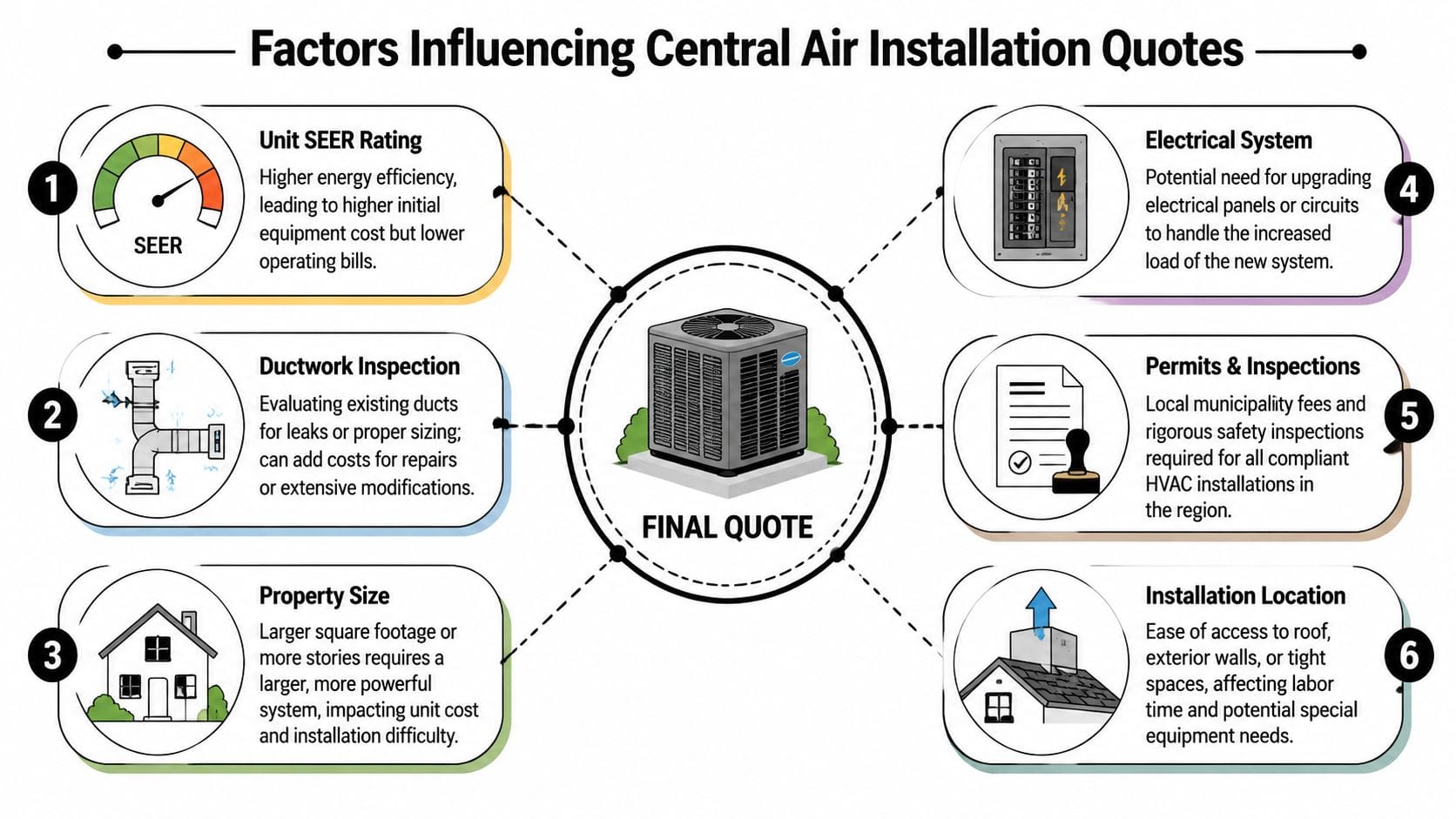
Your house decides more than the equipment does
Start with layout. A compact townhouse with a clean utility area and accessible runs is usually simpler than a split-level house with finished ceilings and awkward chases. If installers have to open more areas, route around structural obstacles, or work in tight spaces, labour rises quickly.
Then there's the age of the home. Older Vancouver and Richmond houses often weren't designed around central cooling. That doesn't make the project impossible, but it does mean more planning around return air, vent locations, and the practical route for ducting without making a mess of the home.
Several factors push quotes up or down:
- Home size: Bigger homes usually need larger equipment and more distribution work.
- Duct condition: Existing ducts can help, but only if they're suitable for cooling.
- Access difficulty: Tight crawlspaces, finished basements, and limited exterior placement add labour.
- Electrical readiness: Some homes need supporting electrical work before installation can proceed.
- Equipment efficiency: Higher-efficiency units cost more up front but can make better long-term sense.
A practical example: a homeowner in a newer Richmond townhouse may already have forced-air heating and serviceable ducts. In that case, the quote often centres on equipment, labour, and moderate adjustments. A homeowner in an older detached house with electric baseboards is looking at a very different scope because air distribution has to be created.
Code and efficiency requirements matter in Vancouver
BC-specific requirements also affect pricing. According to this cost guide on central air installs without existing ductwork, updated building codes influenced by recent heat dome events can raise costs by 20 to 30% by requiring higher-efficiency units at SEER2 16 or above and more demanding ducting standards. That same source says the average installation cost in Vancouver moved from a pre-regulation baseline of $8,000 to $14,000 to a new normal of $10,000 to $18,000.
That's not just paperwork. It changes what equipment qualifies, what duct details are acceptable, and how much supporting work is required to meet current expectations.
The cheapest system on paper often becomes the expensive one if it's oversized, poorly ducted, or pushed into a house that can't support it cleanly.
What tends to work best here is a quote built around the home's actual layout and moisture conditions, not a generic box-size estimate. Coastal humidity exposes bad design. If the system is oversized or airflow is wrong, the house may cool down fast but still feel clammy.
Sample Central Air Installation Estimates for Vancouver Homes
Real pricing makes more sense when you see the job type behind it. These examples reflect the kinds of situations homeowners and strata managers in Greater Vancouver run into all the time.
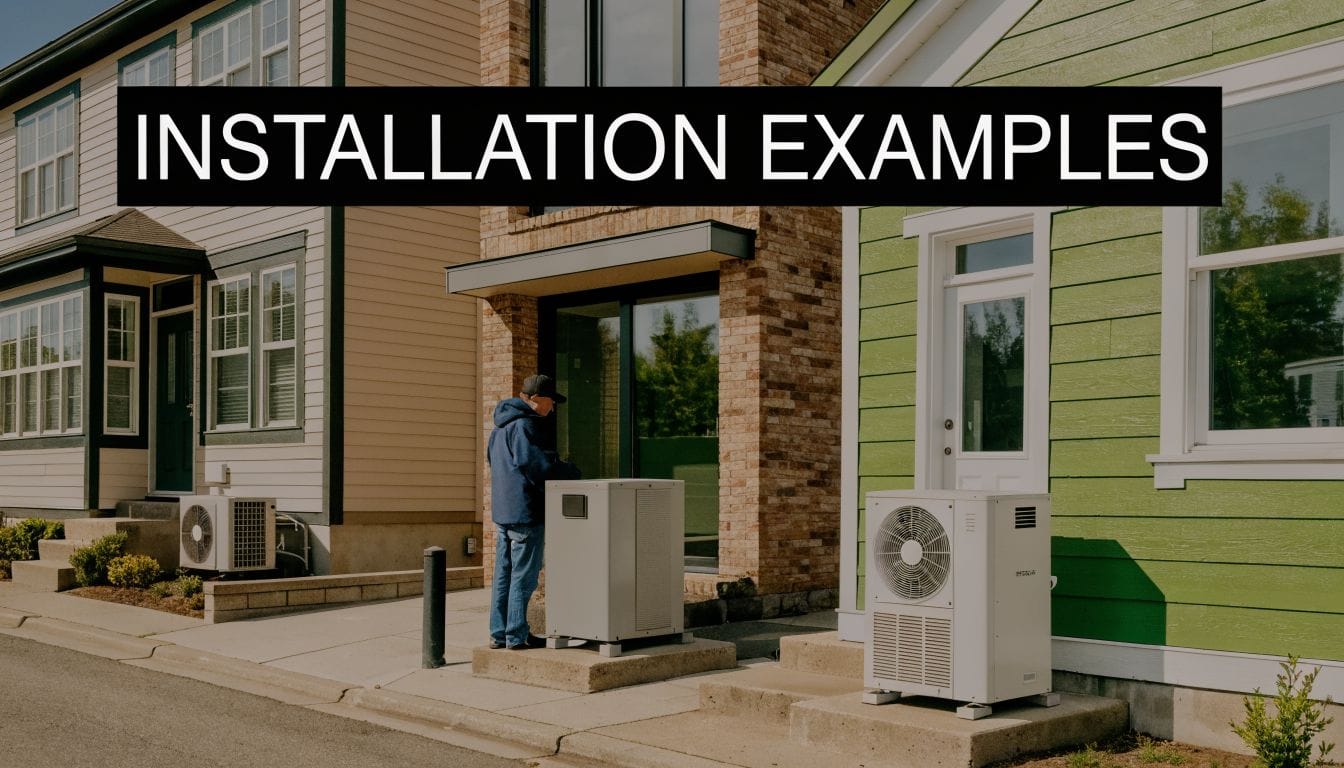
Example one older Vancouver house with no ducts
A homeowner has an older detached house with electric heat and no central ducting. They want whole-home cooling, not more portable units. This is the classic retrofit job where cost rises because the cooling system needs an air delivery system built into the house.
A realistic estimate usually includes:
- Core equipment and installation: This portion commonly lands in the broader detached-home range already discussed earlier.
- New ductwork: This is often the budget driver because the installer has to design and route supply and return paths through an older structure.
- Finish considerations: Ceiling access, soffits, patching, and protecting occupied living space all affect labour.
For homes in the Greater Vancouver area without existing ductwork, central air installation typically costs $12,000 to $22,000, and new ductwork can account for up to 55% of the total expense in older housing stock, as noted in this Greater Vancouver central air pricing overview.
This is the kind of job where a low quote can be misleading. If duct planning is rushed, the system may technically cool the house but still leave hot rooms and weak airflow upstairs.
Example two newer Richmond townhouse with workable ducts
Now take a newer townhouse with forced-air heating already in place. The owner wants central cooling added to an existing system. This is usually the cleaner version of the project because the installer can often reuse part of the existing distribution setup.
A practical estimate here might involve the equipment itself, standard labour, thermostat integration, and selective duct adjustments rather than full replacement. Homeowners in this category often have a better chance of staying near the lower end of the local range, assuming the existing system is compatible and the strata or townhouse rules don't create extra hurdles.
If the house already has a good forced-air backbone, central air can be a straightforward upgrade instead of a full mechanical retrofit.
A useful reference point for homeowners comparing system layouts is this installation walkthrough:
Example three strata retrofit in Burnaby or Vancouver
Strata work is its own category. The equipment may not be the hardest part. Noise limits, approval steps, access restrictions, and shared building conditions often create the actual complexity.
For multi-unit stratas in Vancouver, central air retrofits average $18,000 to $35,000 per unit, driven by acoustic isolation requirements to meet BC Building Code noise criteria of max 35 dB and the approval process under the BC Strata Property Act, as outlined in the same Vancouver market reference above.
Three things tend to affect these jobs most:
- Council approval: You need more than a contractor. You need a project that satisfies building rules.
- Noise control: Outdoor placement, mounts, and vibration management matter a lot.
- Shared conditions: Routing through common areas or coordinating with building systems adds friction.
In these buildings, the best quote is rarely the shortest quote. It's the one that shows the contractor understands paperwork, access, acoustic control, and what happens if the council asks for revisions.
How to Lower Your Installation Costs Without Cutting Corners
The right way to save money on central air isn't to strip the project down until performance suffers. It's to avoid paying for the wrong equipment, the wrong scope, or duplicated work.
Spend money where it changes the outcome
First, size the system properly. Bigger isn't better. In Vancouver's coastal climate, an oversized unit can cool fast and still leave the house feeling damp. Good design matters more than bragging rights on tonnage.
Second, be realistic about ducts. If the existing ductwork is poor, pretending it's usable doesn't save money. It just delays the bill until after installation, when comfort problems show up.
Here's where homeowners usually make better financial decisions:
- Choose the right efficiency tier: Don't buy premium equipment blindly. Buy the efficiency level that fits how long you expect to stay in the home.
- Bundle supporting work once: If you already know a mechanical room upgrade is coming, combining work is often cheaper than opening everything up twice.
- Plan before peak summer: Contractors have more room to schedule and troubleshoot when the market isn't in panic mode.
- Check heat-loss and envelope issues: A home that leaks air badly may need building-side fixes along with HVAC planning. This guide on testing your house for heat loss is a useful place to start.
Use bundling and rebates intelligently
One of the better ways to improve value is to combine related upgrades. According to this guide on heating and cooling system pricing, integrating a central air installation with a tankless water heater upgrade can reduce total project costs by 15 to 25% through shared infrastructure and venting. The same source says this hybrid approach can lower annual energy bills by up to 30% in a typical 1,500 to 2,000 sq ft home.
That won't fit every house, but it's a practical option when both systems are aging and the mechanical setup supports a combined approach.
The cheapest quote is not the lowest invoice. It's the project that solves cooling properly and avoids redo work a year later.
Rebates also matter, but only when the installed system meets the program rules. Homeowners should treat rebates as a bonus, not as permission to buy the wrong system.
Finding a Reputable Contractor and Getting Accurate Quotes
A proper quote starts with a proper site visit. If a contractor prices central air for your home without looking at the ducts, access, electrical setup, and equipment location, you're not getting a reliable number.

What to ask before anyone prices the job
Homeowners don't need to be HVAC experts, but they should ask direct questions.
- Who will inspect the home: Make sure someone is assessing duct paths, return air, and equipment placement.
- What permits are expected: A serious contractor should talk clearly about municipal requirements and inspections.
- How will they handle older homes or strata rules: Local experience matters a lot in Greater Vancouver.
- What happens if ducting needs more work than expected: You want clear language around change orders and approvals.
Low-ball quotes usually have one thing in common. They leave out the hard parts.
What a proper quote should include
A professional quote should break out the scope in plain language. You should be able to see what equipment is being installed, what labour covers, whether duct changes are included, and what exclusions still exist.
Look for these basics:
- Equipment details: Brand, model family, and efficiency level.
- Scope of labour: Installation, startup, testing, and final commissioning.
- Ductwork notes: Whether ducts are reused, modified, or replaced.
- Warranty information: Equipment and workmanship should both be clear.
- Project timeline: Not just install day, but approvals and lead times too.
A good contractor makes the quote easier to understand, not harder.
If you want to compare professional estimates side by side, start with a detailed request for a central air quote that includes your property type, existing heating system, and whether ducts already exist.
Frequently Asked Questions About Central Air in the Lower Mainland
Is central air worth it in Vancouver's climate
For many homeowners, yes. The value isn't only about peak heat. It's also about better humidity control, cleaner indoor air when windows stay closed, and quieter whole-home cooling than juggling multiple room units.
What if my house has no ductwork
That's common in older Greater Vancouver homes. Installing central air in homes without existing ductwork typically costs $12,000 to $22,000, and the reason it's expensive is that fabricating and installing new ductwork can account for up to 55% of the total project cost in older local homes. That local benchmark was discussed earlier in the Vancouver market example.
Are strata units harder to cool with central air
They can be. The mechanical work may be manageable, but approvals, outdoor unit placement, and noise control often decide whether the project is simple or frustrating.
Should I buy the highest-efficiency unit available
Not automatically. Higher efficiency can make sense, but only if the rest of the system is designed properly. Good ducting, correct sizing, and solid commissioning matter just as much as the badge on the equipment.
How do I know if a quote is realistic
A realistic quote is detailed. It explains what's included, what assumptions are being made about ducts and access, and what could change the price after inspection.
If you want a clear, local assessment instead of a generic price guess, Encano Plumbing & Drainage Ltd. can help homeowners and property managers in Greater Vancouver evaluate ductwork, building constraints, and realistic installation scope before the work starts. That's the easiest way to get a quote that reflects your actual home, not just a broad online average.