

You call for a quote after the hot water runs cold. One company gives you a low number over the phone. Another asks about fuel type, venting, access, permits, and whether the old tank needs to be hauled out. In Vancouver, that gap usually comes down to what the quote includes.
A new hot water tank in Greater Vancouver often falls somewhere between the low end for a straightforward replacement and much higher once labour, venting, electrical work, disposal, and code upgrades are part of the job. The tank itself is only one line on the invoice.
What changes the price here is local job reality. A like-for-like electric swap in an open utility room is usually simple. A gas tank in a tight mechanical closet, an older home with dated venting, or a condo with access restrictions can add time, materials, and permit costs fast.
Homeowners also get tripped up by charges that generic U.S. articles gloss over. In Vancouver, you need to account for permit requirements where they apply, local labour rates, removal and disposal fees, and the small code corrections that show up once the old unit is disconnected.
The useful question is not just how much a hot water tank costs. It is how much the full job costs, and what has been left out of the quote.
That is what this guide clears up.
Table of Contents
- The Real Answer to Your Hot Water Tank Question
- Total Cost to Install a Hot Water Tank in Vancouver
- Key Factors That Influence Your Final Bill
- Beyond Installation Long-Term Operating Costs
- Is a Tankless Water Heater a Better Investment
- When to Repair vs Replace Your Hot Water Tank
- Your Next Steps and When to Call a Pro in Vancouver
The Real Answer to Your Hot Water Tank Question
The call usually comes after a cold shower, a puddle in the utility room, or both. At that point, the question is not just how much the tank costs at the store. It is how much it will take to get hot water back safely, legally, and without paying twice for missed work.
For Greater Vancouver homeowners, a new hot water tank is usually a full replacement job, not just a box swap. The final number depends on the heater you choose, but also on local labour rates, permit requirements, disposal of the old tank, access to the mechanical room, and whether the existing gas, venting, or electrical setup passes inspection.
That is why the price on the unit rarely matches the invoice.
What a replacement quote should actually cover
A proper quote usually includes the new tank, labour, standard fittings, connection work, and removal of the old heater. In Vancouver and nearby cities, it should also make clear whether permit handling is included and whether disposal fees are extra. Those two items are easy to miss in low quotes.
I tell homeowners to look at scope before price. A cheaper number is not better if it leaves out work that will still have to be done once the installer is on site.
Common add-ons include:
- Permit and inspection costs required by the municipality or gas authority
- Old tank removal and disposal fees, especially if access is tight
- Venting corrections if the existing setup does not meet current code
- Water shutoff, expansion tank, or valve replacement when aging parts are no longer safe to reuse
- Electrical updates for disconnects, wiring, or breakers on electric units
- Extra labour for stairs, crawl spaces, or low-clearance utility rooms
A low quote often excludes one or more of those items.
What this looks like in a Vancouver home
A typical local example is an older gas tank in a Vancouver basement or Burnaby utility room. The homeowner may expect to pay mainly for the heater itself. Then the installer finds corroded shutoffs, an aging vent connection, or no practical way to remove the old tank without extra labour. The job cost changes because the work changed.
That does not mean the quote was dishonest. It means the useful number is the installed cost for your home, not the sticker price for a generic tank.
The safest way to compare estimates is to ask four direct questions. Is the permit included? Is old tank disposal included? Are new valves and connection materials included? What happens to the price if the venting or electrical needs correction?
If a contractor answers those clearly, you are already getting closer to a fair number.
Total Cost to Install a Hot Water Tank in Vancouver
If your hot water tank fails in a Vancouver basement on a Friday night, the number that matters is not the price tag on the tank at the hardware store. It is the full installed cost to get hot water back safely, pass inspection where required, and avoid a callback for venting, valves, or code problems.
For most Greater Vancouver homeowners, a standard tank replacement usually lands somewhere from the low four figures into the mid two-thousands once the tank, labour, basic fittings, permit-related steps, and removal are accounted for. Electric replacements are often simpler. Gas replacements usually cost more because the installer has to confirm the venting, gas connection, combustion setup, and clearances are still acceptable under current code.
That range is broad for a reason. A straightforward swap in a newer condo utility room is one kind of job. Replacing an older gas tank in a Vancouver Special, Burnaby basement, or North Shore mechanical room is another. Local labour rates, municipal permit requirements, and disposal charges all affect the final bill, and those costs are easy to miss if you are comparing against generic US pricing articles.
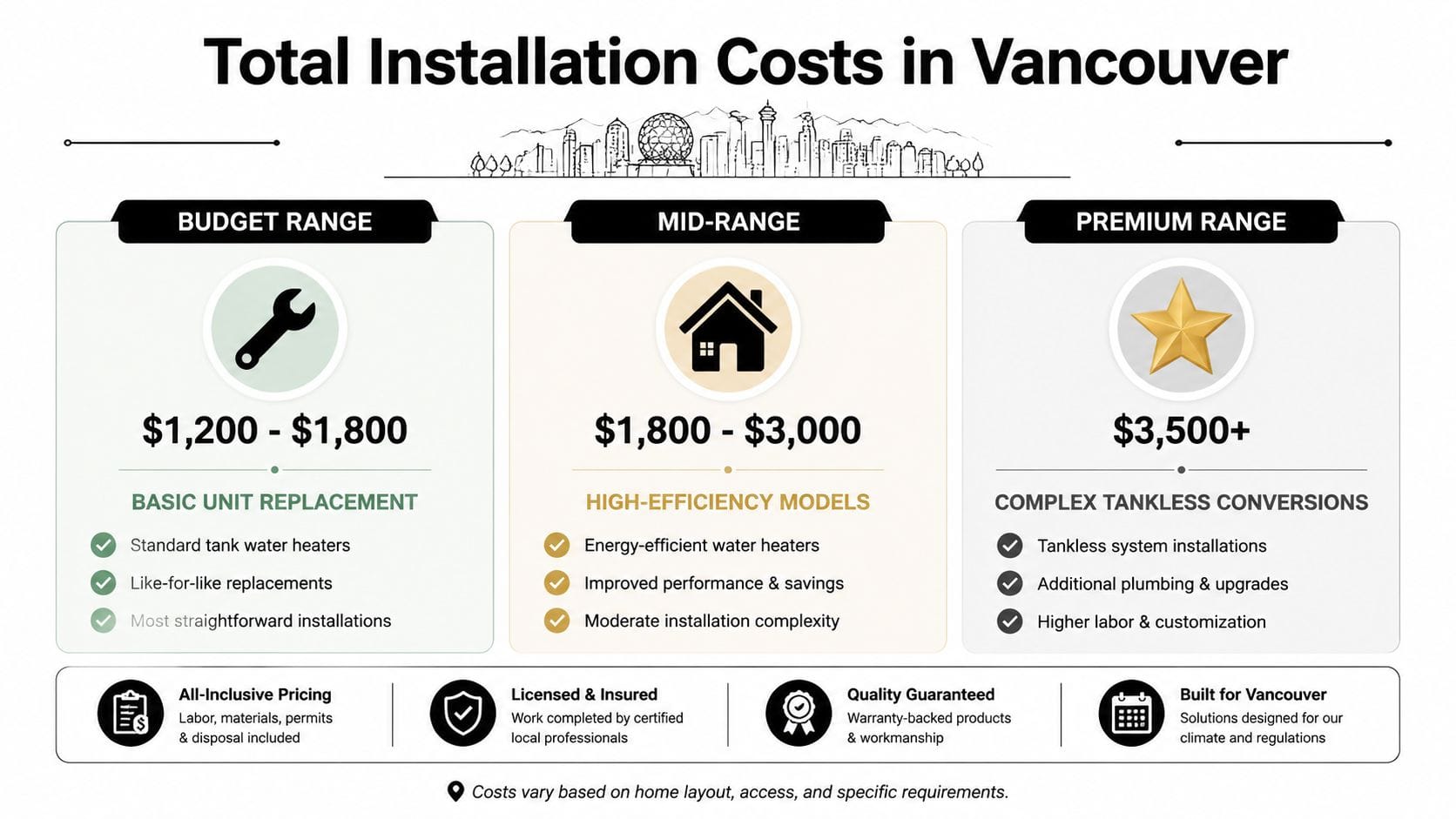
Estimated Hot Water Tank Installation Cost in Greater Vancouver (2026)
| Cost Component | Electric Tank | Gas Tank |
|---|---|---|
| Tank unit | Lower-cost models start at the budget end, while larger or higher-efficiency tanks cost more | Similar equipment range, with price rising by size, brand, and efficiency |
| Professional installation labour | Usually lower if existing wiring, disconnect, and location are already suitable | Usually higher because venting and gas connections need more verification and adjustment |
| Typical full installed conventional tank cost | Often at the lower end of the local installed range | More likely to land at the higher end, especially in older homes |
| Permit handling | Varies by municipality and job scope | Varies by municipality and job scope |
| Old tank disposal | May be included or billed separately | May be included or billed separately |
Why gas quotes often come in higher
Gas work has more points that can stop a simple swap. The vent connector may be wrong for the new unit. The draft may be poor. The shutoff may be seized. The existing gas connector may not be something a plumber wants to reuse.
Electric tanks can still bring surprises, but many replacements are more direct if the breaker, wiring, and disconnect are already in good shape. That usually means fewer correction items and less labour.
A low online equipment price does not answer those site conditions.
A practical Vancouver-area example
A common call in Burnaby or East Vancouver is an older 40-gallon gas tank that has started leaking at the bottom. The homeowner expects a same-day swap. Once the old tank is isolated and the area is checked, the plumber finds a tired shutoff, venting that should be corrected, and a narrow stair route that adds time to remove the old unit safely.
Now the quote has to reflect the complete job. That includes labour, updated connection materials, haul-away, and any permit handling required for the installation. Those are normal Vancouver-area costs, not upsells.
If you are comparing estimates, check the scope against a professional water heater installation service in Vancouver and against a stripped-down quote that only lists the tank and basic labour. The cheaper number is often missing disposal, permit costs, new valves, or venting corrections.
What a solid quote should spell out
Look for these details before you approve the job:
- Tank type and size: The estimate should state gas or electric and the tank capacity.
- Included labour: It should be clear whether the price covers a simple swap only or also covers minor code corrections.
- Removal and disposal: Old tank haul-away should be listed plainly.
- Materials: Valves, connectors, fittings, strapping, and vent parts should not be vague.
- Permit responsibility: The quote should say who is handling permit and inspection steps where required.
- Exclusions: Access problems, electrical upgrades, venting changes, and carpentry should be identified if they are extra.
A clear quote protects you from the cheapest number on paper turning into the most expensive job by the end of the day.
Key Factors That Influence Your Final Bill
The final invoice changes for specific reasons. Most of them are predictable if you know where to look.

Tank size changes both purchase and operating cost
A standard tank is still the lowest-upfront-cost option, but the capacity you choose directly affects both price and operating cost. Common residential tank sizes include 30, 40, 50, and 75 to 80 gallons, with 40-gallon and 50-gallon tanks being common household benchmarks, while 75 to 80 gallon units carry higher unit costs (tank sizing and pricing benchmarks for common residential sizes).
Bigger isn't automatically better. A larger tank costs more to buy, takes up more space, and can increase standby losses. A smaller tank may save money upfront but can leave a household waiting for recovery after back-to-back showers.
Household demand matters more than guesswork
A couple in a condo can often live comfortably with a smaller tank than a family in a house with multiple bathrooms. The right choice depends on how hot water is used, not just how many people live there.
A practical example: if your home regularly runs a shower, laundry, and dishwasher close together, a small tank may create complaints immediately. On the other hand, installing a large tank “just in case” can mean paying more for capacity you rarely use.
The best-sized tank is the one that covers your peak use without making you pay for unnecessary storage every day.
Fuel type affects labour
Gas and electric tanks can both work well, but installation is not equally simple. Gas systems require proper combustion venting and safe gas connections. Electric systems avoid venting but still need suitable electrical service and code-compliant connections.
This is why two tanks with similar retail pricing can produce very different installed quotes.
Efficiency affects what you pay after install
From a technical standpoint, the U.S. Department of Energy notes that operating cost depends on the Uniform Energy Factor (UEF) and on the energy source used to power the unit, as summarised in the same pricing overview above. In plain language, a cheaper tank at purchase can cost more to run if efficiency is lower.
That doesn't always mean you should buy the highest-efficiency model available. It means you should compare the purchase price to how long you expect to stay in the home and how much hot water you use.
Brand, warranty, and build tier
Not every tank is built to the same standard. Some models are positioned as entry-level replacements. Others include longer warranty coverage, upgraded components, or better corrosion protection.
Here's where homeowners often make a bad trade:
- Lowest-price focus: Good for a rental turnover or urgent sale prep, but it may not be the best long-term fit.
- Mid-tier choice: Often the most balanced option for owner-occupied homes.
- Premium tier: Makes more sense when you want longer expected service life, better component quality, or stronger manufacturer coverage.
Installation conditions inside the home
The same tank can cost very different amounts to install depending on the house.
A few examples:
- Easy access: Garage or utility room with open working space
- Moderate access: Basement corner with tight piping and awkward drain route
- Difficult access: Crawl space, narrow stairs, or closet where the tank barely fits through the opening
When a plumber has to spend more time protecting floors, draining carefully, disassembling old connections, and manoeuvring the tank out safely, labour goes up for good reason.
Beyond Installation Long-Term Operating Costs
The purchase price gets attention because it's immediate. The ownership cost matters just as much if you plan to stay in the home.
The cheapest tank to buy may not be the cheapest to own
Operating cost comes down to two things. First, how efficient the water heater is. Second, what fuel it uses. As noted earlier, a lower-efficiency model can look attractive at the point of sale and then cost more over time because it uses more energy to deliver the same hot water.
That's why it helps to think in two layers:
- Upfront spending: what you pay for the unit and installation
- Ongoing spending: what you pay every month to keep water hot
In Greater Vancouver, homeowners usually compare electric and gas based on current local utility bills, but the practical answer isn't universal. A household with modest hot water use may prioritise lower installation complexity. A heavier-use household may care more about long-run operating patterns.
Maintenance is cheaper than emergency replacement
The other long-term cost driver is maintenance. Tanks don't usually fail all at once without warning. They deteriorate over time, especially when sediment builds up or protective components are ignored.
A few maintenance habits make a real difference:
- Annual flushing: Helps remove sediment that can reduce efficiency and increase noise.
- Periodic inspections: Catch valve issues, venting concerns, and early signs of leakage.
- Anode rod service: Replacing a spent anode rod can help slow internal tank corrosion.
Small maintenance jobs are usually far cheaper than a flooded mechanical room, emergency callout, and rushed replacement.
A practical ownership example
If you're choosing between a low-cost tank and a better-built model, don't just ask what the quote is today. Ask how you use hot water, how long you expect to stay in the property, and whether you're willing to maintain the unit.
For a landlord turning over a suite quickly, the answer may be different than for a family planning to stay in a detached home for years. One is a short-horizon decision. The other is a lifecycle decision.
Is a Tankless Water Heater a Better Investment
Tankless units come up in almost every replacement conversation now, especially when the existing tank has failed and the homeowner doesn't want to revisit the issue again soon.
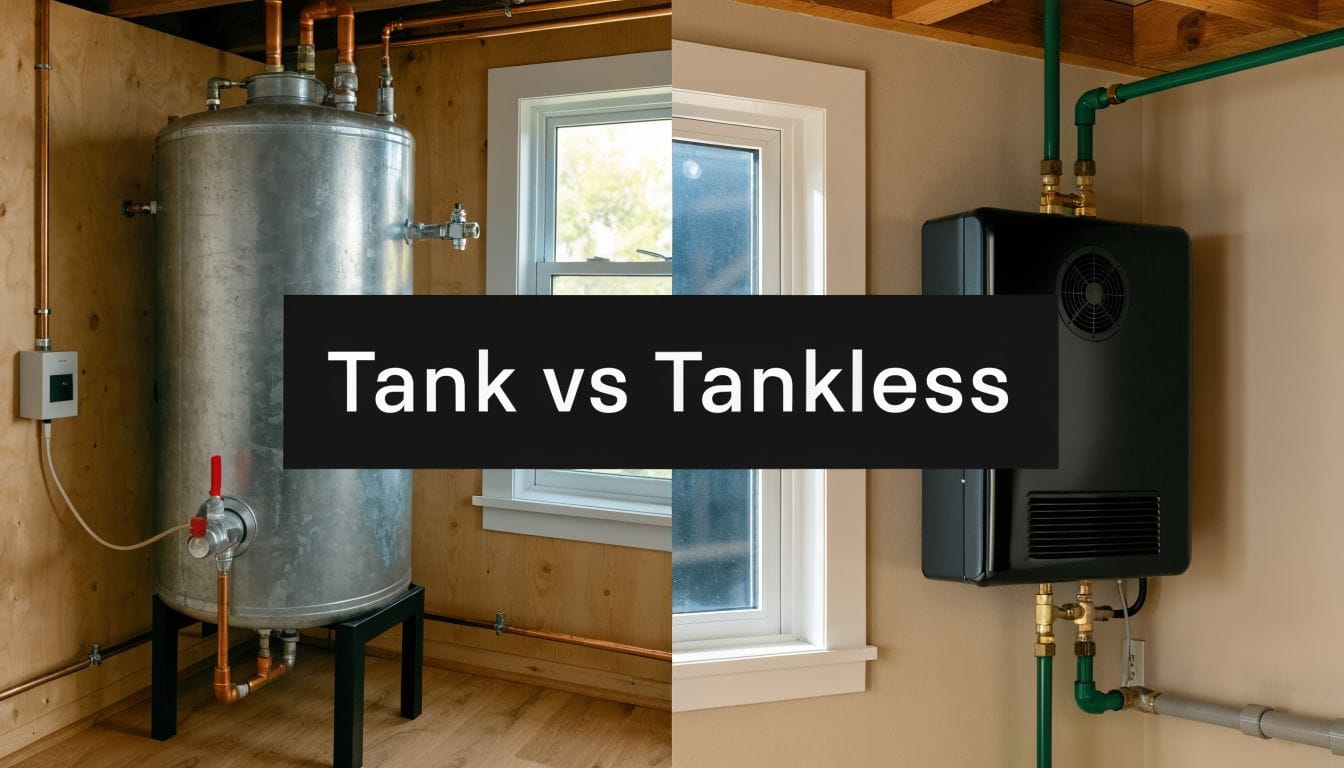
Tank vs tankless in real homes
A traditional tank is usually the easier answer when budget and speed matter most. It stores a fixed volume of hot water, installs more easily in many replacement scenarios, and remains the familiar choice for a straight swap.
Tankless changes the equation. It heats water on demand, frees up floor space, and can be a better fit for households that want longer showers or more flexible use patterns. But the installation is usually more involved, especially if the home needs gas, venting, or electrical modifications to support the new system.
Here's the practical split:
| Homeowner priority | Traditional tank | Tankless |
|---|---|---|
| Lower upfront cost | Usually stronger | Usually weaker |
| Compact footprint | Weaker | Stronger |
| Like-for-like replacement | Often simpler | Often more involved |
| High-demand usage pattern | Limited by stored volume | Better if sized correctly |
| Minimal installation disruption | Often stronger | Often weaker |
A practical example
For a family of four in Vancouver, a tank can work perfectly well if the tank size matches actual demand. But if that family often has two showers going while the dishwasher or laundry runs, a stored-volume system can hit its limit. A properly sized tankless unit handles that kind of pattern better, assuming the house can support the installation requirements.
The mistake is assuming tankless is automatically the better investment. Sometimes it is. Sometimes it isn't.
A useful starting point is a side-by-side review of traditional vs tankless water heaters with your own home in mind rather than a generic online checklist.
When tankless makes sense
Tankless is often worth serious consideration if:
- Space is tight: Wall-mounted units free up floor area.
- Usage is uneven but heavy: Long showers or overlapping appliance use can favour on-demand heating.
- You plan to stay in the home: A bigger upfront project can make more sense when you'll benefit from it for years.
When a tank is still the smarter buy
A standard tank often wins when:
- You need the lowest upfront spend
- The existing setup already suits a simple replacement
- The household's hot water demand is predictable and moderate
This walkthrough is useful if you want to see the differences in plain terms before comparing quotes:
Don't choose tankless because it sounds newer. Choose it if your home, budget, and hot water habits actually support the conversion.
When to Repair vs Replace Your Hot Water Tank
A lot of homeowners spend money on the wrong problem. They replace a unit that needed a repair, or they repair a tank that's already at the end of the road.
Call for a repair
These issues often justify diagnosis and repair before you think about full replacement:
- No hot water but no tank-body leak: Thermostat, heating element, pilot, or ignition issues may be the culprit.
- Valve-related dripping: Pressure relief or connection leaks can sometimes be corrected without changing the entire heater.
- Intermittent performance: Inconsistent heating can come from controls or sediment rather than total tank failure.
If the symptoms are limited and the tank body itself is sound, a repair call is reasonable. A troubleshooting guide for water heater not heating and common causes can help you narrow down what may be happening before booking service.
Start budgeting for a replacement
These signs usually point toward replacement rather than repair:
- Visible leakage from the tank body itself
- Rust-coloured water linked to tank corrosion
- Loud rumbling or banging that persists
- Repeated service calls on an aging unit
- Noticeable decline in reliability when demand is normal
A simple decision test
If the issue is a component, repair may make sense. If the issue is the tank shell, internal corrosion, or repeated failure, replacement is usually the smarter spend.
Once the tank body starts leaking, there's no meaningful repair that restores it safely. At that point, the question isn't whether to replace it. It's how quickly you can do it before water damage gets worse.
Your Next Steps and When to Call a Pro in Vancouver
If you're comparing quotes right now, keep the checklist simple.
What to confirm before you approve a quote
- Exact tank type: Gas or electric
- Exact tank size: Make sure it matches your household's actual demand
- Included scope: Removal, disposal, basic materials, and permit handling if required
- Known upgrades: Venting, shutoffs, wiring, and access issues
- Warranty details: On both the unit and the installation work
What not to DIY
Draining a tank is one thing. Replacing a gas-fired water heater is another. Gas work, combustion venting, and final commissioning should be handled by qualified professionals. Even electric tanks can become unsafe quickly if wiring, bonding, or shutoff components are mishandled.
For Vancouver homeowners, proper installation also matters for code compliance, insurance questions, and warranty protection. A rushed install that ignores venting, valves, or clearances can cost far more later than doing the job properly once.
A good plumber should give you a clear scope, explain what's included, flag any likely complications, and tell you plainly when a repair is still reasonable. That's the standard you should expect.
If you need a clear quote for a new hot water tank in Vancouver, Richmond, Burnaby, or nearby communities, Encano Plumbing & Drainage Ltd. handles tank and tankless water heater work for residential and commercial properties. Ask for an itemised estimate that lists the unit, labour, removal, and any likely venting or electrical adjustments so you can compare options properly.