
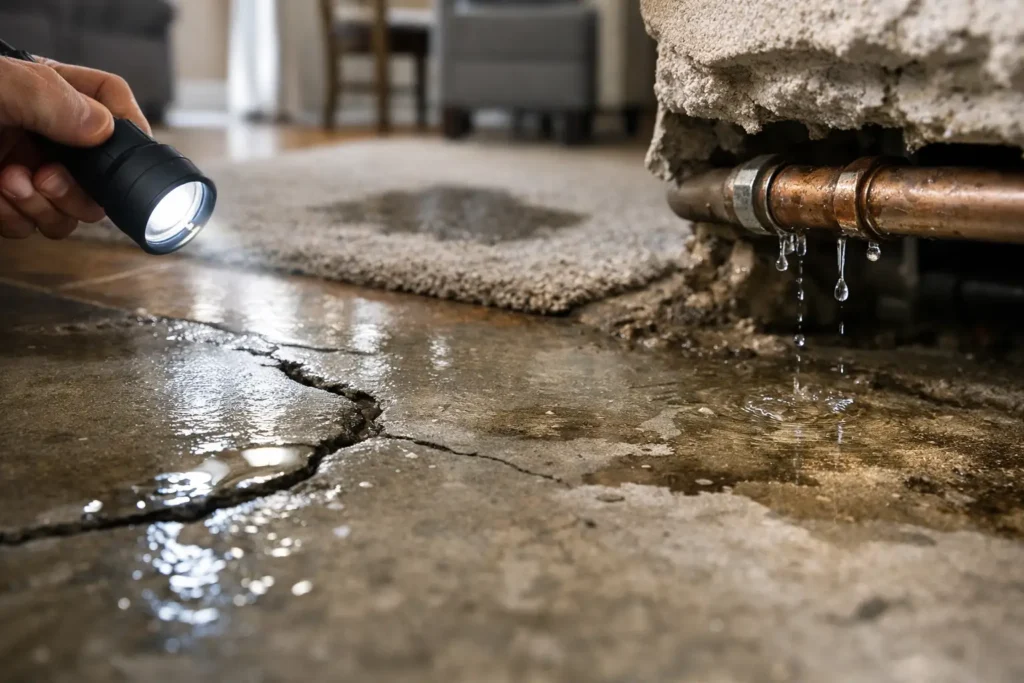
A slab leak rarely starts with a dramatic flood. More often, it begins with something small you almost dismiss – a warm patch on the floor, the faint sound of running water, or a water bill that suddenly looks wrong. If you are wondering how to spot slab leak problems before they turn into major structural damage, the key is noticing those early changes and taking them seriously.
Slab leaks happen when a water line running beneath your concrete foundation develops a crack, pinhole, or break. In homes, condo ground-floor units, and some commercial buildings, those pipes are hidden under the slab, so the leak can continue for days or weeks before anyone sees obvious water. That hidden nature is what makes slab leaks expensive. The water is out of sight, but the damage is very real.
What is a slab leak, exactly?
A slab leak is a leak in the plumbing line located below the concrete foundation of a building. It can affect either hot or cold water lines, and the symptoms often depend on which line is damaged. A hot water line leak may create warm spots on the floor, while a cold water line leak may show up more through dampness, low pressure, or unexplained moisture.
Not every leak under a floor is technically a slab leak. In some buildings, pipe routing is different, and leaks may come from walls, crawl spaces, or nearby drainage lines. That matters because the repair method can change. Still, from a property owner’s point of view, the main concern is the same: hidden water can damage flooring, weaken materials, and increase utility costs fast.
How to spot slab leak warning signs
The most useful way to approach this is by looking for patterns, not single clues. One sign alone may point to another plumbing issue, but several appearing together often tell a clearer story.
Your water bill climbs for no clear reason
One of the earliest red flags is an unusual increase in your monthly water bill. If your habits have not changed and no fixtures are visibly leaking, water may be escaping somewhere hidden. A slab leak can run continuously, even when nobody is using water.
This is especially worth checking in rental properties or commercial spaces where usage is more predictable. If the bill rises without a good explanation, it is smart to investigate before assuming it is a utility error.
You hear water running when everything is off
Turn off faucets, dishwashers, washing machines, and irrigation if you have it. Then listen. If you still hear water moving through pipes, there may be a hidden leak under the slab or behind a wall.
A soft hissing or steady rushing sound can be easy to miss during the day. Late at night or early in the morning, when the building is quiet, these sounds are often easier to hear.
Warm or damp spots appear on the floor
A warm area on tile, laminate, or concrete can point to a leaking hot water line under the slab. It may feel subtle at first, more like an odd temperature difference than actual heat. Damp spots can also appear, though they do not always show up directly above the leak.
This is one of the more classic answers to how to spot slab leak issues, but it depends on the flooring material. Carpet may feel damp or develop a musty smell. Tile may feel warmer than surrounding areas. Hardwood or laminate may begin to warp or separate.
Water pressure starts dropping
A damaged water line under the slab can reduce pressure throughout the property or in certain fixtures. If showers, faucets, or supply lines suddenly seem weaker than normal, and there is no municipal issue affecting the area, a hidden leak is one possible cause.
Low pressure is not exclusive to slab leaks. It can also come from clogged pipes, corroded plumbing, pressure regulator problems, or fixture issues. That is why it should be taken as one clue, not the whole diagnosis.
Flooring damage shows up for no obvious reason
Buckling floors, loose tiles, cracked grout, stained carpet, and unexplained moisture near floor level all deserve attention. Water traveling under or through a slab can shift where damage appears, so the visible problem may not sit directly above the pipe break.
In commercial units and multifamily properties, this sometimes appears first as damage along baseboards or at the edge of flooring transitions. The source may still be below the slab even if the surface symptom looks minor.
Mold or musty odors begin to develop
A persistent damp smell indoors is often the result of hidden moisture. If there is no roof leak, appliance leak, or obvious bathroom issue, moisture beneath the floor may be feeding mold growth. Even when mold is not visible, the odor alone can be a strong warning sign.
For property managers, this matters beyond repair cost. Indoor moisture problems can lead to tenant complaints, damaged finishes, and air quality concerns if left unresolved.
Cracks start forming in floors or walls
In more advanced cases, slab leaks can affect the soil or support under the foundation. That may contribute to shifting, which can show up as cracks in flooring, walls, or baseboards. Doors may begin sticking, or certain areas may feel slightly uneven.
To be clear, not every crack means a slab leak. Buildings settle for many reasons. But if cracks appear alongside moisture, higher bills, or pressure loss, the leak possibility becomes much stronger.
Why slab leaks happen
Pipes under a slab do not usually fail without a reason. Over time, corrosion, pipe abrasion, poor installation, water pressure issues, and shifting soil can all play a role. In older properties, age alone may be enough. In newer ones, installation quality matters more than people think.
Ground movement is a bigger factor in some areas than others. Seasonal moisture changes, settling, and nearby construction can all stress buried lines. If the plumbing system already has weak spots, that movement can turn a small vulnerability into a real leak.
What to do if you suspect one
If you think a slab leak may be developing, avoid the temptation to wait for clearer proof. Hidden leaks get more expensive with time. Start by checking whether your water meter continues moving when no water is being used. That is not a full diagnosis, but it can confirm that water is escaping somewhere in the system.
From there, the safest next step is professional leak detection. A licensed plumber can use pressure testing, acoustic listening equipment, thermal imaging, and other non-invasive methods to narrow down the source. That matters because breaking concrete without a precise location creates unnecessary mess, cost, and downtime.
If the leak appears severe, such as active floor saturation, sudden pressure loss, or visible water damage spreading quickly, shutting off the property’s main water supply may help limit damage until a plumber arrives.
How professionals confirm a slab leak
This is where experience really counts. Slab leak symptoms overlap with other plumbing and building problems, so guessing can send you in the wrong direction. A professional diagnosis looks at the full picture: the type of piping, age of the building, pressure behavior, meter readings, moisture patterns, and equipment-based detection results.
In some cases, the repair is a direct spot fix. In others, rerouting the line or replacing a section of pipe makes more sense. It depends on the pipe material, the location of the break, and whether the leak is likely part of a larger pattern. The cheapest repair is not always the best long-term option.
When fast action matters most
A small slab leak can become a major restoration project if it is ignored. Water can damage flooring, cabinets, drywall, insulation, and even the slab itself over time. For landlords and facility operators, delays can also mean occupant disruption, higher remediation costs, and more complicated insurance conversations.
That is why early detection matters so much. If you notice two or more of these warning signs together, it is worth treating the issue as urgent, even if there is no visible flood.
At Encano Plumbing & Drainage Ltd., we have seen how quickly hidden leaks can go from inconvenient to destructive. The good news is that catching the signs early usually gives you more repair options, less damage, and a much smoother path back to normal.