The forecast drops, the wind picks up, and suddenly you're listening to every creak in the house. If you live in Vancouver, Richmond, Delta, or Burnaby, that stress is familiar. A lot of local homes have plumbing in places that don't stay warm enough during a cold snap, like crawl spaces, attached garages, exterior walls, and older basements that leak cold air.
Generic winter plumbing advice usually sounds simple. Keep the heat on. Maybe let a tap drip. That helps, but it doesn't cover the way many Greater Vancouver homes are built. A Richmond house with an unconditioned crawl space has a very different risk profile than a newer condo with all plumbing buried deep inside conditioned space.
A practical example. A homeowner in East Vancouver leaves for a long weekend, turns the thermostat down to save money, and assumes the house will be fine because outdoor temperatures only dip for one night. The kitchen sink line runs through an exterior wall with a draft near the service entry. By morning, there's no water at that faucet. That's how these calls often start. Not with a flood. With silence from one tap.
Table of Contents
- The Vancouver Freeze Why Your Pipes Are at Risk
- Your Proactive Winterization Checklist
- Immediate Actions for a Sudden Cold Snap
- The Unfreeze Protocol What to Do When a Pipe Is Frozen
- Essential Tools Materials and Estimated Costs
- Year-Round Maintenance and When to Call Encano
The Vancouver Freeze Why Your Pipes Are at Risk
The homes that worry me most during a freeze aren't always the oldest-looking ones. They're the houses and low-rise multi-unit buildings where plumbing was routed through spaces nobody thinks about until the temperature drops. That includes Richmond crawl spaces, Vancouver character homes with retrofits layered over older walls, and side-by-side units where one cold corner affects a whole branch line.
That local housing stock matters. The biggest gap in most frozen-pipe advice is that it skips over older multi-unit homes and houses with plumbing in unconditioned crawl spaces or exterior walls. According to CMHC data discussed in Prism Risk guidance, over 40% of homes built before 1980 in BC have plumbing routed through unheated crawl spaces or exterior walls, and that setup increases freeze risk by 3x during sub-zero events.
Why Greater Vancouver homes freeze differently
A lot of local owners assume frozen pipes are mostly a Prairie problem. They're not. Vancouver's issue is different. We get cold snaps that arrive fast, and many homes weren't designed around prolonged hard-freeze protection.
A crawl space in Richmond is a good example. It may stay damp, drafty, and noticeably colder than the rooms above. If a water line runs along the perimeter and there's poor insulation or outside air getting in around vents or service penetrations, that pipe can freeze while the main living area still feels comfortable.
Practical rule: If a pipe runs through a space you wouldn't want to stand in during a cold snap without a jacket, that pipe needs protection.
The draft matters as much as the temperature
People often focus only on the thermostat setting. The hidden problem is moving cold air. A pipe against an exterior wall or near a gap around wiring, ducting, or foundation penetrations loses heat much faster than homeowners expect.
That's why I tell people to think in zones, not just rooms. Under the kitchen sink on an outside wall is one zone. The garage ceiling below an upstairs bathroom is another. The back corner of the crawl space where the hose bib line enters is another again. If you're not sure where your home leaks heat, a useful starting point is this guide on how to test your house for heat loss.
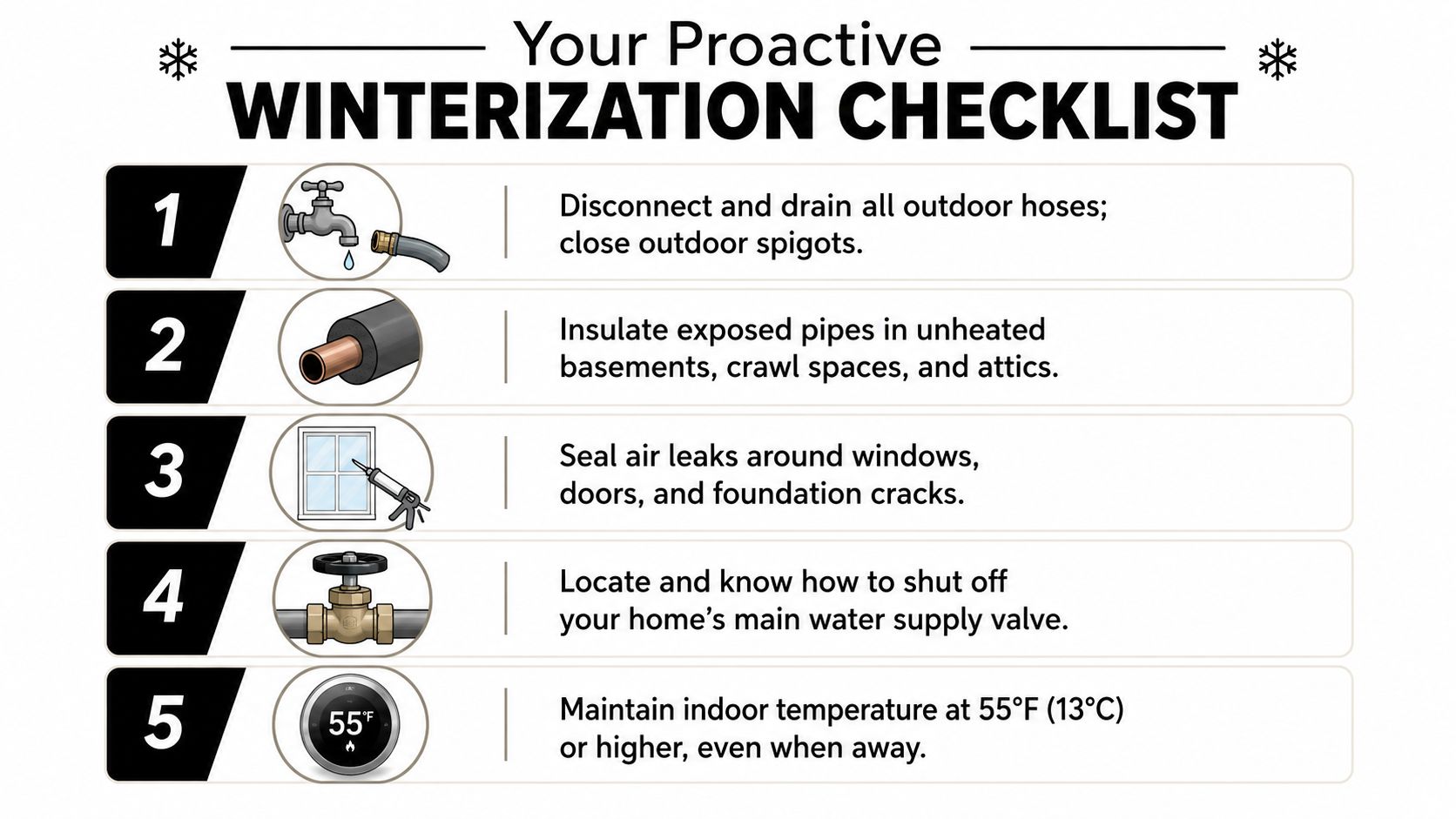
Your Proactive Winterization Checklist
Prevention works best before the first hard freeze warning. Once pipes are already close to freezing, you're managing risk. Before that, you're still in control.
Start with the pipes that actually freeze
Walk the property and identify exposed plumbing in unheated areas. In Greater Vancouver, the usual trouble spots are:
- Crawl spaces: Look for copper or PEX lines near foundation walls, vents, or access hatches.
- Garages: Check pipes along exterior walls, above garage doors, or behind unfinished drywall.
- Attics and roof transitions: Any plumbing line above insulation level or near soffit vents is vulnerable.
- Exterior hose bibs and irrigation feeds: Disconnect hoses and drain lines before temperatures fall.
- Cabinets on outside walls: Kitchen and bathroom sink lines often sit in cold pockets.
A practical example. If your laundry room shares a wall with the garage, don't assume the insulated wall protects the pipes enough. Open the access panel, feel for drafts, and inspect the line path. I've seen perfectly heated homes with one garage-adjacent branch line freeze because the wall cavity was cold.
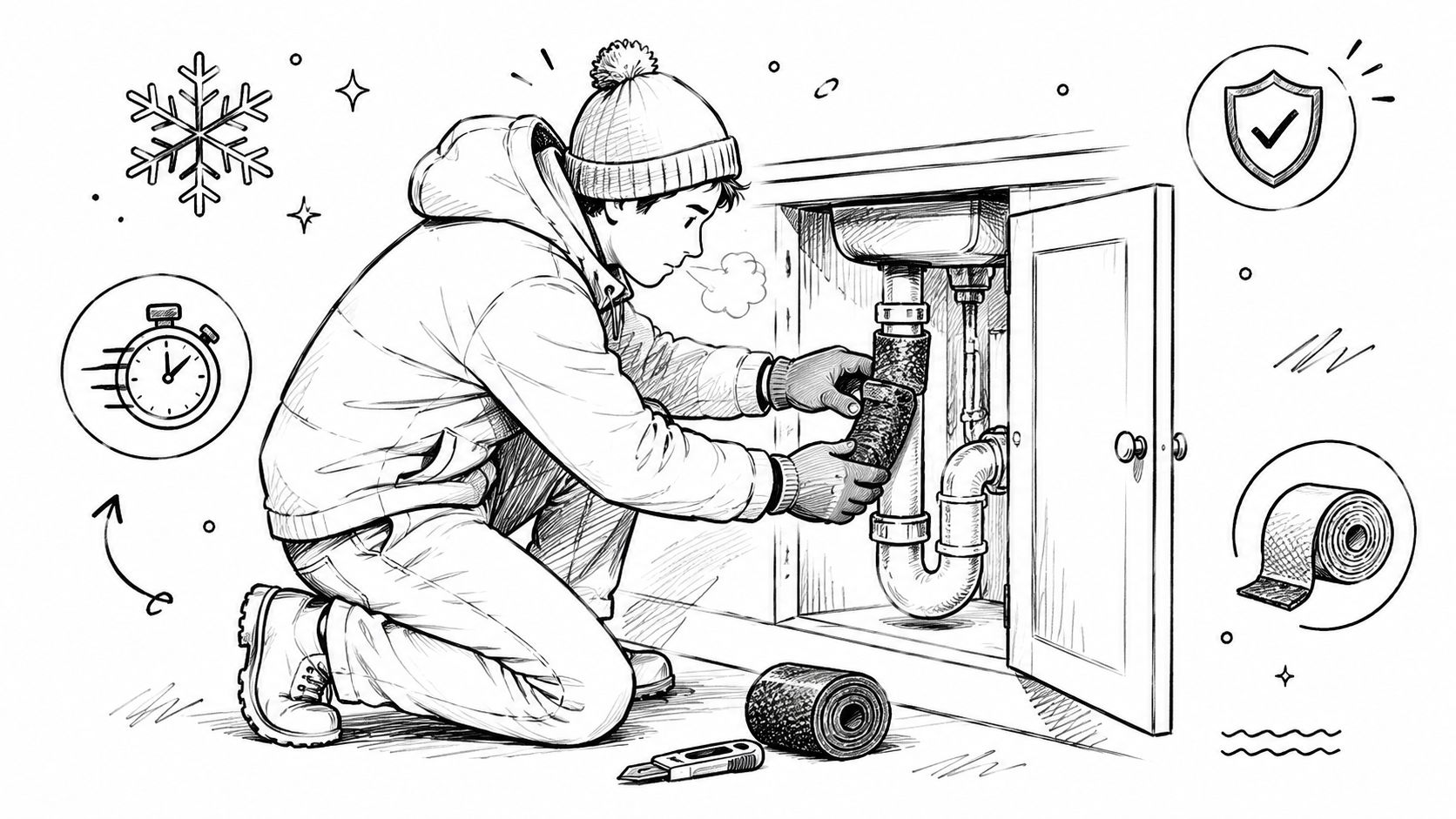
Choose insulation that matches the location
Not all insulation does the same job. For accessible straight pipe runs, foam sleeves are often the cleanest first step. For higher-risk areas, especially where temperatures stay low for longer, technical guidance for homes in cold conditions recommends UL-listed pipe sleeves or UL-listed heat tape/cable with thermostat controls, especially in attics, crawl spaces, and garages, because standard insulation alone can fail in a hard freeze. That same guidance notes a benchmarked 88% success rate when homeowners combine maintaining heat, insulating exposed plumbing, and dripping faucets during cold snaps according to Travelers' frozen pipe prevention guidance.
What works well:
- Foam pipe sleeves: Good for accessible, straight indoor pipe runs where the main issue is moderate cold exposure.
- UL-listed heat tape or heat cable with thermostat controls: Better for high-risk sections near exterior walls, crawl spaces, or other consistently cold zones.
- Properly sealed insulation joints: Important at elbows, tees, and valve bodies where heat loss often gets missed.
What doesn't work well:
- Loose wrapping with scraps: A towel draped over pipe isn't real protection.
- Incomplete coverage: One exposed elbow can defeat an otherwise insulated run.
- Improvised electrical heating products: If it isn't designed and listed for pipe protection, don't use it.
Don't just cover the pipe. Protect the vulnerable points where cold air gets behind the insulation.
Seal the cold air pathways
This step gets skipped all the time, and it's one of the reasons winter pipe prevention fails. If outside air can reach the pipe, insulation has less to work with.
Check these areas carefully:
- Foundation penetrations where water, cable, or gas lines enter.
- Drafts around windows near sinks or laundry plumbing.
- Access hatches and crawl space entries that don't close tightly.
- Gaps under cabinets where plumbing enters an exterior wall.
- Poorly sealed garage wall penetrations around hose bibs and utility runs.
Use caulk or foam sealant where appropriate, but be selective. Seal air leaks without burying shutoffs, tags, or serviceable fittings.
For homeowners who want a broader preventive routine, this residential plumbing maintenance guide is a useful companion because frozen-pipe prevention works best as part of regular maintenance, not as a one-night panic response.
Build a simple cold-weather routine
Once your home is winterized, keep a repeatable checklist:
- Disconnect and drain hoses: Leaving a hose attached traps water in the bib and connected piping.
- Know your main shutoff location: In an emergency, speed matters.
- Recheck insulation every autumn: Pipe sleeves shift. Tape loosens. Access covers get removed and forgotten.
- Pay attention to changes after renovations: New cabinets, venting, or wall openings can create new cold spots.
If you want to know how to prevent frozen pipes, this is the part that pays off. Most serious winter plumbing damage starts with a missed weak point that was visible beforehand.
Immediate Actions for a Sudden Cold Snap
If the cold snap is already on the way, forget perfect. Do the fast, high-value steps first.
Square One Insurance reports that frozen pipe claims in Canada surged by 191% during recent extreme cold snaps, and BC homeowners are advised to keep indoor temperatures at at least 16°C (61°F) even at night or when the home is unoccupied, especially in homes with crawl spaces or unheated attics, according to Square One's frozen pipe prevention advice.
Do these things the same day the temperature drops
Start with the thermostat. Keep the house consistently warm. Don't let daytime comfort fool you into turning it down sharply overnight.
Then move to the plumbing itself:
- Let vulnerable faucets drip: For pipes likely to freeze, run a pencil-thin stream from both hot and cold sides. Commercial restoration guidance recommends about one drop per second during extreme cold below 20°F (-6°C), with interior areas maintained no lower than 55°F (12.8°C) according to Commercial Restoration's frozen pipe guidance.
- Open cabinet doors: Kitchen and bathroom sink cabinets on exterior walls need room air to circulate around the pipes.
- Close garage doors: Attached garages often cool the plumbing routes beside or above them.
- Disconnect outdoor hoses if you haven't already: Even late is better than never.
- Check the coldest parts of the home: Basements, crawl spaces, utility rooms, and corners far from the furnace matter most.
Vince Singh of Clearly Plumbing in Port Coquitlam, cited by Square One, specifically points to insulating exposed water lines and disconnecting garden hoses as two of the most effective preventive moves. He also recommends heat tape for at-risk pipes, plus keeping garage doors closed and cabinet doors open so warm indoor air reaches exposed plumbing in attached garages and unheated basement areas.
A quick real-world setup
Take a typical Richmond bungalow with a crawl space and a kitchen line on the north wall. If the weather warning comes in this afternoon, do this tonight:
- Set the thermostat to hold steady at 16°C or above.
- Open the sink cabinet under the kitchen and bathroom vanities on outside walls.
- Start a very slow drip on the affected faucets, hot and cold.
- Check that the garage door is fully shut.
- Remove the garden hose and verify the exterior bib isn't under pressure.
If you're leaving town during a freeze, ask someone to check the house. A frozen line that goes unnoticed becomes a burst line.
If you're not sure where the main shutoff is before the temperature drops, sort that out now. This guide on how to shut off the water main safely is worth reading before you need it in a panic.
The Unfreeze Protocol What to Do When a Pipe Is Frozen
A frozen pipe isn't always a burst pipe. You still have a window to prevent a flood, but you need to slow down and handle it properly.
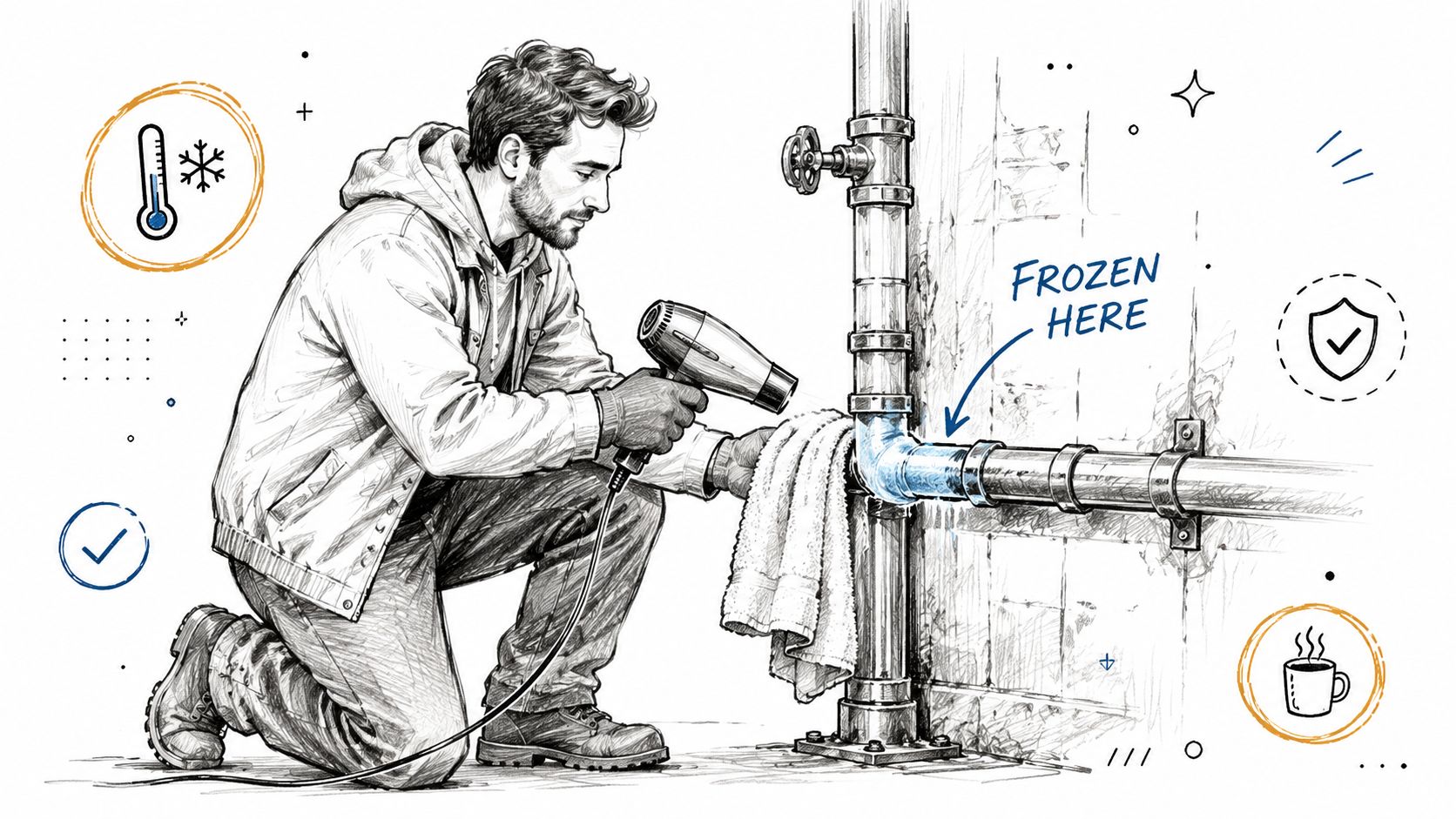
How to confirm a pipe is frozen
The usual signs are straightforward:
- A faucet that suddenly produces little or no water
- One fixture affected while others still work
- Frost on visible pipe
- A section of pipe that feels unusually cold compared with the rest of the run
- Bulging or visible stress at fittings
A practical example. If the bathroom sink on an outside wall stops running but the bathtub and toilet still have water, the frozen section is often in that sink's supply line, not the whole house.
How to thaw an accessible pipe safely
First, open the affected faucet. That relieves pressure and gives melting water somewhere to go.
Then apply gentle, even heat to the exposed section. Start near the faucet end and work back toward the colder section. Safe options include a hairdryer, warm towels replaced regularly, or a heating pad used carefully on an accessible pipe. Keep heat moving. Don't concentrate it on one fitting.
Use this sequence:
- Open the tap first
- Warm the pipe gradually
- Watch every joint and fitting
- Stop if you see moisture
- Keep the faucet slightly running once flow returns
The short video below shows the kind of calm, controlled approach homeowners should think in terms of before rushing in with the wrong tool.
Never use an open flame, torch, or propane heater on plumbing. The pipe, nearby framing, insulation, and wall finishes all add risk.
When to stop and call a plumber
If the frozen section is inside a wall, ceiling, or another inaccessible cavity, stop there. The American Red Cross advises calling a licensed plumber when a frozen pipe is not accessible or can't be safely thawed. That caution lines up with a 2024 BC Safety Authority report showing that 52% of DIY pipe thawing attempts in urban areas resulted in secondary water damage due to improper wall access or overheating, as summarised in this report on preventing frozen pipes and DIY thawing risks.
That matters in Vancouver and Surrey where a lot of older homes hide supply lines in walls with limited access. Cutting drywall blindly, overheating a wall cavity, or trying to force warm air into an enclosed space can turn a manageable freeze into a bigger repair.
Call for help immediately if:
- You can't reach the frozen section safely
- The pipe has already split or is leaking
- The frozen area is near electrical wiring
- The line is in a strata wall or shared building section
- You've restored flow but now see dampness, staining, or dripping
Safe thawing is about restraint as much as action. If you can see the pipe and warm it gently, proceed carefully. If you can't, professional access and controlled diagnosis are the right next step.
Essential Tools Materials and Estimated Costs
This is the part homeowners often overcomplicate. You don't need a truck full of equipment to improve your odds. You need the right materials for the vulnerable points in your home.
Because verified pricing data isn't provided here, the table below uses qualitative cost ranges only. Actual pricing varies by brand, length, and retailer across Greater Vancouver.
Winterization Toolkit Costs
| Material | Best For | Estimated Cost (CAD) |
|---|---|---|
| Foam pipe sleeves | Straight, accessible pipes in basements, crawl spaces, and utility rooms | Low |
| UL-listed heat tape or heat cable with thermostat controls | High-risk pipes in crawl spaces, garages, attics, and along exterior walls | Moderate |
| Insulation tape or fastening tape approved for pipe insulation | Sealing sleeve joints, elbows, and transitions | Low |
| Exterior faucet cover | Outdoor hose bibs exposed to wind and cold | Low |
| Caulk | Sealing small air leaks around windows, penetrations, and trim near plumbing | Low |
| Expanding foam sealant | Larger gaps around service entries and foundation openings | Low to moderate |
| Warm towels or reusable heating pad | Gentle thawing of accessible frozen sections | Low |
| Hairdryer | Controlled thawing of visible indoor pipe sections | Low to moderate |
| Flashlight or headlamp | Crawl space, under-sink, and garage inspections | Low |
| Thermometer for cold zones | Checking temperatures in crawl spaces, garages, and utility rooms | Low |
| Work gloves and knee pads | Safer inspections in crawl spaces and unfinished areas | Low |
What's worth buying first
If the budget is tight, start with the items that solve the most common local failures:
- Foam sleeves for accessible lines
- Caulk or foam sealant for obvious air leaks
- An exterior faucet cover
- A reliable hairdryer reserved for thawing, not high-heat improvisation
If you know a pipe run is especially exposed, move straight to UL-listed heat tape or cable with thermostat controls rather than hoping basic sleeve insulation will handle a hard freeze.
What not to waste money on
Skip products that don't clearly state they're intended for plumbing freeze protection. Decorative wraps, random fabric covers, and unlisted heating gadgets don't offer dependable protection. They also create confusion later when someone assumes the pipe is protected and it isn't.
A practical example. For a Delta home with one vulnerable crawl-space run and one exposed outdoor bib, a small focused kit usually beats a basket of miscellaneous products. Sleeve the crawl-space line properly, seal the draft at the foundation penetration, cover the exterior bib, and keep a hairdryer ready for emergency thawing.
Year-Round Maintenance and When to Call Encano
Frozen-pipe prevention isn't one job in November. It's a small routine repeated at the right times. That's what keeps a cold snap from becoming a flood claim.
The Government of British Columbia says thermostats should be set no lower than 12°C (54°F) to help prevent pipes from freezing. The province also advises that after a burst pipe, the correct move is to shut off the main water valve and call a plumber for next steps, as outlined by BC Emergency Management guidance on frozen pipes.
The annual routine that prevents winter emergencies
For most homes, the repeatable checklist is simple:
- Autumn check: Disconnect hoses, inspect exposed pipe insulation, and look for new drafts.
- Before travel in winter: Keep the heat on, don't shut the house down too far, and have someone check in.
- During freezes: Focus on vulnerable zones instead of assuming the whole house is equally protected.
- After renovations: Reinspect any area where walls, cabinets, venting, or access openings changed.
For strata and multi-unit properties, the challenge is consistency. One cold utility room, one neglected exterior line, or one inaccessible drafty crawl space can affect multiple units. Shared buildings need clear shutoff access, documented vulnerable areas, and a plan for vacant suites.
Call for help when the risk is no longer a DIY problem
Some situations are not worth experimenting with:
- Frozen pipes inside walls or ceilings
- Burst pipes or active leaks
- Complex crawl-space insulation work
- Repeated freezing in the same location
- Properties with older plumbing routes you can't fully inspect
If a pipe freezes twice, treat it as a building-condition problem, not bad luck.
Knowing how to prevent frozen pipes is partly about materials and temperature settings. Mostly, it's about recognising weak points early and not waiting until water is on the floor to take them seriously.
If you need help with a frozen pipe, a burst line, a pre-winter inspection, or a hard-to-access crawl-space plumbing issue, contact Encano Plumbing & Drainage Ltd.. They serve Vancouver, Richmond, Burnaby, New Westminster, Delta, Surrey, and nearby communities with scheduled service and 24/7 emergency response. If water is already leaking, shut off the main supply first, then call right away so a licensed plumber can take over safely.