

If you're reading this because the shower went lukewarm, the tank is making odd noises, or there's water on the floor around the mechanical room, you're in the same spot a lot of Greater Vancouver owners and managers end up in. The problem usually starts small. A little less hot water. A faint popping sound. A drip that only shows up now and then.
A proper service hot water tank appointment is meant to catch those issues before they turn into a flooded utility room, a safety problem, or an expensive rushed replacement. In Vancouver, that conversation also has local wrinkles that many generic guides miss: permit rules, low-sediment water, and the coming shift away from replacing gas tanks with new gas models in the City of Vancouver.
Table of Contents
- Warning Signs Your Hot Water Tank Needs Service
- What a Professional Hot Water Tank Service Includes
- Hot Water Tank Service Costs and Timelines in Vancouver
- DIY Maintenance vs Calling a Professional Plumber
- Repair or Replace Comparing Tank vs Tankless Water Heaters
- FAQs for Vancouver Homeowners and Property Managers
- How often should a tank be serviced in a Vancouver condo or house
- What temperature should stored hot water be set to
- What does a strata manager need to watch for
- Is a standard tank enough for a small business
- What if a gas tank fails close to the 2027 rule change
- Do newer tanks offer any efficiency gain over older ones
- What if my property is in California, not Vancouver
Warning Signs Your Hot Water Tank Needs Service
Most service calls start with something the owner notices before anything fails. The tank rarely gives no warning at all. It usually starts talking to you through sound, water quality, or visible wear.
If the unit has been reliable for years and suddenly behaves differently, take that seriously. Small changes are often the best time to book service, because you're still dealing with a manageable repair instead of a full emergency.
Rumbling and Popping Noises
A healthy tank shouldn't sound like a kettle full of gravel. If you hear rumbling, popping, or crackling, there may be build-up on the bottom of the tank. That layer forces the burner or heating element to work through material that shouldn't be there, and the tank gets noisier as heating becomes less smooth.
In Greater Vancouver, the noise doesn't always mean the same thing it would in a harder-water region. Local water conditions matter. A proper diagnosis looks at the noise together with the tank's age, service history, recovery time, and whether the water output has changed.
Practical rule: New noise plus slower hot water recovery is a service call. New noise with water around the base is an urgent one.
Some owners try to ignore sound changes because the tank still produces hot water. That's a mistake. The tank can keep working while efficiency drops, parts wear faster, and a serviceable issue becomes a replacement issue.
Discoloured or Smelly Water
When hot water comes out rusty, cloudy, or with an unusual smell, don't assume the problem is somewhere else in the plumbing. The tank is one of the first places to check. Internal corrosion, a deteriorating anode rod, or stagnant conditions can all change what comes out of the tap.
A simple way to narrow it down is to compare hot and cold. If the cold water looks and smells normal but the hot side doesn't, the tank deserves immediate attention. If both sides are affected, the issue may be broader than the heater.
This is also where temperature matters. The BC Building Code recommendation for stored service hot water is aimed at safety as well as system health. If you're trying to understand one of the tank's key safety components, this guide on a water heater pressure relief valve is worth reviewing alongside a professional inspection.
Visible Leaks or Corrosion
A puddle around the tank isn't a symptom to watch for later. It's a reason to act now. The source could be a fitting, a valve, a connection above the tank, or the tank body itself. Those aren't equal problems. Some are repairable. Some mean the tank is at the end.
Look closely at what you can safely see without taking anything apart:
- At the fittings: Moisture at threaded or soldered connections may point to a local repair.
- At the relief discharge area: Water there can suggest a pressure or temperature control issue.
- At the bottom seam or body: Corrosion or leakage from the tank shell itself usually means replacement is near or unavoidable.
- On the venting area of a gas unit: Rust stains or heat damage deserve prompt inspection.
A practical example. A Richmond homeowner notices a small ring of water around a gas tank after laundry day and assumes it was a spill. Two days later, the puddle returns and there's rust at the lower jacket seam. That is not a wait-and-see situation. A plumber needs to determine whether the leak is from a nearby fitting or from the tank body before the unit lets go completely.
What a Professional Hot Water Tank Service Includes
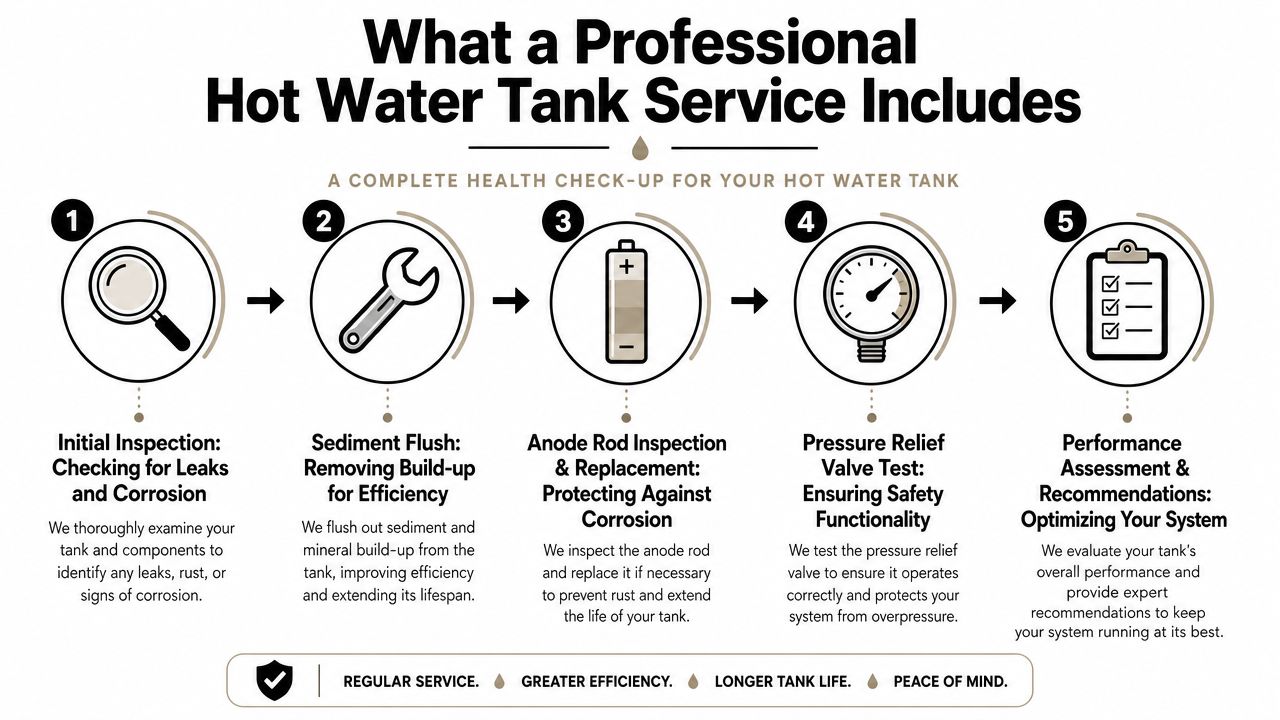
A proper service call answers three questions fast. Is the tank safe to keep running, what parts are wearing out, and what maintenance schedule makes sense for this building in Greater Vancouver.
The Initial Safety and Condition Check
The visit usually starts with a full visual inspection of the tank, the shutoff valve, water connections, venting on gas units, earthquake strapping where applicable, and the area around the base. In Vancouver homes and rental properties, I also want to see whether the installation still matches current code expectations and whether any older work will cause trouble during a future repair or replacement.
Tank temperature gets checked as part of that review. In BC, stored hot water is commonly kept at 60°C to reduce Legionella risk, but that setting has to be considered with the rest of the system, especially where mixing valves or anti-scald protection are part of the setup. A service visit should confirm the control is behaving as intended, not just that the dial is pointing to a number.
Small clues matter here. Rust at the draft hood on a gas tank, a slow weep at a connection, heat marks near the burner compartment, or a relief line that was never run properly all change the recommendation.
Anode Rod, Relief Valve, and Performance Checks
The anode rod is one of the parts that determines how long a tank body lasts. It sacrifices itself so the steel tank corrodes more slowly. If the rod is badly depleted, the tank can look fine from the outside while the inside is already well into decline.
A plumber may inspect or recommend replacement of the anode rod based on the tank's age, access, and condition. The service should also include a check of the temperature and pressure relief valve, burner operation on gas models, thermostat response, and signs that the tank is overheating, short-cycling, or building pressure when it should not. Those checks matter more than a quick drain-and-go visit.
For owners trying to budget ahead, this guide on how much a hot water tank costs in Vancouver helps put service decisions in context. A modest maintenance visit can be worthwhile if it prevents an emergency replacement, but there is no sense putting money into a tank that is already near the end of its service life.
A tank can still produce hot water and still fail a sensible safety inspection.
For homeowners who want a straightforward booked visit rather than guessing through the process, Encano Plumbing & Drainage Ltd. is one local option that handles water heater maintenance and leaking tank service in Greater Vancouver.
Why Flushing in Vancouver Needs Judgment
This part is often oversimplified online. Metro Vancouver water is generally low in sediment compared with many other regions, so a blanket annual flush schedule is not always the smartest plan. A service plumber should look at the tank's age, performance, water conditions, and maintenance history before recommending how often to drain or flush it.
That is especially true on older tanks. An aggressive flush on a neglected unit can stir up debris, expose weak components, or create a leak that was not far off anyway. On a newer or well-maintained tank, a controlled drain may still make sense. The point is to match the work to the tank, not to follow a generic checklist written for a different city and different water.
Local rules matter too. If a gas tank is nearing replacement age, service should be looked at in light of permit requirements and the coming 2027 municipal restrictions affecting some gas appliance replacements in parts of the region. In plain terms, the right maintenance decision in Vancouver is not just about the tank's condition today. It is also about whether spending on repairs now still makes sense if replacement options may tighten later.
Hot Water Tank Service Costs and Timelines in Vancouver
A common Vancouver call goes like this. The tank is still making hot water, but recovery is slower, there is dampness near the base, or a property manager wants to deal with the unit before a weekend failure. At that point, cost depends on whether the job stays at the service level or turns into a repair or replacement.
What You Can Expect to Pay
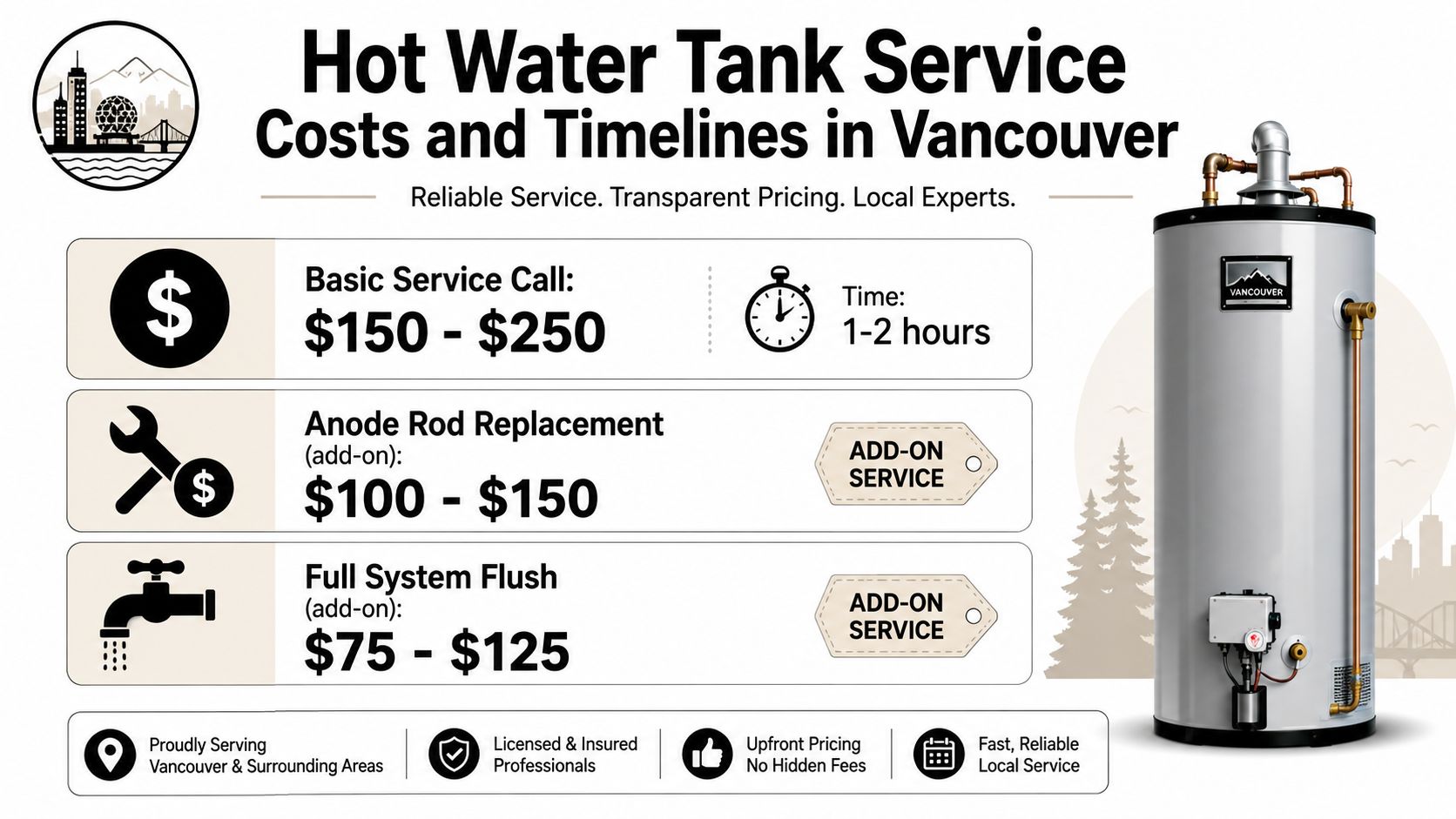
In Greater Vancouver, a booked service visit usually costs far less than a full replacement, but the final invoice depends on what the plumber finds on site. A simple inspection and maintenance appointment is one price. A failed valve, drafting issue, or code correction changes the scope quickly.
Replacement is a separate budget decision. If you are comparing those numbers in advance, this local guide on how much a hot water tank costs in Vancouver gives a useful baseline for tank replacement pricing versus service work.
The practical point is simple. If the tank is still operating and the problem is caught early, service or a targeted repair is often the cheaper path. If the tank body is leaking or the unit is already near the end of its expected life, spending more on repeated visits can stop making financial sense, especially with permit and fuel-choice questions becoming more important in parts of the region ahead of the 2027 gas replacement restrictions.
What Changes the Final Price
Price is driven by site conditions as much as by the tank itself.
| Factor | Why it affects cost |
|---|---|
| Tank type | Gas and electric tanks require different testing, safety checks, and parts. |
| Access | Tight utility rooms, crawl spaces, and basement corners add labour time. |
| Age and condition | Corroded valves, old connectors, or marginal venting can turn a routine visit into a repair call. |
| Permit and code requirements | Replacement work may need permits, and any deficiencies found may need correction before the job can be completed. |
| Timing of the call | Emergency, evening, or weekend service usually costs more than scheduled daytime work. |
In Vancouver, water quality also affects service decisions. Because Metro Vancouver water is relatively low in sediment, many tanks do not build heavy debris the way tanks do in harder-water regions. That can keep routine maintenance simpler on some units, but it does not reduce the importance of checking safety controls, venting, shutoffs, and leak conditions.
How Long a Visit Usually Takes
A standard service appointment is usually completed in one visit if access is clear and no major defect is found. Repairs take longer if parts are needed or if the plumber has to correct related issues before putting the tank back into regular use.
Replacement takes more time than owners often expect. The old tank has to be drained and removed, the new one set and connected, the system tested, and the installation brought into line with current code. If venting, seismic strapping, shutoff valves, or drain arrangements need updates, the schedule can stretch beyond a basic swap.
For homeowners and property managers, a few steps keep the appointment efficient:
- Clear the work area: Leave enough room around the tank for safe access.
- Share the tank's age and symptoms: That helps the plumber arrive with the right expectations and common parts.
- Plan around occupancy: In rental properties or busy households, schedule before the tank fails so hot water disruption stays manageable.
- Budget for findings: Older Vancouver tanks often come with at least one surrounding issue that needs attention, even if the heater itself is the original reason for the call.
The cheapest service call is usually the planned one, booked while the tank is still working and before a small issue turns into water damage or an urgent replacement.
DIY Maintenance vs Calling a Professional Plumber
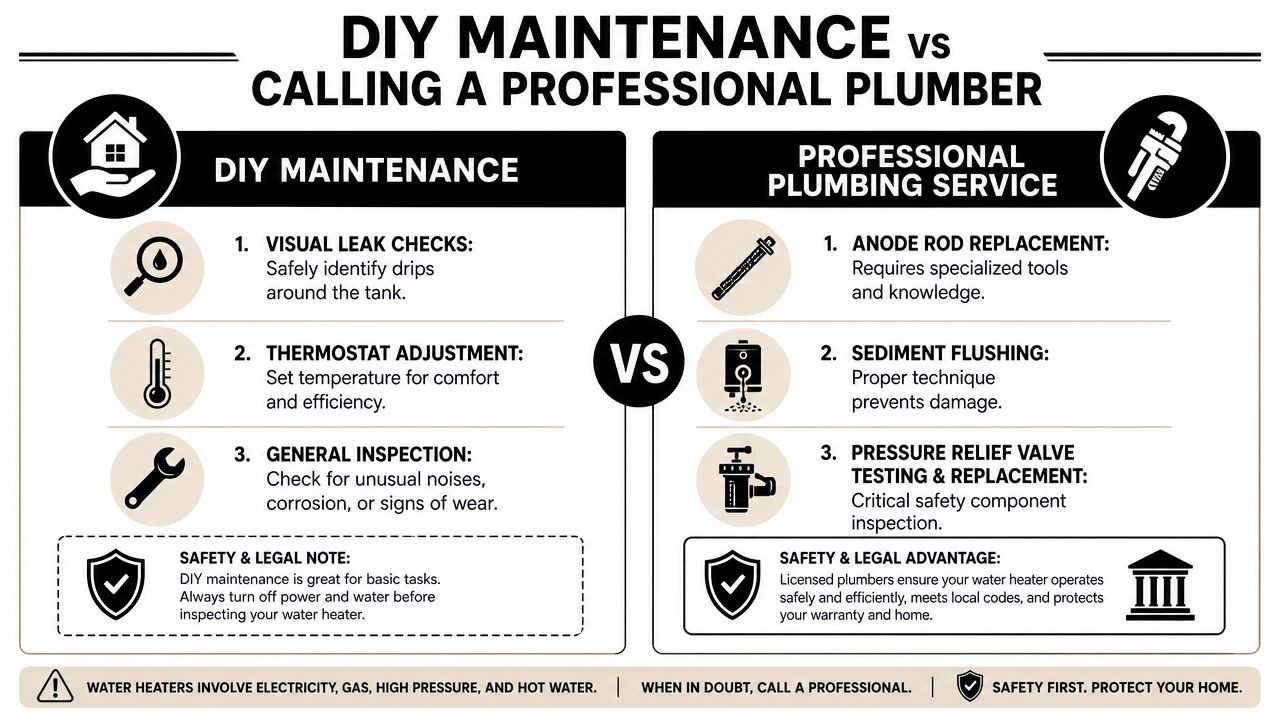
Some tank upkeep is perfectly reasonable for an owner to handle. Some is not. The line should be drawn based on safety, legality, and whether the task affects gas, pressure control, or replacement work.
Too many problems start with good intentions and the wrong level of confidence.
What You Can Safely Do Yourself
A homeowner or site staff member can usually handle basic observation without creating new risk.
- Look for visible water: Check around the base, nearby valves, and exposed connections for drips or moisture.
- Pay attention to changes: Notice noise, reduced hot water, odours, or a slower recovery after heavy use.
- Keep the area clear: Don't crowd the tank with storage, paint, cleaners, or combustibles.
- Check the obvious first: If there's no hot water, confirm power or fuel supply hasn't been interrupted before assuming the tank has failed.
These checks are useful because they help you call with better information. They don't replace service. They help the plumber arrive prepared.
What Should Never Be DIY
Gas work is the clearest line in BC. Gas appliance installations, including hot water tanks, must be performed by a licensed gas fitter (Class B or higher), as noted in this BC installation guide for hot water heaters. If the job involves a gas line, combustion setup, or replacing a gas unit, that is licensed trade work.
Replacement also triggers legal requirements. In Vancouver and across the Lower Mainland, a permit is legally required for all new water heater installations and replacements before work begins, and skipping that step can lead to fines and may void home insurance if there's a leak or fire, according to Lower Mainland water heater permit requirements.
That means these tasks belong to a professional:
- Replacing the tank: This is not a DIY weekend project.
- Working on gas connections or burners: Licensed gas work only.
- Replacing a temperature and pressure relief valve: It is a critical safety device and must be handled correctly.
- Changing venting or combustion components: Improper work here creates serious safety issues.
- Pulling permits and closing compliant installation details: This is part of doing the job properly, not paperwork after the fact.
A practical example. A Surrey landlord hires a handyman to swap out a leaking gas tank in a rental suite to save money. That shortcut creates two separate risks at once. The gas work isn't legal without the right licence, and the replacement shouldn't proceed without the required permit path. If something goes wrong later, the savings disappear quickly.
Repair or Replace Comparing Tank vs Tankless Water Heaters
A common Vancouver call goes like this. The tank still makes hot water, but it has started acting old. Maybe a valve is leaking, recovery feels slower, or you've paid for two different repairs in the last year. At that point, the primary question is not just "can it be fixed?" It is whether another repair is the smart use of money given the unit's age, your building's demand, and the replacement options you may be dealing with in Vancouver over the next few years.
When Repair Still Makes Sense
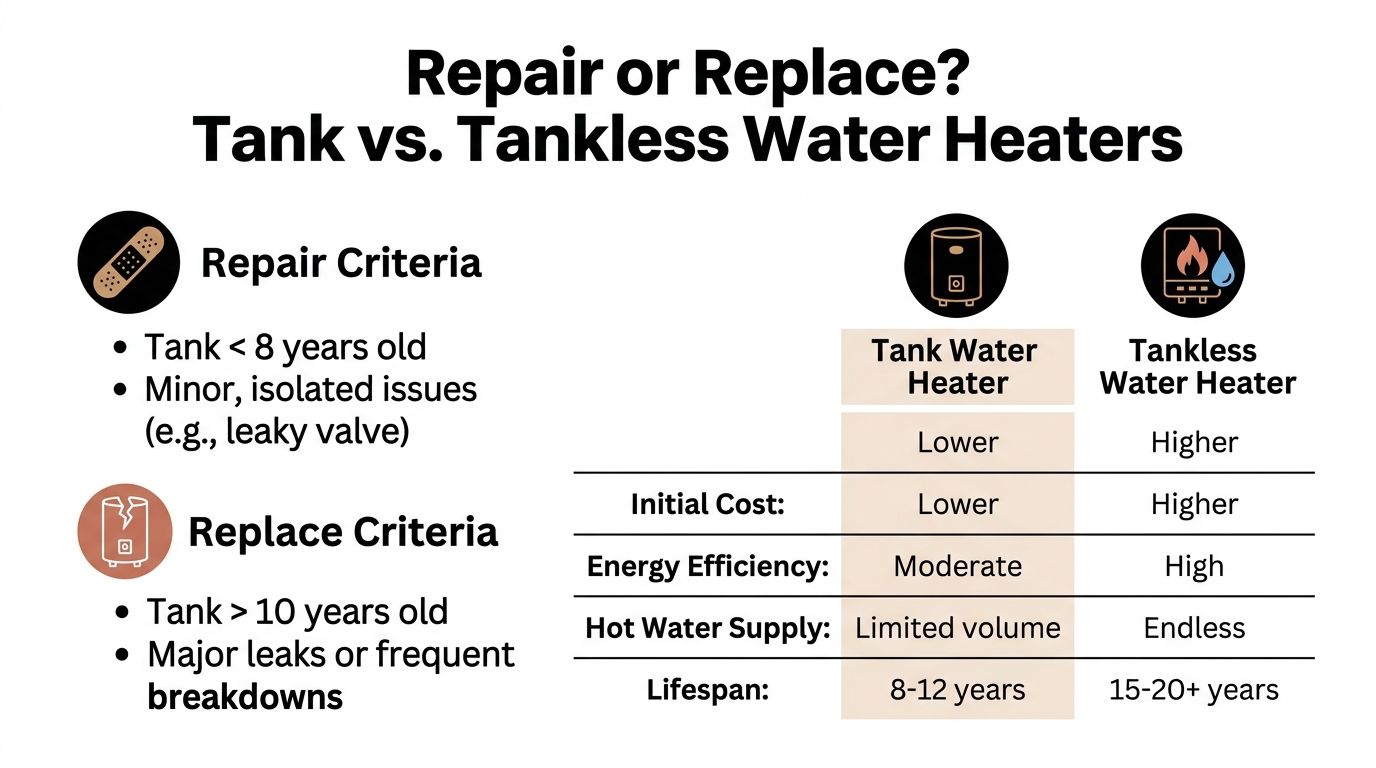
A repair is usually reasonable if the problem is isolated and the tank itself is still in good shape. That can include a failing control, a leaking connection, or a valve issue where the rest of the system checks out well.
The math changes once the tank body is deteriorating.
If water is coming from the tank shell, the lower seam, or corrosion has become obvious, replacement is usually the practical call. The same goes for units that keep failing in different ways. One repair can be normal. A string of unrelated repairs often means the heater is nearing the end of its useful life and you are paying to postpone replacement for a short window.
This quick table is how I would frame it on site:
| Situation | Better direction |
|---|---|
| Isolated fault and tank body is still sound | Repair may make sense |
| Leak from tank body or lower seam | Replace |
| Multiple service calls for different issues | Replacement is usually the better spend |
| Planned renovation, suite upgrade, or equipment change | Compare replacement options now |
Tank and Tankless Trade-Offs
Comparing tank and tankless systems shows a clear split. A standard tank is usually easier and less expensive to replace, especially if the home already has a straightforward tank setup. Tankless can be a good fit, but the installation is often more involved and the upfront investment is higher.
That difference matters in Greater Vancouver because the right answer depends heavily on the property.
A detached house with high hot water demand, limited floor space, and long-term ownership plans may justify tankless. A rental property or condo unit may be better served by a direct tank replacement that keeps costs predictable and avoids unnecessary rework. I also tell owners to think about serviceability. Tankless units offer on-demand hot water, but they have more installation variables, and future maintenance needs to be done properly.
Local water quality plays into this too. Metro Vancouver's water is relatively low in sediment compared with many other regions, which can be easier on storage tanks than generic national guides suggest. That does not mean every older tank should be repaired. It does mean replacement decisions should be based on the actual condition of the unit, not on maintenance advice copied from harder-water markets.
A simple side-by-side view helps:
Tank water heater
- Lower upfront replacement cost: Usually the fastest path back to hot water.
- Straightforward fit in many homes: Often works with the existing layout and connections.
- Stored supply: Good for typical household use, with a fixed capacity limit.
Tankless water heater
- Higher installation cost: Better suited to owners planning longer-term use of the property.
- On-demand hot water: Useful for households that regularly outpace a tank.
- Smaller footprint: Helpful in tight utility rooms or where storage space matters.
If you're weighing layouts, operating style, and installation implications, this local comparison of traditional vs tankless water heaters is a useful starting point.
A quick visual explainer can help frame the choice:
Why Vancouver Owners Need to Think Ahead
For owners in the City of Vancouver, gas equipment planning deserves more attention now than it did a few years ago. Municipal rules around decarbonization are changing, and the replacement path for an aging natural gas tank may not stay as simple as swapping in another gas unit.
Current guidance indicates that, starting in 2027, the City of Vancouver is expected to restrict like-for-like replacement of certain natural gas water heaters and steer owners toward electric or heat pump options, according to Vancouver's 2027 natural gas hot water tank rules. Owners should verify the current rule set and permit requirements at the time of replacement, because timelines and implementation details can change.
This affects repair decisions today. If a gas tank in Vancouver proper is already old and starting to cost money, a short-term repair may still leave you facing a different replacement standard at the next failure. For some homeowners and property managers, that is a good reason to plan the upgrade before the heater dies on a weekend or during tenant turnover.
A practical example. A Vancouver owner has an older gas tank with a repairable valve leak. If the rest of the heater is solid, fixing the valve can be reasonable. If the unit is tired overall, replacement planning usually makes more sense than putting fresh money into a system that may soon need a different technology path anyway.
FAQs for Vancouver Homeowners and Property Managers
How often should a tank be serviced in a Vancouver condo or house
A two-bedroom condo in Yaletown, a detached house in East Vancouver, and a rental duplex in Burnaby do not put the same load on a hot water tank. Service intervals should reflect the building, the number of occupants, the age of the tank, and what the last inspection found.
In Greater Vancouver, our municipal water is generally low in sediment compared with many other parts of Canada. That often means a tank does not build up debris as fast as owners expect from generic online advice. It does not mean maintenance can be ignored. I still look for early corrosion, burner issues, venting problems, valve wear, and signs of small leaks that owners usually miss.
A practical schedule is simple. Have the tank checked regularly, then adjust the timing based on condition instead of following a one-size-fits-all flushing rule.
What temperature should stored hot water be set to
For tank systems, stored hot water is typically kept at 60°C (140°F) to reduce bacterial risk, including Legionella. In practice, the safe setup depends on the full system, not just the number on the dial.
Stored temperature and fixture temperature are separate issues. A tank can store hotter water while mixing or tempering controls manage delivery temperature at taps and showers. That matters in houses, and it matters even more in rental and strata properties where scalding risk and code compliance both need attention.
Do not assume the dial is accurate. Older controls drift, and some tanks are not set where owners think they are.
What does a strata manager need to watch for
Strata managers should watch for patterns across suites and common equipment, not just one-off complaints. Three residents on the same stack reporting lukewarm water in the morning usually points to a shared system issue, not three separate plumbing calls.
The warning signs that deserve action are usually straightforward:
- Repeated hot water complaints by area or time of day
- Moisture, rust staining, or recurring puddling in the mechanical room
- A change in burner noise, recovery time, or cycling
- Spotty maintenance records or no recent service history
- Tenant turnover periods where weak performance is easier to miss until move-in
I have seen Burnaby and New Westminster stratas defer these issues for months because the tank is still producing some hot water. That is how a manageable service call turns into an after-hours outage.
Is a standard tank enough for a small business
Sometimes. It depends on how the business uses hot water, not just the floor area.
A small office with one washroom and light kitchenette use can often run well on a standard tank. A hair salon, daycare, café, or food business usually has clustered demand and much less recovery time. In those spaces, the tank may be undersized even if fixture count looks modest on paper.
Property managers should review actual use patterns before replacing like for like. The wrong size costs money twice. First in poor performance, then again when the replacement has to be corrected.
What if a gas tank fails close to the 2027 rule change
If the property is in the City of Vancouver and the current water heater is natural gas, plan before failure. Waiting until the tank is dead usually means limited equipment choices, rushed permit decisions, and higher labour costs.
Vancouver has already tightened efficiency requirements for some projects. Effective February 28, 2025, major home renovations in Vancouver exceeding $150,000 are required to install higher efficiency water heaters instead of standard units, and starting January 1, 2027, that highest efficiency standard is expected to apply to all replacement water heaters in detached homes and duplexes regardless of renovation cost, according to the City of Vancouver efficiency standards update.
For Vancouver homeowners and landlords, the practical takeaway is clear. If a gas tank is already old, replacement planning should happen now, while there is still time to check electrical capacity, location constraints, venting changes, and permit requirements.
Do newer tanks offer any efficiency gain over older ones
Yes, in many cases they do. A newer tank can reduce standby loss, recover more consistently, and run more efficiently than an aging unit that has drifted out of spec.
That said, efficiency alone is rarely the best reason to replace a tank that is otherwise in good shape. In Vancouver, replacement decisions usually make more sense when efficiency gains are paired with age, repair history, reliability problems, or upcoming municipal rule changes on gas equipment.
What if my property is in California, not Vancouver
The service principles are similar, but the code rules are different. California has its own requirements for items such as seismic bracing, relief valve discharge piping, garage installations, and drainage pans in some locations, outlined in this California water heater code summary.
Use local code for the jurisdiction where the property sits. Advice for Vancouver or Burnaby should not be applied to Los Angeles or San Diego without checking local rules first.
If your tank is leaking, losing temperature, or due for a proper inspection, Encano Plumbing & Drainage Ltd. handles hot water tank service, repairs, and replacements across Vancouver, Richmond, Burnaby, New Westminster, Delta, Surrey, and nearby communities. For homeowners, landlords, and property managers, booking an assessment before a failure is usually the cheaper and safer move.