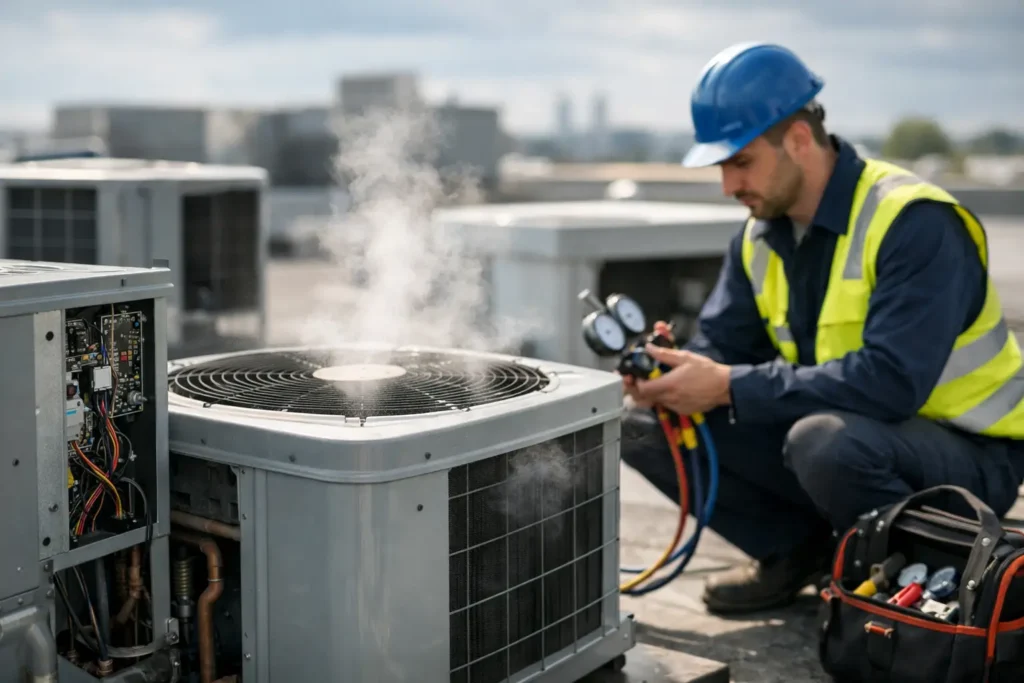
A rooftop unit that quits during a busy lunch rush, an office that is too hot for half the staff, or a furnace that starts making a new banging sound can quickly become more than a comfort issue. Commercial HVAC repair helps protect tenants, employees, customers, inventory, and the equipment budget behind your building. The right response is not always a full replacement, but waiting too long can turn a manageable repair into a disruptive shutdown.
For property managers and business owners, the goal is simple: restore safe, dependable heating and cooling with as little interruption as possible. That starts with knowing which symptoms need prompt attention, what a technician should investigate, and how regular maintenance can reduce surprises.
When Commercial HVAC Repair Should Not Wait
Commercial heating and cooling systems usually give warning signs before they fail completely. A single warm room may be caused by a thermostat setting, blocked vent, or temporary occupancy change. But recurring problems, uneven temperatures, unusual noise, or rising energy use deserve a professional assessment.
A system that runs constantly without reaching the set temperature is one of the clearest warning signs. It may have an airflow restriction, a failing component, refrigerant issue, dirty coil, or equipment that is no longer sized or performing correctly for the space. Continuous operation puts extra strain on motors and compressors while driving up utility costs.
Water around indoor equipment also needs attention. Condensate drains can clog, drain pans can crack, and a frozen evaporator coil can later create water damage as it thaws. In a commercial building, a small leak above a ceiling can affect insulation, electrical components, finishes, and tenant operations before it becomes visible.
Burning odors, gas smells, frequent breaker trips, or a carbon monoxide alarm are urgent safety concerns. Shut down the affected equipment if it is safe to do so, keep people away from the area, and contact the appropriate emergency service and qualified technician. Do not restart gas-fired or electrical equipment until it has been inspected.
Common Problems Behind HVAC Breakdowns
The same symptom can have several causes, which is why diagnosis matters. Replacing a part without finding the underlying issue can lead to repeat service calls and unnecessary expense.
Airflow Restrictions and Dirty Components
Clogged filters are a common source of weak airflow, frozen coils, overheated equipment, and poor indoor air quality. In a busy commercial setting, filters may need more frequent attention than the manufacturer’s basic schedule suggests. Restaurants, retail spaces near traffic, warehouses, and buildings with renovation activity often collect dust and debris faster.
Dirty evaporator and condenser coils also reduce heat transfer. The system has to work harder to cool or heat the building, and parts wear faster as a result. Coil cleaning is not cosmetic maintenance – it directly affects efficiency and equipment performance.
Thermostat, Controls, and Electrical Failures
Modern commercial systems depend on thermostats, sensors, relays, control boards, contactors, wiring, and sometimes building automation controls. A faulty sensor can make a space feel too warm or cold even when the main equipment is capable of operating properly. An electrical issue can cause intermittent shutdowns that are difficult to identify without proper testing.
These repairs require more than a quick reset. A qualified technician should check operating conditions, electrical connections, safety controls, and the sequence of operation to identify why the failure happened.
Refrigerant and Mechanical Issues
Low refrigerant is not a normal condition that simply needs topping up. It usually indicates a leak that should be located and repaired. Running cooling equipment with incorrect refrigerant levels can damage the compressor, one of the most expensive components in many commercial units.
Belts, bearings, blower motors, fan motors, capacitors, and compressors also wear with age. Some parts can be replaced quickly, while others may signal that the unit is approaching the point where replacement is more economical. The right decision depends on the equipment’s age, repair history, efficiency, condition, and the cost of downtime.
Repair or Replace: How to Make a Practical Decision
A repair is often the sensible choice when the equipment is relatively new, the issue is isolated, and the unit has otherwise been maintained well. Replacing a failed capacitor, motor, belt, control component, or drain assembly can restore reliable operation without the cost and disruption of a new installation.
Replacement becomes worth discussing when repairs are frequent, major components are failing, energy bills have climbed, or the system cannot keep up with the building’s needs. Equipment that uses outdated refrigerant or has extensive corrosion may also be costly to keep running.
There is no universal age when every commercial unit should be replaced. A well-maintained system may provide dependable service beyond its expected lifespan, while a neglected system may fail much earlier. A good service provider should explain the repair options clearly, identify the risks of delaying work, and provide straightforward pricing so you can make an informed decision.
What to Do Before the Technician Arrives
When a heating or cooling issue affects your business, a few simple details can make the service visit more efficient. Note when the problem started, which areas are affected, whether the system makes unusual sounds, and whether it runs continuously or shuts off unexpectedly. If your building has multiple units, identify which unit serves the affected area if possible.
Check accessible thermostat settings and confirm that electrical disconnects have not been switched off during other work. Replace filters only if your maintenance staff is trained and the procedure is safe for the equipment. Avoid opening panels, bypassing safety switches, or attempting refrigerant and electrical repairs. Those actions can create safety hazards and make the original problem harder to diagnose.
For tenant-occupied properties, communicate early. Let occupants know that service is scheduled, whether access is needed, and what temporary steps are being taken. Clear communication is especially valuable when repairs affect offices, retail areas, common spaces, or temperature-sensitive operations.
Preventive Maintenance Reduces Emergency Calls
Emergency repairs cannot be eliminated completely, but scheduled maintenance catches many problems before they interrupt operations. A practical maintenance plan should reflect the type of system, its age, operating hours, and building use. A small office with standard hours has different needs than a restaurant, medical facility, apartment building, or warehouse.
Regular visits commonly include filter checks, coil inspection and cleaning as needed, drain maintenance, belt and motor inspection, electrical testing, thermostat calibration, and a review of heating and cooling performance. For gas-fired equipment, combustion and safety checks are equally important.
Maintenance also creates a record of equipment condition over time. That history helps property managers budget for larger repairs or replacement instead of being forced into a rushed decision after a complete failure. It can also help identify recurring issues, such as a unit that repeatedly trips because of poor airflow or a drain line that clogs every cooling season.
Choosing a Commercial HVAC Repair Provider
Commercial work calls for a provider that understands both the equipment and the operational pressure around it. Fast arrival matters, but so does accurate troubleshooting, safe work practices, clear communication, and a repair plan that respects your tenants and business hours.
Ask whether the technician can explain the cause of the issue in plain language, not just name a failed part. You should understand what needs immediate repair, what can be monitored, and what maintenance may prevent the issue from returning. For larger work, clear estimates and realistic scheduling help you protect your budget and plan around disruptions.
In Vancouver and nearby communities, weather shifts, heavy rainfall, and mixed-use buildings can add pressure to mechanical systems and drainage around HVAC equipment. A local team familiar with commercial properties can coordinate practical service without treating every problem as a one-size-fits-all repair.
A reliable commercial HVAC system is part of how your building serves the people inside it. When performance changes, acting early gives you more options, less disruption, and a better chance of keeping a small problem from becoming the next emergency call.