
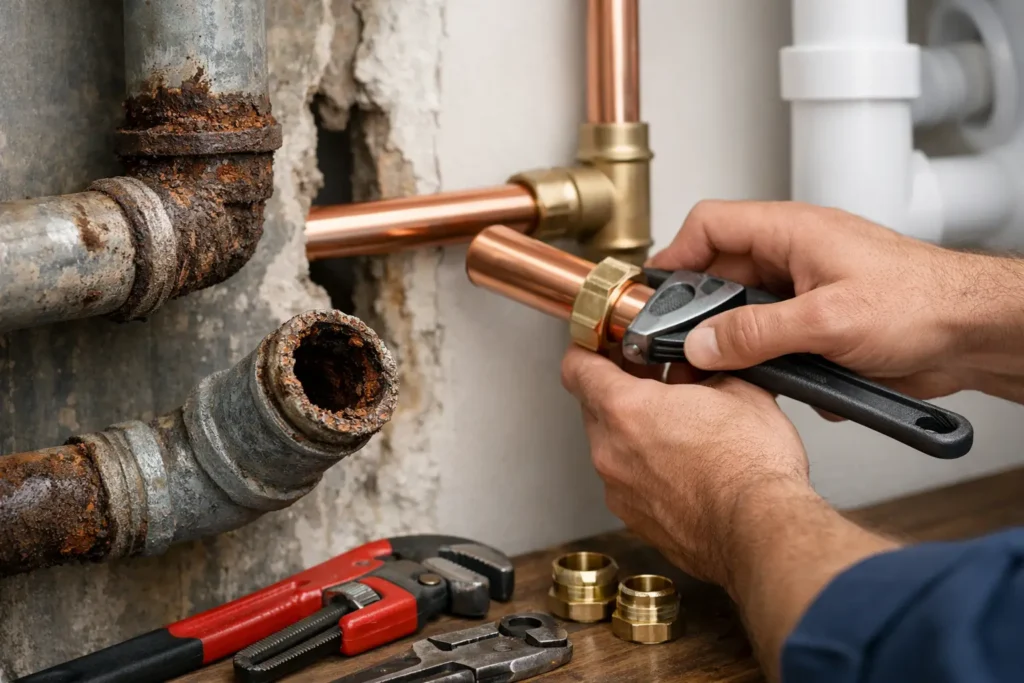
A glass of water that runs brown for a few seconds, a shower that has lost pressure, or a pinhole leak behind a wall can all point to the same aging-plumbing problem. This guide to replacing old galvanized pipes helps homeowners and property managers understand what is happening inside their plumbing, what replacement involves, and how to plan the work without unnecessary surprises.
Galvanized steel pipes were widely installed in homes built before the 1960s, although they can appear in properties from later decades as well. Their zinc coating was intended to slow rusting. Over many years, that coating breaks down and corrosion builds inside the pipe. The pipe may still look sound from the outside while its interior diameter has narrowed significantly.
Signs Your Galvanized Pipes Are Reaching the End
A sudden leak is the clearest warning sign, but it is not the only one. Internal corrosion often develops slowly, creating plumbing problems that feel unrelated at first. Water may take longer to reach a fixture, pressure may be weak at one faucet but acceptable at another, or sediment may clog showerheads and appliance screens.
Discolored water is another common concern. Yellow, brown, or reddish water can result from rust inside the piping, especially after water has been sitting overnight or after a period away from the property. If discoloration occurs only with hot water, the water heater may also need inspection. A professional can help separate a pipe issue from a water-heater issue before recommending major work.
Look for visible corrosion at exposed connections in basements, utility rooms, crawl spaces, or under sinks. Flaking metal, rust stains, damp spots, and fittings that appear swollen or crusted deserve attention. Repeated small leaks should not be treated as isolated repairs when the rest of the home has the same aging material.
For landlords and facility operators, recurring tenant complaints about low pressure, rusty water, or leak repairs are particularly meaningful. One repaired section can restore service temporarily, but it does not stop deterioration elsewhere in the original system.
Why Replacement Is Usually Better Than Repeated Repairs
A localized repair makes sense when a newer plumbing system has one damaged fitting or a clearly isolated failure. It becomes less cost-effective when galvanized piping is corroding throughout the building. Cutting out one leaking section may reveal thin pipe walls, heavily restricted flow, or connections that are close to failing.
Full or partial repiping is an investment, but it gives you a predictable system rather than a cycle of emergency calls, wall repairs, water damage cleanup, and tenant or family disruption. It can also improve water flow to showers, washing machines, dishwashers, and multiple fixtures used at the same time.
Replacement is especially worth considering before a kitchen remodel, bathroom renovation, flooring project, or new drywall installation. Opening finished surfaces twice is frustrating and expensive. Planning pipe work before cosmetic improvements protects your investment and gives installers better access.
A Guide to Replacing Old Galvanized Pipes: Start With an Inspection
The first step is not choosing a pipe material. It is determining the true scope of the existing system. A licensed plumber can inspect accessible supply lines, identify pipe materials, check pressure and flow, review the history of leaks, and look for corrosion at fittings. In some homes, galvanized pipe serves only a portion of the system, such as the main line or a branch feeding an older bathroom.
The inspection should also account for other aging components. Old shutoff valves, supply hoses, pressure regulators, water-heater connections, and drain piping may affect the project plan. Replacing pipes without addressing a failing main shutoff valve, for example, can leave a major weak point in an otherwise updated system.
For multi-unit buildings, identify where piping serves a single suite versus shared areas. Work may require coordination with owners, tenants, strata management, or building operations. A clear scope helps everyone understand access needs, water shutoff periods, restoration work, and scheduling.
Choosing Between PEX and Copper
Most residential repiping projects use PEX, copper, or a combination of both. The right choice depends on the property, local code requirements, installation conditions, budget, and the plumber’s assessment.
PEX is flexible plastic tubing that can often be routed through walls, ceilings, and crawl spaces with fewer connections than rigid pipe. Its flexibility can reduce the amount of opening and patching needed in some homes. It is also resistant to the internal rust that affects galvanized steel. PEX is commonly used for residential water-supply upgrades because it is practical and cost-conscious.
Copper remains a proven choice with a long service history. It is rigid, durable, and well suited to many plumbing applications. Copper can cost more in materials and labor, particularly where numerous fittings or difficult access are involved. Neither material is automatically best for every property. A professional recommendation should explain why a material and routing method suit your building rather than relying on a one-size-fits-all answer.
What the Repiping Process Looks Like
A well-planned repipe begins with mapping the routes for new hot- and cold-water lines. Plumbers look for the least disruptive paths through basements, crawl spaces, utility areas, closets, ceilings, and walls. Some openings are usually necessary, but experienced planning can limit them and avoid opening finished surfaces where another route is available.
Before work starts, ask how long water will be shut off, which rooms require access, and whether fixtures can remain usable at the end of each day. A single-family home may be completed relatively quickly, while a larger house, occupied apartment building, or commercial property requires a phased plan. The timeline depends on the number of fixtures, access conditions, pipe routing, permit requirements, and restoration needs.
The existing galvanized lines are disconnected or abandoned in place where appropriate, and new piping is installed, secured, and connected to fixtures. After installation, the system is pressure tested and checked for leaks before walls are closed. Any required inspections should be completed before drywall or other finishes are restored.
Do not assume the plumbing contractor will automatically handle painting, texture matching, tile repair, or cabinet work unless that is written into the scope. Clarifying restoration responsibilities early prevents confusion after the pipe work is complete.
Cost Factors That Matter More Than a Single Price
Repiping estimates can vary substantially, and a low number is not always a complete number. The size of the property matters, but access often matters just as much. An open basement is generally easier to work in than a home with finished ceilings, concrete walls, or plumbing buried behind custom cabinetry.
The number of bathrooms, kitchens, laundry areas, hose bibs, and water-using appliances affects labor and materials. So do upgrades to valves, water-heater connections, main supply lines, and pressure-control equipment. Permit fees, inspection requirements, after-hours scheduling, and drywall restoration can also change the final project cost.
A useful estimate identifies the areas being repiped, the proposed pipe material, what fixtures or valves are included, expected water interruptions, testing, permit handling, and what happens after wall openings are made. Transparent details make it easier to compare proposals fairly.
Protecting the Property During the Work
A professional plumbing crew should treat repiping as both a construction project and an occupied-home service call. Furniture and work areas need protection, water must be shut down carefully, and the team should communicate before entering bedrooms, suites, offices, or tenant spaces. For commercial and multi-family properties, scheduling work around business hours and resident needs can reduce disruption.
If active leaking is present, speed matters. Turn off the nearest fixture valve if possible, or use the main water shutoff if the leak cannot be controlled. Move valuables away from the affected area and contact a licensed plumber promptly. Water damage can spread beyond the visible leak, especially inside walls and ceilings.
For homeowners and managers in Vancouver, Richmond, and nearby communities, Encano Plumbing & Drainage can inspect aging supply lines, explain practical replacement options, and provide a clear plan for moving from failing galvanized pipe to reliable modern plumbing.
Aging pipes rarely become more convenient to replace with time. Addressing the warning signs before the next hidden leak gives you more control over the schedule, the budget, and the condition of the space you are working hard to maintain.