You turn on the kitchen tap and the water rises instead of disappearing. The dishes are stacked beside the basin, the P-trap is out of sight under the cabinet, and the first temptation is to pour a harsh drain cleaner into the standing water. Don't. A clogged sink is often a small fixture-level problem, but the wrong response can turn it into a leak, a chemical hazard, or a delayed sewer-line repair.
The right decision depends on where the blockage is, whether other fixtures are affected, and whether the clog returns after clearing. A cup plunger and trap cleaning can solve a shallow obstruction. Multiple slow drains, gurgling, sewage odours, or repeated backups call for a plumber for clogged sink service and a proper diagnosis.
Table of Contents
- Immediate Actions When Your Sink Won't Drain
- DIY Fixes Versus Calling a Professional Plumber
- How to Choose a Qualified Local Plumber
- Expected Costs and What Happens During the Service Call
- Preventing Repeat Sink Clogs in Your Home
- Your Action Plan for a Clogged Sink
Immediate Actions When Your Sink Won't Drain
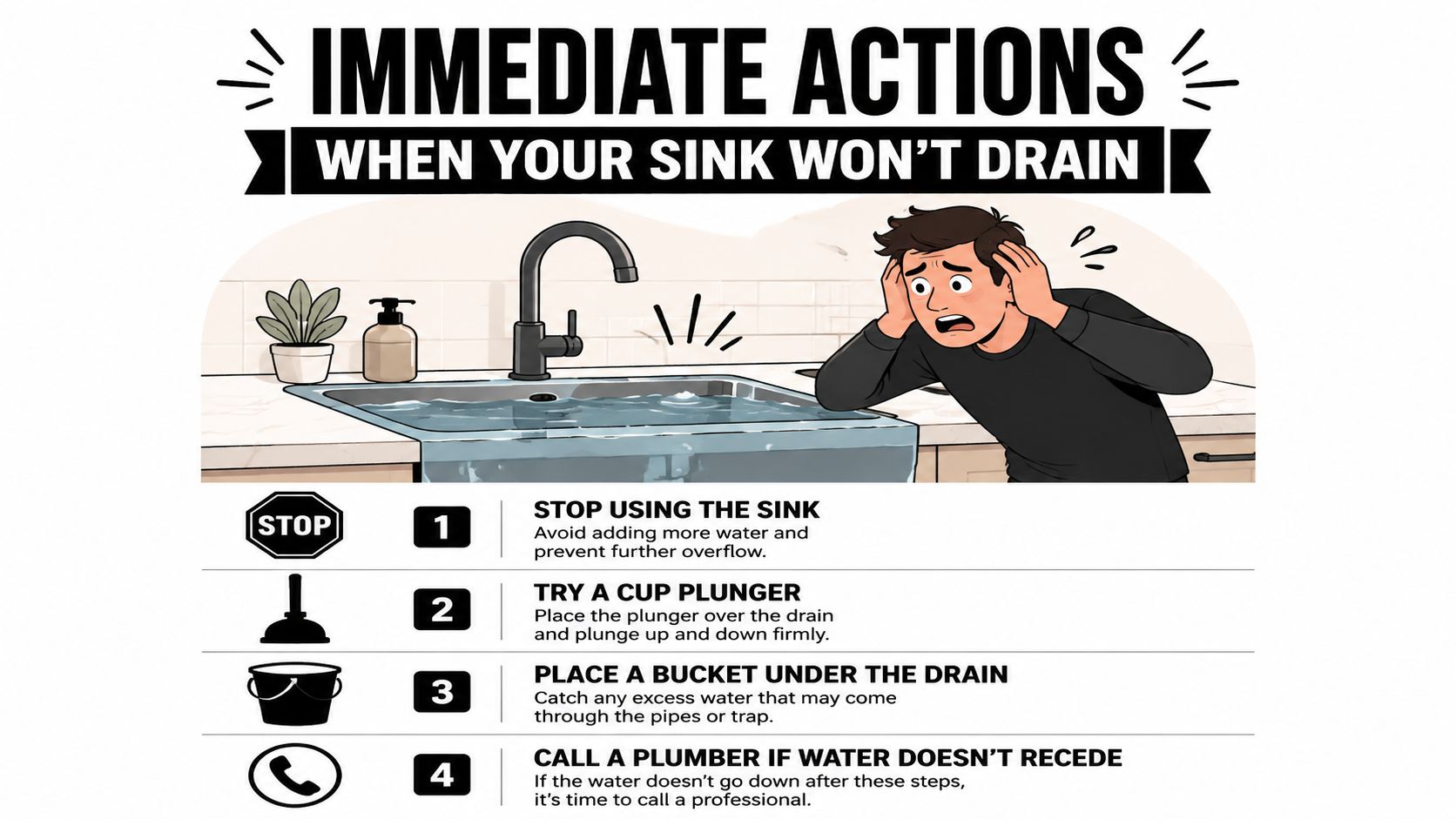
You're standing at the sink with water around the drain opening. First, stop using the fixture. Running the tap, dishwasher, or nearby appliance can add more water to a branch line that may already be restricted. Check whether the problem affects only this sink or whether a tub, toilet, laundry drain, or second basin is also slow.
A single affected sink usually points toward the strainer, stopper, P-trap, or nearby branch pipe. Several affected fixtures change the situation. Vancouver guidance identifies grease, tree roots, personal products, paper towels, cat litter, baby wipes, misaligned joints, broken sewer laterals, and plugged sewer mains among common causes of sewer backups, so a sink problem shouldn't automatically be treated as a simple kitchen nuisance. (Vancouver-relevant sewer-backup causes)
Start with a safe inspection
Remove visible food, hair, or debris from the drain strainer. If the sink has a garbage disposal, switch off its power before checking for a jam or obstruction. Don't put your hand into the disposal chamber, even if the unit appears inactive.
Place a bucket under the P-trap before loosening fittings. Look for leaks, loose connections, or obvious debris, but don't force corroded fittings. A trap that's full of grease or food waste can explain a kitchen backup. A bathroom trap may contain hair, toothpaste residue, or personal products.
For a basic attempt, use a cup plunger, not a toilet plunger. Block the overflow opening with a damp cloth so the plunger can create suction, then work the cup firmly over the drain. A Canadian drain-maintenance guide also recommends removing and cleaning the P-trap when plunging doesn't solve a slow bathroom sink. (Cup-plunger and P-trap guidance)
Practical rule: If the water doesn't recede after a controlled plunging attempt, stop adding water and stop escalating force.
Avoid chemical drain cleaners. They can leave caustic liquid in a blocked pipe and create a dangerous situation when someone later opens the trap or uses mechanical equipment. If water remains in the basin, photograph the condition, note which fixtures are affected, and call a qualified plumber rather than guessing.
DIY Fixes Versus Calling a Professional Plumber
DIY is reasonable when the blockage is isolated, accessible, and improving. Professional service makes sense when the evidence points beyond the fixture or when repeated attempts produce only temporary drainage.
| Situation | Sensible first move | Stop and call a plumber when |
|---|---|---|
| Slow bathroom sink | Clear the stopper, use a cup plunger, and inspect the P-trap | The basin remains full or the clog returns |
| Kitchen sink with grease symptoms | Remove debris, plunge carefully, and clean the trap | Water backs up again after clearing |
| One sink affected | Check the local trap and tailpiece | A hand snake doesn't restore reliable flow |
| Several fixtures affected | Limit water use | Multiple drains back up or gurgle |
| Chemical cleaner already used | Don't open the trap casually | Tell the plumber before work begins |
A cup plunger is the right starting tool for many shallow sink blockages. Blocking the overflow is important because it lets pressure act on the obstruction instead of escaping through the basin opening. A small hand-crank snake can help with hair or debris near the fixture, but forcing it through a trap or repeatedly twisting against resistance can damage fittings and leave the blockage untouched.
Hot water may soften minor grease buildup, and a baking soda and vinegar treatment can help with light residue. Neither is a reliable answer for a solid obstruction, a collapsed pipe, or a main-line restriction. Don't confuse temporary flow with a completed repair.
The decision threshold is especially clear in Metro Vancouver. Lower Mainland pricing guidance places standard unclogging for a sink, tub, or toilet at about $350 to $500, with simple clogs often cleared in 15 to 30 minutes. (Lower Mainland drain-service pricing context) If you've already spent money on repeated products, replacement fittings, or unsuccessful DIY tools, another attempt may cost more in damage and delay than a professional assessment.
Read this guide to the top signs you need professional drain cleaning services if you're unsure whether the issue has moved beyond the sink.
Multiple drains slowing together, water backing up into another fixture, persistent gurgling, sewage odours, or a clog that returns after snaking are strong warning signs. Vancouver-area utility guidance distinguishes internal sink blockages, often near the P-trap, from problems involving a branch line, sewer lateral, or plugged main. (Homeowner guidance on sewer backups)
How to Choose a Qualified Local Plumber
Once the sink has crossed the DIY threshold, don't choose a contractor based only on the lowest advertised price. You need someone who can identify whether the blockage is in the trap, branch line, venting system, or sewer connection, then explain the remedy before starting.
Verify qualifications before booking
Ask for the plumber's licence details and confirm what the company is authorised to do. If gas work is involved, the contractor must hold the applicable Technical Safety BC gas permit. For general protection, ask whether the company carries WorkSafeBC coverage and at least $2 million in liability insurance.
Check verified reviews on Google and the Better Business Bureau, but read the wording rather than relying on a star rating. Look for comments about arrival times, drain diagnosis, cleanup, pricing clarity, and whether recurring problems were investigated instead of repeatedly snaked.
A company that specifically lists drain cleaning, sewer inspection, or branch-line diagnosis is more suitable than a general handyman service for a recurring sink blockage.
Ask direct pricing questions
Call two or three local companies and ask the same questions:
- Pricing model: Is the work flat-rate, hourly, or a combination?
- Diagnostic charge: Is the assessment fee waived if you approve the repair?
- Inspection method: Will you recommend a camera inspection if the clog keeps returning?
- Equipment: Will you start with a cable or auger, and when would jetting be appropriate?
- Warranty: What coverage applies if the same drain blocks again?
A qualified plumber won't promise a precise repair price without understanding the conditions. They should, however, explain the service-call structure, likely options, and any conditions that could change the estimate.
A fair contractor sells the diagnosis first, not the most expensive equipment.
Be wary of anyone who quotes a detailed repair over the phone without seeing the sink, pushes hydro-jetting as the first response to a simple isolated clog, or refuses to provide a licence number. High-pressure sales and vague “starting from” prices make it difficult to compare quotes.
For strata buildings, rental properties, and older homes, ask who will document the work and whether the plumber can identify responsibility between the fixture, private branch line, shared building drain, and municipal connection. That paperwork can matter when a recurring backup affects more than one unit.
Expected Costs and What Happens During the Service Call
For a straightforward sink blockage in Greater Vancouver, use the quoted $350 to $500 standard unclogging range as a planning benchmark, not a guaranteed bill. (Regional drain-cleaning cost guidance) The final price depends on access, attendance time, blockage depth, equipment, and whether the plumber is clearing the local trap or tracing a larger drainage problem.
| Service Type | Estimated Cost Range | Typical Time Required |
|---|---|---|
| Simple sink or P-trap unclogging | About $350 to $500 | Often 15 to 30 minutes |
| Deeper branch-line blockage | Quote after assessment | Longer than a simple fixture visit |
| Camera inspection for a recurring clog | Quote after assessment | Depends on access and line condition |
| After-hours or weekend attendance | Ask for the dispatch structure | Depends on urgency and repair scope |
The published benchmark covers standard unclogging only. Before work starts, confirm whether the quote includes travel, diagnosis, mechanical clearing, testing, cleanup, and taxes. Do not treat “quote after assessment” as a hidden price.
What the plumber should do first
A competent visit starts with questions and observation. The plumber should ask when the sink stopped draining, whether the blockage has returned, which fixtures are affected, whether chemical cleaner was used, and whether the cabinet or floor shows water damage.
Access comes next. California Plumbing Code references require a cleanout at the upper terminal of each horizontal drainage pipe, with another cleanout for each 100 feet of developed length beyond that. The short-run exception does not apply to lines serving sinks. The technician should therefore check the nearest accessible cleanout instead of automatically forcing a cable through the trap. (California cleanout and trap requirements)
The clearing method should match the blockage. A hand snake, powered cable, or another suitable tool may be enough for a local obstruction. Hydro-jetting belongs on jobs where pipe condition and buildup justify it, not on every isolated sink clog. A camera inspection makes sense when the blockage returns, access is difficult, or the plumber needs to check for misaligned joints, roots, damage, or a deeper obstruction.
Watch for warning signs of a sewer-line problem: several fixtures backing up, a clog that returns soon after clearing, or drainage trouble beyond the original sink. Those symptoms justify a wider inspection rather than repeated fixture-level service.
Testing closes the visit. The plumber should run water, check drainage speed, inspect relevant fixtures and connections for leaks, and state whether the work removed one obstruction or identified a broader defect. California drainage guidance supports checking pipe arrangement, cleanout access, and conditions that encourage fouling, solids deposits, and recurring clogging. (California sanitary drainage guidance)
Preventing Repeat Sink Clogs in Your Home
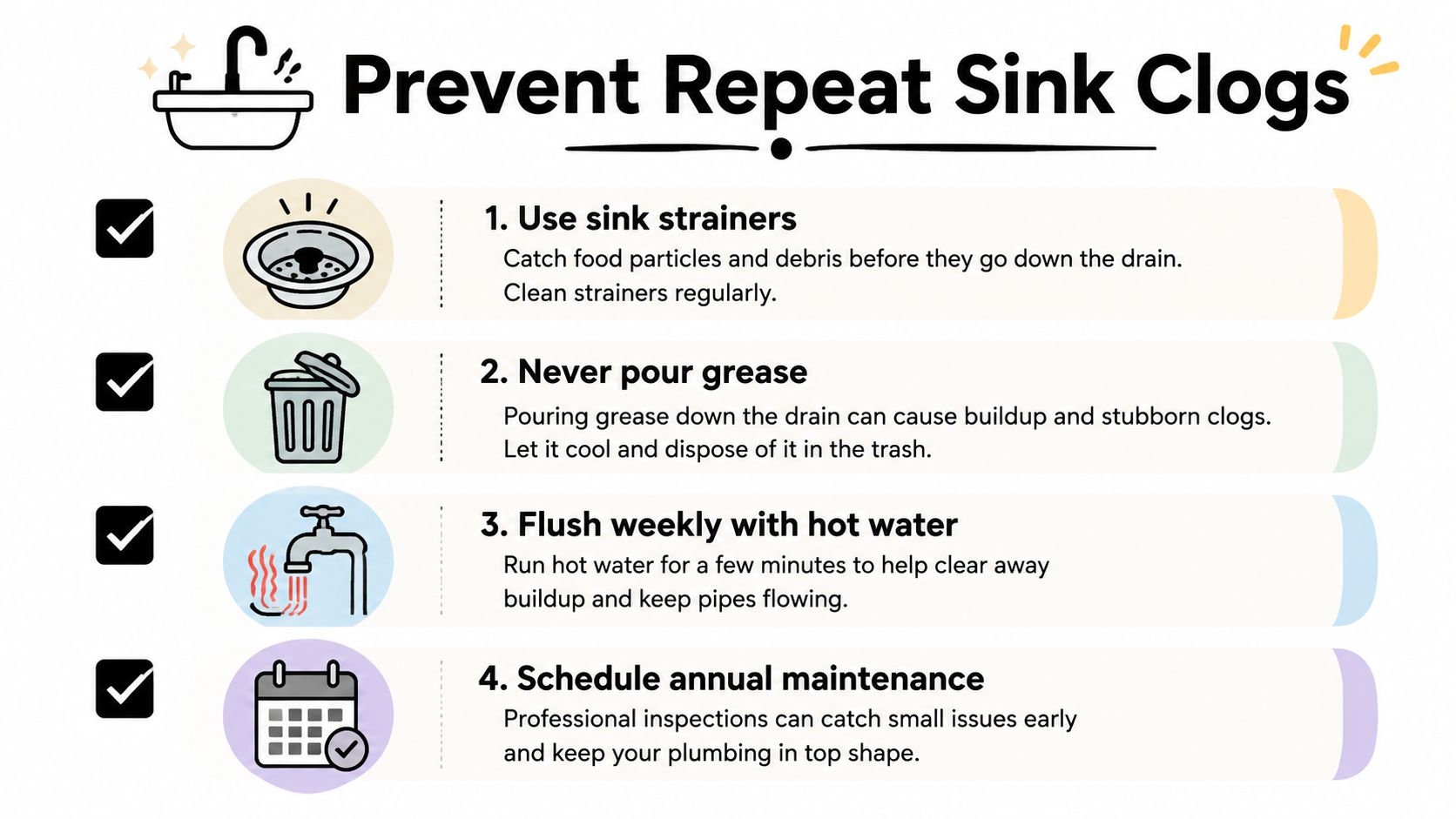
A repeat sink clog usually starts with what goes down the drain. British Columbia guidance recommends keeping grease, coffee grounds, starches, peels, rice, pasta, and potato peel out of kitchen sinks. Fit a tight mesh strainer and empty it after each meal. Do not make the trap catch waste that belongs in the rubbish. (British Columbia kitchen-drain prevention guidance)
After frying, wipe the pan with a paper towel and put the residue in the rubbish. Do not rinse grease away with hot water. It can travel farther into the pipe, cool, and combine with other debris.
Build simple habits
Use the sink for water, soap, and properly filtered food residue. A garbage disposal does not make grease harmless, and fibrous, starchy, or peel-heavy waste can still create a blockage. In the bathroom, remove hair and product residue from the stopper before they enter the trap.
For a busy kitchen fixture, use a weekly flush of 6 to 8 litres of hot water. (Weekly hot-water flush guidance) This helps with routine maintenance, but it will not clear an established blockage. If drainage is already slow, mechanical cleaning is the right fix.
Repair leaks while you are addressing the sink. In British Columbia, a fast drip can waste about 750 litres of water per week, while a steady stream can waste about 3,785 litres per week. (British Columbia water-waste guidance) A leaking tap beside a clogged sink also increases the chance of cabinet and flooring damage.
Older homes need closer attention when the same line keeps slowing. Tree roots, damaged laterals, misaligned joints, and long pipe runs can produce sink symptoms even when the obstruction is farther downstream. A clog that returns soon after a snake job, or affects other fixtures, points to a deeper sewer-line problem. Book drain cleaning or video inspection instead of repeating the same temporary clearing.
Use this practical guide to preventing frequent drain clogs as a household checklist, then respond to recurring warning signs before the sink backs up completely.
Your Action Plan for a Clogged Sink
Start by shutting off the water and checking whether one sink or several fixtures are affected. Remove visible debris, inspect the disposal safely, place a bucket beneath the P-trap, and try a cup plunger with the overflow blocked.
If the sink clears and stays clear, clean the strainer and change the habits that caused the buildup. Don't use chemical drain cleaner, and don't keep plunging against a blockage that isn't moving.
Call a plumber for clogged sink service when water remains, the clog returns, multiple fixtures back up, drains gurgle, or sewage odours appear. Before booking, ask for licence information, insurance coverage, the pricing model, diagnostic charges, equipment proposed, and warranty terms.
During the visit, expect a diagnosis before major work, a clear explanation of necessary versus optional services, safe mechanical clearing, and a drainage test at the end. For standard Greater Vancouver unclogging, use the published $350 to $500 context as a comparison point, then ask why your situation differs if the quote is higher.
Adopt the strainer, grease-free disposal, and weekly hot-water habits now. They're cheaper than repeating the same emergency call.
If your sink is still backing up, Encano Plumbing & Drainage Ltd. provides drain cleaning, mechanical clog clearing, video inspection, and related plumbing service across Vancouver, Richmond, Burnaby, and nearby communities. Contact the team to arrange scheduled or emergency help and get a clear assessment before unnecessary work begins.