You flush at midnight, hear the tank refill, and watch the bowl climb instead of drain. The water reaches the rim while towels are still in the cupboard. Stay calm. The first priority isn't finding the blockage, it's stopping fresh water from entering the toilet.
In British Columbia, water damage accounts for about 60% of total residential insurance losses, and the average water-damage claim in 2024 exceeded $70,000, according to British Columbia strata water-loss guidance. That's why the first minute matters. Stop the inflow, prevent another flush, contain the spread, and only then decide whether the clog is safe to tackle yourself.
Table of Contents
- Immediate Actions When Your Toilet Starts Overflowing
- How to Shut Off Water to an Overflowing Toilet
- Clearing the Clog Without Making It Worse
- Safe Cleanup After a Sewage Overflow
- Understanding the Cost of Toilet Overflow Damage
- When to Call a Professional Plumber
Immediate Actions When Your Toilet Starts Overflowing
The first thing to do is stop pressing the handle. A second flush adds another tankful to a bowl that already can't drain. Reach behind or beside the toilet and turn the shutoff valve clockwise. If you can't reach it quickly, lift the tank lid and press the rubber flapper down over the opening at the bottom of the tank. That stops tank water from continuing into the bowl, as described in emergency overflow response guidance from a Vancouver plumbing contractor.
If the water has already reached the floor, move bath mats, laundry, cardboard boxes, and anything else within safe reach. Close the bathroom door if that helps contain the spill, but don't step through contaminated water unnecessarily. Keep children and pets away, and watch for water moving toward electrical outlets or through the ceiling below.
The midnight rule: Stop the handle, close the valve, and don't flush again until you know the drain is clear.
Use this sequence under pressure:
- Stop the flush: Push the handle back to its resting position and leave it alone.
- Press the flapper: Remove the tank lid and hold the flapper closed if water is still entering the bowl.
- Close the valve: Turn the fixture shutoff clockwise, firmly but gently.
- Contain the floor: Place towels at the bathroom threshold and around the toilet base, without spreading contaminated water into adjacent rooms.
- Check below: If you're in a multi-unit building, look for dripping or staining in the suite below and notify the strata contact promptly.
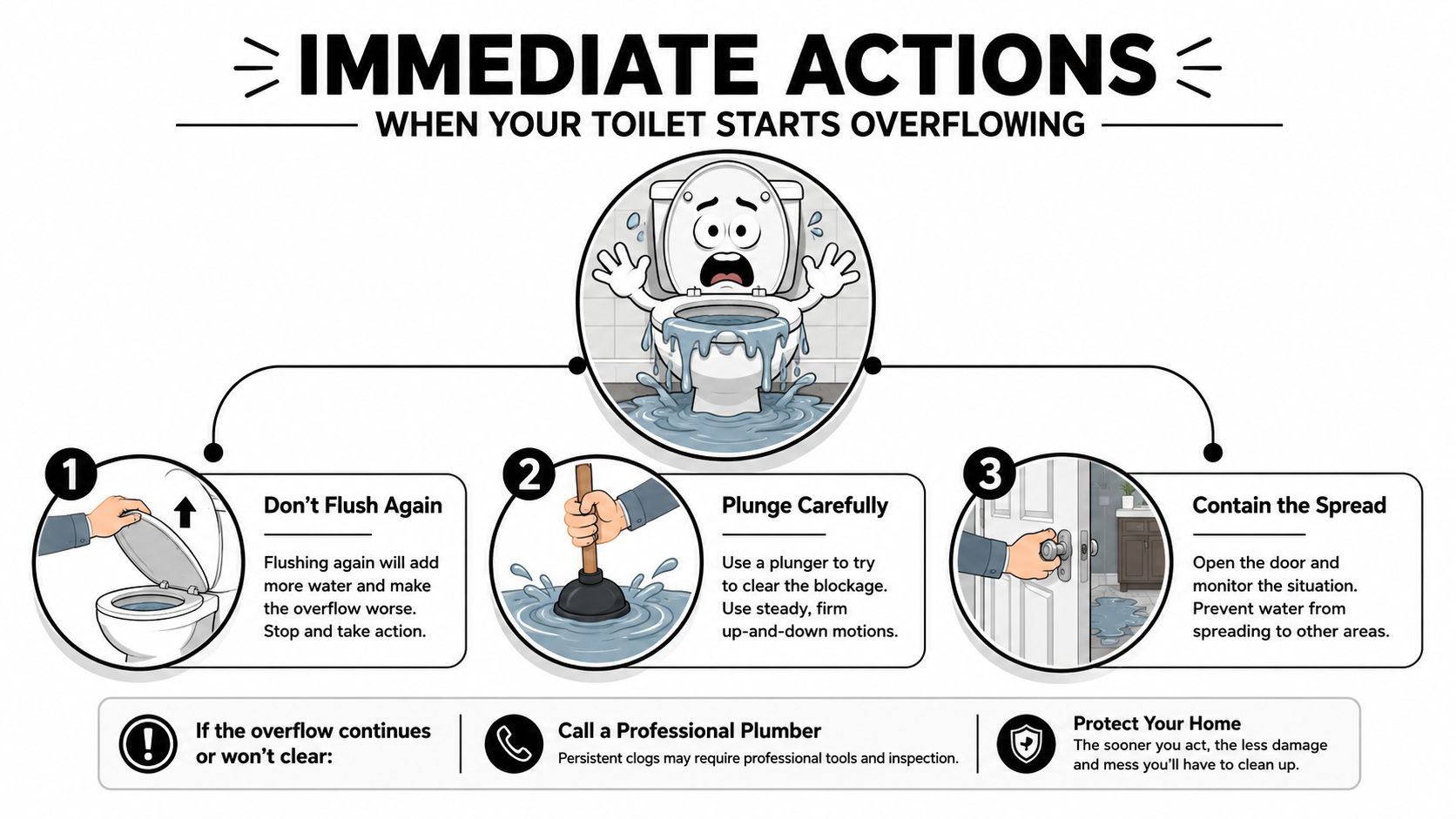
Plunging comes after the inflow is controlled, not before. A few careful strokes can clear a bowl clog, but aggressive plunging while the bowl is full can splash contaminated water across walls, fixtures, and clothing. For a broader emergency checklist, keep this guide to common plumbing emergencies available before a crisis occurs.
How to Shut Off Water to an Overflowing Toilet
Most toilets have a small shutoff valve on the wall or floor behind the bowl. It may have an oval handle, a round knob, or a short lever. Turn it clockwise until it stops. Use steady hand pressure, but don't force a corroded valve with pliers. A broken stem can turn a toilet overflow into a supply-line leak.
After closing the valve, listen. The hiss or refill sound should stop. Look inside the tank and confirm the water level isn't rising. If the bowl remains high, don't test the toilet with another flush. The bowl may still contain enough water to overflow.
When the fixture valve won't work
Remove the tank lid and press the flapper shut. If the flapper won't seal, lift the float cup or float ball to make the fill valve sense that the tank is full. Hold it in the raised position while someone finds the main shutoff. This is a temporary control, not a repair, and you'll need to keep watching it if the internal mechanism is damaged.
Older homes sometimes have seized, painted-over, or missing fixture valves. In that situation, locate the main house shutoff near the water meter, in a basement, crawlspace, or utility area. In a strata unit, contact building management or the emergency property representative before operating a building-level valve. Shared isolation can affect other homes, and the valve may be part of the building's managed plumbing system.
In Vancouver, a homeowner can temporarily stop service at the curb only when the service line is 50 mm, or 2 inches, or smaller. The City says residents can borrow a free shutoff key and turn the valve clockwise, while City crews handle lines of 75 mm, or 3 inches, or larger, according to Vancouver emergency water shutoff information. If the indoor valve is inaccessible, the access point is typically a 10 cm, or 4 inch, circular iron lid marked VWW, with the valve or service line usually 0.6 m to 1.5 m below street level, as outlined in Vancouver shutoff access guidance.
For a safe sequence for operating a main valve, use this water-main shutoff guide.
Clearing the Clog Without Making It Worse
Once the water supply is isolated, remove enough standing water to work safely, but don't scoop contaminated water into a sink or bathtub that may share the blocked drainage path. Start with the least aggressive method. If the bowl is nearly full, wait for the level to settle or remove some water with a disposable container before using a plunger.
Start gently
A small amount of dish soap followed by hot tap water may help soften an organic obstruction. Don't use boiling water. Sudden heat can damage porcelain, and this method won't solve a foreign object, a structural blockage, or a main-drain backup.
A flange plunger is the right tool for a toilet because its extended rubber flange fits into the outlet. A flat cup plunger is designed more for sinks and may not seal the toilet trap.
Set the flange firmly into the drain opening. Keep enough water in the bowl to cover the rubber head, then pump with controlled strokes while maintaining the seal. The aim is alternating pressure and suction, not forceful splashing. After several strokes, pull the plunger away slowly and watch the water level. If it drops, wait before restoring the supply, then add water cautiously to confirm the drain accepts it.
Practical rule: A toilet that drains once may still be partially blocked. Test gradually instead of giving it a full flush.
Use an auger for stubborn obstructions
A toilet auger protects the porcelain while reaching through the trap. Feed the cable into the bowl outlet, crank it as it advances, and let the coil work around the bend. When you feel resistance, rotate rather than forcing the cable forward. Retract slowly so the cable doesn't scrape the bowl or pull an object into a worse position.
Chemical drain cleaners are a poor choice here. They can sit in standing water, damage older plumbing, and create dangerous fumes if another product is added later. They also don't retrieve toys, hygiene products, or other solid objects. If plunging and an auger don't restore normal drainage, stop experimenting and arrange a professional drain assessment. Toilets draining slowly can indicate a developing obstruction rather than a one-time paper clog.
Call promptly if other fixtures gurgle, water rises in a tub or shower, several drains slow together, or sewage appears at a floor drain. Those signs point beyond the toilet trap, and repeated flushing can push the backup into the branch or main drain.
Safe Cleanup After a Sewage Overflow
Treat bowl overflow water as contaminated, even when it looks clear. Keep children and pets out of the room, open windows if conditions allow, and put on rubber boots, rubber gloves, goggles, and a mask before touching the spill. Public health cleanup guidance also recommends disinfecting hard surfaces with a bleach solution, as described in local sewage cleanup guidance.
Remove standing water with a wet-dry vacuum only if the equipment is suitable for contaminated water and you can operate it safely. Otherwise, use disposable absorbent towels, a mop, and a bucket. Don't use household equipment that you'll later return to ordinary cleaning without thorough sanitation.
Separate salvageable and porous materials
Hard, non-porous surfaces such as sealed tile and washable plastic can be cleaned and disinfected. Bath mats, cardboard, and porous building materials that absorbed sewage may need disposal because contamination can move below the visible surface. Place contaminated towels, gloves, and disposable materials in sealed heavy-duty garbage bags.
The verified public health guidance specifies one-third cup of regular household bleach per gallon of water for food-contact surfaces. Follow the product label for other surfaces, never mix bleach with ammonia or acidic cleaners, and ventilate the room while cleaning.
A toilet spill that reaches drywall, flooring layers, wall cavities, or a neighbouring suite needs more than surface mopping. In a strata building, notify management and document the affected areas before materials are removed. Professional remediation may be necessary when sewage has spread into concealed assemblies or common property.
Understanding the Cost of Toilet Overflow Damage
At midnight, an overflowing toilet can turn a bathroom problem into damage across floors, walls, and neighbouring suites. British Columbia guidance identifies water damage as about 60% of total residential insurance losses, with the average water-damage claim in 2024 exceeding $70,000, according to the Canadian Condominium Institute's BC resource. This figure covers water-loss claims broadly, not the expected cost of one toilet overflow. It still shows why closing the supply and limiting spread in the first minute can reduce the financial consequences.
A 2022 B.C. Civil Resolution Tribunal decision involved an overflow that damaged the owner's unit and the suite below, as recorded in The Owners, Strata Plan VR1183 v. Smith. The decision illustrates why a strata incident may involve more than one home, flooring assembly, or insurance file. A later insurance-law summary noted that strata occupants may be expected to monitor whether a toilet empties and refills properly after flushing. Ignoring a malfunction can therefore create repair and liability issues.
| Damage Category | Estimated Cost Range (CAD) | Typical Timeline to Escalate |
|---|---|---|
| Toilet fixture or local drain repair | Varies by diagnosis | Escalates when the toilet won't drain or the overflow repeats |
| Flooring, baseboard, or subfloor damage | Site-specific | Escalates when contaminated water enters seams or layers |
| Drywall or concealed-area remediation | Site-specific | Escalates when water reaches walls, ceilings, or the suite below |
| Sewage cleanup and rebuilding | Site-specific | Escalates when porous materials absorb contaminated water |
These categories are planning guidance, not fixed BC prices. The verified material does not provide reliable cost ranges for individual subfloors, drywall, or mould remediation, so a site inspection is needed before estimating repairs.
Insurance treatment depends on the cause and policy wording. A sudden overflow may be treated differently from a gradual leak, while sewer or drain backup coverage may require a specific endorsement. Photograph the toilet, shutoff position, standing water, and damaged belongings. Keep receipts, notify the insurer and strata representative promptly, and record whether another suite or common property was affected.
When to Call a Professional Plumber
A plunger is reasonable when the problem is clearly confined to one toilet, the water stops rising after isolation, and the bowl drains normally after careful testing. Stop DIY work when the level rises again immediately, the auger won't pass, or the same toilet keeps overflowing.
Call for professional diagnosis when you hear gurgling from nearby drains, see sewage in a shower or floor drain, or notice several slow fixtures at once. Those symptoms can indicate a branch-drain or main-line obstruction, and a toilet auger won't reliably resolve a blockage farther into the system. Repeated events also deserve investigation instead of repeated plunging.
For a strata property, report the incident early and clarify whether the affected pipe or area is within the unit, common property, or another suite. A plumber may need to coordinate access, building isolation, drain cleaning, video inspection, or restoration. Don't alter shared plumbing without the required building coordination.
Before calling, record whether the fixture valve is closed, whether the bowl level changes, which other fixtures are affected, and whether water reached flooring, walls, or the suite below. That information helps the technician bring the right equipment and distinguish a local toilet blockage from a wider drainage failure.
Encano Plumbing & Drainage Ltd. provides 24/7 emergency plumbing, toilet repairs, drain cleaning, sewer inspections, and related water-damage response across Vancouver and nearby Greater Vancouver communities. If your toilet is still rising, the shutoff won't hold, or sewage has spread beyond the bathroom, visit Encano Plumbing & Drainage Ltd. to request service and get the overflow under control safely.