A sewer problem rarely starts with a dramatic backup. More often, it begins with a slow kitchen drain, a toilet that gurgles after flushing, or a damp, unpleasant-smelling patch near the yard. Understanding the top causes of sewer line damage helps homeowners, landlords, and property managers act before a small underground defect turns into a disruptive repair.
Your sewer line carries wastewater from the building to the municipal sewer connection. Because most of the pipe is buried, damage can stay hidden until drainage slows, sewage backs up, or water begins affecting the property. The right response depends on the pipe material, its age, the location of the issue, and whether the problem is a clog, a break, or a failing connection.
Top Causes of Sewer Line Damage
Tree root intrusion
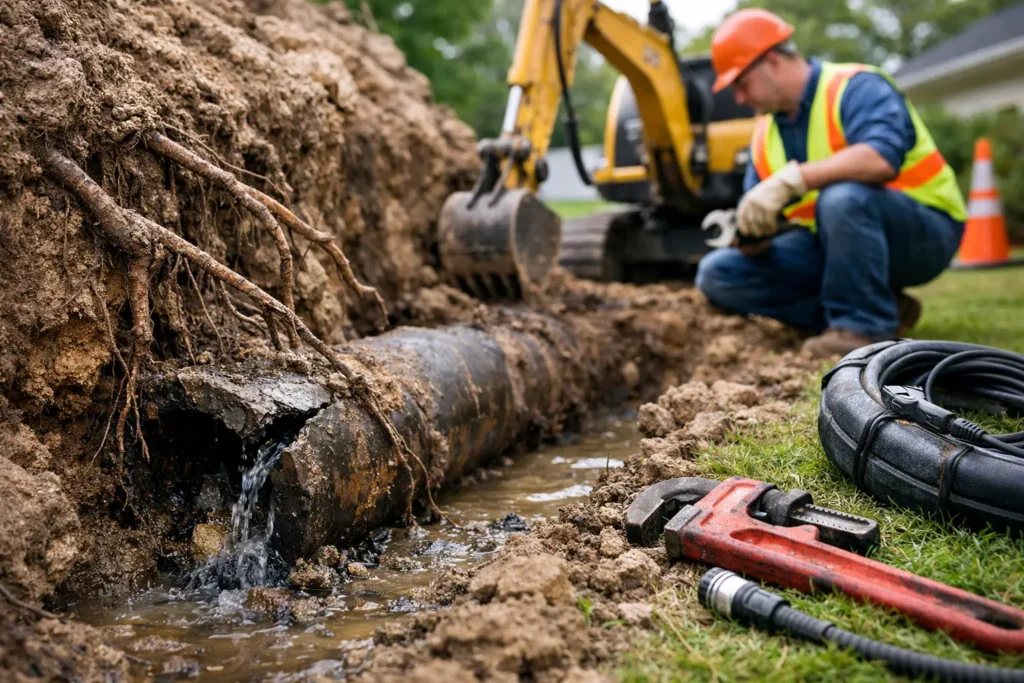
Tree roots are one of the most common causes of sewer line trouble, especially around mature properties. Roots naturally seek moisture and nutrients. A tiny gap at a pipe joint, crack, or aging seal can release enough moisture to attract them.
Once roots enter, they expand into a dense mass that catches toilet paper, grease, and other debris. The result is recurring clogs, slow drains throughout the building, and eventually a cracked or separated pipe. Cutting roots can restore flow temporarily, but it may not be a lasting solution if the pipe has open joints or structural damage. A camera inspection can show whether cleaning, spot repair, or pipe replacement is the sensible next step.
Aging, corroded, or deteriorated pipes
Many older homes and commercial buildings have sewer pipes made from cast iron, clay, concrete, or other materials that can deteriorate over time. Cast iron can corrode from the inside, leaving rough surfaces that trap waste. Clay pipe sections may shift or develop gaps at their joints. Older materials can also become brittle and crack under pressure.
Age alone does not mean a sewer line must be replaced. Some older lines remain in good condition, while newer installations can fail because of poor connections or ground movement. A professional camera inspection provides a clearer answer than guessing based on the building’s age. It identifies the pipe material, shows the extent of corrosion or cracking, and helps prevent unnecessary work.
Ground movement and settling soil
Sewer pipes must maintain a steady slope so wastewater can flow away from the property. When soil settles, shifts, or erodes, the line can sag, separate, or lose its proper grade. This is sometimes called a belly in the pipe.
A sagging section collects water and solid waste rather than carrying it downstream. Property owners may notice repeated blockages even after drain cleaning, because the underlying low spot remains. Heavy rain, poor drainage around the property, nearby excavation, and natural soil movement can all contribute. In parts of the Vancouver area, seasonal wet weather makes proper drainage and prompt investigation particularly worthwhile.
Grease, wipes, and unsuitable drain waste
Not every sewer issue begins outside the building. What goes down sinks, toilets, and floor drains has a direct effect on the line. Cooking grease may look liquid when warm, but it cools and hardens inside pipes. It then catches food particles and other debris, creating a stubborn blockage.
Flushable wipes are another frequent issue. Despite the label, they do not break down like toilet paper and can collect at bends, root intrusions, or rough pipe interiors. Paper towels, hygiene products, dental floss, cotton swabs, and cat litter also belong in the trash, not the drain. These materials may cause an immediate clog or worsen an existing weak point in the sewer line.
Cracks, breaks, and damaged connections
A sewer line can crack because of age, shifting soil, root pressure, heavy loads above the line, or improper installation. In some cases, a joint separates and allows sewage to escape into surrounding soil while dirt and roots enter the pipe.
This type of damage often causes recurring symptoms rather than a single complete blockage. Drains may work normally for weeks, then slow down after heavy use. A camera inspection can locate the break and help determine whether a targeted repair is possible. If the pipe has multiple damaged areas, a larger repair or replacement may offer better long-term value than repeated service calls.
Construction work and heavy traffic above the line
Driveway replacement, landscaping projects, utility work, and foundation repairs can affect buried sewer pipes if crews do not know where the line runs. Heavy vehicles or equipment may crush shallow, weak, or already deteriorated pipe. New retaining walls, grading changes, and poorly planned drainage work can also alter the soil conditions around the line.
Before major exterior work begins, identify the route of underground services and discuss access limits with the contractor. This simple step can prevent expensive damage and keeps repair responsibility clearer if an issue does occur.
Warning Signs That Need Attention
One slow sink does not always point to a sewer line problem. It may be a local fixture clog. When multiple drains are slow or affected at the same time, the concern is more serious. Pay attention to toilets that bubble when a sink or washing machine drains, water rising in a shower or tub after flushing, persistent sewer odors, or backups at the lowest drain in the building.
Outside, unusually green or wet areas can also indicate a damaged sewer line, particularly when there has not been enough rain to explain them. Rodent activity around broken lines and sudden depressions in the yard are additional warning signs. For apartment buildings and commercial properties, repeated backups in the same stack or lower-level washroom should be documented and investigated rather than treated as isolated clogs.
Avoid using chemical drain cleaners when you suspect a main sewer issue. They rarely remove roots or repair structural defects, and harsh products can create a safety hazard for anyone servicing the line. If sewage is backing up, stop using water fixtures as much as possible until the cause is identified.
How Professionals Find the Real Problem
Drain cleaning restores flow, but it does not always explain why the blockage happened. That distinction matters. A professional sewer camera inspection sends a small waterproof camera through the line to view roots, cracks, grease buildup, offsets, standing water, and pipe condition in real time.
The inspection can also help locate the defect from above ground. This allows a plumber to recommend work based on evidence instead of assumptions. For example, a single root-filled joint may need cleaning and repair, while widespread corrosion in an old cast-iron line may require a more comprehensive plan.
There are trade-offs. Cleaning is often less disruptive and less expensive upfront, but it may need to be repeated when roots are entering through damaged joints. Excavation can provide direct access for replacement but may affect landscaping, pavement, or building operations. In certain situations, trenchless repair options can reduce surface disruption, though they are not suitable for every pipe layout or level of damage.
Practical Ways to Protect Your Sewer Line
Good sewer care is mostly about catching problems early and avoiding unnecessary strain on the system. Keep grease, wipes, and non-flushable items out of drains. Use sink strainers in kitchens, and make sure tenants, staff, or family members know what should not be flushed.
If the property has mature trees near the sewer route or a history of recurring drain issues, schedule a camera inspection before the problem becomes an emergency. This is particularly useful before buying an older property, beginning a renovation, or taking on a new commercial lease. Knowing the line’s condition early gives you time to plan instead of making rushed decisions during a backup.
Maintain exterior drainage as well. Downspouts should direct water away from the foundation, and changes to grading or landscaping should not place extra stress on buried utilities. When recurring clogs appear, do not accept repeated clearing as the full answer. Ask what caused the blockage and whether the pipe itself shows signs of damage.
When to Call for Sewer Line Help
Call a licensed plumbing professional promptly when sewage backs up, several fixtures drain slowly, toilets gurgle, or a clog returns soon after cleaning. Fast action can limit water damage, reduce sanitation risks, and protect tenants or customers from unnecessary disruption.
For property owners in Richmond, Vancouver, and nearby communities, Encano Plumbing & Drainage can inspect the line, explain the findings in plain language, and recommend a practical repair approach with clear pricing. A sewer line is easy to forget when it is working properly, but early attention to the first warning sign is often the best way to protect the property, the people in it, and the budget.