
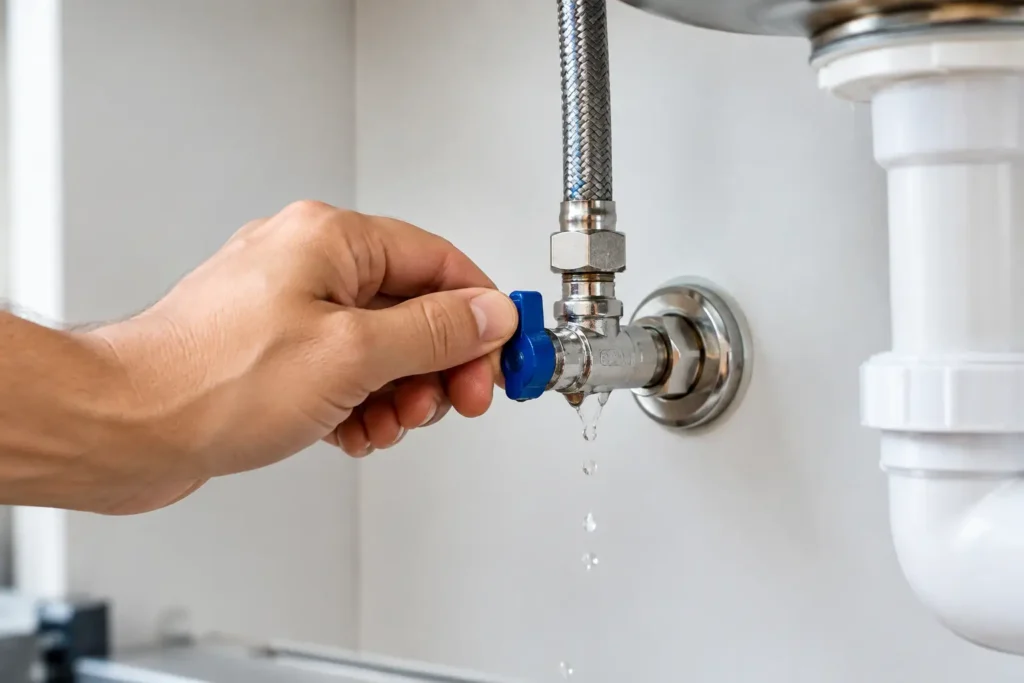
A burst supply line can release more water in a few minutes than most people expect. Knowing how to shut off water before you need to can limit damage to flooring, cabinets, drywall, and the unit below yours. The goal is simple: stop the flow, protect people and property, then get the plumbing problem properly repaired.
For homeowners, tenants, landlords, and property managers, this is one of the most useful emergency skills to have. You do not need plumbing experience to turn a valve, but you do need to know which valve to use and when it is safer to step back and call for help.
Shut Off Water First When There Is an Active Leak
If water is actively spraying, pouring from a pipe, or spreading across the floor, act quickly. Move clear of any electrical outlets, appliances, power bars, or panels that may be wet. Do not walk through standing water if electricity could be involved.
If you can safely reach the fixture, close its local shutoff valve first. This is often the fastest way to stop a toilet, sink, dishwasher, washing machine, refrigerator water line, or water heater supply leak without shutting down water to the entire building.
Turn the valve clockwise until it stops. Avoid forcing it. Older valves can seize, corrode, or break if too much pressure is applied. If the local valve will not close, the leak is not coming from that fixture, or water continues to flow, use the main water shutoff valve.
Once the water is off, open a faucet at the lowest practical point in the home, such as a basement laundry sink or main-floor tub. This relieves pressure in the lines and may reduce dripping while you wait for repairs. Then mop up standing water, place buckets or towels under the leak, and take photos if you need them for a landlord, strata, property manager, or insurance claim.
Where to Find the Main Water Shutoff Valve
The main shutoff controls the cold-water supply entering the property. Its location depends on the building type, age, and local layout, but it is commonly near where the service line enters the building.
In a detached home, look in the basement, utility room, crawl space, garage, mechanical room, or near the water heater. In some properties, the valve is close to the front foundation wall. In warmer climates, it may be outside near the meter, but many homes in the Vancouver area have the main valve indoors because of weather and building design.
You may see one of two common valve styles. A round wheel valve requires several clockwise turns. A lever-style ball valve closes with a quarter turn. When the lever is perpendicular to the pipe, it is usually off. When it runs parallel with the pipe, it is usually on.
Some homes also have a municipal curb stop near the property line. This is not usually the valve to rely on in an emergency. It may require a special key, may be the utility’s responsibility, and can be damaged if handled incorrectly. Use the indoor main shutoff whenever possible.
Apartments, Condos, and Shared Buildings
Apartment and condo plumbing can be more complicated. Your suite may have individual shutoff valves in a laundry closet, under sinks, behind an access panel, or in a mechanical cabinet. In some buildings, only building staff or a property manager can access the main shutoff for a stack or the entire building.
If water is leaking into another unit or a common area, notify building management immediately after stopping the water you can access. Do not assume a hallway valve or utility-room valve belongs to your suite. Closing the wrong valve can interrupt water service for neighbors or affect building equipment.
Tenants should report active leaks promptly, even if the leak appears small. A slow drip inside a cabinet or wall can become a much larger repair if it is left unnoticed.
Know the Fixture Shutoff Valves in Your Home
Local shutoffs allow you to isolate one fixture while the rest of the property keeps running. They are especially helpful when a toilet fill valve fails overnight or a sink supply hose begins leaking under the cabinet.
Look under bathroom and kitchen sinks for two small valves connected to flexible supply lines. Toilets generally have one cold-water valve behind or beside the toilet. Washing machines should have hot and cold valves in a laundry box or on the wall behind the machine. Dishwashers and refrigerator ice makers may have smaller dedicated valves under the sink, in a nearby cabinet, or behind the appliance.
Water heaters have a cold-water supply valve above the tank or near the top of the unit. If the tank itself is leaking, closing that valve may slow or stop the incoming water. However, a leaking water heater can involve hot water, pressure, gas, electrical components, or a failed relief valve. Do not take apart the unit yourself. If there is steam, hissing, a gas smell, scorching, or significant water flow, keep clear and contact a qualified professional.
When You Should Not Try to Handle It Alone
Shutting off the water is a smart first response, but it is not a repair. Some leaks point to a problem that needs immediate professional attention. Call for emergency plumbing support when a pipe has burst, water is coming through a ceiling, a valve will not close, sewage is backing up, or you cannot locate the shutoff while water continues to spread.
You should also call if a frozen pipe has cracked. Do not use an open flame, torch, or high-heat device to thaw pipes. Heat can damage materials, create a fire risk, and worsen a hidden break. A plumber can identify the damaged section, make a safe repair, and help determine why the pipe froze in the first place.
For commercial properties, quick coordination matters just as much as the valve itself. A facility manager may need to notify occupants, protect equipment, isolate a section of plumbing, and document damage. In these situations, having a clearly labeled shutoff map and an emergency plumbing contact can save valuable time.
Test Your Shutoff Valves Before an Emergency
The worst time to discover a shutoff valve is stuck is during a flood. Check accessible valves once or twice a year. Turn a valve gently to confirm that it moves, then return it to its original position. Watch for drips around the stem or connection after touching it.
Do not repeatedly work an old valve if it begins leaking or feels fragile. A valve that has not moved for years may fail when disturbed. Schedule replacement rather than waiting for an emergency. Modern quarter-turn ball valves are generally easier to operate and more reliable than aging multi-turn valves.
It also helps to label your main shutoff clearly. A simple tag or note near the valve can prevent confusion for family members, tenants, guests, or staff. Everyone responsible for the property should know where the valve is and how to close it.
A Few Steps That Reduce Water Damage
Stopping the water quickly is only part of the response. Water that stays trapped under flooring, inside cabinets, or behind walls can lead to swelling, odors, mold growth, and hidden structural damage.
After you shut off water, remove wet items where possible and use towels, mops, and fans to begin drying. Open cabinet doors beneath sinks so air can circulate. If water reached electrical equipment, ceiling cavities, walls, or large areas of flooring, contact the appropriate restoration and electrical professionals as needed.
Avoid turning the water back on until the source of the leak is understood. A loose supply connection may be straightforward, but a split pipe, failed valve, or damaged appliance line needs a proper repair. Turning the supply back on to “see if it stopped” can restart the leak when no one is ready to contain it.
Encano Plumbing & Drainage helps homeowners and property managers throughout Vancouver and nearby communities respond to leaks, failed shutoff valves, burst pipes, and other urgent plumbing problems. A licensed plumber can locate the source, make the repair, and help ensure your water supply is safe to restore.
A labeled, working shutoff valve will never feel exciting, but it can be the difference between a small plumbing repair and a major cleanup. Take a few minutes today to find yours, show others where it is, and keep the path to it clear.