A pipe can burst behind a wall long before water reaches the floor. A toilet can overflow while guests are on the way. When either happens, emergency plumbing response time expectations become more than a scheduling question – they help you make smart decisions in the first few minutes, protect your property, and know what a qualified plumber should communicate.
For homeowners, tenants, landlords, and building managers, the realistic answer is not always a single number of minutes. Emergency response depends on the severity of the problem, the time of day, traffic, weather, technician availability, and how far the plumber needs to travel. What matters most is prompt triage, a clear arrival window, and practical guidance to reduce damage while help is on the way.
What Counts as a Plumbing Emergency?
Not every plumbing issue needs an after-hours call, but some problems should not wait until regular business hours. A true emergency usually involves active water damage, a sanitation risk, a gas concern, or a loss of an essential service that could quickly affect people or property.
A burst or actively leaking pipe is an emergency, especially if water cannot be shut off or is reaching electrical fixtures, ceilings, flooring, or neighboring units. A sewer backup is also urgent because wastewater can carry harmful bacteria and contaminate finished areas. Overflowing toilets, major drain backups, failed water heaters that are leaking heavily, and no water in a multi-unit or commercial building may all require immediate attention.
If you smell gas, hear hissing near a gas line, or suspect a gas leak, leave the area, avoid switches and open flames, and contact the gas utility or emergency services first. Plumbing companies can address gas piping issues, but immediate safety takes priority.
A slow faucet drip, one mildly slow drain, or a toilet that runs intermittently is frustrating, but it can often be booked as a standard repair. The key difference is whether waiting creates a meaningful risk of damage, unsafe conditions, or major disruption.
Emergency Plumbing Response Time Expectations: What Is Reasonable?
For an active plumbing emergency, a professional service should answer or return your call promptly, ask focused questions, and provide an honest estimated arrival window. In many urban areas, an emergency plumber may arrive within one to two hours. In some cases, especially when a technician is nearby and the situation is severe, arrival can be faster.
That said, a guaranteed 20-minute arrival is not always realistic or responsible. Vancouver-area traffic, late-night staffing, severe weather, bridge congestion, and simultaneous emergencies can all affect travel time. A trustworthy company will not promise an impossible arrival time simply to win the call. Instead, it should explain the expected window, update you if conditions change, and help you take immediate damage-control steps.
For property managers, response expectations should also account for access. A plumber may arrive quickly but still need a contact person, suite access, mechanical-room keys, parking instructions, or clearance to work around tenants. Having those details ready can save valuable time.
The First Call Should Move the Situation Forward
A good emergency call is not just a request for an address. The dispatcher or plumber should ask where the water is coming from, whether the main shutoff has been closed, whether sewage is present, and whether there are electrical or gas concerns. These questions help determine the urgency and ensure the technician arrives with the right equipment.
You should receive a clear explanation of the next step: whether the plumber is being dispatched immediately, the estimated arrival range, and what you should do until they arrive. If pricing is likely to include an after-hours dispatch fee or diagnostic charge, that should be explained clearly as well. Transparent pricing does not always mean a final quote can be given before an inspection, especially for hidden leaks or sewer problems. It does mean you should understand how the visit will be billed before work begins.
Why Arrival Times Can Vary
Emergency plumbing is not like ordering a package with a fixed route. Each call can involve a different level of complexity, and the closest available technician may already be stabilizing another urgent situation.
The most significant factor is the nature of the emergency. A sewage backup affecting several suites or water pouring through a ceiling may take priority over a contained leak with the water supply already shut off. This is not a lack of service – it is proper triage based on health, safety, and potential damage.
Location also matters. Richmond, Vancouver, Burnaby, Surrey, Delta, New Westminster, and nearby communities can experience very different travel conditions depending on the hour. A snowstorm, heavy rain, road work, or a major event can add time even when a technician is dispatched right away.
The information you provide matters, too. Saying “there is a leak” is helpful, but saying “water is coming from the ceiling below the upstairs bathroom, the main water is off, and the ceiling is bulging” gives the plumber a much clearer picture. Photos can be useful if requested, but do not delay calling while trying to document every detail.
What to Do While You Wait for an Emergency Plumber
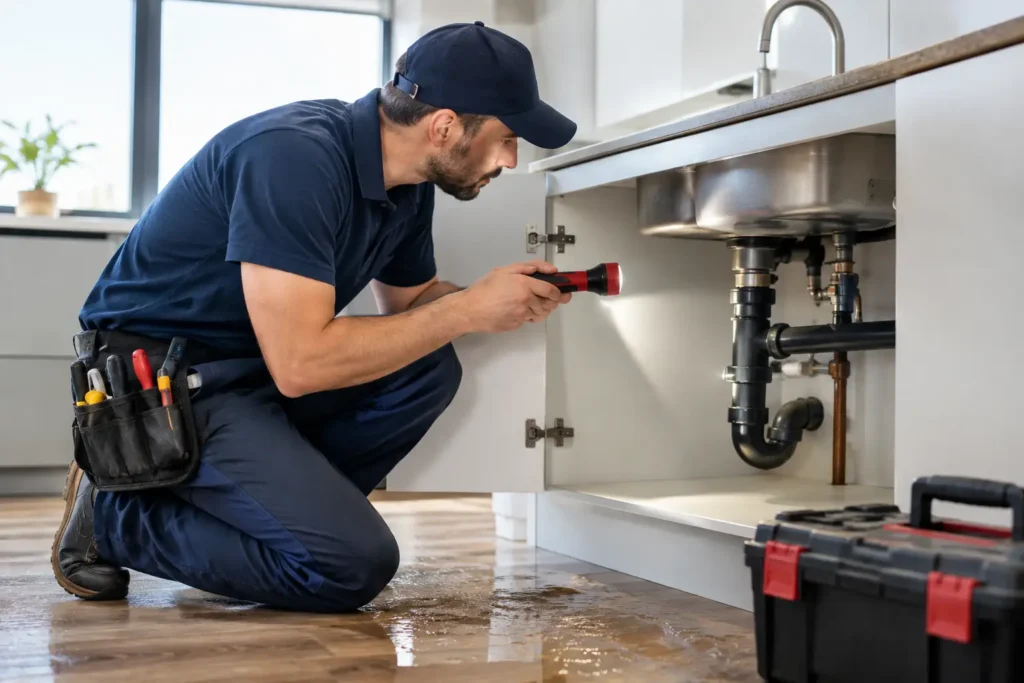
The best way to limit damage is to act quickly and safely before the plumber arrives. If water is actively flowing, shut off the nearest fixture valve if you can identify it. For a toilet, that is usually the small valve near the wall behind the toilet. For a sink, it is often inside the cabinet below. If the leak continues or the source is unclear, shut off the main water supply to the property.
Every homeowner and facility manager should know where the main shutoff is located. It may be near the water meter, in a utility room, garage, basement, crawlspace, or mechanical area. In an apartment or condominium, contact building management if you cannot access the building shutoff safely.
Move electronics, rugs, furniture, and valuables away from the affected area. Place buckets under controlled drips and use towels to contain shallow water, but do not stand under a sagging ceiling or attempt to puncture it. If water is near outlets, appliances, a breaker panel, or exposed wiring, keep clear and contact an electrician or emergency services when appropriate.
For a drain or sewer backup, stop using toilets, showers, sinks, dishwashers, and washing machines. Running more water can make the backup worse. Keep children and pets away from contaminated areas, and avoid using household chemical drain cleaners. They can cause injuries, damage pipes, and create hazardous conditions for the plumber working on the line.
Questions Worth Asking Before the Plumber Arrives
You do not need to interrogate a plumber during an emergency, but a few direct questions can set clear expectations. Ask for the estimated arrival window and whether the technician will call when they are on the way. Ask whether there is an emergency service or diagnostic fee and whether repair options will be reviewed before major work begins.
If the problem affects a tenant, common area, business operation, or multiple units, ask what information the technician needs for access and whether temporary restoration is possible that night. Sometimes the immediate goal is to stop the water, make the area safe, and complete a larger repair once parts, permits, or specialized equipment are available. That is often the sensible approach, not a sign that the job is incomplete.
For commercial properties, keep records of the incident, affected areas, and steps taken to isolate the issue. This supports communication with tenants, insurers, and maintenance teams after the emergency is under control.
Fast Does Not Mean Rushed
A quick arrival is valuable, but quality emergency service includes more than getting through the door. The plumber should identify the source of the problem, explain what has failed, protect the work area as much as possible, and recommend a repair that fits the condition of the system. A temporary patch may be appropriate at 2 a.m.; a permanent repair may require follow-up work. You deserve to understand that difference.
At Encano Plumbing & Drainage Ltd., the focus is on responding with practical urgency, clear communication, and workmanship that protects your home or building. The goal is not just to stop today’s leak, but to help prevent the same issue from becoming tomorrow’s emergency.
When you call for urgent plumbing help, shut off what you safely can, share clear details, and expect honest updates rather than vague promises. Those early minutes can make a real difference in the damage a plumbing failure leaves behind.