
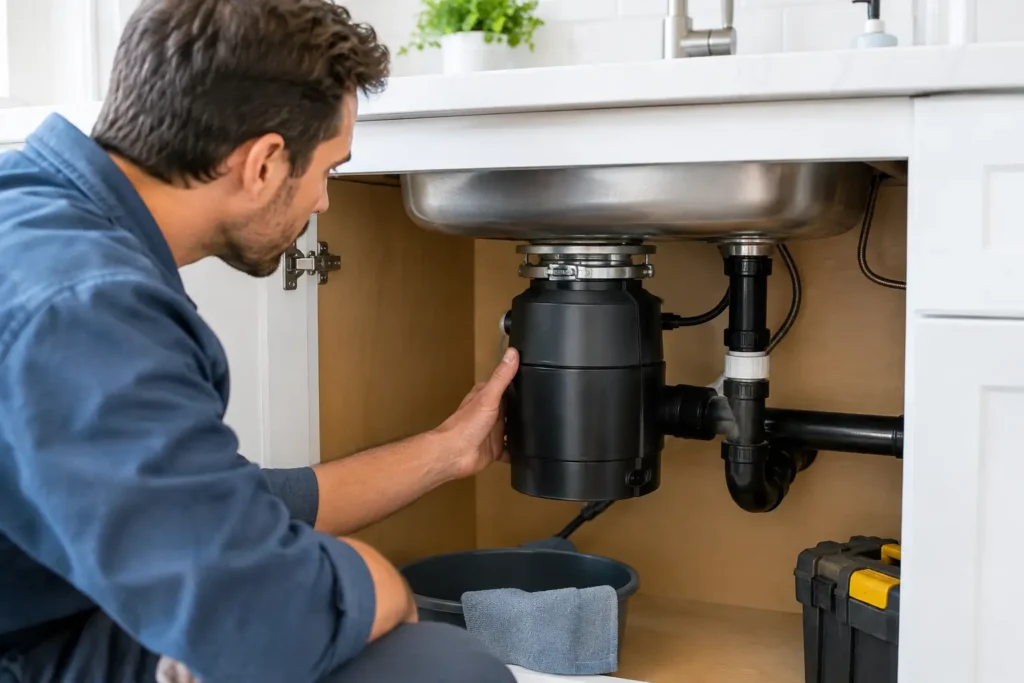
A sink full of cloudy water after dinner is frustrating, especially when the garbage disposal seems to run normally. A garbage disposal not draining does not always mean the disposal itself has failed. In many cases, food debris, grease, or buildup is blocking the drain line below the unit. Knowing where the blockage is can help you take the right next step without damaging your plumbing or creating a bigger backup.
Start With Safety and Stop Adding Water
If water is standing in the sink, turn off the faucet and do not run the disposal again. Running it against a blocked drain can churn food waste without moving it anywhere, making the cleanup more difficult. If the unit is humming, grinding unusually, or has stopped altogether, turn off its wall switch.
For any hands-on inspection, unplug the disposal under the sink. If it is hardwired, switch off the circuit breaker instead. Never reach into a garbage disposal, even when you think the power is off. Use tongs or pliers to remove any visible item near the opening, such as a utensil, bottle cap, or food packaging.
A disposal that turns on and sounds normal but leaves water in the sink usually points to a drain blockage. A disposal that hums without spinning may be jammed. Those are different problems and need different fixes.
Why a Garbage Disposal Stops Draining
The disposal is connected to the sink drain through a short pipe, often called a discharge tube, and then to the P-trap and branch drain in the wall. Food particles can collect at any of these points. Grease is another frequent cause because it may flow down warm and liquid, then cool and cling to the inside of the pipe.
A clog can also sit farther down the kitchen drain line. That is more likely when both sides of a double sink drain slowly, water rises in the opposite bowl when the disposal runs, or the dishwasher backs up into the sink. In those situations, the disposal may be working properly while the shared drain is restricted.
Older homes, rental properties, and busy commercial kitchens can develop gradual buildup over time. A drain may appear fine until one more load of food waste narrows the passage enough to stop water from moving.
Safe Steps to Try Before Calling for Service
Check for a simple jam
If the disposal is not spinning, look underneath the unit for the reset button. It is usually a small red button on the bottom. Press it once, then wait a few minutes before restoring power. The reset button protects the motor after overheating or a jam, but it does not clear a clogged drain.
Many units also have a hex-shaped socket in the center of the bottom. With the power disconnected, insert the manufacturer-supplied wrench or the correct hex key and move it back and forth. This can free an object caught in the grinding chamber. Remove the object with tongs, restore power, and test with cool water running.
If the disposal spins freely but the sink still will not drain, stop focusing on the motor. The problem is likely in the plumbing after the disposal.
Use a sink plunger correctly
A standard cup plunger can clear a minor kitchen sink clog. Add enough water to cover the rubber cup, then place the plunger firmly over the drain opening. If you have a double sink, seal the other drain opening with a stopper or wet cloth. Otherwise, pressure will escape through the second bowl instead of pushing against the clog.
Pump steadily for 15 to 20 seconds, then lift the plunger and see whether the water begins to move. Repeat a few times if you notice improvement. Do not use a plunger immediately after pouring in a chemical drain cleaner. Chemicals can splash back onto your skin or into your eyes.
Clean the P-trap if you can do it safely
The curved pipe beneath the sink is designed to hold water and block sewer gases. It is also a common place for dense food debris to settle. If you are comfortable working under the sink, place a bucket and towels below the trap, then carefully loosen the slip nuts and remove the curved section.
Empty the contents into the bucket and check for buildup. Clean the trap, inspect the washers, reassemble the fittings hand-tight, and run water slowly to check for leaks. Do not force old or cracked plastic fittings. If a connection is corroded, brittle, or difficult to reseal, a plumber can replace it without turning a small clog into a cabinet leak.
Avoid using a drain snake through the garbage disposal opening. The cable can damage disposal components or become tangled. If a clog is beyond the trap, professional drain-cleaning equipment is the safer choice.
What Not to Put Down the Disposal
A garbage disposal is made for small amounts of soft food scraps, not as a replacement for the trash or compost bin. These materials commonly lead to a garbage disposal not draining or draining very slowly:
- Cooking grease, fats, butter, and oily sauces
- Coffee grounds, which can collect into a dense sludge
- Fibrous scraps such as celery, corn husks, onion skins, and artichoke leaves
- Large amounts of rice, pasta, potato peels, or flour-based food that can swell or form paste
Use cold water before, during, and after running the disposal. Cold water helps keep fats more solid so they can be ground and carried through the line rather than coating the pipe. Let the water run for several seconds after the grinding sound stops.
Citrus peels can freshen the disposal briefly, but they do not remove a real drain clog. Ice cubes can help dislodge light residue from the grinding chamber, yet neither is a substitute for clearing a blocked pipe.
Signs the Clog Is Beyond the Disposal
A single slow kitchen sink can sometimes be handled with a careful DIY check. Repeated backups or drainage issues in nearby fixtures usually deserve a professional inspection. Call for help if you notice any of the following:
- Water backs up into the other sink bowl or dishwasher
- The sink gurgles, drains slowly, or clogs again soon after plunging
- You smell sewer gas or see water leaking from pipes under the sink
- Several fixtures in the property are draining slowly or backing up
These symptoms can point to a blockage farther down the branch line, a clogged main sewer line, or a venting issue. For landlords and property managers, addressing the first signs quickly can prevent water damage, tenant disruption, and an emergency call after hours.
Professional drain cleaning is not just about forcing water through a pipe. A licensed plumber can identify where the restriction is, remove buildup with the right method, and check whether aging pipes, improper connections, or recurring grease accumulation are contributing to the problem. Camera inspection may be useful when clogs keep returning or there is concern about damage deeper in the line.
When a Local Plumber Is the Better Option
If you have tried safe basic steps and the water still will not move, avoid repeated plunging, harsh chemicals, or taking apart more piping than you can confidently reinstall. Kitchen drain backups can quickly spread into cabinets and flooring, particularly in condo units where a backup may affect neighboring spaces.
For homeowners and property managers in Vancouver and nearby communities, Encano Plumbing & Drainage can diagnose disposal-related drainage problems, clear kitchen drain clogs, and repair leaking or damaged connections. A prompt repair is often less disruptive and less expensive than waiting for a complete backup.
Your garbage disposal should make cleanup easier, not turn a routine meal into a sink full of water. Treat slow drainage as an early warning, keep grease and fibrous waste out of the unit, and get experienced help when the clog is not clearly within reach.