A toilet that bubbles when the washing machine drains is not a minor plumbing quirk. It can be one of the top signs of a sewer backup, especially when more than one fixture is acting up at once. Sewer problems can move from an unpleasant smell to contaminated wastewater and property damage quickly, so early action can make a real difference.
For homeowners, landlords, and property managers, the key is knowing the difference between a single clogged drain and a blockage in the main sewer line. A sink clog usually affects one fixture. A sewer backup often affects the lowest drains in the building first and creates problems in several areas.
Top Signs of a Sewer Backup in Your Property
Multiple drains are slow or clogged at the same time
One slow bathroom sink may be hair, soap residue, or a local blockage in that fixture’s drain. But if the kitchen sink, bathtub, shower, and toilet all drain slowly, the issue may be farther down the line. Water has nowhere to go when a main sewer line is obstructed, so it starts moving sluggishly through the drains connected to it.
Pay particular attention if the problem returns soon after plunging or using a basic drain cleaner. Repeated clogs in several fixtures are a reason to arrange a professional sewer-line inspection rather than continuing to treat each drain separately.
Toilets, tubs, or showers make gurgling noises
Gurgling happens when air is trapped or displaced in the plumbing system. A toilet may bubble after a shower drains, or a bathtub may make a hollow gulping sound when the sink is running. Those noises can point to a venting issue, but they can also indicate a developing blockage in the sewer line.
The timing matters. If a toilet gurgles only once, monitor it. If it happens repeatedly, especially along with slow drains or unpleasant odors, treat it as an early warning that deserves prompt attention.
Wastewater comes up through a floor drain or lower fixture
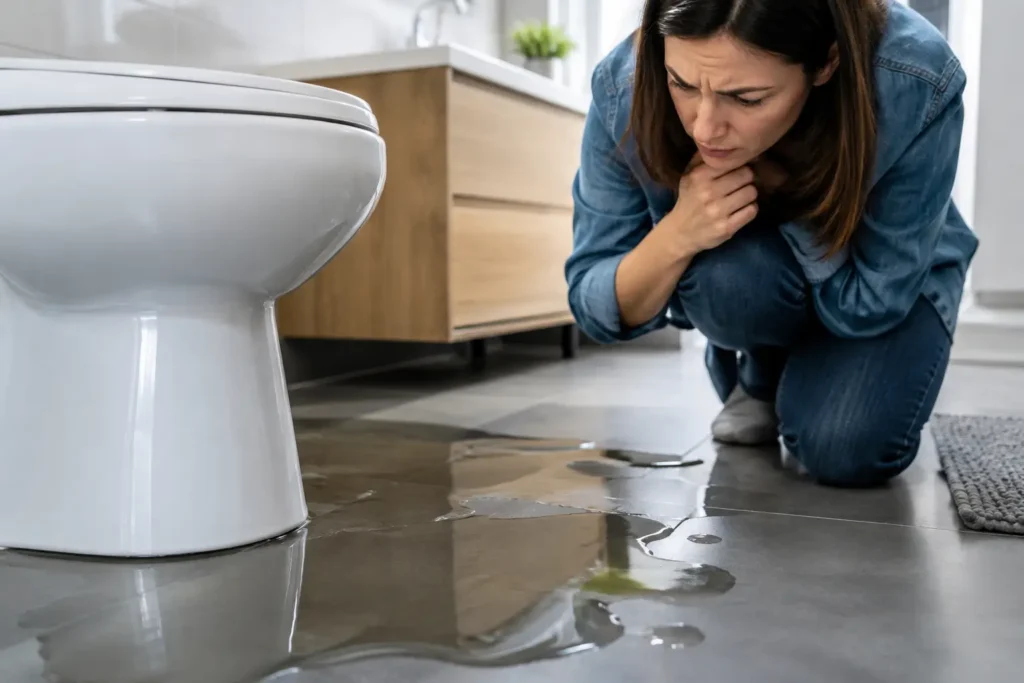
This is one of the clearest signs of a sewer backup. Water follows the easiest available path. When the main line is blocked, wastewater can emerge from a basement floor drain, laundry drain, shower, bathtub, or a first-floor toilet.
The lowest fixture is usually affected first because gravity carries backed-up water there. In a multi-unit building, a lower-level suite or common-area drain may show the issue before upper floors do. Do not assume the water is clean just because it looks mostly clear. Sewer backup water may contain bacteria, sewage, and other contaminants.
You smell sewage indoors or around the property
A persistent sewage smell is never something to ignore. It may come from a dry floor-drain trap, a cracked pipe, or a damaged sewer line, but it can also signal that wastewater is not moving correctly through the system.
Check whether an infrequently used floor drain has dried out. Pouring water into the drain can restore the trap seal and stop an odor caused by evaporation. If the smell remains, becomes stronger when water is used, or appears with other drainage problems, professional diagnosis is the safer next step.
The toilet water level changes unexpectedly
A toilet bowl that rises unusually high before flushing, drains very low afterward, or bubbles without being used may be reacting to pressure changes in the drain system. A simple toilet clog can cause high water, but repeated changes in water level can indicate a larger drainage problem.
Avoid flushing again if the bowl is already high. One more flush can send wastewater over the rim, causing avoidable damage to flooring and nearby walls.
Drains back up when you use water elsewhere
This pattern is especially telling. You flush a toilet and water rises in the tub. You run the washing machine and the floor drain fills. You empty a kitchen sink and hear water moving in a shower drain. These are not isolated fixture problems.
They suggest a restriction in a shared drain line or the main sewer line. Stop adding water to the system until a plumber can identify where the blockage is located.
Why Sewer Backups Happen
Sewer backups do not always result from something a property owner did wrong. Older pipe materials, shifting soil, root intrusion, heavy use, and municipal sewer conditions can all contribute. In Metro Vancouver, mature trees and aging underground infrastructure can make root-related line problems a common concern for some properties.
Inside the property, grease, wipes, paper towels, hygiene products, and heavy food debris can build up in drains over time. Products labeled “flushable” do not always break down reliably once they enter a plumbing system. A single item may not create a blockage, but repeated disposal can narrow the line until normal water use triggers a backup.
Roots are another frequent cause. Tree roots naturally seek moisture and can enter tiny openings in older or damaged sewer pipes. Once inside, they can expand into a dense mass that catches paper and waste. Clearing roots may restore flow, but a camera inspection can show whether the pipe itself is cracked, separated, or deteriorating.
There is also a difference between a private sewer lateral issue and a municipal sewer issue. If nearby homes are reporting similar problems, the source could be beyond your property line. A licensed plumbing professional can help determine where the blockage is likely located and what steps should follow.
What to Do When You Suspect a Backup
Act quickly, but do not make the situation worse. The immediate goal is to stop more wastewater from entering the system and protect people from exposure.
- Stop using toilets, sinks, showers, dishwashers, and washing machines until the source is assessed.
- Keep children and pets away from affected areas, particularly where wastewater has reached floors or carpets.
- Do not use chemical drain cleaners. They rarely clear a main sewer blockage and can create a hazard for anyone working on the line.
- If it is safe to do so, take photos of visible water, affected drains, and damaged belongings for insurance documentation.
- Call a qualified plumbing and drainage professional for urgent assessment, drain cleaning, and camera inspection when needed.
If sewage has entered your home or business, cleanup should be handled carefully. Porous materials such as carpet, insulation, and some drywall may require removal if contaminated. Hard surfaces need proper cleaning and disinfection. The right response depends on how much water entered, how long it remained, and whether the water came from a clean supply line or the sewer system.
How Professionals Find the Real Cause
A proper diagnosis is more useful than simply getting water moving again. Drain cleaning equipment may remove a blockage caused by grease, debris, or roots, while a sewer camera inspection lets the technician see the inside condition of the pipe. This can reveal cracks, offsets, root intrusion, collapsed sections, or buildup that is likely to cause repeat problems.
For a one-time clog, cleaning may be all that is needed. For recurring backups, a camera inspection is often worth the added step because it helps avoid spending money on temporary fixes. A property with an aging line may need scheduled maintenance, localized repair, or replacement depending on the pipe condition and access.
Encano Plumbing & Drainage helps homeowners and property managers in Vancouver and nearby communities assess urgent sewer and drainage issues with practical recommendations and clear next steps. The right solution should address the actual cause, minimize disruption, and explain the work before it begins.
Preventing the Next Sewer Backup
No property can eliminate every sewer risk, but sensible maintenance lowers the odds of a surprise. Keep grease, wipes, coffee grounds, food scraps, and hygiene products out of drains. Use sink strainers where appropriate, and avoid treating toilets like garbage cans.
If your property has large trees near the sewer route, an older sewer line, or a history of recurring clogs, consider a preventative camera inspection and drain cleaning plan. Rental and commercial properties may benefit from regular maintenance because a single backup can affect multiple tenants, operations, and common areas.
When a drain starts gurgling, a toilet bubbles, or water appears in a floor drain, treat it as your plumbing system asking for attention. A fast, professional assessment can help protect the property before a small warning becomes a messy emergency.