
A hidden pipe leak rarely announces itself with a burst pipe and a flooded floor. More often, it starts with something small – a water bill that creeps up, a musty smell near a wall, or a patch of paint that suddenly looks off. If you are wondering how to know if pipe is leaking, the fastest answer is this: watch for changes in water use, wall surfaces, flooring, and sound. Small clues usually show up before major damage does.
For homeowners, landlords, and property managers, catching a leak early can save a lot of money and disruption. A slow leak inside a wall or under a slab can damage drywall, flooring, insulation, cabinets, and even structural materials over time. In multi-unit buildings and commercial spaces, one hidden leak can also affect neighboring units and create insurance headaches.
How to know if pipe is leaking: the early warning signs
The most common sign is an unexplained increase in your water bill. If your habits have not changed but your monthly usage is rising, water may be escaping somewhere behind the scenes. This does not always mean a supply pipe leak – it could also be a running toilet or dripping fixture – but it is a strong reason to investigate.
Another common clue is discoloration on walls or ceilings. Yellow, brown, or copper-colored stains often point to moisture sitting where it should not be. In some homes, paint may bubble, drywall may soften, or wallpaper may peel. These changes usually mean water has been present for more than a day or two.
Smell matters too. A damp, musty odor near a bathroom, laundry room, basement, utility room, or kitchen sink can point to ongoing moisture behind walls or under floors. Even if you cannot see water, trapped moisture encourages mold and mildew growth, and that smell tends to show up early.
Then there is sound. If you hear dripping, ticking, or the faint sound of running water when all fixtures are off, take it seriously. In quiet homes, hidden leaks sometimes make themselves known this way before visible damage appears.
Visible signs around floors, walls, and fixtures
Leaks do not always stay where the pipe is. Water follows gravity and the path of least resistance, so the spot you notice may be several feet away from the actual problem.
Soft or warped flooring is a common giveaway. Wood may cup or buckle. Laminate can swell at the seams. Tile may loosen if moisture has affected the subfloor underneath. In bathrooms and kitchens, a leak under the sink or inside the wall can slowly spread into surrounding cabinets and flooring.
Pay attention to baseboards and trim as well. Swelling, separation, or staining along the bottom of a wall can indicate water traveling down from a leak higher up. In basements and utility rooms, look for concrete dampness, white mineral deposits, or rust on nearby metal components.
Around fixtures, the clues can be more direct. Water under a sink, corrosion on shutoff valves, dampness around a toilet base, or moisture near a water heater often means a connection, seal, or nearby pipe needs attention. Sometimes the issue is simple. Other times, the visible water is just the part that finally made it out.
Simple checks you can do before calling a plumber
If you suspect a leak, a few careful checks can help confirm whether water is escaping somewhere in the system.
Start with your water meter. Turn off all faucets, appliances, and fixtures that use water, including dishwashers, washing machines, and irrigation if possible. Then check the meter. If the leak indicator is moving, or the reading changes after 15 to 30 minutes with no water in use, there is a good chance you have an active leak.
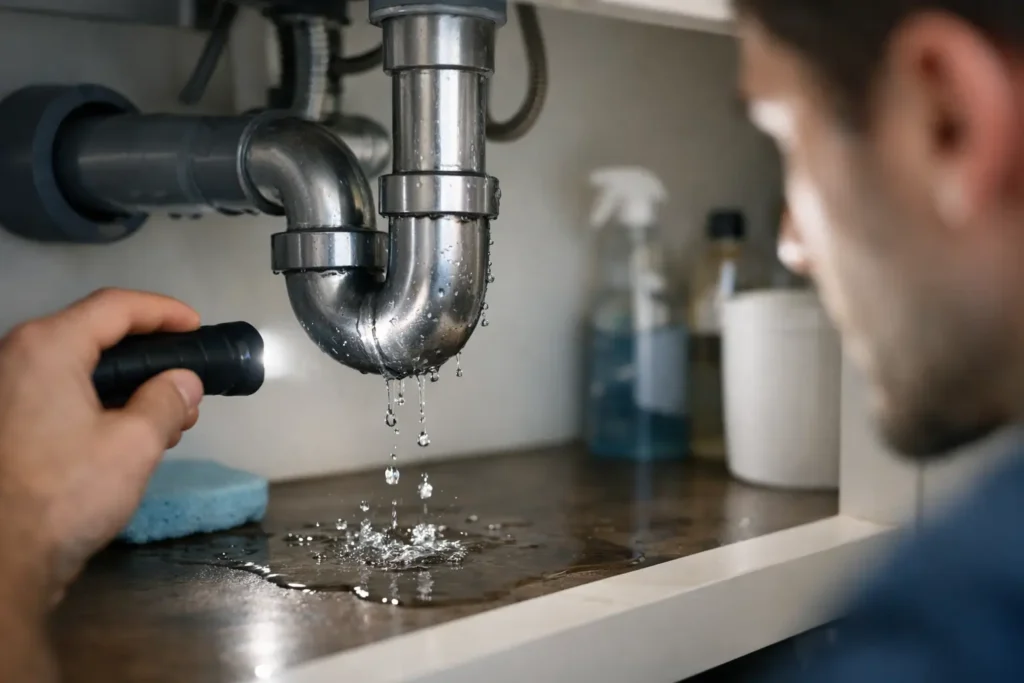
Next, check under sinks and around exposed pipes with a flashlight. Look for active drips, moisture beads, greenish corrosion on copper, rust on steel, or mineral buildup around fittings. Run a dry paper towel along pipe joints and shutoff valves. Even a small amount of moisture can show up clearly that way.
Toilets are another smart place to check because they waste a surprising amount of water. Add a few drops of food coloring to the toilet tank and wait about 10 to 15 minutes without flushing. If color appears in the bowl, water is leaking through the flapper or valve assembly.
You can also pay attention to water pressure. A sudden drop in pressure, especially if it affects more than one fixture, can point to a leak or pipe issue. That said, low pressure can also come from sediment, valve problems, or municipal supply changes. This is one of those cases where it depends on the full picture.
How to know if pipe is leaking behind a wall
A pipe leak behind a wall usually leaves indirect evidence. You may notice a damp smell that does not go away, paint bubbling in one area, drywall that feels soft to the touch, or mold spots appearing with no obvious surface spill. In some cases, the wall may feel slightly warmer or cooler than surrounding areas depending on whether it is a hot or cold water line.
Listen closely too. If you hear a faint hiss or trickling sound inside a wall cavity when no water is running, that is worth investigating. Some homeowners first notice a leak because they hear plumbing noise at night, when the house is quiet.
Do not cut into walls unless you are confident in what you are doing and have ruled out electrical hazards. Hidden leak detection often requires moisture meters, thermal imaging, pressure testing, or acoustic equipment to pinpoint the source with less damage to the wall.
Signs of an underground or slab leak
Leaks under a home or outside the building can be harder to spot, but there are still clues. Warm spots on the floor, cracks in flooring, unexplained moisture, low water pressure, or the sound of running water can all point to a slab leak. Outside, unusually green patches of grass, soggy areas, pooling water, or soil erosion may suggest a buried pipe leak.
In colder seasons, some leaks become more obvious after freeze-thaw cycles stress older piping. In older properties, corrosion and pipe wear are often part of the story. In newer buildings, poor connections, shifting ground, or high water pressure may be the cause.
Because underground leaks can waste a lot of water and affect foundations or landscaping, it is best not to wait too long if the signs are adding up.
When a small leak is not really small
A slow drip may not look urgent, but hidden water damage builds over time. Insulation loses effectiveness when wet. Wood framing can rot. Cabinets can swell and delaminate. Mold can start growing within a day or two in the right conditions. In commercial properties or apartment buildings, delays can also increase liability and disrupt tenants or operations.
The trade-off is that not every stain or odor means an active pipe leak right now. Sometimes the source is an old repair, condensation, roof issues, or poor caulking around a shower. That is why a proper inspection matters. The goal is not just to find moisture, but to identify where it is coming from and whether it is ongoing.
When to call a professional plumber
Call a plumber right away if you see active leaking, water damage spreading, sudden pressure loss, water near electrical areas, or signs of a slab or hidden wall leak. If your meter suggests water is running but you cannot find the source, that is also a strong reason to bring in a pro.
Professional leak detection is especially helpful in larger homes, apartment buildings, commercial spaces, and older properties where pipes may run through walls, ceilings, crawl spaces, or below concrete. A qualified plumber can confirm the source, explain repair options, and help you avoid opening the wrong area or missing a bigger issue.
For property owners in Greater Vancouver, that fast diagnosis can make a big difference. Encano Plumbing & Drainage Ltd. sees this often – what looks like a minor stain or damp smell can trace back to a hidden leak that has been causing damage for weeks.
If you suspect a pipe leak, shut off the local fixture valve if you can identify it. If the leak is more serious, turn off the main water supply and move valuables away from the affected area. The sooner the problem is checked, the better your chances of keeping the repair simple.
A leak does not have to be dramatic to be expensive. If something in your home or building feels off, trust that instinct and check it sooner rather than later.