
Water is creeping across the basement floor. The laundry smell has turned sour. You're staring at a drain that should be taking water away, not pushing it back into the room. That's the moment most homeowners lose time by guessing.
The fastest way to get control of a basement drain backup is to identify the type of water after you've made the area safe. Sewer backup, stormwater intrusion, and a simple internal clog can all show up at the same drain, but they don't behave the same way and they shouldn't be handled the same way.
In Vancouver and the surrounding area, that distinction matters. Older homes, aging sewer laterals, mature tree roots, and heavy rain put a lot more pressure on basement drainage than is commonly realised. If you treat every backup like a minor clog, you can make a bad situation worse. If you assume every puddle is a sewer emergency, you may miss a straightforward fix.
Table of Contents
- Your Basement Is Flooding Here's What to Do Right Now
- Is It the Sewer Main Stormwater or a Simple Clog
- How to Safely Clean Up After a Basement Backup
- Clearing the Drain Without Making It Worse
- From Drain Cleaning to Trenchless Sewer Repair
- How to Protect Your Home from Future Backups
Your Basement Is Flooding Here's What to Do Right Now
Take a breath and do the first three things in this order.
- Stay out of the water if power could be involved. If water is near outlets, extension cords, appliances, or the panel area, don't step into it.
- Shut off electricity to the affected basement area if you can do it safely. If you can't, leave it alone and call for help.
- Stop all water use in the building. No toilet flushing, no showers, no dishwasher, no laundry, no taps.
That third step is more critical than it might seem. A backed-up drain is often the lowest release point in the house. If anyone keeps using water upstairs, that water may end up right back on your basement floor.
Practical rule: Don't start cleanup before you stop the source. Otherwise you're mopping while the plumbing system keeps feeding the problem.
The immediate response workflow is straightforward. Stop water use, remove the drain cover, clean the trap and any visible debris, try a plunger, then move to a hand auger only if the flow still hasn't returned. If the drain still won't normalize, stop and bring in a professional. Chemical drain cleaners are specifically discouraged on backed-up floor drains, and mould can begin forming within 24–48 hours if the basement isn't dried quickly, as outlined in this basement floor drain backup response guide.
The first safe actions inside the room
Once the area is safe to enter, keep it simple:
- Put on boots and gloves: Assume the water is contaminated until you know otherwise.
- Keep children and pets upstairs: Basement backup water can contain more than dirt.
- Lift items off the floor: Cardboard boxes, rugs, laundry baskets, and power bars should come up first.
- Open the space for drying: If conditions allow, increase airflow right away.
A useful companion checklist is this guide to common plumbing emergencies before help arrives.
What not to do in the first hour
Homeowners often lose ground by trying the wrong fix too early.
- Don't pour chemicals into a standing backup: They can sit in the pipe, damage components, and splash back during later work.
- Don't run “just a little water” to test it yet: If the line is blocked, that test can become more flooding.
- Don't assume the floor drain itself is the whole problem: It may only be where a larger issue shows up first.
If you need one practical example, think of a washing machine discharge. A homeowner sees water near the floor drain, runs the sink to check it, flushes a toilet, then starts plunging. In a true main-line problem, those extra fixtures can add enough water to turn a small puddle into a contaminated spread across the room.
Is It the Sewer Main Stormwater or a Simple Clog
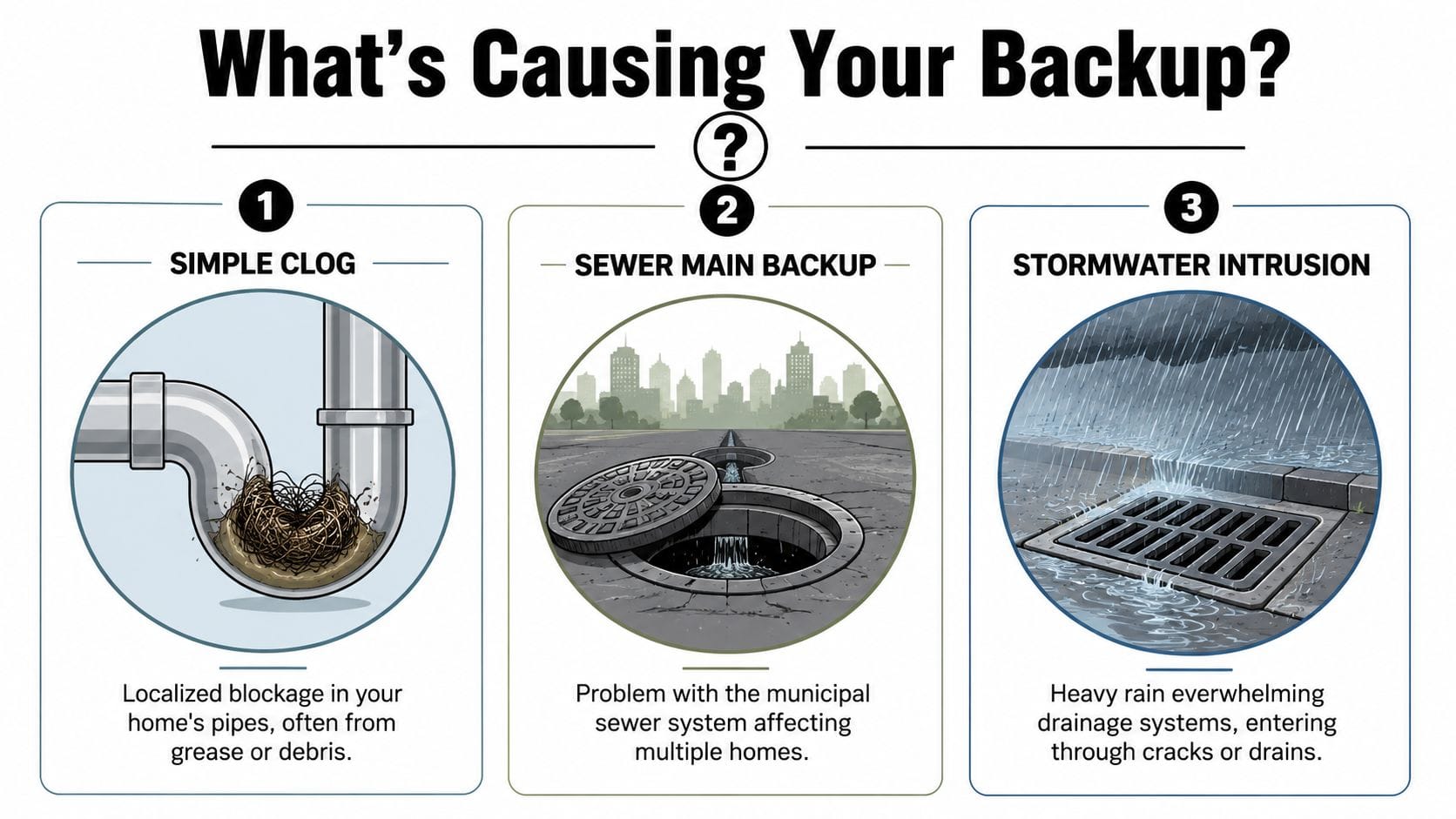
Diagnosis starts with pattern, not panic. Look at when the water appears, what it looks and smells like, and whether other fixtures are involved.
In Canada, water damage has become the largest source of insured property losses, and sewer or drain backup is a major part of that pattern. Severe weather caused more than CA$3 billion in insured losses in 2022, and catastrophic flooding in 2013 produced roughly CA$3 billion in insured damages in Alberta and Toronto-area events combined, as noted in this discussion of insured losses tied to basement drain backup and flooding. In practical terms, heavy rainfall and overloaded sewer systems are no longer edge cases.
Use the water itself as a clue
A quick comparison helps:
| Likely cause | What you notice | What usually triggers it | Best first conclusion |
|---|---|---|---|
| Simple clog | Localized water near one drain, little or no foul odour | Laundry discharge, mop water, slow buildup over time | The blockage may be in the trap or branch line |
| Sewer main backup | Dirty water, sewage smell, possible solids, multiple low fixtures acting up | Water use anywhere in the house, recurring backups | The main line or lateral may be restricted |
| Stormwater intrusion | Backup appears during or right after heavy rain, often with grit or silty debris | Downpours, overloaded municipal systems, groundwater pressure | The issue may be outside the house plumbing alone |
Here's the key difference. A simple clog is local. A sewer main backup affects the system. Stormwater intrusion follows weather.
A practical example from a typical rainy week
A homeowner in East Vancouver notices the basement floor drain burp after the washing machine empties on a dry day. The upstairs bathroom seems normal. There's no strong sewage smell. That points more toward an internal clog near the basement branch or trap.
A different homeowner sees water rise through the floor drain during a heavy rain, even though no one is running taps. The water looks murky and carries fine debris. That pattern points more toward storm-related surcharge or infiltration.
Another common version is this: someone flushes an upstairs toilet and the basement drain gurgles. Then the laundry standpipe starts acting up too. That's a stronger sign of a sewer main issue, not an isolated floor drain problem.
If the backup involves more than one low-point fixture, stop thinking “clog at the drain” and start thinking “restriction in the main path out of the house.”
In older Vancouver-area neighbourhoods, roots, settled piping, and aging laterals can blur these categories. That's where a camera inspection stops the guesswork. A professional drain camera inspection service can show whether you're dealing with roots, scale, a sag, a broken section, or a line that's full of buildup.
How to Safely Clean Up After a Basement Backup
Once the water has stopped rising, cleanup becomes a health job before it becomes a cosmetic one.
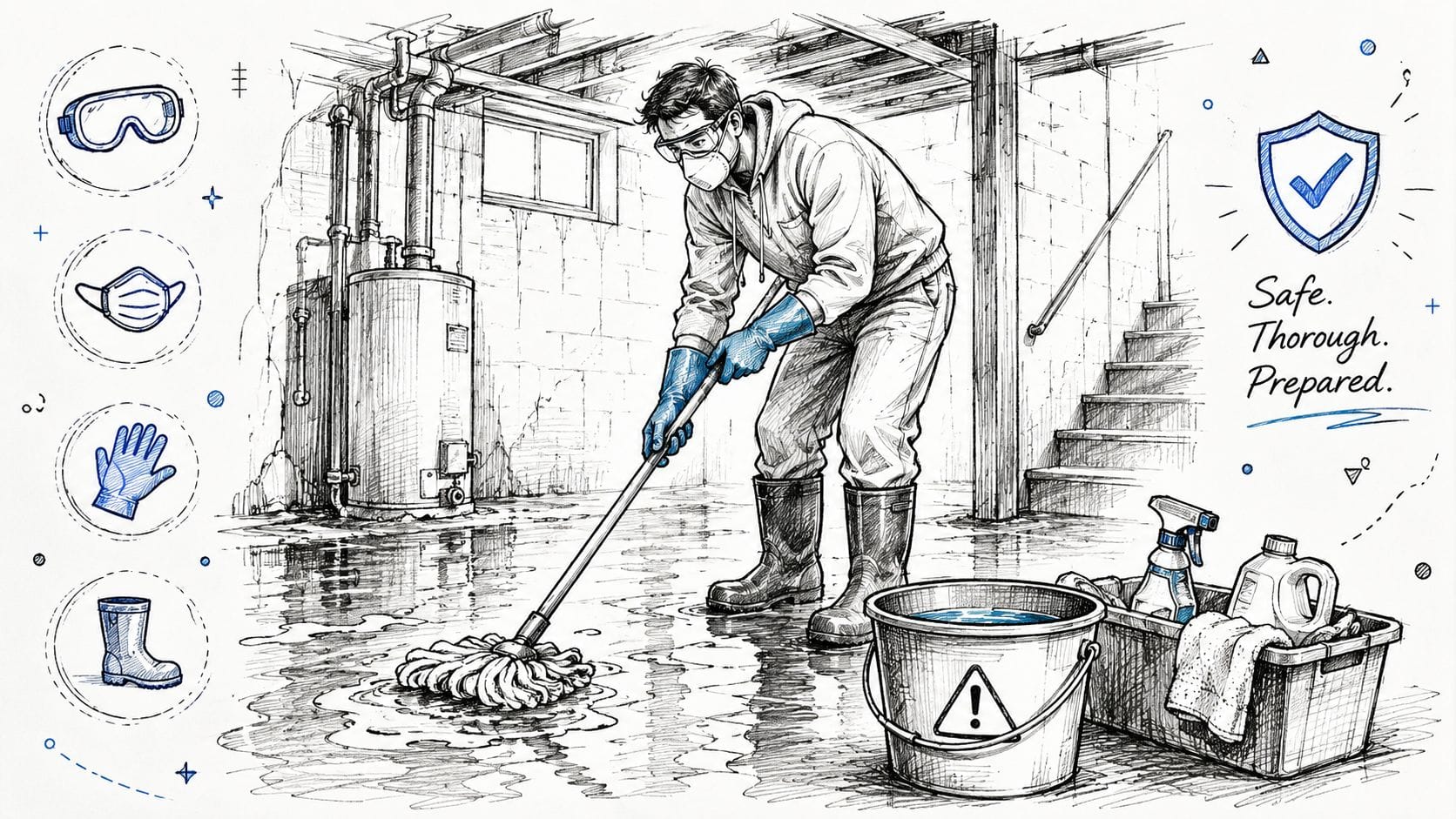
If the water may be sewage, treat it as contaminated. Even when it looks like dirty rainwater, a basement floor drain sits low enough in the system that you shouldn't assume it's harmless. Wear rubber boots, gloves, and a properly fitted mask before you start moving anything.
Protect yourself before you touch anything
Use this order:
- Gear up first: Waterproof boots, heavy gloves, long sleeves, and a mask are basic protection.
- Create a clean path: Don't track contaminated water through the rest of the house.
- Remove standing water: A wet/dry vacuum is useful for hard surfaces if the electrical setup is safe.
- Start drying immediately: Fans and a dehumidifier help limit lingering moisture.
The reason for moving quickly isn't just smell or staining. Damp basement conditions can turn into a mould problem fast if the area stays wet.
Sewage cleanup isn't just about getting the floor to look clean. It's about reducing exposure and getting the structure dry.
What to remove and what to throw out
Hard surfaces such as concrete can often be cleaned and disinfected. Porous items are another story.
- Throw out cardboard and paper goods: They absorb contamination and don't clean up well.
- Be cautious with rugs and fabric storage bins: If they were soaked with dirty water, replacement is often the safer choice.
- Check baseboards and lower drywall edges: If water wicked upward, hidden moisture may remain even after the floor looks dry.
A practical example helps here. If a sewer backup reached a stack of cardboard holiday boxes and the bottom edge of a finished wall, don't waste time trying to save everything. Move clean items out, bag the contaminated cardboard, and inspect the wall cavity early. Homeowners often focus on the puddle and miss what soaked upward.
This walkthrough gives a useful visual sense of cleanup sequencing:
When DIY cleanup should stop
There's a clear line where cleanup needs to become a restoration job.
Call in professional water damage or sanitation help when:
- The water is obviously sewage: Strong odour, visible waste, or repeat backflow.
- The affected area is finished: Carpet, drywall, insulation, wood trim, and stored furnishings complicate drying.
- You can't dry it promptly: Hidden moisture behind walls and under flooring causes the bigger problem later.
- Anyone in the home is vulnerable: Young children, older adults, and anyone with health concerns shouldn't be around contaminated cleanup.
If you only had a small, cleanable surface spill from a simple internal clog, basic cleanup may be enough. If the source is uncertain, act as if contamination is present until proven otherwise.
Clearing the Drain Without Making It Worse
If your diagnosis points to a simple internal clog, you can try a limited DIY clear. Keep the goal modest. You're checking whether the blockage is shallow and local, not trying to force a solution through the entire drainage system.
Start with the least aggressive tool
Begin with the drain cover off and any visible debris removed.
Then work in this order:
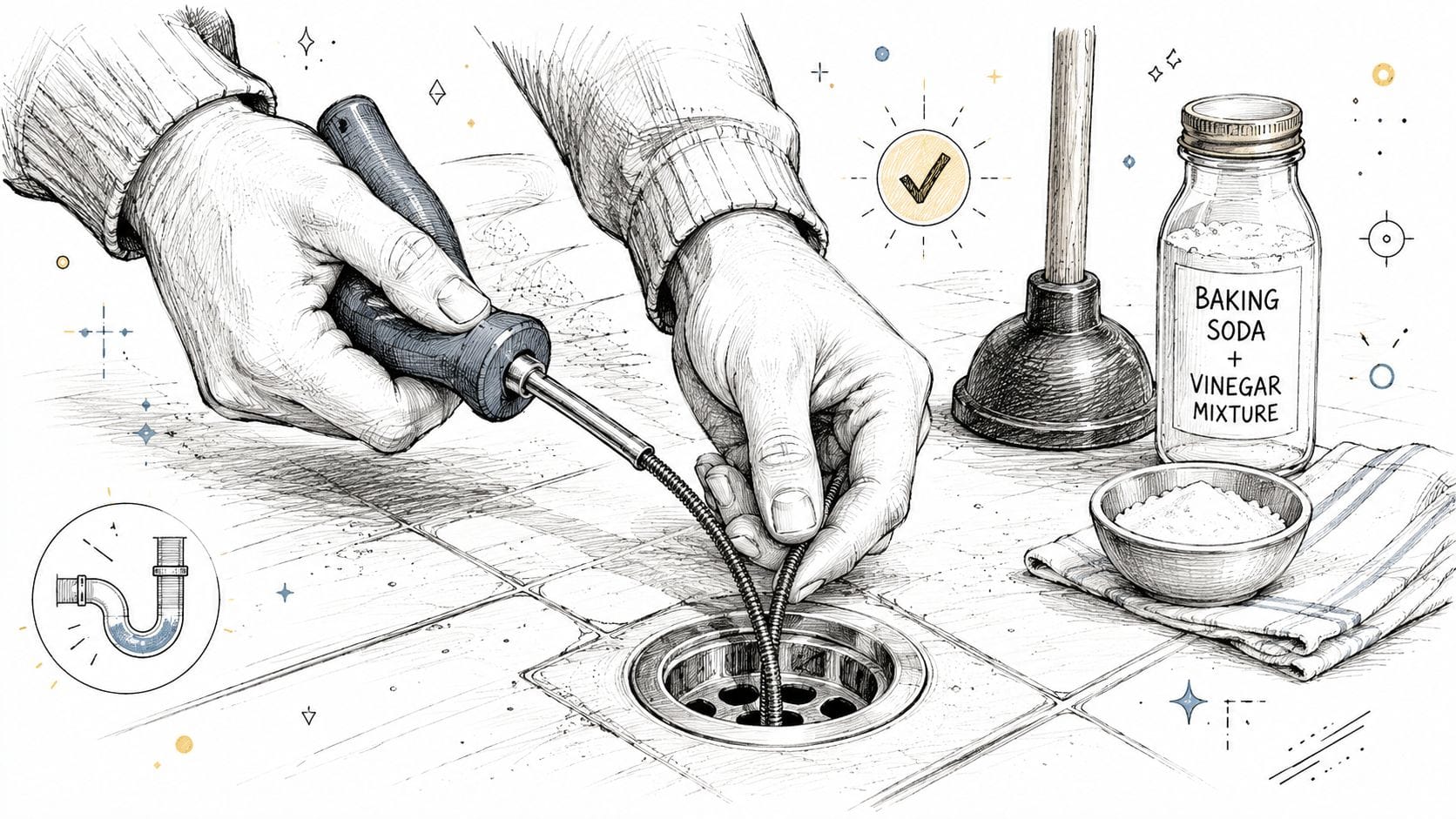
Plunger first
Use a standard cup plunger if it seals well on the drain opening. Add a bit of water around the lip if needed to improve the seal. Give several firm plunges rather than frantic fast ones.Hand auger second
Feed the cable slowly. If it catches soft debris and then moves through, that's promising. If it binds hard, don't crank harder and harder.Controlled test last
Pour in a small bucket of water. Watch whether it drains normally or starts to stand again.
A shallow clog often responds to that sequence. Dirt, lint, soap residue, and small debris loads near the trap or branch line can clear without much drama.
When a DIY drain clear is the wrong move
What doesn't work well is just as important.
- Chemical drain cleaners: These are a poor choice for a backed-up floor drain. The chemicals don't solve a main-line issue, and they can create a hazard for whoever opens the drain next.
- Force with a power tool: Homeowners can damage older piping, especially if the cable kinks or catches.
- Repeated testing with lots of water: Every “let's see if it's fixed now” test adds risk.
Here's a practical example. If you remove some hair and grit, plunge the drain, and a small bucket drains away cleanly, you may have cleared a local blockage. If the auger stops hard after a short run, the drain gurgles, and the second bucket rises back to the surface, stop there. That's no longer a simple DIY clog.
A good DIY attempt ends when the evidence changes. The moment the clog looks deeper, harder, or tied to other fixtures, the right move is to stop forcing it.
From Drain Cleaning to Trenchless Sewer Repair
When a basement drain backup keeps returning, the fix usually isn't “more snaking.” It's a proper diagnosis followed by the right level of repair.
Municipal guidance in North America treats recurring backup prevention as a system issue, not just a clog issue. The highest-value mitigation for repeat basement backups is to inspect the sanitary sewer lateral with a camera every 3–5 years and, if reverse flow from the public sewer is the cause, install a backwater valve. The same guidance also recommends disconnecting downspouts and drain tiles from the sewer system to reduce overload risk during storms, as described in this municipal handbook on basement backup mitigation.
What a professional diagnosis actually changes
Professional work differs from DIY in one main way. It identifies why the backup happened.
Common tools and where they fit:
- Video camera inspection: Finds roots, cracks, offsets, bellies, scale, or collapsed sections.
- Drain augering: Good for restoring flow through many soft or moderate blockages.
- Hydro-jetting: Better when pipe walls are coated with grease, sludge, or root residue that simple snaking leaves behind.
- Trenchless sewer repair: Used when the pipe itself is damaged and cleaning won't hold.
A camera inspection often saves money because it stops random trial-and-error work. You don't want one visit to snake it, another to guess at roots, and a third to discover the pipe has failed.
A practical example of temporary relief versus real repair
Take a home with a recurring basement drain backup every rainy season. The first service clears the line and the water goes down. For a while, that feels like a fix.
Then the issue returns. A camera shows root intrusion at a damaged section of the lateral. At that point, repeated cleaning becomes maintenance on a broken pipe, not a repair. That's where trenchless sewer line repair options start to make sense, especially if you want to avoid digging up a driveway, lawn, or finished hardscape.
Professional repair also matters when the issue is municipal reverse flow rather than pipe damage. In those cases, the right answer may be a backwater valve and drainage corrections, not just more aggressive drain cleaning.
How to Protect Your Home from Future Backups
Prevention works best when you stop thinking in single fixes and start thinking in layers. Hardware, maintenance, and household habits all matter.
Vancouver-area conditions make that approach more important. Municipal and provincial programs in Canada show how common basement backup prevention has become in response to real flood risk. In the City of Vancouver, the Basement Flooding Protection Program has included sump pumps, backwater valves, and drainage upgrades in flood-prone areas, reflecting the city's conclusion that intense rainfall can exceed sewer capacity and cause basement flooding. Regional projections also indicate heavier short-duration rainfall events by mid-century, which increases pressure on basement floor drains, as noted in this overview of Vancouver-area basement flooding prevention measures.
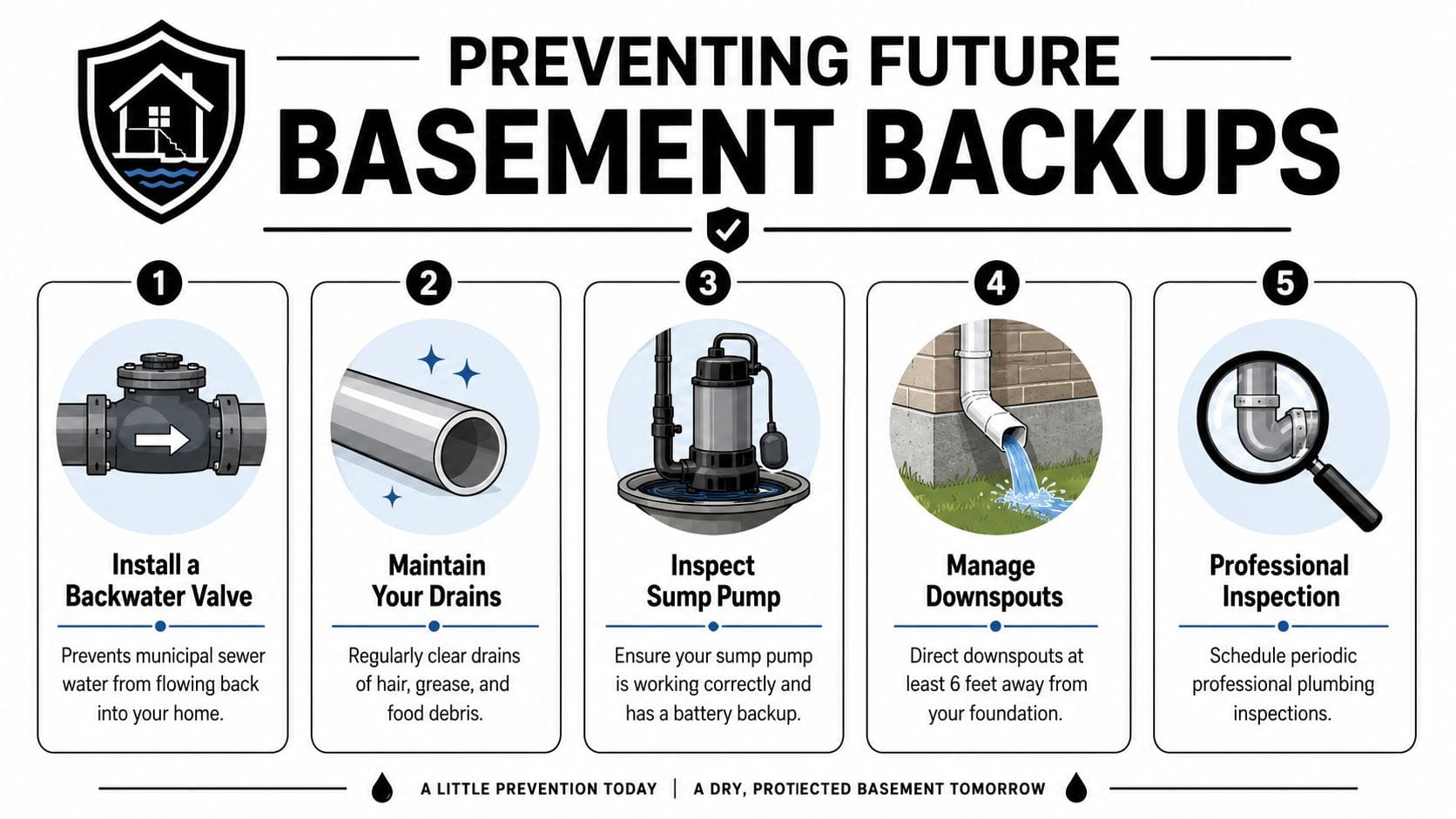
The prevention plan that actually works
Use this checklist as a working plan for the house:
- Install a backwater valve if your risk profile fits: This is one of the most effective defences against reverse flow from the sewer side.
- Maintain the sump pump: Test it before the rainy season and make sure discharge routing is correct.
- Keep downspouts and foundation drainage in mind: Roof water should move away from the house, not toward the footing or sewer load.
- Change what goes down drains: Grease, wipes, lint, and debris create clogs that become much worse under storm pressure.
- Book periodic inspections for older homes: Especially where mature trees and older sewer laterals are part of the property history.
What matters most in Vancouver area homes
A practical example. In a character home with a finished basement, large trees in the front yard, and repeated wet-weather drain issues, the strongest prevention plan usually isn't one thing. It's a camera inspection, root-risk assessment, proper exterior water management, and a backwater valve if the line and municipal conditions warrant it.
The homes that avoid repeat basement drain backup problems usually have two qualities. Someone inspected the system before it failed, and someone fixed the cause instead of only clearing the symptom.
For many homeowners, the best long-term habit is simple. Pay attention to patterns. If the basement drain gurgles during laundry discharge, if odours appear after heavy rain, or if the same drain has needed clearing more than once, act before the next storm does the diagnosing for you.
If you're dealing with a basement drain backup in Vancouver or the surrounding area, Encano Plumbing & Drainage Ltd. can help with emergency response, drain diagnostics, sewer camera inspections, cleaning, and longer-term repair options. When the problem isn't just a clog, getting the right diagnosis early can save your basement, your finishes, and a lot of stress.