A restaurant can run through its hot water supply in the middle of a dinner rush. An apartment building can face tenant complaints before breakfast. In both cases, choosing the best commercial water heaters is less about finding one popular model and more about matching the equipment to real demand, building conditions, and operating costs.
A water heater that is too small creates downtime and unhappy occupants. One that is oversized can cost more to buy and operate than necessary. For property managers, business owners, and facility operators, the right system delivers dependable hot water during peak use without becoming a constant maintenance concern.
Why the Best Commercial Water Heaters Start With Demand
Commercial hot water needs are not measured by square footage alone. A small café with a commercial dishwasher may need more recovery capacity than a much larger office. A multifamily building may have predictable morning and evening peaks, while a fitness center can see a sudden surge after classes end.
Start by looking at when hot water is used, not just how much is used over a full day. Peak demand includes simultaneous showers, hand sinks, dishwashers, laundry equipment, mop sinks, and food-service fixtures. A qualified plumbing professional can calculate the needed first-hour delivery and recovery rate based on your fixtures, occupancy, and usage patterns.
The recovery rate is especially important. It tells you how many gallons of hot water a unit can heat in an hour at a specified temperature rise. In a busy commercial setting, recovery often matters more than tank size. A large tank can be depleted, while a correctly sized high-recovery system can keep up with ongoing demand.
Know Your Temperature Rise
Temperature rise is the difference between the incoming cold-water temperature and the temperature required at the fixture or storage tank. Colder incoming water means the heater must work harder to produce the same amount of usable hot water.
A system sized for mild incoming water may struggle during colder months. Buildings in the Vancouver area should account for seasonal water temperatures, especially when replacing an older heater that has barely kept up in winter. For safety, many commercial systems store water at a higher temperature and use thermostatic mixing valves to deliver safer temperatures at fixtures. This approach can improve available capacity, but it must be designed and installed correctly.
The Best Commercial Water Heater Types by Application
There is no single winner for every property. The best option depends on demand, available fuel, mechanical-room space, venting access, budget, and future operating plans.
Commercial Storage-Tank Water Heaters
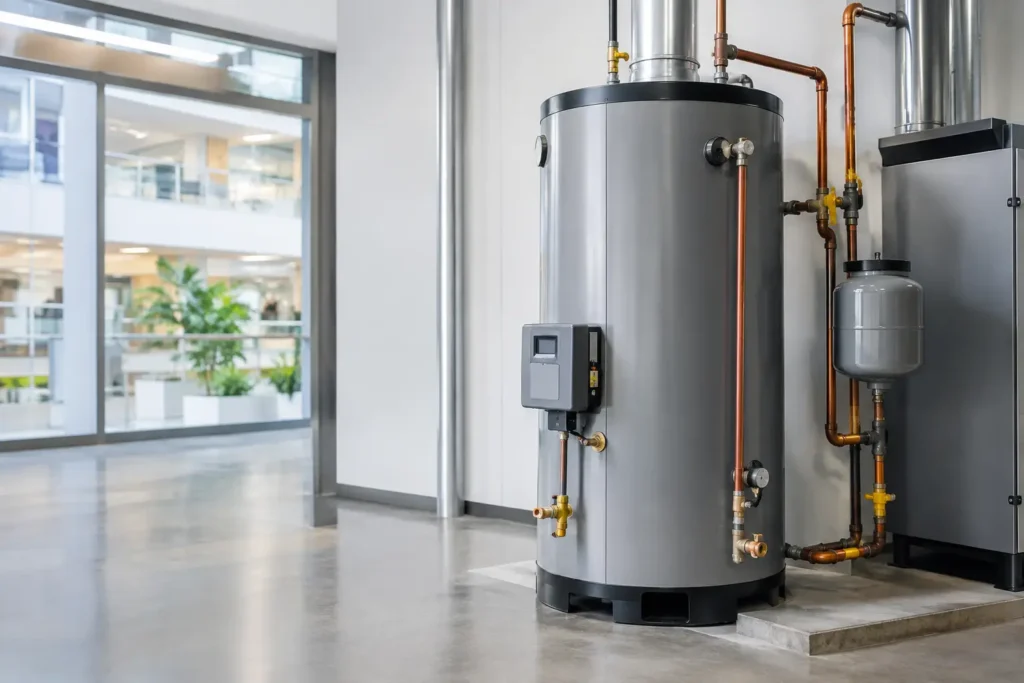
Gas-fired storage-tank water heaters remain a practical choice for many restaurants, apartment buildings, retail facilities, and light commercial properties. They store a reserve of heated water and offer strong recovery when properly sized.
Their main advantage is straightforward performance. They are familiar to many maintenance teams, replacement parts are widely available, and a like-for-like replacement may require fewer building changes than a full system redesign. The trade-off is standby heat loss and floor space. A standard-efficiency unit may also cost more to operate than a condensing alternative.
High-Efficiency Condensing Water Heaters
Condensing water heaters capture heat from exhaust that conventional equipment sends outside. This can significantly improve efficiency, particularly in buildings with steady, high hot-water use.
They are often a smart fit for hotels, multifamily properties, care facilities, and high-demand food-service operations. However, the efficiency gain comes with installation considerations. Condensing units need proper condensate drainage, compatible venting, and regular maintenance to keep burners, drains, and heat exchangers working as intended. A low purchase price does not automatically make a conventional unit the better value over its service life.
Tankless Water Heater Banks
Commercial tankless systems heat water on demand. Instead of one large storage tank, several units can be installed in a bank and staged as demand rises. This design provides redundancy: if one unit needs service, the remaining units may still provide partial hot-water capacity.
Tankless equipment can save space and reduce standby losses, but it is not a shortcut around sizing. A single tankless unit that works well for a small office washroom will not necessarily support a commercial kitchen or multiple apartment suites. High-flow applications may require several units, larger gas piping, upgraded electrical controls, and careful venting design. Hard-water scale also needs attention because it can restrict performance inside the heat exchanger.
Electric Resistance and Commercial Heat Pump Systems
Electric resistance water heaters can make sense where gas is unavailable or where electrical infrastructure and operating costs support the choice. They are often simple to install but may have higher energy costs in high-demand applications.
Commercial heat pump water heaters use electricity more efficiently by moving heat from surrounding air into the water. They can be a strong long-term option for buildings with appropriate mechanical space, ventilation, and electrical capacity. Their performance, noise, cooling effect on the room, and recovery time all need to be considered. In many properties, a hybrid design with storage and supplemental heating is the more reliable answer.
Sizing a System Without Guesswork
The most common commercial water heater mistake is replacing equipment based only on the old unit’s tank size. The existing heater may have been undersized from day one, or the building’s occupancy and equipment may have changed since it was installed.
A proper assessment looks at fixture count, fixture flow rates, equipment requirements, hours of operation, occupancy, and simultaneous use. It also considers whether the building has recirculation piping. Recirculation improves wait times for hot water at distant fixtures, but it adds heat loss and can increase the workload on the water heater if piping is not insulated or controls are poorly set.
For larger buildings, a central plant with multiple heaters may be better than one oversized unit. Staging equipment allows the system to bring on additional capacity only when needed. It can also make future repairs less disruptive, which matters in apartments, restaurants, and facilities that cannot easily close for a hot-water outage.
Fuel, Venting, and Building Constraints Matter
Before choosing a water heater, confirm what the building can support. Natural gas systems may need larger gas lines to supply high-input equipment. Tankless banks, in particular, can require more gas capacity than the equipment they replace. Electrical systems may require panel upgrades, dedicated circuits, or new service capacity.
Venting is another deciding factor. Standard atmospheric equipment, power-vent units, direct-vent units, and condensing models all have different requirements. Vent runs, termination locations, combustion air, drain access, and local code requirements should be reviewed before equipment is ordered. Trying to solve these issues after the unit arrives can delay the project and add unexpected cost.
Mechanical-room access matters too. Measure doorways, stairwells, ceiling clearance, and the route from delivery to installation. A technically correct water heater is not helpful if it cannot be safely moved into place or serviced once installed.
Compare Total Cost, Not Only the Purchase Price
The least expensive heater on a quote may become the costliest option if it wastes energy, needs frequent repairs, or cannot meet demand. Compare expected fuel use, maintenance needs, warranty coverage, installation changes, and the likely working life of the equipment.
A busy business may justify a premium high-efficiency system because the utility savings and reduced recovery issues add up quickly. A small commercial suite with light use may be better served by a simpler, dependable storage-tank heater. The honest answer is often that it depends on the building’s demand profile and how long you expect to own or manage the property.
Water quality should be part of this conversation. Hard water can create scale on heating surfaces, reduce efficiency, and shorten equipment life. Sediment can also collect in tanks. Depending on local water conditions and equipment type, filtration, water treatment, flushing, and descaling may protect your investment.
Plan for Maintenance Before Installation Day
Commercial water heaters need clear access for inspection, flushing, anode checks where applicable, burner service, vent inspection, and leak detection. Equipment crowded into a tight corner may save space initially but can make routine service slower and more expensive.
Ask for a maintenance plan that fits your system. Storage tanks generally need periodic flushing and component checks. Tankless units often need descaling on a schedule tied to water quality and usage. Condensing systems need condensate and venting components inspected. Catching a weak igniter, failing relief valve, or small leak early is far less disruptive than losing hot water during operating hours.
When your current heater shows signs of corrosion, recurring shutdowns, inconsistent temperatures, water around the base, or rising repair costs, it is time to assess replacement before it becomes an emergency. Encano Plumbing & Drainage can help commercial property owners evaluate demand, installation requirements, and practical replacement options with clear recommendations and professional service.
The right commercial water heater should fade into the background of your operation. Plan the system around your busiest hour, maintain it before problems develop, and you will protect the comfort, safety, and daily routine of everyone who depends on it.