A frozen pipe is rarely just a winter inconvenience. As water freezes, it expands and can put enough pressure on a pipe to split it open. The damage may not appear until temperatures rise and the ice thaws, leaving homeowners or property managers with soaked drywall, damaged flooring, and a major cleanup. The best ways to prevent frozen pipes are simple, but they work best when handled before a cold snap arrives.
For homes and buildings around Vancouver and the Lower Mainland, the risk often increases during sudden stretches of below-freezing weather. Mild winters can lead people to assume their plumbing is safe, yet exposed piping in garages, crawl spaces, exterior walls, and vacant units can freeze quickly when temperatures drop.
Why Pipes Freeze in Places You May Not Expect
Pipes freeze when the water inside them is exposed to sustained cold, especially in areas without enough heated air or insulation. The most vulnerable pipes are usually supply lines, not drains, because standing water remains inside them under pressure.
A pipe beneath a kitchen sink on an exterior wall can freeze if a cabinet blocks warm room air. So can a line in an unheated garage, a poorly insulated crawl space, or a utility room with a draft near the foundation. Older homes may have limited insulation around plumbing, while newer buildings can still have trouble at poorly sealed penetrations around vents, wiring, and pipes.
Commercial and multi-unit properties add another challenge. A vacant suite, locked mechanical room, or rarely used washroom may not receive the same heat and daily water use as occupied areas. That is why prevention needs to cover both the building as a whole and its coldest, least visible spaces.
Best Ways to Prevent Frozen Pipes Before Cold Weather
Insulate exposed plumbing and seal cold-air leaks
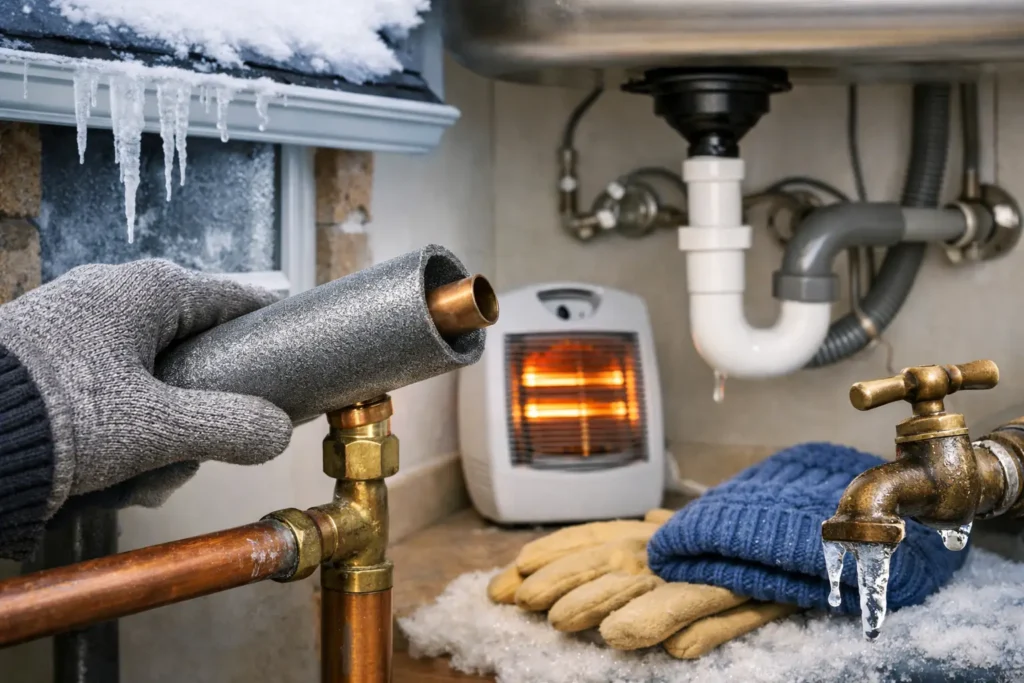
Start by checking pipes in unheated or partially heated areas. Foam pipe insulation is an affordable way to reduce heat loss on exposed water lines in basements, garages, crawl spaces, attics, and utility rooms. Fit insulation snugly, including around bends where possible, and secure it so it does not shift over time.
Insulation helps, but it does not create heat. If a pipe is exposed to outdoor air through a gap in the wall, insulation alone may not be enough. Seal openings around pipe penetrations, foundation gaps, dryer vents, and exterior-wall cracks using materials suitable for the location. Pay close attention to areas where cold wind can move through a crawl space or behind cabinets.
For a pipe that has frozen before, consider a more permanent upgrade. Rerouting the line away from an exterior wall, adding approved heat cable, or improving insulation in that section may be safer than relying on temporary fixes every winter. The right option depends on access, pipe material, and whether the area can be reliably heated.
Keep indoor temperatures steady
Lowering the thermostat substantially at night may save a little energy, but it can raise the chance of frozen plumbing during a cold spell. Keep the building at a consistent temperature, including overnight. A practical minimum for occupied and vacant homes is usually 55 F, though higher settings may be necessary where pipes run through particularly cold areas.
Do not assume that one warm room protects the entire plumbing system. A heat source may be running while a garage, crawl space, or basement corner remains cold enough to freeze a pipe. Check those zones during freezing weather, especially after a power outage or heating-system problem.
If you use space heaters, follow the manufacturer’s safety instructions and keep them clear of combustible materials. They can provide short-term help in a small monitored area, but they should not replace proper insulation or dependable building heat.
Let warm air reach pipes inside cabinets
Kitchen and bathroom sink cabinets can trap cold air when pipes run along an outside wall. During freezing conditions, open cabinet doors to allow warmer indoor air to circulate around the plumbing. Move cleaners, chemicals, and other items out of reach of children and pets before leaving doors open.
This small step is especially useful overnight, when temperatures are lowest. It is not necessary for every cabinet in the house, but it is worthwhile for sinks that sit against exterior walls or have a history of freezing.
Use a small water trickle when conditions are severe
When a hard freeze is expected, allowing a vulnerable faucet to run at a small, steady trickle can help prevent freezing. Moving water is less likely to freeze than water sitting still, and opening the faucet also relieves pressure if ice begins to form downstream.
Use this method selectively rather than leaving every faucet running. Focus on fixtures served by exposed or historically cold pipes. A small stream is generally more effective than an occasional drip, but the exact amount depends on the plumbing layout and how cold the area is. Property owners should also consider water-use costs and make sure sink drains are clear before using this approach.
Disconnect outdoor hoses and protect exterior faucets
Before freezing weather arrives, disconnect garden hoses and drain them. A connected hose can trap water against an exterior faucet, allowing ice to form and potentially damage the faucet or the pipe inside the wall.
If your home has an indoor shutoff valve for exterior faucets, close it and drain the outdoor line according to the valve setup. Frost-free faucets are helpful, but they still need the hose removed to work as intended. Inspect exterior hose bibs for drips, loose handles, or signs of previous freeze damage before winter makes repairs more difficult.
Know where your main water shutoff valve is
Knowing how to stop the water quickly can turn a burst-pipe emergency into a manageable repair. Locate the main shutoff valve before winter, make sure it can be operated, and show other household members, tenants, or staff where it is.
For apartment buildings and commercial properties, management should ensure that responsible staff know the location of suite, floor, and building shutoffs. Clear labeling matters when water is leaking quickly and minutes count. If a valve is seized, corroded, or difficult to access, arrange service before an emergency exposes the problem.
Protect Pipes When You Are Away
A vacant property is at greater risk because nobody is there to notice a heating failure, open a cabinet, or respond to a leak. Before traveling, keep the heat on, set the thermostat to a safe minimum, and ask a trusted person to check the property during prolonged cold weather.
For longer absences, consider shutting off the main water supply and draining vulnerable lines if appropriate for your plumbing system. This can significantly limit water damage if a pipe breaks, but it is not the right choice for every building. Homes with boiler-based heating, fire protection systems, or specific water-treatment equipment may require a different plan. When in doubt, have a licensed plumber assess the setup.
Smart leak sensors and temperature alerts can add useful protection, particularly for rental homes, vacant units, and facilities with multiple plumbing areas. They do not prevent freezing on their own, but early notice can help you act before a small problem becomes a large claim.
What to Do If You Suspect a Pipe Is Frozen
Common warning signs include weak or no water flow from one faucet, frost on visible piping, unusual odors from a drain, or a strange bulge in a pipe. Do not ignore a faucet that has stopped running during freezing weather. The frozen section may be nearby, or it may be farther along the line where you cannot see it.
First, leave the affected faucet open. This gives melting water and pressure a place to escape. Then warm the area gradually using safe methods such as raising the room temperature, opening cabinets, or applying warm air from a hair dryer at a safe distance. Start near the faucet and work toward the suspected frozen section.
Never use an open flame, propane torch, or high-heat device to thaw plumbing. These methods can damage pipe materials, ignite nearby surfaces, or cause steam pressure problems. If the pipe is inaccessible, visibly cracked, or still frozen after safe warming efforts, turn off the water if needed and call a professional.
If a pipe has already burst, shut off the main water supply immediately, switch off electricity in affected areas only if it is safe to do so, and move belongings away from standing water. Fast response limits damage. Encano Plumbing & Drainage can help homeowners, landlords, and facility operators with urgent plumbing repairs when a frozen line turns into a leak.
Cold weather preparation is most effective when it becomes part of regular property maintenance, not a last-minute reaction to a forecast. A quick check of exposed pipes, heating, shutoff valves, and vacant spaces before the next freeze can protect your home or building when temperatures take an unexpected drop.