You notice the kitchen sink taking longer to empty. Then the bathroom drain gurgles when the washing machine runs, and a sewer odour appears near the basement floor drain. One slow fixture can be a local clog, but several fixtures reacting together point farther downstream, often toward the shared sewer line. In Vancouver and across Greater Vancouver, tree root intrusion is identified among the leading causes of sewer backups, alongside oil, fat, and grease buildup, according to the City of Vancouver sewer-backup planning summary.
The most useful way to assess clogged sewer line symptoms is by severity. Early multi-fixture slowing calls for observation and a planned inspection. Gurgling, recurring odours, and unusual yard conditions deserve prompt diagnosis. Sewage in a toilet, an overflowing lower-level drain, or active basement intrusion means you should stop using the plumbing and seek emergency help. Encano Plumbing & Drainage Ltd. serves Vancouver, Richmond, Burnaby, New Westminster, Delta, Surrey, and nearby communities with video sewer inspections, drain cleaning, repairs, and 24/7 emergency response.
Table of Contents
- 1. Slow Draining Fixtures Throughout the Home
- 2. Gurgling or Bubbling Sounds from Drains and Fixtures
- 3. Frequent Backups Requiring Constant Plunging or Drain Cleaning
- 4. Sewage Odours Inside or Around the Home
- 5. Lush, Unusually Green Patches in the Yard
- 6. Toilet Backup and Sewage in the Bowl
- 7. Foundation Cracks, Settling, or Water Intrusion in the Basement
- 7-Point Comparison: Sewer Line Clog Symptoms
- Know When a Sewer Problem Becomes an Emergency
1. Slow Draining Fixtures Throughout the Home
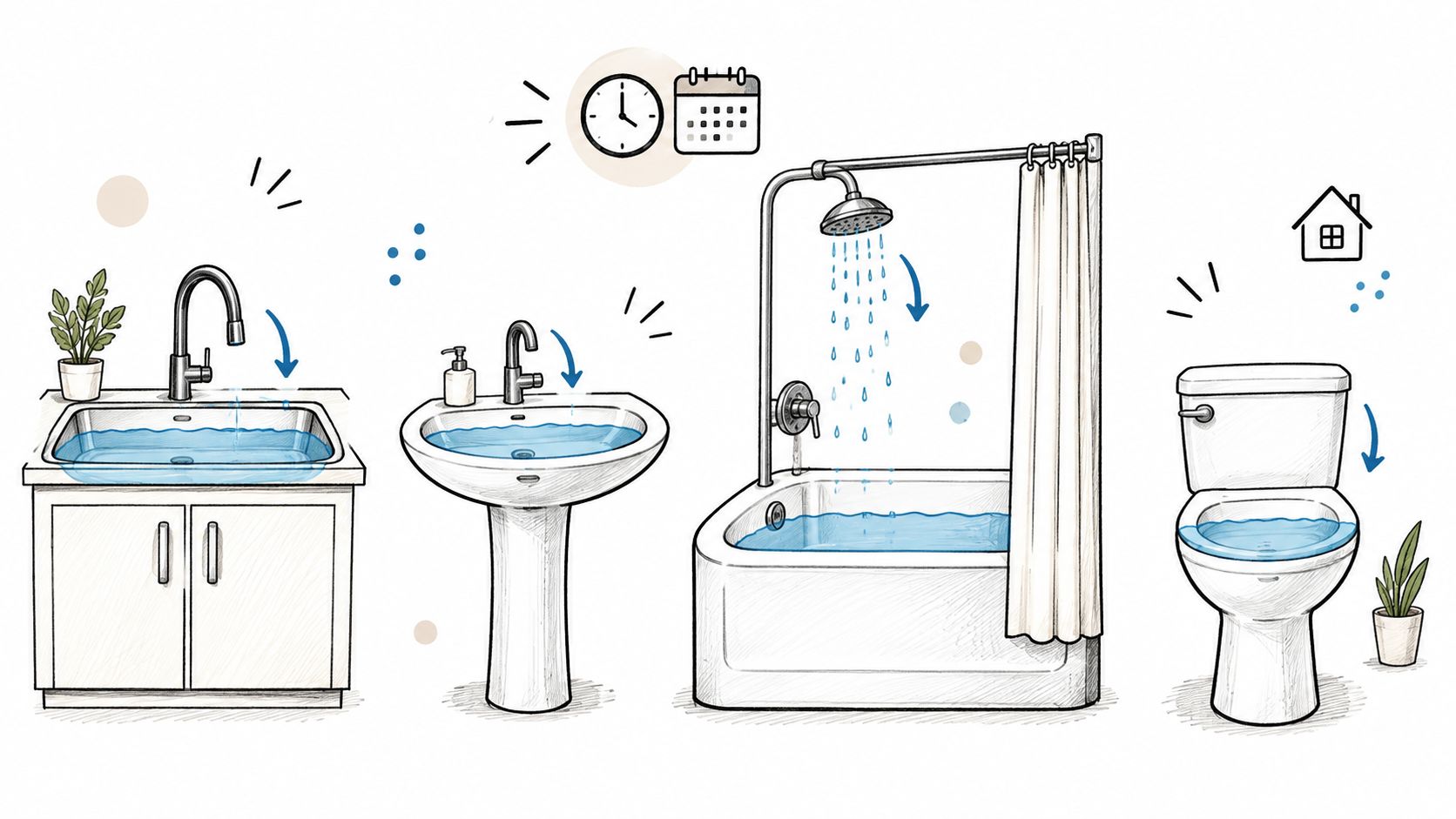
A single slow sink usually starts with that sink's trap, stopper, or branch drain. Several slow fixtures at the same time are different. If the kitchen sink, bathtub, shower, laundry drain, and toilet all begin responding slowly, wastewater may be meeting resistance in the shared line that carries flow away from the home.
Try a simple sequence before calling for service. Run a small amount of water in one fixture, then observe a nearby toilet, tub, or floor drain. Repeat the observation at another fixture. If water rises elsewhere, or if the same sluggishness appears throughout the home, the pattern is more consistent with a main-line restriction than an isolated trap blockage. Canadian homeowner guidance also identifies simultaneous slow sinks and tubs, or a washing machine triggering a toilet or bathtub backup, as warning signs of a shared sewer-line problem in the RBC Insurance sewer-backup guide.
What to check safely
- Record the pattern: Note which fixtures are affected, when the slowdown began, and whether laundry or bathing makes it worse.
- Separate local from shared problems: A hair-covered shower strainer can explain one slow shower, but it won't explain a slow kitchen sink and bubbling toilet.
- Skip chemical cleaners: They usually won't reach or resolve a deeper sewer obstruction, and they can create a hazard for the technician who later opens or cameras the line.
A Richmond homeowner might notice the master bathroom sink, kitchen sink, and shower slowing within the same week. If a plunger helps one fixture only temporarily, repeated spot-clearing won't address the shared restriction. Arrange a professional video inspection, especially if gurgling accompanies the slow drainage.
2. Gurgling or Bubbling Sounds from Drains and Fixtures
A toilet that bubbles when the washing machine drains is communicating more than a noisy plumbing system. A blockage can trap air and change pressure in the pipe, pushing that air back through the water in a toilet, tub, shower drain, or sink. The sound often appears before wastewater becomes visible.
Pay attention to the trigger. Does the gurgle start when someone flushes, showers, empties a bathtub, or runs the washing machine? A Vancouver resident who hears bubbling in the shower drain after flushing a toilet is seeing cross-fixture behaviour that Canadian plumbing guidance treats as an early warning sign of a sewer backup. The Mr. Rooter Canada guide to sewer-backup causes also identifies toilet bubbling and unusual drain noises as signs that deserve attention.
Use the sound as diagnostic information
Record a short phone video if you can do so without running extra water. Include the fixture making the sound and note what appliance or tap was operating. That information helps a plumber distinguish an isolated vent or trap issue from pressure building behind a main-line obstruction.
Practical rule: Gurgling from one fixture deserves investigation. Gurgling that follows water use elsewhere, especially across several fixtures, should be treated as a possible main sewer-line restriction.
A Vancouver homeowner may hear the master bathroom toilet gurgle whenever the kitchen sink is used. Don't keep testing the system by running more water. Stop chemical drain treatments, limit water use, and arrange a camera inspection. If gurgling is joined by rising water, sewage odour, or a lower-level backup, move from scheduled service to urgent response.
3. Frequent Backups Requiring Constant Plunging or Drain Cleaning
Temporary clearing can hide a worsening sewer problem. A cable may open a narrow passage through buildup or roots, allowing water to move again while leaving the underlying defect in place. When the same fixture, or several fixtures, clog again after service, the recurrence matters more than the temporary relief.
Keep a service record rather than relying on memory. Write down the fixture, the date, what was done, and how long normal drainage lasted. Also check whether the problem is isolated. Removing hair from a shower strainer can solve a local shower clog. It won't explain a toilet that bubbles when laundry drains or a basement floor drain that repeatedly receives water.
When repeated clearing stops making sense
A second similar incident is a reasonable point to request professional video inspection instead of authorizing another blind clearing. The camera can show whether the line contains grease or scale narrowing, tree roots, an offset or separated joint, a belly caused by settlement, or a damaged section. California sewer-inspection guidance recommends documenting the footage counter, pipe material and diameter, a sonde-based surface locate with depth, and still images of defects so the owner can plan cleaning, excavation, or repair accurately. Those details are described in this California sewer camera inspection report guide.
Repeated clearing is a treatment. A camera inspection is diagnosis.
A property manager in Surrey who keeps calling for the same restroom drain may be paying for access to flow without learning why the restriction returns. The practical threshold for professional diagnosis is a repeating pattern, not a specific number of visits or a particular time interval. If backups return soon after drain cleaning, ask for documented inspection rather than assuming another cleaning will solve the asset condition.

4. Sewage Odours Inside or Around the Home
A persistent sewage smell is not an unpleasant ventilation issue. It can indicate that gases are escaping through a drain, a cleanout, soil near the foundation, or a damaged section of underground pipe. A blockage can also prevent wastewater and gases from moving normally through the drainage and venting system.
Start by locating the strongest odour without opening a pressurised cleanout or disturbing contaminated ground. Check basement fixtures, floor drains, laundry areas, and the soil around an accessible cleanout. A dry P-trap under a sink or at a seldom-used floor drain can allow odours into the home, so restoring water to that trap may resolve an isolated smell. If the odour keeps returning, or appears alongside slow drains, gurgling, or wet ground, the sewer line needs professional assessment.
Treat strong odours as a safety concern
Keep children and pets away from areas with concentrated sewage odour, particularly enclosed basements. Don't pour chemicals into the drain to mask the smell. A technician may need video inspection and locating equipment to determine whether the source is a clog, root intrusion, cracked pipe, or backup.
A Burnaby homeowner may smell sewage in the basement each morning without seeing a leak. That still warrants prompt diagnosis, because underground leakage can release odours through soil and foundation openings before wastewater becomes visible. In Greater Vancouver, local guidance consistently links recurring sewer odours, gurgling, simultaneous slow drains, and water rising in floor drains with sewer-line trouble, as explained in this Vancouver-area homeowner guide to sewer-backup warning signs. Arrange professional service promptly, and treat any visible sewage as an emergency.

5. Lush, Unusually Green Patches in the Yard
A sharply defined, unusually green or soggy patch can indicate more than healthy landscaping. A leaking sewer line can add moisture and nutrients to surrounding soil, allowing grass or plants above the affected area to look different from the rest of the yard. It's a clue, not proof. Irrigation, drainage from a downspout, and natural runoff can create similar conditions.
Observe before you dig. Mark the patch, photograph it, and note whether it stays green during dry weather or becomes soft underfoot. If the patch follows the mapped route of the building sewer, or if a sewage odour is present, arrange prompt inspection. Don't remove soil yourself. Digging can damage the line further and can expose you to contaminated soil.
Compare the ground with nearby areas
A Surrey homeowner might notice one strip of thick grass following the sewer route while surrounding lawn is dormant. That pattern becomes more concerning if the ground is marshy, the cleanout area smells foul, or indoor drains are also slow. A professional camera with location mapping can connect the visible surface condition to a defect below ground and help determine whether cleaning, repair, or replacement is appropriate.
Coastal conditions can complicate the picture. BC-oriented plumbing guidance notes that intermittent or recurring symptoms may be amplified by heavy rain, saturated soils, and aging infrastructure, while soggy or unusually lush yard areas can point to a deeper main-line issue or root intrusion. Read the practical warning signs in this BC guidance on identifying a main sewer drain clog.
This symptom usually calls for prompt professional diagnosis rather than an emergency call by itself. Escalate immediately if the green patch is accompanied by active sewage, a strong odour inside, rising floor-drain water, or basement intrusion.
6. Toilet Backup and Sewage in the Bowl
A toilet that backs up after one flush may have a local toilet or branch clog. The risk changes when sewage appears in multiple bathrooms, or wastewater rises in a tub, shower, or floor drain. Those patterns point to a blockage downstream of several fixture connections.
Do not flush again to test it. Stop using toilets, sinks, showers, dishwashers, washing machines, and other fixtures until the line is assessed. Keep children and pets away, avoid contact with wastewater, and do not begin cleanup without suitable protective measures because sewage can carry contamination.
Separate a local clog from a shared backup
Start with a safe check: note which fixtures are affected and whether the backup follows a particular flush. One toilet that responds to a single flush is more consistent with a fixture-level problem. Several toilets backing up, or water appearing in a tub or basement drain after an upstairs flush, indicates a shared drainage issue. Wastewater rising inside or spilling from a floor drain is identified as a sewer blockage or backup in the City of Vancouver sewer-backup planning document.
Emergency threshold: Stop all plumbing use and call for 24/7 emergency service when sewage is visible, a toilet is overflowing, or wastewater is entering a lower-level fixture.
For example, a New Westminster homeowner may flush an upstairs toilet and see sewage rise there and in the downstairs bathroom. Repeated plunging can add more water without clearing a downstream obstruction. Emergency technicians can limit further discharge, assess the line, clear the blockage where appropriate, and decide whether video inspection or repair is needed.
7. Foundation Cracks, Settling, or Water Intrusion in the Basement
Foundation movement and basement water are serious signs, but they don't prove that a sewer line caused them. Groundwater, poor grading, drainage failures, and foundation defects can produce similar symptoms. The concern rises when new or expanding cracks, wet soil, sewer odour, a nearby floor-drain backup, or a known sewer route appear together.
Document what you see. Photograph cracks from the same angle, note when they appeared, and record whether water enters after rain, fixture use, or both. Don't dig beside the foundation to find the sewer line. Excavation can worsen soil movement and may expose contaminated material if the line is leaking.
Investigate the plumbing and structure together
A Vancouver homeowner who finds water entering near a basement floor drain and a new foundation crack should investigate both the sewer line and the structure. Waterproofing alone may not address a leaking or displaced sewer pipe, while sewer repair alone may not resolve an independent foundation defect. A camera inspection with surface locating can establish the line's path and its proximity to the foundation. A structural engineer should assess visible movement, settling, or cracks that appear serious or continue to grow.
A Burnaby property with chronic basement moisture may need coordinated plumbing, soil, and structural assessment rather than another isolated patch. If active sewage leakage is suspected, ask qualified professionals whether soil testing and remediation are necessary. This is an urgent professional investigation, and it becomes an emergency when sewage or contaminated water is actively entering the basement.
7-Point Comparison: Sewer Line Clog Symptoms
| Symptom | Implementation complexity 🔄 | Resource requirements ⚡ | Expected outcomes 📊 | Ideal use cases 💡 | Key advantages ⭐ |
|---|---|---|---|---|---|
| Slow Draining Fixtures Throughout the Home | Low → Medium: simple checks; may need pro camera if persistent | Minimal initially (plunger, observation); video inspection if unresolved | Early detection; often simpler, lower‑cost repair when caught early | When multiple fixtures slow simultaneously or after heavy use | Early warning sign; repair easier if addressed promptly |
| Gurgling or Bubbling Sounds from Drains and Fixtures | Low → Medium: audible diagnosis easy but location unclear | Low (recording/notes) → moderate (video inspection, acoustic testing) | Confirms trapped air/pressure issues; leads to targeted inspection | When noises occur during use of other fixtures or across rooms | Distinctive audible cue; useful to document for plumbers |
| Frequent Backups Requiring Constant Plunging or Drain Cleaning | Medium → High: recurring pattern suggests systemic problem | Moderate to high: repeated cleanings waste resources; camera inspection recommended | Diagnostic pattern indicates mainline blockage; usually requires permanent repair | When backups recur within weeks/months despite cleaning | Clear evidence of systemic issue; supports need for full inspection |
| Sewage Odors Inside or Around the Home | Medium → High: odor easy to notice but cause may vary | Moderate: odor tracing, camera inspection, possible gas testing | Indicates significant clog or break; often requires professional repair | When persistent rotten‑egg smell indoors or near cleanout | Prompts immediate action; indicates health hazard if ignored |
| Lush, Unusually Green Patches in the Yard | Medium: visual symptom that helps locate leaks | Moderate: map sewer line, acoustic locate, camera inspection | Pinpoints probable leak location; often reveals pipe breach | When isolated verdant patches appear despite dry conditions | Visual locator for leaks; can reduce search area for repair |
| Toilet Backup and Sewage in the Bowl | High (urgent): emergency condition, immediate intervention | High: emergency plumbing, containment/cleanup, likely sewer repair | Confirms severe mainline blockage; requires rapid remediation | When raw sewage appears in one or multiple toilets | Unambiguous emergency sign; mandates immediate professional response |
| Foundation Cracks, Settling, or Basement Water Intrusion | Very high: complex, multi‑discipline assessment (structural + plumbing) | Very high: sewer repair, foundation remediation, structural engineer | Indicates long‑term/severe damage; major repair and remediation needed | When new/expanding foundation cracks or recurring basement moisture | Signals severe, long‑standing problem; justifies comprehensive fixes and inspection |
Know When a Sewer Problem Becomes an Emergency
Not every slow drain requires an emergency truck, but multi-fixture symptoms shouldn't be dismissed. Early-stage signs, such as several fixtures draining slowly without visible sewage, call for reduced water use, careful observation, and a planned sewer inspection. Keep a log, test fixtures only enough to understand the pattern, and check accessible P-traps if one odour appears at a rarely used drain.
Prompt professional diagnosis is appropriate when gurgling persists, odours return, backups recur after temporary clearing, or a suspiciously lush or soggy yard patch develops. These signs can reflect partial obstruction, root intrusion, a cracked or offset joint, settlement, or another pipe condition. A camera inspection provides evidence that a plunger or chemical cleaner can't provide. In California inspection practice, useful reports include footage distance, pipe details, a surface locate with depth, and images of defects such as roots, separated joints, offsets, bellies, and scale or grease narrowing, as set out in this technical sewer-inspection guidance.
Use a simple response rule
- Monitor and arrange inspection: Multiple slow drains or a recurring clog without visible sewage.
- Call promptly: Persistent sewage odours, cross-fixture gurgling, wet ground, or unusual green growth.
- Seek emergency help: Visible sewage, overflowing toilets, water rising in a floor drain, active basement intrusion, or suspected contamination.
Don't force water through the system, pour chemical cleaners into a suspected main-line blockage, or dig around a sewer route. Encano Plumbing & Drainage Ltd. provides video sewer inspections, drain cleaning, sewer repairs, trenchless replacement, and 24/7 emergency response for homes, strata properties, commercial buildings, and government facilities across Vancouver, Richmond, Burnaby, New Westminster, Delta, Surrey, and nearby communities.
Encano Plumbing & Drainage Ltd. can investigate clogged sewer line symptoms with video inspection, drain cleaning, sewer repair, and trenchless replacement services, with 24/7 emergency response when sewage is backing up or entering your property. Visit Encano Plumbing & Drainage Ltd. to describe your symptoms, book service, and get the right next step for your Vancouver-area property.