
A floor drain is easy to ignore until water starts pooling around it. If you are searching for how to clear floor drain clogs, the goal is not just to get water moving again. You also need to avoid pushing a blockage farther into the pipe, damaging the drain trap, or exposing your home or building to sewer gas.
Floor drains are common in basements, laundry rooms, mechanical rooms, garages, commercial kitchens, and utility areas. They collect dirt, hair, lint, soap residue, grease, and debris that would otherwise sit on the floor. With the right approach, many minor clogs can be handled safely. Slow drains, recurring backups, or foul odors may point to a larger drainage issue that needs professional attention.
Start by Identifying What the Drain Is Doing
Before reaching for a tool or drain cleaner, look at the symptoms. A drain that is simply slow often has debris caught near the grate, trap, or first section of pipe. A drain that backs up when the washing machine runs, a toilet flushes, or another fixture drains may be connected to a deeper branch-line or sewer problem.
Standing water with a musty smell can mean the trap has dried out, especially in an unused basement or garage drain. In that case, the drain may not be clogged at all. The trap is designed to hold water and block sewer gases from entering the room.
If sewage is coming up through the floor drain, stop using water fixtures in the building if possible. Do not run the dishwasher, shower, washing machine, or additional toilets. This is not a normal surface clog, and adding more water can make the backup worse.
How to Clear a Floor Drain Step by Step
For a minor clog, work from the simplest method to the more involved options. Wear rubber gloves, protect nearby belongings, and keep children and pets away from the work area.
Remove the grate and clear visible debris
Start by lifting off the drain grate. Some grates lift out, while others are secured with screws. Put the screws in a small container so they do not disappear into the drain opening.
Use a flashlight to inspect the drain. Pull out visible hair, lint, leaves, mud, or other debris with gloved fingers, a small hook, or needle-nose pliers. Avoid forcing sharp tools deep into the pipe, where they can damage components or become stuck.
In laundry and utility areas, a surprising amount of lint and soap buildup can collect just below the grate. Removing that material may be enough to restore normal drainage.
Flush with hot water and dish soap
If the drain is open but still slow, pour a small amount of liquid dish soap into it, followed by a kettle or pot of hot water. The water should be hot, not aggressively boiling, especially if you are unsure whether the drain piping is older plastic.
Dish soap can help loosen light grease and soap residue. Give the drain several minutes, then test it with more water. This method is best for mild buildup, not a drain holding several inches of standing water.
Use a plunger correctly
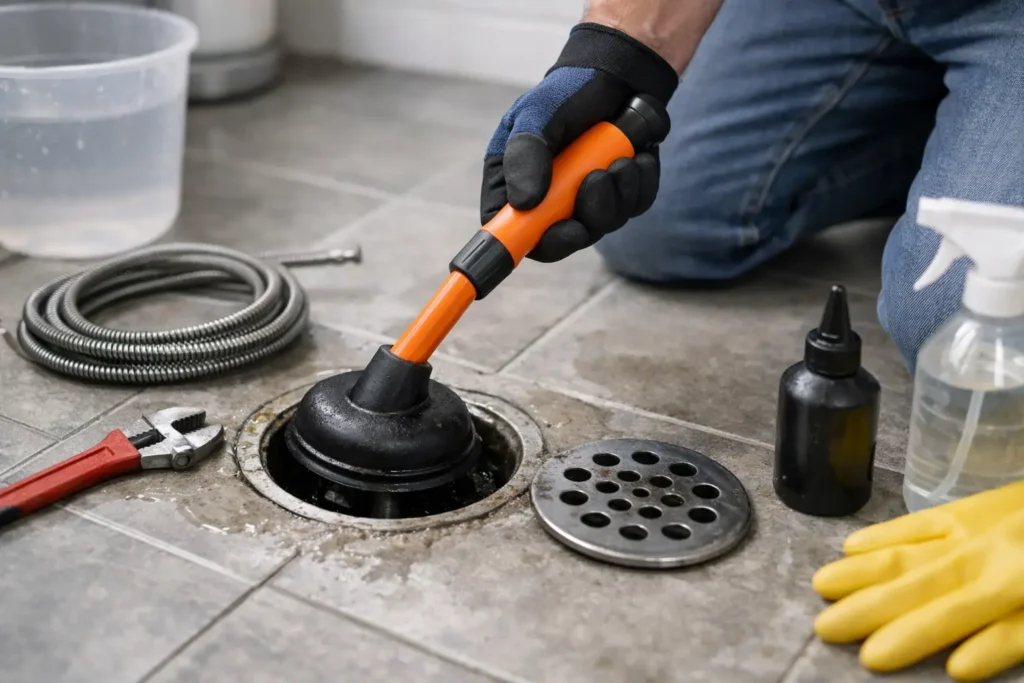
A standard cup plunger can often loosen a clog near the drain opening. Add enough water to cover the rubber cup, place it flat over the drain, and make several firm, controlled plunges.
The seal matters. If the drain is in a large open area and the plunger will not seal well, use a wet rag around the edge of the cup. Check the drain after several rounds rather than plunging endlessly. If water starts moving faster, flush it gently with warm water to carry loosened debris away.
Try a hand-crank drain snake
A hand-crank drain snake is useful when plunging does not solve the problem. Feed the cable slowly into the drain until you feel resistance. Turn the handle gently as you advance the cable. Do not force it. The cable may be meeting a bend in the pipe rather than a clog.
When the cable catches material, pull it back carefully and clean it into a bucket. Repeat as needed, then run water to see whether flow has improved. For most household floor drains, a smaller hand snake is appropriate for light blockages close to the opening.
There is a trade-off here: a snake can clear a simple clog, but aggressive use can scratch pipes, damage a trap, or push compacted debris farther down the line. Stop if the cable will not advance, binds tightly, or returns with sewage.
Check Whether the Trap Needs Water
An unused floor drain can smell bad even when it is clear. The likely cause is a dry trap. Pour about one gallon of water slowly into the drain to refill it. Once the water has entered, add a few tablespoons of mineral oil. The oil floats on top and slows evaporation.
If the odor returns quickly, or water will not stay in the trap, there may be a damaged trap, venting issue, or other plumbing concern. That is a good time to have the drain inspected instead of repeatedly masking the smell.
What Not to Put Down a Floor Drain
Chemical drain cleaners may look like a fast fix, but they are rarely the best choice for a floor drain. Strong chemicals can damage older pipes, harm seals, create dangerous fumes, and make future repairs more hazardous for anyone working on the drain. They may also fail to clear heavy sediment, roots, construction debris, or a deeper sewer blockage.
Avoid using a pressure washer hose indoors, forcing metal rods into the pipe, or mixing any cleaning chemicals. Never mix bleach with ammonia-based products or drain cleaners. If someone has already poured a chemical product into the drain, tell a plumber before they begin work.
A wet/dry vacuum can help remove shallow standing water and loose debris near the opening, but it should not be used as a substitute for proper drain cleaning when sewage is present. Clean and disinfect the equipment afterward if it comes into contact with contaminated water.
Signs the Clog Is Deeper Than the Floor Drain
A single slow floor drain may be a local issue. Several plumbing fixtures acting up together usually means the problem is farther down the drainage system. Watch for these signs:
- Water rises from the floor drain when a toilet is flushed or a washing machine drains.
- Toilets, tubs, or sinks gurgle when other fixtures are used.
- The drain clears briefly, then backs up again within days or weeks.
- You see dark wastewater, toilet paper, or sewage coming through the drain.
- There is a persistent sewer odor even after the trap has been refilled.
For apartments, commercial spaces, and multi-unit properties, these symptoms may involve a shared line. Property managers should document where and when the backup occurs, then arrange service promptly. Waiting can lead to damaged flooring, mold growth, business disruption, and sanitation concerns.
When to Call a Professional Drain Cleaner
Call for professional help when the drain does not respond to basic cleaning, the clog keeps returning, or there is any sign of sewage backup. A licensed plumber can determine whether the issue is at the floor drain, in a branch line, or in the main sewer line. Depending on the cause, the solution may involve power snaking, hydro jetting, camera inspection, trap repair, or sewer line service.
This matters in older homes and buildings around Vancouver and the surrounding area, where aging drain lines, root intrusion, and accumulated scale can create recurring drainage problems. The right repair depends on the pipe material, blockage location, and condition of the line. A quick surface fix is not always the affordable option if it leads to another backup next month.
Encano Plumbing & Drainage helps homeowners, landlords, and property managers address clogged floor drains with straightforward advice, careful diagnosis, and professional drain cleaning when a deeper issue is involved.
Keep the Drain Clear After It Is Flowing
Once the water is moving normally, put the grate back in place and keep the area clean. Sweep dirt and debris away from the drain rather than washing it directly into the opening. In laundry rooms, clean lint around appliances regularly. In garages and work areas, avoid rinsing paint, cement dust, oils, or chemicals into a floor drain.
For drains that are rarely used, pour water into them every few months to maintain the trap seal. A little routine attention is far easier than dealing with a flooded basement or a drain backup during a busy workday.
A floor drain should quietly do its job in the background. When it stops doing that, start with safe, simple cleaning steps, pay attention to the warning signs, and get experienced help before a small drainage problem turns into a messy one.