
You're standing at the sink, brushing your teeth or rinsing a pan, and the water just sits there longer than it should. In a Greater Vancouver home, that little slowdown usually starts as a nuisance and ends as a cabinet full of water, a bad smell, or a weekend you didn't plan to spend under the vanity. The good news is that a slow drain usually gives you a warning before it becomes a true blockage, and the first fix is often a lot simpler than people think.
Table of Contents
- The Sink That Drains While You Brush Your Teeth
- Tools and Safety Gear You Need Before You Start
- Four DIY Fixes from Easiest to Most Involved
- When the Problem Is Not the Clog You Think It Is
- Time, Cost, and When to Call Encano
- Prevention Habits That Keep the Drain Flowing
- Knowing When to Stop and Call Encano
The Sink That Drains While You Brush Your Teeth
The most common slow sink I see is the one that still drains, just not fast enough to keep up with real life. You turn on the tap, finish brushing, and the basin is still holding a shallow pool that should've gone in seconds ago. That usually means the pipe is partially restricted, not fully blocked.
What's actually slowing the water down
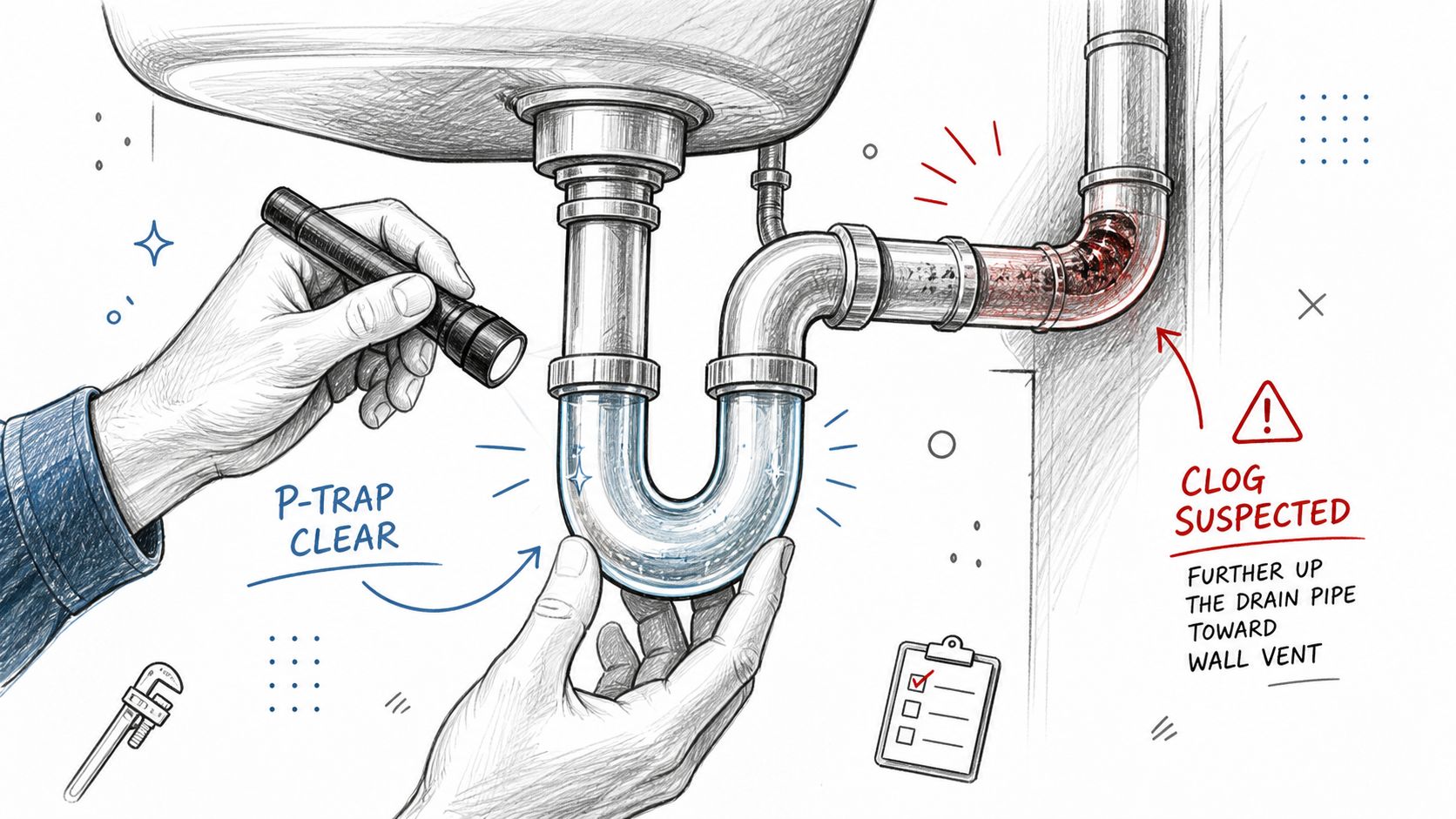
In most homes, the first trouble spot is the stopper assembly. Hair, soap, toothpaste, and kitchen residue collect right where the water first enters the drain, and that mess can cling to the drain opening long before anyone notices a bigger problem. If the stopper is clear, the next likely stop is the P-trap, where sludge settles in the bend and narrows the flow.
A deeper restriction can also sit farther down the line, especially in kitchen sinks where grease and fine debris travel past the visible parts of the drain before they harden. That's why a sink can start as “a bit slow” and later become a full backup. The water is warning you that the opening is shrinking.
Practical rule: if the sink still moves water, don't treat it like a disaster yet. Treat it like a small blockage you can often catch before it turns into a cabinet leak.
A Richmond townhouse owner once ignored the gurgle in a bathroom vanity for weeks because the sink still drained eventually. By the time it stalled completely, the repair had gone from a simple cleanout to a weekend emergency with towels on the floor and a call that could've been avoided. That's the pattern with slow drains. They rarely fail all at once.
If you want the short version, slow draining means the pipe is still open enough to pass water, but not open enough to pass it cleanly. That distinction matters, because it tells you where to start, and where to stop if the problem keeps coming back.
Tools and Safety Gear You Need Before You Start
Before you touch the drain, clear the cabinet and put everything within reach. A good DIY setup keeps the mess contained and keeps you from dripping sink water all over the floor while you hunt for a tool. The usual kit is simple, but the order matters more than the brand.
Set the counter before you loosen anything
Gather a bucket, adjustable pliers, a cup plunger, a flashlight, old towels, rubber gloves, and a rag for the cabinet floor. A small hand auger or drain snake helps if the drain is stubborn, but it's optional for the first pass. A trash bag nearby makes the job sanitary when you pull out the glop that's sitting in the stopper or trap.
If you're under a sink with shut-offs, it's smart to close the relevant supply valves only if you're planning to work around the faucet or expect spray while disassembling parts. Most slow-drain fixes don't need a full water shutoff, but they do need a dry workspace and enough room to move without bumping the P-trap.
Practical rule: skip harsh chemical drain cleaners. They're a bad fit for old plumbing, they can damage fittings, and they don't help you diagnose where the blockage actually is.
A flashlight changes the job from guesswork to inspection. You can see whether the stopper is packed with hair, whether the trap is crusted with soap or grease, and whether you already have a leak from a previous over-tightened fitting. If the cabinet smells musty before you start, assume there's already old moisture under there and protect the base with a towel.
The goal is simple, start clean, stay dry, and keep the drain parts organised. If you've got the tools laid out and you know where the bucket goes, the fix usually stays in the DIY lane long enough to be worth doing yourself.
Four DIY Fixes from Easiest to Most Involved
Start at the stopper, not the trap
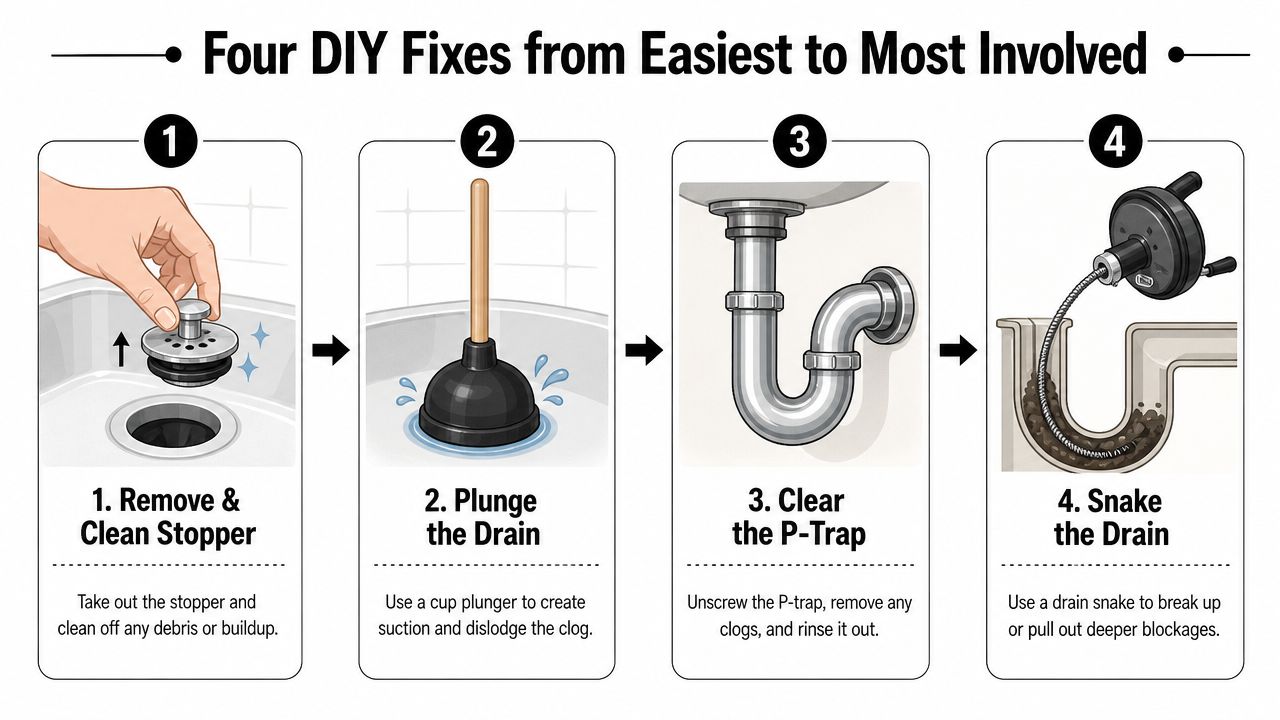
The fastest fix is often the messiest one. Pull the stopper, wipe off the visible hair and soap build-up, and clear the drain opening with your fingers, a stick, or a small snake if you have one. A bathroom sink that pools water but still drains eventually will often come back to life right there, because the blockage sits at the top, not deep in the plumbing.
If that clears the drain, run water for a moment and watch the surface. You want steady flow, no lingering pool, and no gurgle from the basin. If the sink still hesitates, move on.
Use the simple flush only when the blockage looks light
Baking soda and vinegar work best as a maintenance-style flush, not a miracle cure for a hard clog. The common mix is 1/2 cup baking soda followed by 1/2 cup vinegar, then let it sit for 15 to 30 minutes before flushing with hot water. Hot water is usually run for 30 seconds to 1 minute.
This helps when the drain is sluggish from light residue, not when the sink is full of standing water. It can loosen organic build-up and freshen a drain that is starting to slow down. If the water does not improve after the flush, do not keep repeating it all afternoon.
The mistake I see most often is people treating vinegar like a substitute for real cleaning. It is not. It is a light-touch step, not a rescue plan for a packed P-trap.
Plunge with a proper seal
A cup plunger can move a small restriction that is sitting just past the stopper. Fill the basin enough to cover the cup, seal the overflow opening with a wet rag if the sink has one, then plunge with 10 to 15 strokes. Use firm, controlled pressure, not frantic pumping.
You are trying to create movement in the pipe, not beat the fixture into submission. After plunging, pull the plug and watch how the water goes down. If the drain suddenly clears and the sound settles, you have likely dislodged a shallow blockage.
Clean the P-trap when the first three steps do not work
If the sink is still slow, put the bucket under the trap and loosen the slip nuts by hand first. Then use pliers only if needed, and reassemble the fittings by hand-tightening, followed by a small snug if required. Overtightening can crack the fittings and create a leak you did not have before.
This is the stage where you physically remove the sludge instead of pushing it farther down the pipe. Clear out the trapped hair, grease, and soap scum, then run water and check the joints for leaks. If the trap comes out packed with compacted gunk, that was probably the restriction all along.
A Surrey homeowner once walked through all four of these steps on a kitchen sink that had slowed over several months. The stopper was dirty, the drain flush helped a bit, the plunger moved it further, and the P-trap finally revealed a tight plug of grease and food residue. The whole job stayed under an hour because the fix started at the fixture and stopped before the problem got deeper.
If the sink keeps slowing after a cleanout, a drain camera inspection helps show whether the problem sits farther down the line instead of inside the sink assembly.
What to look for after each fix
- After the stopper cleanout: Water should drain without pooling at the opening.
- After the flush: You should hear less gurgling and see faster flow.
- After plunging: The basin should empty more evenly, without a return backup.
- After the P-trap clean: The sink should run dry under load, with no leak below.
If none of those checks changes the drain's behaviour, the blockage may not be inside the sink assembly at all.
When the Problem Is Not the Clog You Think It Is
A clear stopper and a clean trap don't end every slow-drain case. If the sink is still lazy after the fixture parts are clean, the next question is whether the issue is in the vent path or in a shared branch line. Those are the two problems most homeowners miss, because they don't look like a simple clog.
Venting problems show up as air, not just blockage
When a vent is blocked or undersized, the drain can't move air properly, so the water slows down and may gurgle. If the trap is clear but the sink still hesitates, listen for bubbles, look for odd noises when nearby fixtures drain, and notice whether the smell from the drain changes after use. That pattern points away from surface debris and toward an airflow issue.
Technical DIY discussions often stop at plungers and trap cleaning, but venting deserves attention when the simple fixes don't change anything. In colder conditions, vent problems can be harder to spot because roof and stack issues can be intermittent. That's when a camera inspection becomes more useful than another round of vinegar.
Shared branch lines need a different response
In a strata building or older duplex, one slow sink can be the first sign of a partial blockage farther down the shared line. If a nearby tub, toilet, or laundry sink also slows down, you're no longer dealing with one fixture. You're dealing with a system issue.
That's the point where a homeowner should stop treating it like a single-sink problem. A camera inspection can show whether the blockage is in the branch, whether the line is damaged, or whether the venting is part of the fault. The issue is often less about the sink itself and more about how that sink connects to the rest of the building.
Practical rule: one slow sink is usually a fixture problem. Two or more slow fixtures, or a sink that gurgles when another drain runs, deserves a proper inspection.
For a deeper look at inspection options, see drain camera inspection services. A Burnaby condo with a roof vent blockage can look exactly like a stubborn clog from inside the suite, and a New Westminster duplex can show the same symptoms when a shared branch line is partially restricted. The trick is knowing when the drain is telling you about the building, not the basin.
Time, Cost, and When to Call Encano
A slow kitchen sink often starts as a small, cheap job. If you already have a bucket, pliers, and a flashlight, the DIY side can stay close to zero unless you need a new stopper, a replacement washer, or a bottle of drain cleaner you probably should not rely on in the first place. Homefixx's slow sink drain cost guide puts many DIY slow-drain fixes in the $0 to $50 range, while a standard professional residential drain-clearing visit rarely goes above $275. That spread is why I tell homeowners to start at the fixture and only pay for more help once the sink proves it is more than a local blockage.
What the budget looks like in a real building
In a Vancouver strata or older duplex, the choice is usually not between “cheap” and “expensive”. It is between a quick fix at the sink and a bigger bill if a shared line or venting issue gets ignored. If the drain is acting up on its own, a homeowner can usually handle the first round of work. If other fixtures join in, the job stops being about one basin and starts becoming a system problem.
Keep the first pass simple. Check the stopper, flush the line, use the plunger, then open the trap if the sink is still the only fixture giving trouble. Call a plumber sooner if water shows up under the cabinet, if another drain gurgles when this sink runs, or if the smell has that sewer edge that points past a basic clog.
| Approach | Typical Cost | Time Required | Best For |
|---|---|---|---|
| DIY sink cleanout | $0 to $50 | About 30 to 90 minutes | Stopper debris, light soap scum, a dirty P-trap |
| Professional drain clearing | Rarely above $275 | Usually a single service visit | Recurring clogs, shared lines, deeper obstructions |
If you want a quick way to judge whether the problem has moved past DIY, review the warning signs that call for professional drain cleaning. A sink that clears after one cleanout is a different job from a sink that slows again the next day. The repeat pattern is what costs homeowners time and can turn a small repair into a cabinet leak.
What to have ready when you call
Have the sink location, the building type, and the steps you already tried. If you are in a townhouse, condo, duplex, or older house, say that right away, because it helps narrow whether the problem sits in the trap, the branch line, or the vent. For landlords and strata managers, a clear note of what was happening and when it started often saves a round of back-and-forth.
Encano Plumbing & Drainage Ltd. provides drain cleaning and emergency plumbing across Vancouver, Richmond, Burnaby, New Westminster, Delta, Surrey, and nearby communities, with 24/7 response and tools like video inspection and high-pressure jetting. That is the right next call when the sink stops behaving like a sink problem and starts acting like a plumbing system problem.
Prevention Habits That Keep the Drain Flowing
The small routine that actually holds up
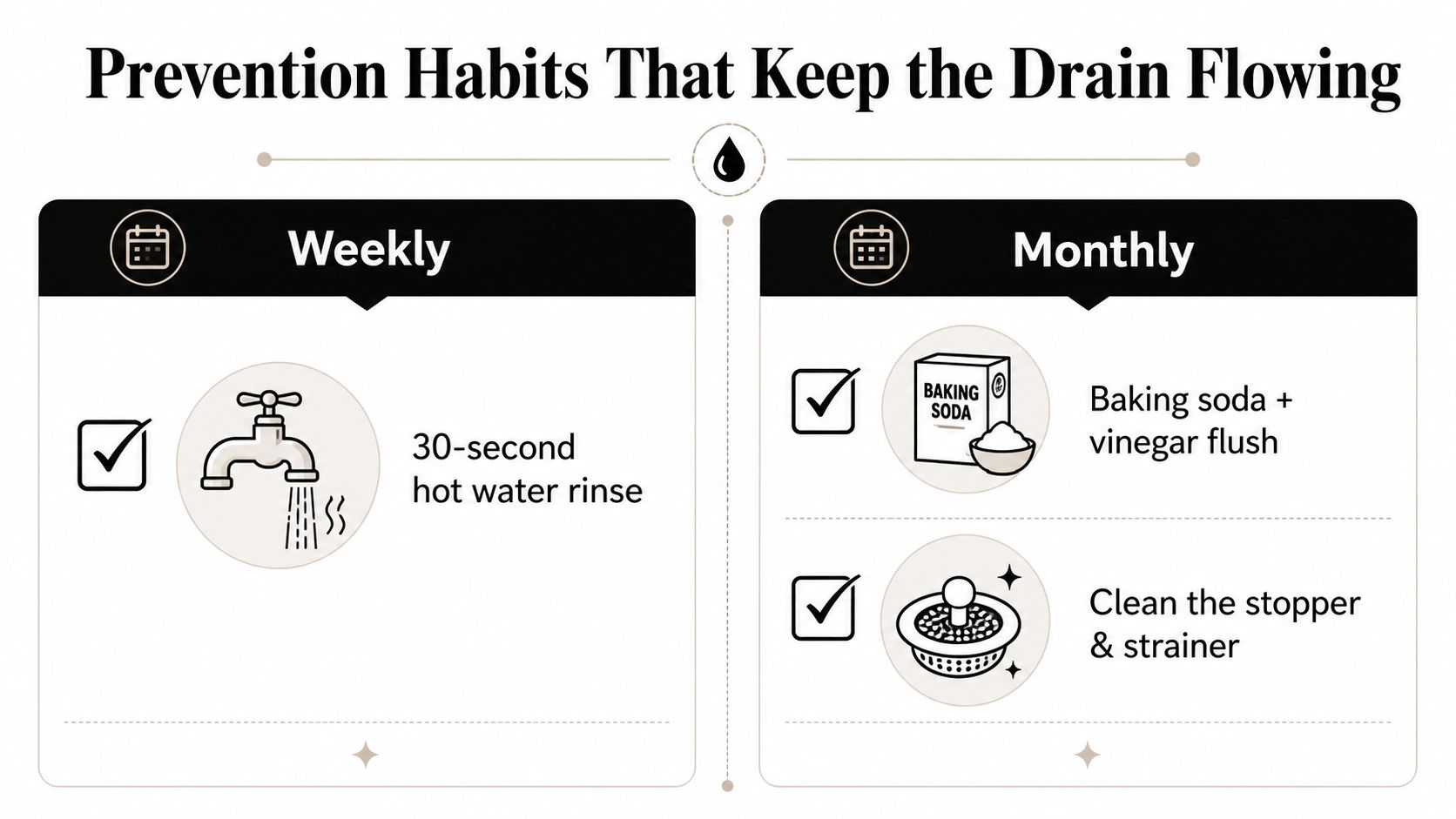
After a heavy kitchen cleanup, run hot water through the sink for about 30 seconds. Grease cools fast in Vancouver kitchens, especially after pans, plates, and sauce dishes have all gone through the same drain. A quick rinse right after use keeps that film from settling in the line.
Once a month, do a baking soda and hot water flush to slow down early soap scum and mild residue buildup. Save vinegar for odour control if you want it, but maintenance is about clearing film, not chasing a reaction. In the bathroom, keep the stopper and strainer clean so hair does not start the problem at the surface.
What belongs in the sink and what doesn't
A mesh strainer in the kitchen and a hair catcher in the bathroom cost very little and save a lot of time under the cabinet later. Keep coffee grounds, eggshells, flour, and so-called flushable wipes out of the drain. Those materials are common repeat offenders, and in multi-unit buildings they can pile onto an already stressed line.
If you want a simple rule for the kitchen, follow these habits that help prevent frequent drain clogs in your home. The short version is to keep solids, grease, and sticky residue out of the sink before they ever reach the trap or branch line.
If a family keeps to two habits, a weekly rinse and a monthly cleanout, they usually spend less time dealing with surprise backups and more time ignoring the sink, which is exactly what plumbing should let you do.
A Vancouver family that kept getting repeat drain calls cut those visits back after adding strainers and sticking to a regular rinse routine. That is the goal. Fewer surprises, less strain on the drain, and a sink that stays open long enough to stop being a chore.
Knowing When to Stop and Call Encano
A sink that drains slowly after a basic cleanout is usually still a fixture-level problem. Once the same sink keeps backing up, though, the job gets bigger. If water is coming up in another fixture, if you smell sewage, or if you see moisture or staining under the cabinet, the blockage is no longer staying in the visible parts of the sink. That is the point where DIY stops making sense.
Two problems get missed a lot in BC homes. The first is a venting issue. A blocked or poorly performing vent can leave a sink draining sluggishly even when the trap looks clean. The second is a shared branch line issue, which shows up when more than one fixture is slow or the backup keeps returning after you clear the sink itself. In both cases, pouring in another cleaner or running the plunger again usually only buys a little time.
Encano Plumbing & Drainage Ltd. works across Vancouver, Richmond, Burnaby, New Westminster, Delta, Surrey, and nearby communities. The crew has 10+ years of experience, 24/7 emergency response, and the tools to inspect and clear deeper drain problems, including video inspection and high-pressure jetting. That matters when the issue sits in the vent, the branch line, or farther into the system than a homeowner can reach from under the sink.
Have a few details ready before you book. Note which fixture is affected, what type of building you are in, and what you have already tried. That makes the call more efficient and gives the technician a better starting point. If the sink is just slow, a homeowner can often handle it. If it keeps coming back, or if the problem has spread, stop early and call Encano before the cabinet gets wet or the blockage moves farther through the line.