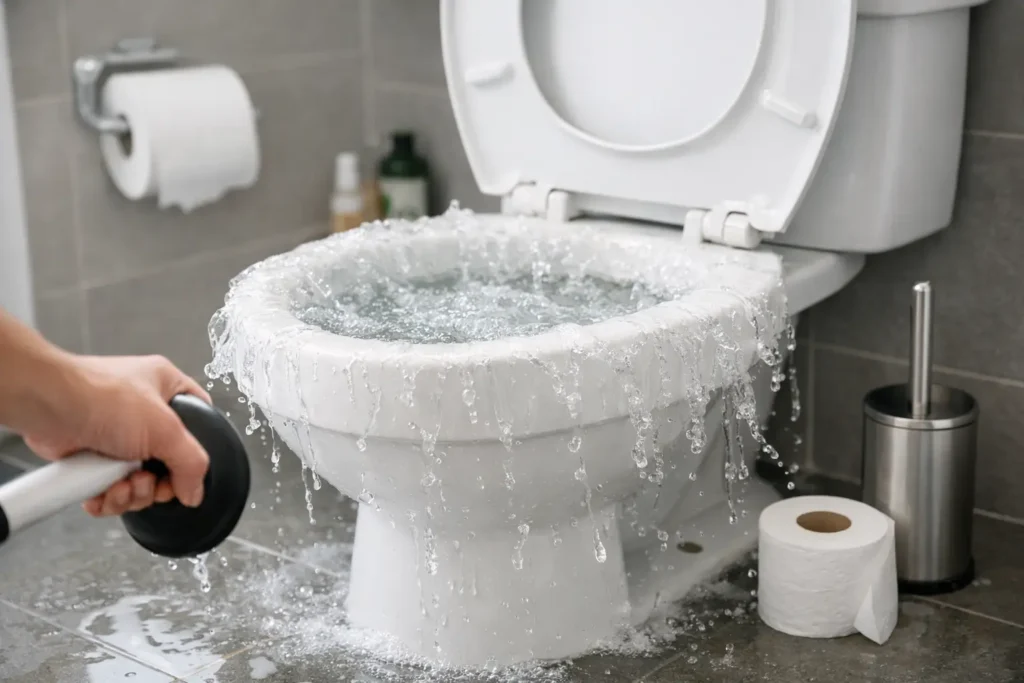
The water is rising, the floor is getting wet, and flushing again is the last thing you should do. Knowing how to stop an overflowing toilet quickly can prevent damaged flooring, soaked drywall, and an unpleasant cleanup. The first goal is simple: stop more water from entering the bowl, then deal with the clog or mechanical problem safely.
How to Stop an Overflowing Toilet Immediately
Start by removing the toilet tank lid and setting it somewhere safe. Inside the tank, you will see a rubber flapper at the bottom. Push the flapper closed if it is open. This can stop water from continuing to flow from the tank into the bowl.
Next, find the toilet shutoff valve. It is usually located on the wall or floor behind the toilet, connected to the water supply line. Turn the valve clockwise until it stops. Do not force an old or stiff valve, especially if it has not been used in years. If it will not turn, leave it alone and focus on shutting off the toilet’s water flow from inside the tank.
If the bowl is already close to overflowing, do not flush. Wait for the water level to fall. Place old towels around the toilet base to limit water spread, and use a bucket or container to remove some water from the bowl if necessary. Wear gloves, especially if wastewater has reached the floor.
If water is spilling from the tank rather than the bowl, the issue may be a faulty fill valve or an improperly adjusted float. Turn off the shutoff valve right away. A tank overflow is different from a clogged toilet, and it needs a different repair.
Why Toilets Overflow
Most toilet overflows happen because water cannot move through the trap or drain line fast enough. A blockage in the toilet, the branch drain, or even the main sewer line causes the bowl to fill instead of emptying after a flush.
Common causes include too much toilet paper, wipes labeled as flushable, paper towels, feminine hygiene products, small toys, and other items that should never go down a toilet. Even a partial clog can become a full blockage when more paper is added over time.
In older homes and multi-unit properties, the problem may be farther down the line. If several fixtures are draining slowly, or if flushing one toilet causes water to rise in a shower or tub, the issue may be a main sewer blockage. Tree roots, grease buildup, damaged pipes, and heavy debris can all restrict a sewer line.
A toilet can also overflow without a clog if its internal parts are not working correctly. A fill valve that continues running, a float set too high, or a damaged overflow tube can cause tank water to spill. That is why it helps to notice where the water is coming from before attempting a repair.
Clear a Simple Toilet Clog Safely
Once the water level has dropped and the supply valve is off, you can try clearing a basic clog. A flange plunger is the right tool for most toilets. It has a soft rubber extension that folds out and creates a better seal in the toilet drain opening than a flat sink plunger.
Place the plunger over the opening with enough water in the bowl to cover the rubber cup. Push down slowly first to remove trapped air, then make firm, controlled strokes for about 15 to 20 seconds. Pull the plunger away and watch the water level. If the water drains normally, turn the shutoff valve back on and test the toilet with one flush.
Do not keep flushing if the bowl starts filling again. Turn the water off and let the bowl settle before trying another plunge. Repeated flushing is one of the fastest ways a minor toilet clog becomes water damage.
If plunging does not work after a few careful attempts, use a toilet auger, also called a closet auger. This tool is designed to reach through the toilet trap without scratching the porcelain. Feed the cable in gently, turn the handle to break up or retrieve the obstruction, then pull it out slowly. Clean the auger thoroughly afterward.
Avoid using chemical drain cleaners in a toilet. They often fail to remove the actual obstruction, can damage plumbing components, and may create a dangerous splash hazard if a plumber later has to work on the line. Bleach, boiling water, dish soap, and improvised mixtures are also not reliable answers to a serious clog. Boiling water can crack porcelain, particularly in a cold toilet bowl.
When a Plunger Is Not Enough
A professional drain cleaning service is the safer choice when the clog keeps returning, the toilet backs up after every flush, or water appears in another fixture. These signs point to a blockage that may be beyond the toilet itself.
Property managers and commercial facility operators should take repeat backups seriously. One overflowing toilet can disrupt tenants, customers, employees, or building operations. More importantly, a recurring backup may indicate a developing sewer issue that will become more expensive if it is ignored.
Call for professional help right away if you notice any of the following:
- Sewage backing up into a tub, shower, floor drain, or lower-level bathroom
- Multiple toilets or drains clogging at the same time
- Water leaking from the toilet base after the bowl has emptied
- A shutoff valve that will not close or a tank that will not stop filling
- A foreign object lodged in the toilet that cannot be reached safely
- Wastewater on floors, carpets, walls, or areas near electrical outlets
A licensed plumber can determine whether the blockage is in the fixture, the local drain, or the main sewer line. Depending on the cause, the solution may involve professional augering, drain cleaning equipment, camera inspection, or sewer line repair. The right fix depends on what is actually blocking the flow, not just on how often the toilet overflows.
Clean Up After an Overflow
Treat overflow water with care. Water from a clean tank is generally less risky, but water from the bowl may contain bacteria and other contaminants. Keep children and pets away from the affected area until it has been cleaned and dried.
Use gloves to remove wet towels and visible debris. Clean hard surfaces with an appropriate disinfectant, following the product directions. Wash hands thoroughly when finished. If water has soaked into carpet, baseboards, drywall, cabinetry, or the subfloor, quick drying matters. Moisture trapped beneath finished surfaces can lead to odors, staining, and mold growth.
For a significant sewage overflow, especially one involving porous materials or a large affected area, professional cleanup may be necessary. Do not assume the area is dry just because the visible puddle is gone.
Prevent the Next Toilet Overflow
The best prevention is to keep non-toilet materials out of the toilet. Toilet paper and human waste are the only things that should be flushed. Wipes, even those marketed as flushable, do not break down like toilet paper and are a frequent cause of drain blockages.
Use a reasonable amount of toilet paper per flush, particularly in older homes or properties with known drainage concerns. If a toilet flushes weakly, drains slowly, gurgles, or needs frequent plunging, address it before it becomes an emergency. Those small symptoms often mean a partial blockage is already forming.
For homes and buildings in Vancouver and nearby communities, regular drain maintenance can be especially helpful where aging pipes, tree roots, or heavy property use affect drainage performance. Encano Plumbing & Drainage can inspect recurring toilet and sewer issues, explain the findings clearly, and recommend a practical repair without unnecessary disruption.
A toilet overflow feels urgent because it is urgent, but a calm response makes a real difference. Shut off the water, avoid another flush, protect the surrounding area, and get help when the problem is beyond a simple clog.