
Radiator bleeding in BC is usually a limited homeowner task, done once a year with the system cool, starting at the radiator closest to the boiler. After bleeding, a pressure fall of 0.2 to 0.4 bar can be typical, but repeated or larger losses need professional attention.
You're likely dealing with it because one room feels colder than the rest, a hallway radiator is hissing, or the radiator warms at the bottom while its top stays cold. That pattern is common in Greater Vancouver homes with sealed hot-water heating, and it often points to trapped air rather than a failed boiler. The important boundary is knowing where radiator bleeding ends and boiler, gas, or pressure-system work begins.
Table of Contents
- Why Radiators Go Cold and What Bleeding Actually Fixes
- Tools and Safety Checks Before You Start
- How to Bleed a Radiator Step by Step
- Hot-Water Systems Versus Steam Systems
- Troubleshooting Cold Spots, Noise, and Pressure Drops
- Maintenance Rhythm and When to Call a Licensed Technician
- Homeowner Checklist and When to Book a Service Call
Why Radiators Go Cold and What Bleeding Actually Fixes
A Richmond homeowner may hear a faint hiss from a hallway radiator and then run a hand across the metal. The bottom feels warm, but the top half remains cold. That uneven temperature is the classic sign that air has collected inside the radiator and is taking the place of hot water.
Air can enter a sealed hydronic loop during a refill, after repairs, or as small bubbles gather over a heating season. Because air rises, it tends to collect at the highest point inside each radiator. The trapped pocket reduces the area available for hot water circulation, so the radiator can't transfer heat evenly into the room.
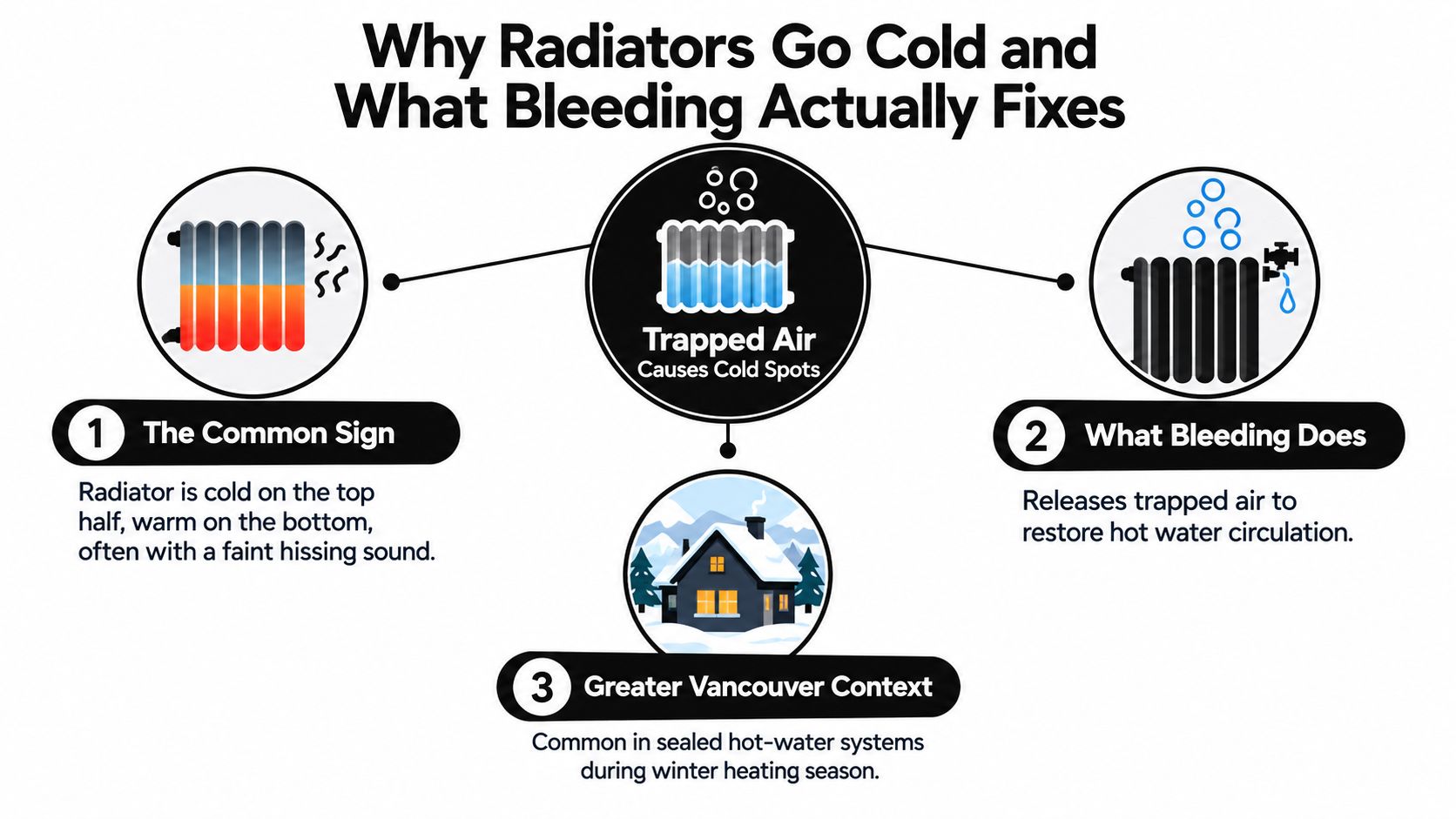
Practical rule: A warm bottom and cold top usually gives you a reasonable radiator bleeding diagnosis. A cold patch near the inlet, a valve that won't move, or a radiator that stays cold after bleeding points elsewhere.
Bleeding releases the air pocket through the small vent near the radiator's upper edge. You should hear air escape first, followed by water. It can restore circulation through the radiator, but it won't remove sludge, repair a failed circulator, correct poor hydraulic balancing, or fix a defective boiler.
For example, if a living-room radiator warms only halfway up, bleed that radiator with the heating off and the system cool. After restarting the heat, allow about 20 minutes and check whether the top and bottom now heat evenly, as outlined in this Canada-focused radiator bleeding guide. If the top remains cold, stop repeating the same task and investigate the valve, circulation, or system condition.
Tools and Safety Checks Before You Start
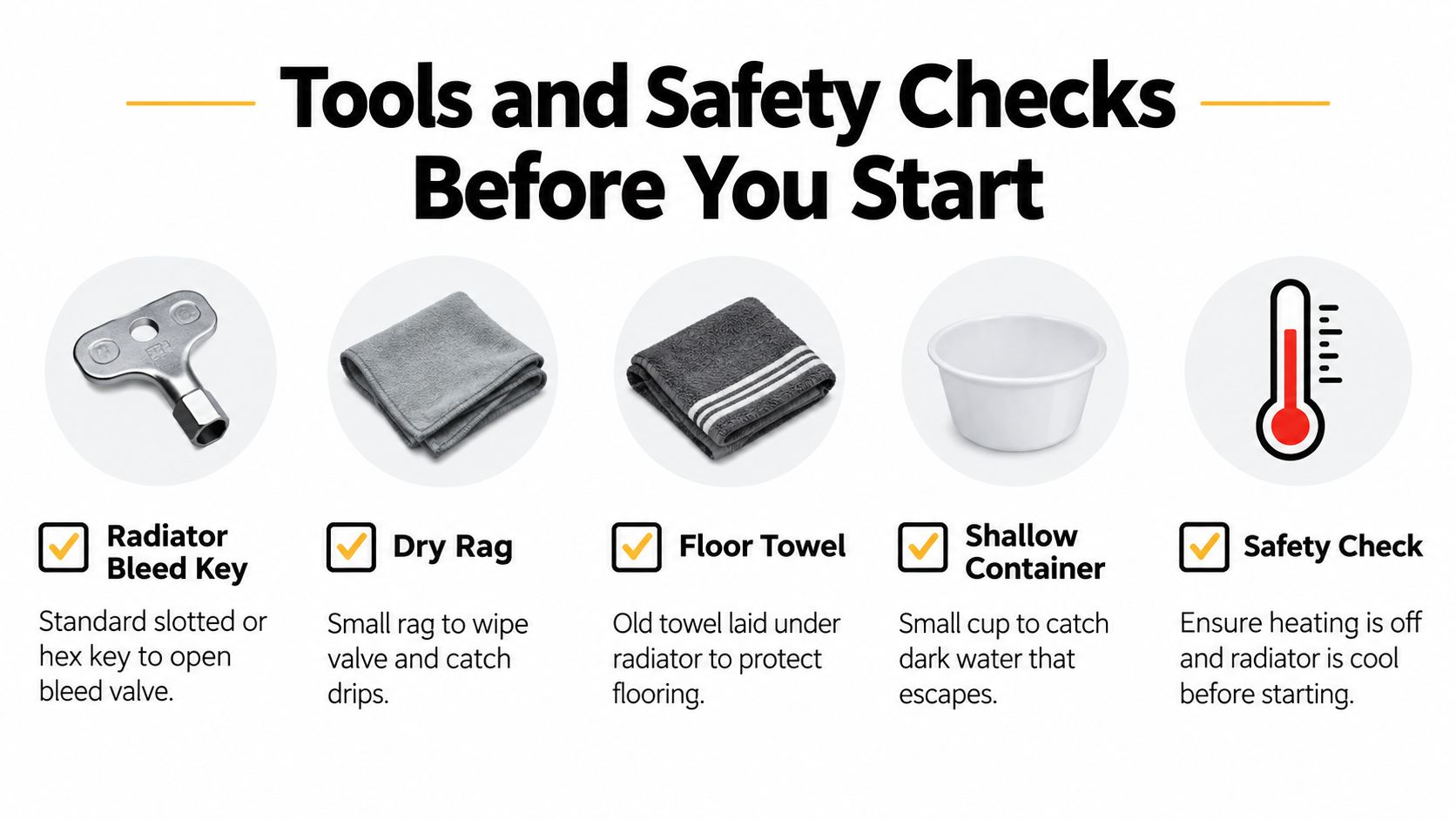
Radiator bleeding doesn't require a large toolkit, but the small details matter. Gather these before opening the vent:
- Radiator bleed key: Use the correct slotted or hex key for the valve fitted to your radiator.
- Dry rag: Hold it against the vent to control drips and wipe the opening clean.
- Old floor towel: Place it under the radiator to protect flooring.
- Shallow container: Keep a small cup or container under the vent for water that follows the air.
- Torch: Good lighting helps you see the vent, valve condition, and any corrosion.
Turn the boiler off and wait until the heating system is cool. Never bleed a radiator while the boiler is running and hot. Hot water can spray from the vent and cause a serious scald, so keep children and pets away from the work area and don't start until the radiator can be handled safely. This BC seasonal boiler guidance also recommends protecting the floor and closing the vent as soon as steady water appears.
Before proceeding, confirm that you're dealing with a sealed hot-water hydronic system, not steam. Look at the boiler gauge and note the starting pressure. Local guidance discusses a 0.2 to 0.4 bar pressure change after bleeding, so record the reading before you begin and check it again afterward using the manufacturer's operating instructions.
Don't remove boiler covers, adjust gas controls, open the gas train, or work on internal pressure components. In BC, gas appliance and gas-piping work is restricted to licensed gas fitters and technicians, making radiator bleeding a narrow DIY boundary rather than general boiler maintenance. If you can't identify the system safely, call a qualified professional before touching the vent.
How to Bleed a Radiator Step by Step
In a Greater Vancouver home, start with the radiator nearest the boiler, then work outward room by room and floor by floor. This gives you a consistent route and makes unusual behaviour easier to spot.
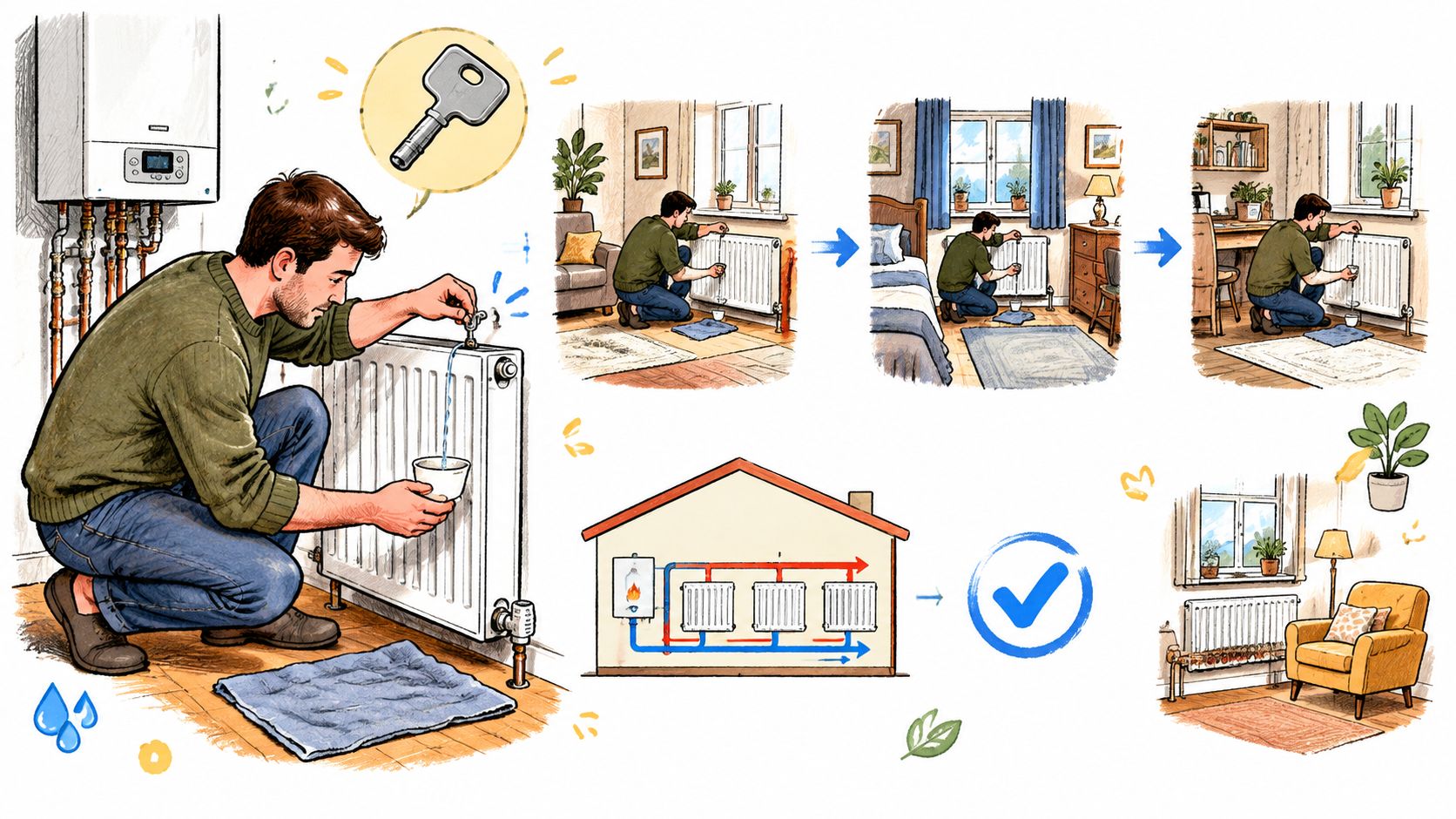
Locate the bleed valve near the radiator's top edge. Place a towel below it, set the container under the outlet, and hold the rag against the valve. Insert the key and turn it slowly counter-clockwise, usually about a quarter turn. Do not remove the screw. If the valve is stiff, forcing it can damage the fitting.
You should hear trapped air escaping first. Keep the towel and container in position. As soon as water appears, close the valve gently. Do not leave it open to produce a longer stream. Steady water means the vent is releasing system water, and the BC radiator guidance advises closing it at that point.
Check the next suitable radiator using the same method. If water appears immediately, close the valve and continue. A valve that still leaks after closing is a stopping point. Dry the area, watch the joint, and arrange service rather than bleeding the remaining radiators.
After checking the radiators, read the boiler gauge again. Bleeding can release some water with the air, so pressure may fall and the system may require topping up. Follow the boiler manufacturer's procedure, inspect for leaks, and only then restart the heating system. If the pressure does not settle after the system cools, stop and call a licensed technician.
A Vancouver home with eight to twelve radiators may require roughly 10 to 15 minutes per radiator bleeding visit, depending on access, valve condition, and the amount of trapped air. Use the vent's change in sound as your guide, from hissing air to steady water, rather than leaving it open for a set time.
Hot-Water Systems Versus Steam Systems
Radiator bleeding applies mainly to sealed hot-water systems. Older homes can contain steam equipment, and the valves and pressure behaviour aren't interchangeable. If you open the wrong component, you can release water, damage a vent, or expose yourself to steam.
| Feature | Hot-Water System | Steam System |
|---|---|---|
| Heating medium | Heated water circulates through a sealed loop. | Steam travels through larger radiators and returns as condensate. |
| Typical air control | A bleed valve at the radiator releases trapped air. | An air vent operates during the heating cycle and isn't treated like a hot-water bleed screw. |
| What you hear | Hissing followed by a thin water stream during bleeding. | Venting occurs as the system moves from air to steam. |
| DIY boundary | A cool radiator vent may be suitable for limited homeowner bleeding. | Boiler pressure, steam vents, and live-steam behaviour require greater caution. |
| Correct service path | Check pressure after bleeding and stop if the system behaves abnormally. | Have a qualified technician identify, test, or replace the vent and assess boiler operation. |
A hot-water radiator should be cool before you open its bleed valve. Steam radiators should also be fully cold, but their air vents aren't handled by cracking open a hot-water bleed valve. A homeowner may need a vent replacement or a wider system assessment instead.
Don't assume a heavy cast-iron radiator tells you the whole story. Identify the boiler and pipe arrangement before choosing a procedure.
If you see steam escaping from a system you believed was hot-water, close the valve if it can be done safely, move clear, and call a licensed technician. Gas-fired boiler internals and pressure controls aren't part of radiator bleeding, and BC rules place gas appliance and gas-piping work with licensed gas fitters.
Troubleshooting Cold Spots, Noise, and Pressure Drops
The location of the cold area tells you more than the mere fact that a radiator isn't heating. A cold top with a warm lower section points toward trapped air. A cold patch near the inlet valve may indicate sludge or a flow restriction, which radiator bleeding won't remove.
Gurgling, ticking, and kettle-like sounds can also indicate air moving through the loop. If the noise remains after the radiators have been bled, look beyond the vents. A circulator problem, excessive water velocity, a zone-valve fault, or poor system balance may be involved.
Read the pressure change, not just the final number
Local BC-oriented guidance cites a typical pressure fall of 0.2 to 0.4 bar after bleeding and recommends checking and topping up afterward. That change can occur because the process releases water as well as air. Record the gauge before and after the work, then compare the result with the boiler manufacturer's operating range.
A single pressure change isn't the same as a continuing fault. The concern rises when pressure keeps falling, the gauge won't stabilise, or water appears around a valve, pipe joint, relief discharge, or boiler connection.
Stop point: If a homeowner hears hissing but sees a continuous water stream, the vent should be shut immediately. Check the pressure before restarting the heat, and don't keep bleeding other radiators if the system is losing water.
For a practical example, suppose a Surrey radiator has a cold top and warm bottom. You bleed it, the hissing stops, and the radiator heats evenly after the system restarts. That supports an air-bound diagnosis. If the radiator remains cold near the inlet, another radiator heats unevenly, or the pressure continues to drop, bleeding has done its job and the remaining problem needs proper diagnosis.
Maintenance Rhythm and When to Call a Licensed Technician
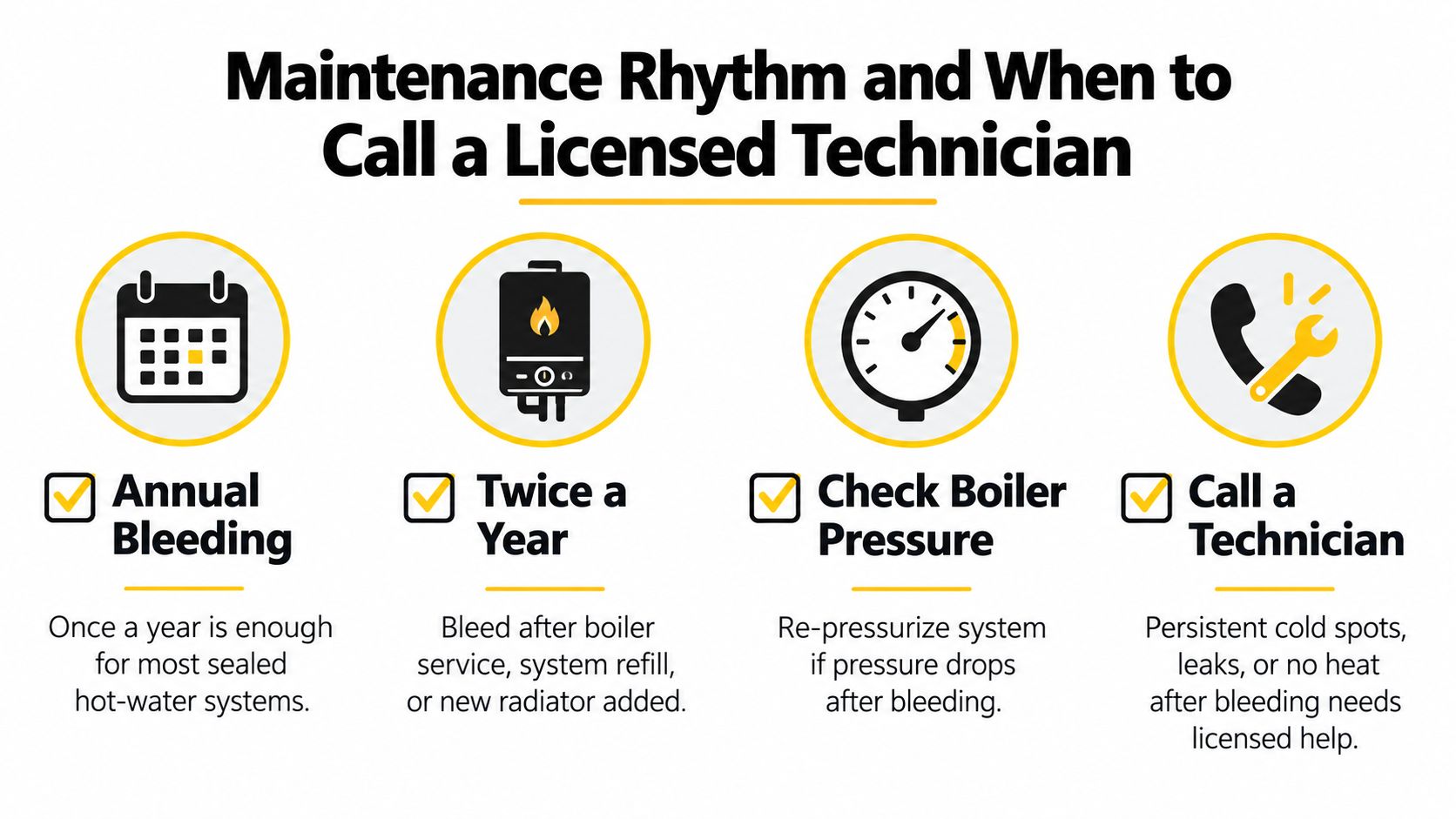
For a Greater Vancouver home, bleeding is usually seasonal maintenance, not a weekly task. Most sealed hot-water systems need radiator bleeding once a year, commonly at the start of the heating season after air has collected during summer, according to BC homeowner guidance. Consider it after boiler servicing, a system refill, or installation of a new radiator. If the same radiator needs repeated bleeding, the system may be admitting air, losing water, or failing to separate air properly.
Keep a pressure and maintenance log through the heating season. Record the gauge reading before and after bleeding, which radiator had a cold top, whether the valve released air, and whether pressure settled afterward. Inspect accessible joints and valves for staining, corrosion, or weeping. A brief note about new noises or recurring cold spots can help a technician identify a fault faster.
Know when the DIY boundary ends
Call a licensed gas fitter or qualified heating technician when:
- Pressure keeps falling: Repeated loss after bleeding can point to a leak, expansion-vessel fault, or relief-valve discharge.
- The relief valve opens: Water from a pressure-relief pipe needs investigation, not repeated topping up.
- The boiler smells wrong: Gas or combustion odours require immediate professional attention.
- Heat doesn't return: A radiator that stays cold after bleeding and valve checks may have a circulation, valve, sludge, or balancing problem.
- The boiler shows a fault: Sealed-combustion equipment and fault codes require trained diagnosis.
- Gas components are involved: The gas train, heat exchanger, pressure controls, and boiler internals are outside the homeowner's task.
Automatic air elimination changes the routine. If the system has automatic vents or mixed hydronic loops, do not open every manual vent by habit. Confirm the system design with the building's heating contractor, particularly in a strata building where one pressure fault can affect multiple homes. In BC, radiator bleeding is a narrow DIY boundary. Gas work and boiler-side repairs belong to licensed technicians.
Homeowner Checklist and When to Book a Service Call
A Burnaby or Surrey homeowner can use this compact checklist at the start of the heating season:
- Cool system: Turn the boiler off and wait until the radiators are safe to handle.
- Correct tool: Have the radiator key, rag, towel, and shallow container ready.
- Boiler-side starting point: Begin with the radiator closest to the boiler and work outward.
- Controlled opening: Turn the key slowly and stop if the valve feels seized.
- Air first: Listen for the hiss, then close the vent immediately when steady water appears.
- Pressure check: Recheck the boiler gauge and compare it with the manufacturer's operating instructions.
- System test: Restart the heat and confirm that the previously cold top now warms evenly.
- Visible inspection: Look for water around the vent, valves, pipe joints, and boiler.
Book a service call if pressure falls repeatedly, the bleed valve leaks, or gurgling continues beyond a day after the system has been bled. Hissing near the boiler, gas odours, pilot-light problems, steam escaping from a hot-water system, or any work involving the gas train, boiler internals, back boiler, pressure controls, or repressurising equipment also require a licensed professional.
The practical BC boundary is simple. Bleeding a cool radiator can be a homeowner task. Boiler and gas work is not. Strata managers should apply the same rule across units and record recurring pressure complaints rather than sending residents to bleed the same radiators repeatedly.
Encano Plumbing & Drainage Ltd. provides scheduled and 24/7 emergency plumbing, heating, HVAC, gas, and drainage service across Vancouver, Richmond, Burnaby, Surrey, and nearby communities. If radiator bleeding exposes a leak, recurring pressure loss, boiler fault, or a heating problem beyond the vent, visit Encano Plumbing & Drainage Ltd. to arrange professional help.