
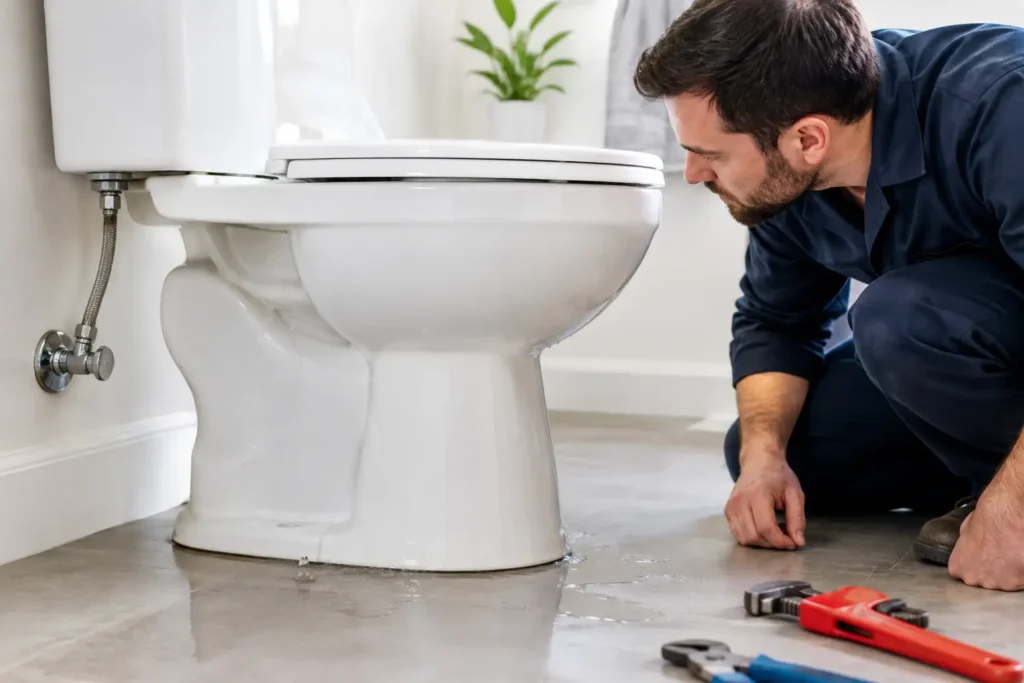
A wet bathroom floor is not always caused by a missed shower. Water can travel down the outside of a toilet, collect at the base, or appear only after flushing, making the original source easy to miss. If you are asking what causes toilet leaks, the answer usually depends on when the water appears and exactly where you find it.
A toilet leak can be a quick repair, such as a loose supply connection, or a sign of a failing seal that can damage flooring and the subfloor beneath it. Acting early limits disruption, especially in condos, rental properties, and commercial washrooms where a small leak can affect another unit or occupied space.
What Causes Toilet Leaks Around the Tank?
Water on the rear of the toilet or behind the bowl often points to a tank-related problem. Start by drying the outside of the tank and placing a few sheets of toilet paper around fittings. Flush once, then look for the first spot that becomes damp. This simple check can help distinguish a toilet leak from condensation.
Loose or worn tank-to-bowl bolts
On a two-piece toilet, bolts and rubber washers secure the tank to the bowl. Over time, washers can harden, bolts can corrode, and slight movement can compromise the seal. Water may drip from underneath the tank only while it is flushing.
A loose bolt may need gentle tightening, but overtightening can crack porcelain. If the washers are old or the bolts are rusted, replacing the full bolt and washer set is usually the better repair.
A failed tank-to-bowl gasket
The large rubber gasket between the tank and bowl seals the flush valve outlet. When it wears out, water can leak from the center underside of the tank during a flush. The toilet may still flush normally, so this issue is sometimes overlooked until water stains the floor.
Replacing this gasket involves shutting off the water, draining the tank, and removing it from the bowl. It is manageable for an experienced DIY homeowner, but porcelain is heavy and can chip or crack if handled carelessly.
Cracks in the tank or bowl
Hairline porcelain cracks can leak slowly and may be difficult to see. A tank crack often leaks continuously or shortly after the tank refills. A crack in the bowl can be more serious because it may worsen under normal use.
Do not attempt to repair a cracked toilet with sealant as a long-term solution. The toilet should be replaced, particularly if the crack is below the waterline or near a structural area of the bowl or tank.
Leaks From the Water Supply Connection
If water is collecting near the wall-side of the toilet, inspect the supply line and shutoff valve. The flexible line connecting the valve to the bottom of the tank can leak at either end, especially as rubber washers age or metal fittings corrode.
A small drip at the supply nut can sometimes be corrected with a very slight turn. If tightening does not stop the drip, turn off the shutoff valve and replace the supply line or fitting. Avoid forcing an old valve. A seized or corroded shutoff can break, turning a minor toilet repair into an urgent plumbing problem.
Water may also appear to come from the supply line when the tank is sweating. In humid bathrooms, cold water inside the tank can create condensation on the outside. The moisture is usually spread across the tank surface rather than concentrated around one connection. Improving bathroom ventilation, insulating the tank, or addressing an unusually high humidity level can help.
Why a Toilet Leaks at the Base
A leak at the base deserves prompt attention. It does not always mean the toilet itself is cracked, but it often involves the seal between the toilet and the drain opening in the floor.
Failed wax ring or toilet seal
A wax ring, or another approved toilet seal, prevents wastewater and sewer gas from escaping where the toilet meets the drain flange. If the toilet rocks, the seal can lose its compression. Water then may seep from the base when someone flushes.
This leak is often intermittent. The floor may be dry between uses, then damp or discolored after a flush. In some cases, you may also notice a sewer odor. Do not keep flushing to test a suspected failed seal, since each flush can send more water beneath the flooring.
The toilet generally needs to be removed, the old seal replaced, and the flange inspected before reinstalling the fixture level and secure. If the flange is damaged, sits too low after new flooring was installed, or has corroded, the repair can require additional plumbing work.
A loose toilet
A toilet should not rock when you sit down or press gently on either side of the bowl. Movement can break the wax seal even if it was installed correctly. Loose mounting bolts, an uneven tile floor, or a deteriorated flange can all contribute.
Do not simply tighten the bolts until the toilet stops moving. Porcelain can crack under excessive pressure. Proper shimming and a new seal may be required, followed by a careful, even tightening of the mounting hardware.
Drain or sewer backup
If water rises in the bowl, drains slowly, or comes out around the base during flushing, a blockage farther down the drain line may be involved. This is not a typical seal failure alone. A blocked toilet trap, branch drain, or sewer line can force wastewater to seek another path.
Stop using the fixture if wastewater is backing up. In a multi-bathroom home or commercial building, avoid running sinks, showers, or laundry until the drainage issue has been assessed. Continued water use can make the overflow worse.
Internal Toilet Problems That Waste Water
Not every toilet leak reaches the bathroom floor. Some leaks happen inside the tank and quietly raise the water bill.
A worn flapper is one of the most common causes. The flapper should seal the flush valve opening after each flush. When it becomes warped, coated with mineral buildup, or misaligned, water slowly escapes from the tank into the bowl. The fill valve then turns on periodically to replace it. You may hear the toilet refill without anyone using it.
To check for an internal leak, add a few drops of food coloring to the tank and wait about 15 minutes without flushing. If color appears in the bowl, the flapper or flush valve seal is leaking. A replacement flapper is often inexpensive, but toilets with unusual flush valve sizes, tower-style valves, or mineral buildup may need a more specific repair.
A faulty fill valve can also cause trouble. If the water level is set too high, water runs continuously into the overflow tube. The toilet may sound like it is always filling, even though there is no visible puddle. Adjusting or replacing the fill valve can solve the issue, but persistent overfilling can also indicate worn internal parts.
What to Do When You Notice a Toilet Leak
First, protect the area. Place towels around the toilet, remove bath mats, and keep people away from a wet floor. If water is actively flowing from the supply connection or tank, turn the shutoff valve clockwise behind the toilet. If the valve will not close or the leak is significant, turn off the home or building water supply if you can do so safely.
Next, avoid flushing until you know the source. A leak from the base, especially one involving wastewater, should be treated as a plumbing repair rather than a cosmetic issue. Take note of whether the leak occurs while the tank refills, only during flushing, or continuously. That information helps a plumber diagnose the problem faster.
For landlords and property managers, document the moisture and respond quickly. Water beneath vinyl, tile, or laminate can remain hidden long after the visible puddle is gone. Fast repairs can prevent odors, mold growth, damaged ceilings, and tenant disruption.
When to Call a Plumber
Call a professional when the toilet is leaking from the base, the porcelain is cracked, the shutoff valve is unreliable, or there is any sign of sewage backup. Professional help is also sensible when a toilet needs to be lifted and reset, particularly on tiled floors or in older properties where the drain flange may be damaged.
For homeowners and property managers in Vancouver and nearby communities, Encano Plumbing & Drainage can identify the source, make the appropriate repair, and check for hidden moisture before it becomes a larger restoration project. A toilet should be stable, dry at every connection, and quiet between uses. If it is not, a timely inspection is usually far less costly than waiting for the floor beneath it to tell the story.