A pipe bursts at 11 p.m., water starts spreading across the floor, and the question gets very real, very fast: what is considered emergency plumbing? In simple terms, it is any plumbing problem that puts your health, safety, property, or essential daily use of water and drainage at immediate risk. Some issues can wait until morning. Others should be handled right away to prevent major damage, contamination, or loss of service.
Knowing the difference matters. If you call too late, a manageable repair can turn into soaked drywall, damaged flooring, mold, sewer backup cleanup, or business disruption. If you call too early for a non-urgent issue, you may end up paying for after-hours service when a scheduled visit would have been the better choice.
What is considered emergency plumbing?
Emergency plumbing usually means one of three things is happening. First, water is escaping where it should not and causing active damage. Second, wastewater or sewage is backing up and creating a sanitation problem. Third, a critical plumbing fixture or system has failed in a way that makes the property unsafe or unusable.
That includes problems like burst pipes, major leaks that cannot be contained, sewer backups, overflowing toilets that will not stop, no running water in certain situations, and failed water heaters when the loss of hot water affects safety or operations. In some homes, a broken water heater is inconvenient. In a restaurant, rental building, care facility, or commercial property, it may be urgent.
The key detail is not just that something is broken. It is that waiting is likely to make the damage, risk, or disruption worse.
The most common plumbing issues that count as emergencies
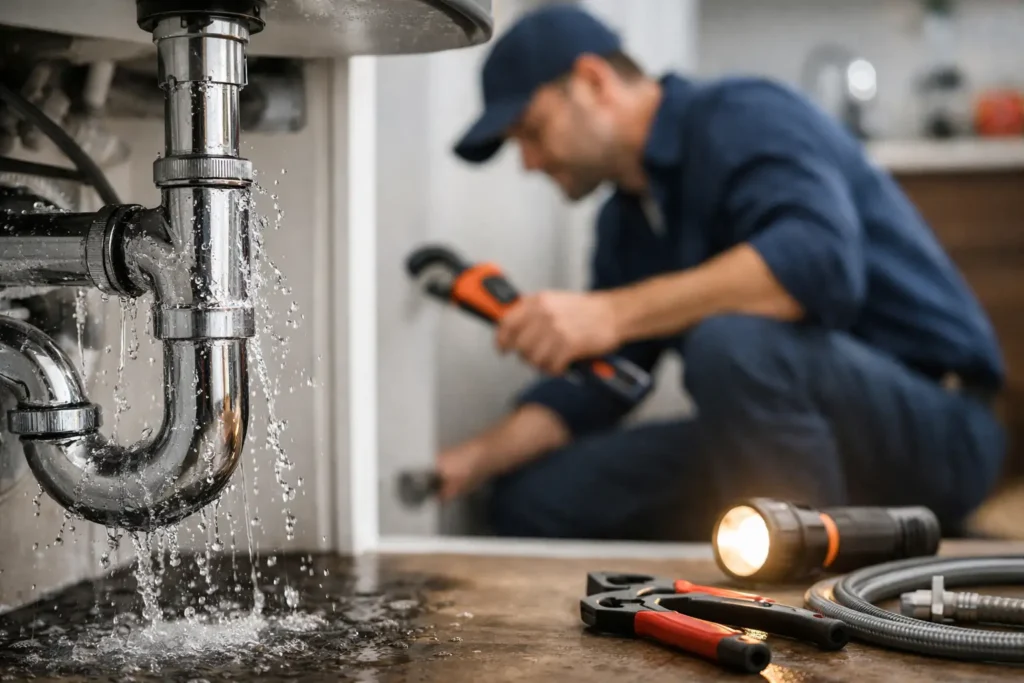
A burst pipe is one of the clearest examples. When a pipe splits or disconnects, water can pour into walls, ceilings, cabinets, and floors within minutes. Even a smaller broken pipe can create hidden water damage if it is inside a wall or under a slab. If you cannot isolate the leak quickly and stop the flow, that is an emergency.
Sewer backups also belong in the emergency category. If sewage is coming up through a basement drain, toilet, or sink, the issue is no longer just a clog. It is a health hazard. Contaminated water can spread bacteria and make parts of the property unsafe to use. This is especially serious in homes with children, multi-unit buildings, restaurants, and commercial washrooms.
An overflowing toilet can be an emergency, but it depends on the situation. If one toilet is backing up and the rest of the plumbing is working, it may be urgent but manageable. If the toilet keeps overflowing, wastewater is spilling onto the floor, or it is the only functioning toilet in the home or unit, the problem moves into emergency territory.
A major drain blockage can also qualify. A single slow sink usually is not an emergency. But if multiple drains are backing up at the same time, or water appears in a tub when you flush a toilet, that may point to a main line blockage. Main sewer line issues can escalate quickly and should not be ignored.
No water service can be another emergency, especially if the cause is inside the property and affects the whole building. For homeowners, that may mean no drinking water, no toilet use, and no ability to cook, clean, or bathe. For landlords and facility operators, a total loss of water can affect habitability and building operations.
Gas-related issues connected to plumbing systems, such as a suspected gas leak near a water heater or boiler, should always be treated as urgent. That goes beyond standard plumbing inconvenience and becomes a safety issue that needs immediate professional attention.
Problems that feel urgent but can often wait
Not every plumbing problem needs an after-hours call. A dripping faucet, a slowly draining bathroom sink, or a toilet that runs occasionally can usually be scheduled during regular business hours. The same goes for minor fixture replacements, low water pressure at one tap, or a water heater that is still operating but not performing well.
Even a small leak is not always an emergency if it can be contained safely. For example, if a shut-off valve under a sink works properly and the leak stops completely, you may be able to schedule a repair for the next available appointment. The important part is being honest about whether the issue is truly under control.
This is where people sometimes underestimate risk. A stain on the ceiling may look minor, but if water is still feeding into that area, the real leak may be active and hidden. A drain that has been slow for weeks may suddenly back up fully. Some issues sit in the gray area between routine and urgent, which is why a quick professional assessment can save time and money.
How to tell if you should call right away
A good rule is to ask four practical questions.
Is water actively causing damage right now? If the answer is yes, do not wait.
Is there a health or safety concern? Sewage exposure, possible gas issues, contaminated water, and flooding all deserve immediate attention.
Can the problem be safely isolated? If shutting off a local valve or the main water supply stops the issue completely, you may have more flexibility. If not, it is more likely an emergency.
Does the problem make the property unlivable or unusable? A home with no working toilet, a commercial kitchen with blocked drains, or a rental unit with no water may require fast service even if there is not visible flooding.
Those questions help remove the guesswork. Emergency plumbing is usually about consequences, not just symptoms.
What to do before the plumber arrives
If it is safe, shut off the water to the affected fixture or the main shut-off for the property. This one step can dramatically reduce damage. If you do not already know where the main shut-off is, it is worth finding it before an emergency happens.
Next, turn off electricity in any area where water is pooling near outlets, appliances, or electrical equipment, but only if you can do so safely. Avoid standing water if there is any chance of electrical exposure.
Try to contain the spread with towels, buckets, or by moving nearby items out of harm’s way. Do not use plumbing fixtures that may be connected to a suspected sewer blockage. Flushing or running more water can make the backup worse.
If the issue involves a water heater, boiler, or gas appliance and you suspect gas, leave the area and follow proper emergency safety steps. That is not a wait-and-see situation.
When you call, be ready to explain what is happening, when it started, whether the water has been shut off, and whether the issue affects one fixture or the whole property. Clear information helps the plumber arrive prepared.
Why emergency plumbing decisions depend on the property
The same plumbing problem does not affect every property the same way. In a single-family home, one blocked toilet may be inconvenient if there is another bathroom available. In a small apartment, that same issue may be urgent. In a restaurant, a backed-up sink or drain can interrupt service and raise sanitation concerns. In a rental building, one leak can affect multiple units.
That is why property managers and commercial operators often need to act faster than homeowners with the same symptom. The cost of waiting is not just repair damage. It can include tenant complaints, downtime, cleanup costs, and liability concerns.
For local homes and buildings across Richmond, Vancouver, and the surrounding area, fast response matters most when the problem is spreading, unsafe, or shutting down normal use. A dependable emergency plumber will help you sort out whether the issue needs immediate service or a prompt scheduled repair.
The cost question: emergency or expensive mistake?
Some people hesitate to call because they are worried about after-hours rates. That is understandable. But the better comparison is not emergency service versus regular service. It is emergency service versus water damage restoration, flooring replacement, drywall repair, mold remediation, or lost business time.
Still, there is a trade-off. If the issue is fully contained and not creating a safety risk, waiting until the next business day can be the more cost-effective choice. Fair guidance matters here. A trustworthy plumbing company should help you understand the urgency instead of pushing every problem into the emergency category.
That practical approach is part of what customers look for in a local company like Encano Plumbing & Drainage Ltd. People want fast help when it is truly needed and honest advice when it is not.
Plumbing emergencies do not always arrive with dramatic warning signs. Sometimes it is obvious, like a burst pipe or sewer backup. Sometimes it is a quieter problem that turns serious because no one acted soon enough. If a plumbing issue is threatening your safety, damaging your property, or stopping essential use of your home or building, it is worth treating it like the emergency it is.