
If you smell natural gas, immediately stop what you're doing, avoid all electrical switches and ignition sources, evacuate the building on foot, and call 911 or the gas utility emergency line only once you're safely outside. In British Columbia, FortisBC's emergency line is 1-800-663-9911, available 24 hours a day, or you can call 911.
You may be standing in the kitchen, halfway through cooking, when a sharp rotten-egg or sulphur smell catches your attention. Perhaps the odour seems strongest near the furnace, water heater, stove, or attached garage. Don't investigate, open a cupboard, or try to decide whether the smell is “strong enough” to justify leaving. Treat it as a gas emergency.
Natural gas is deliberately odorized so people can detect a possible leak more easily, as noted by the BC Energy Regulator's safety information. The right response is fast and simple: get everyone and every pet outside, move away from the building, and report the suspected leak from a safe location.
Table of Contents
- Immediate Evacuation and Safety Protocols
- Hidden Ignition Sources You Must Avoid
- Distinguishing Natural Gas Leaks from Carbon Monoxide
- Who to Call and How to Report the Emergency
- The Utility Response and Securing Professional Repairs
- Proactive Maintenance and Leak Prevention Strategies
Immediate Evacuation and Safety Protocols
A sharp gas odour near the kitchen, furnace, water heater, or attached garage changes the priority immediately: leave the property. Do not pause to finish cooking, find keys, investigate the source, or collect belongings. Diagnosis can wait until trained responders assess the situation.
Use the nearest safe exit and move away from the house, garage, gas meter, and any spot where the odour is noticeable. If an accessible door is already open, leave it that way as you go. Do not stop to open windows or plan ventilation. Never re-enter for a phone, pet, property, or a missing family member if doing so delays your escape.
A homeowner who reaches for a wall switch on the way out may create the spark the leaking gas needs. Keep your hands off anything unnecessary, and leave on foot rather than starting a vehicle near the building.
FortisBC's emergency line is staffed around the clock. If you cannot reach it from a safe location, call 911. Fire crews can respond and contact the utility on your behalf. Follow the FortisBC gas-leak guidance, and remain outside until officials confirm that returning is safe.
Practical rule: Leave immediately, report from outside, and do not investigate.
Keep household members and pets together when you can do so without slowing evacuation. Once well clear of the building, use a phone and report the suspected leak. For local guidance on plumbing and gas leaks, consult Encano's gas-leak resources. A suspected gas leak is an emergency, not a routine maintenance issue.
Hidden Ignition Sources You Must Avoid
Most homeowners know better than to light a match. The dangerous mistakes usually involve ordinary actions that feel harmless, such as flipping a switch or pressing a button.
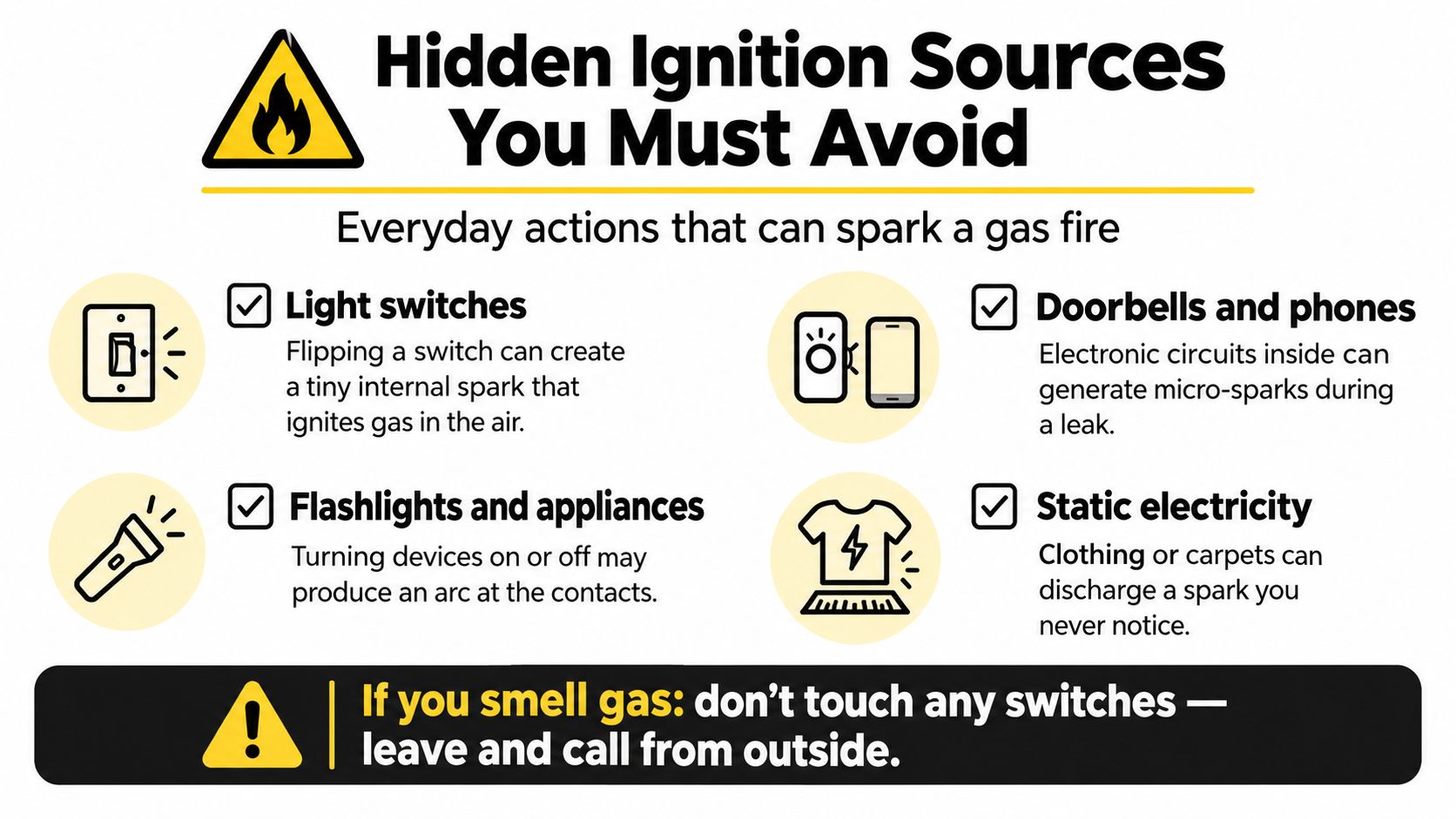
A gas-filled room can ignite from a small spark produced inside an electrical device. That spark may be invisible and may occur when a device is switched on or off. For that reason, BC provincial guidance says not to smoke, use matches or lighters, operate electrical switches, use appliances, or use a landline or cell phone inside the building. It also says to leave on foot and not start a car near the smell, as explained in the provincial natural-gas safety guidance.
The micro-actions that create risk
Don't use a phone indoors, even if you only intend to call for help while standing near the front door. Don't turn a flashlight on, unplug a charger, adjust an appliance, press a doorbell, or operate an electronic garage-door opener. Avoid smoking, matches, lighters, and any flame.
A thermostat, doorbell, appliance control, or vehicle ignition can contain contacts or circuits that produce a small electrical arc. Static electricity can also discharge without you noticing, so avoid unnecessary movement and don't rub clothing or handle objects as you leave.
Consider a common garage scenario. You smell gas near the vehicle and instinctively reach for the garage-door button, then start the car to get it outside. Both actions are wrong. Leave on foot, without pressing the opener or starting the engine, and call from outside.
The Canadian Gas Association's home safety guidance reinforces the same approach, including warnings against flashlights, appliances, phones, and other possible ignition sources.
The smell itself is a warning system, not a measurement of safety. A faint odour still deserves the same response as a strong odour. Don't assume the risk is low because you can't locate the source or because the smell seems to fade.
Distinguishing Natural Gas Leaks from Carbon Monoxide
Natural gas and carbon monoxide create different hazards, and you must respond to both seriously.
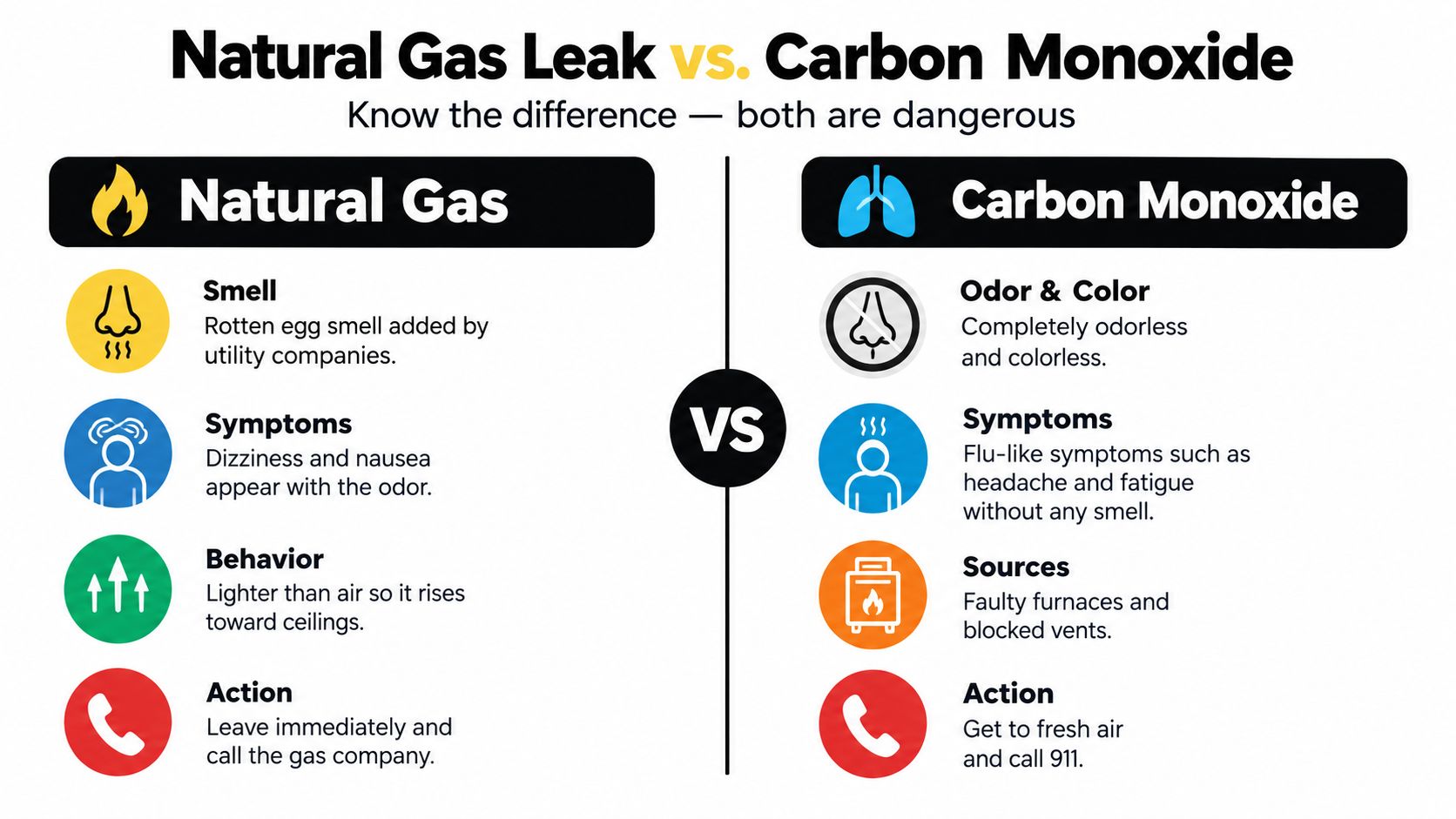
Natural gas is intentionally odorized to smell like rotten eggs or sulphur, making a suspected leak easier to notice. Carbon monoxide, by contrast, is odorless, so you won't detect it by smell. The BC government's carbon-monoxide safety guidance highlights this distinction.
Match the warning to the hazard
| Warning sign | What it may indicate | Correct response |
|---|---|---|
| Rotten-egg or sulphur odour | Possible natural-gas leak | Leave immediately and report it from outside |
| Headache, dizziness, or nausea that improves outdoors | Possible carbon-monoxide exposure | Get outside and call 911 from fresh air |
| No odour but people feel suddenly unwell indoors | Carbon monoxide remains possible | Don't re-enter until responders say it's safe |
If someone has a headache, dizziness, or nausea that improves after going outdoors, don't dismiss it as fatigue, food poisoning, or a minor illness. Leave the building and tell 911 that you suspect carbon monoxide exposure. Don't go back inside to retrieve a detector, open windows, or shut down equipment.
A gas smell and carbon-monoxide symptoms can occur in the same property, but the absence of a rotten-egg odour doesn't rule out carbon monoxide. Keep the descriptions separate when you speak with emergency dispatchers. Tell them exactly what you noticed, who feels unwell, and whether symptoms improve outdoors.
Who to Call and How to Report the Emergency
Call only after leaving the building and moving away from the suspected gas area. In Metro Vancouver, contact 911 or the gas utility's emergency line. State the address first, then say that you smell natural gas and have evacuated.
Give the cross-street as well as the address if the property is difficult to find. Say whether the odour is strongest indoors, outdoors, near the meter, or beside an appliance, because that helps crews decide where to begin. Report injuries, suspected exposure, visible damage, open flames, unusual sounds, and anyone who may still be inside.
Use a neighbour's phone or call from well away from the property. Keep clear of the front door, gas meter, vehicle, and attached garage while speaking with dispatch.
Use a short, precise script:
“This is 1432 Cedar Street, near Oak Avenue. I smell gas inside near the furnace. No one is injured. Everyone is across the street.”
Keep the scene safe while help is coming
Stay outside. Do not return for keys, clothing, pets, documents, or medication. If the odour is strong outdoors, move farther away and warn nearby people without approaching the building or asking them to investigate.
Tell responders what you did not touch as well as what you smelled. “I evacuated without operating switches or starting the car” gives them useful scene information.
If you manage a strata, rental property, or commercial space, explain whether other units or occupants may be affected. Do not try to shut off the gas unless responders specifically direct you and the shutoff is reachable without entering or creating additional risk.
After the emergency, arrange professional assessment before anyone relights an appliance or resumes normal use. Information about gas-line inspection services can help you understand the inspection process, but an inspection never replaces the emergency call or responder instructions.
The Utility Response and Securing Professional Repairs
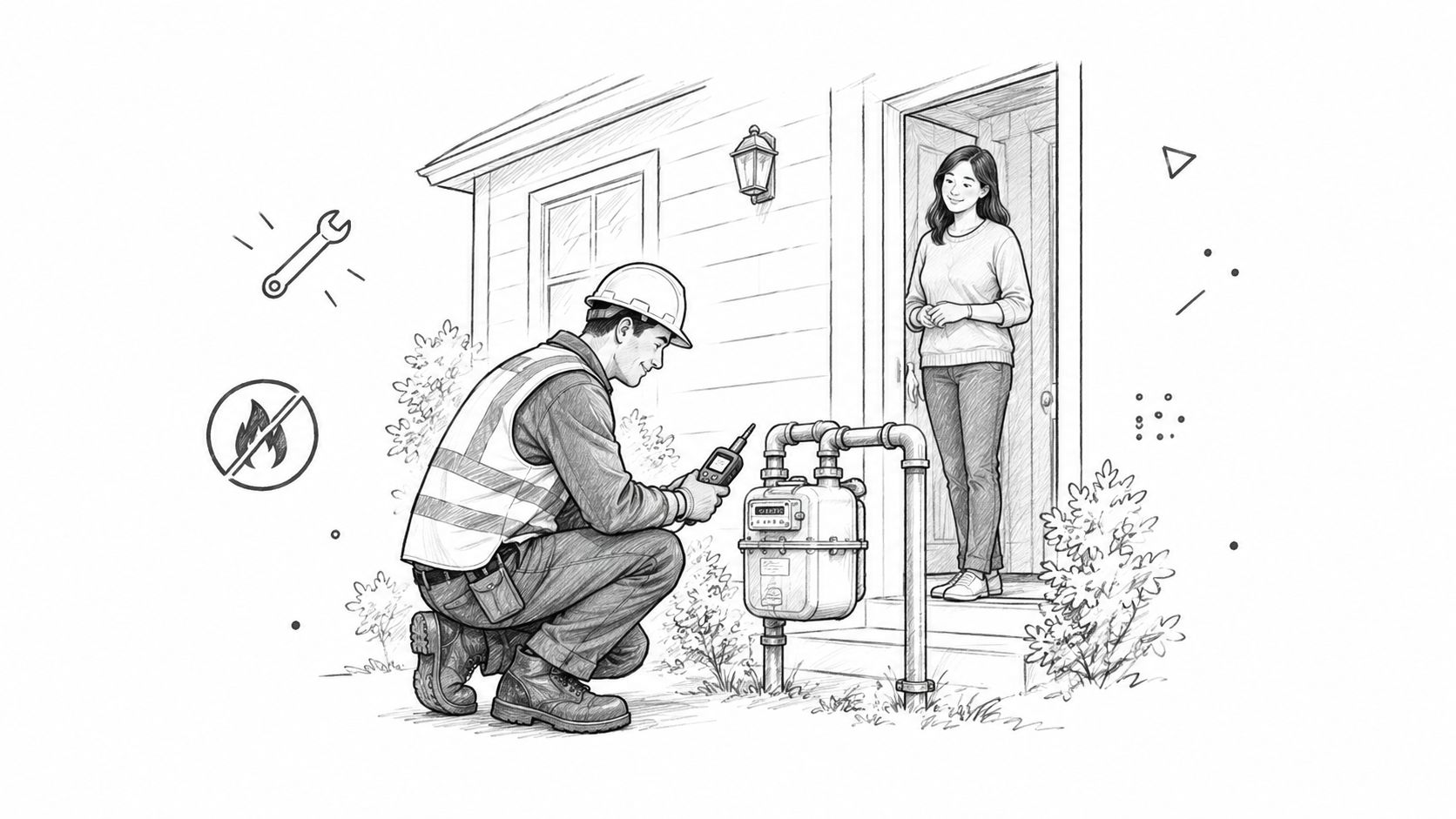
When the utility or fire crews arrive, give them a clear account of where you first noticed the odour and whether anyone has symptoms. Their first job is to control the immediate hazard, assess the atmosphere, and make the property safe. They may shut off the gas supply and restrict entry until the building and gas system have been checked.
That response doesn't automatically repair the failed pipe, valve, connector, appliance, or fitting inside the home. Utility personnel and emergency crews protect the public and secure the supply. A licensed gas fitter or qualified plumbing and gas contractor must identify the fault, complete the repair, and carry out the required safety checks before service is restored.
What happens after the odour is gone
A property can smell normal and still need professional testing. Odour may disperse, but the underlying defect can remain. Don't relight appliances, turn the gas back on, or assume a furnace, stove, fireplace, or water heater is safe because the emergency crew no longer detects a strong smell.
The repair process may include locating the leak, examining accessible gas lines and appliance connections, replacing damaged components, and testing the system. Ask the contractor what was isolated, what was repaired, and what must remain out of service.
For the repair phase, Encano's gas-leak repair service is one local option for gas-line inspection, leak diagnosis, and repair across Greater Vancouver. Property owners should keep records of the emergency call, utility instructions, inspection findings, and completed work, especially in strata or rental buildings.
Proactive Maintenance and Leak Prevention Strategies
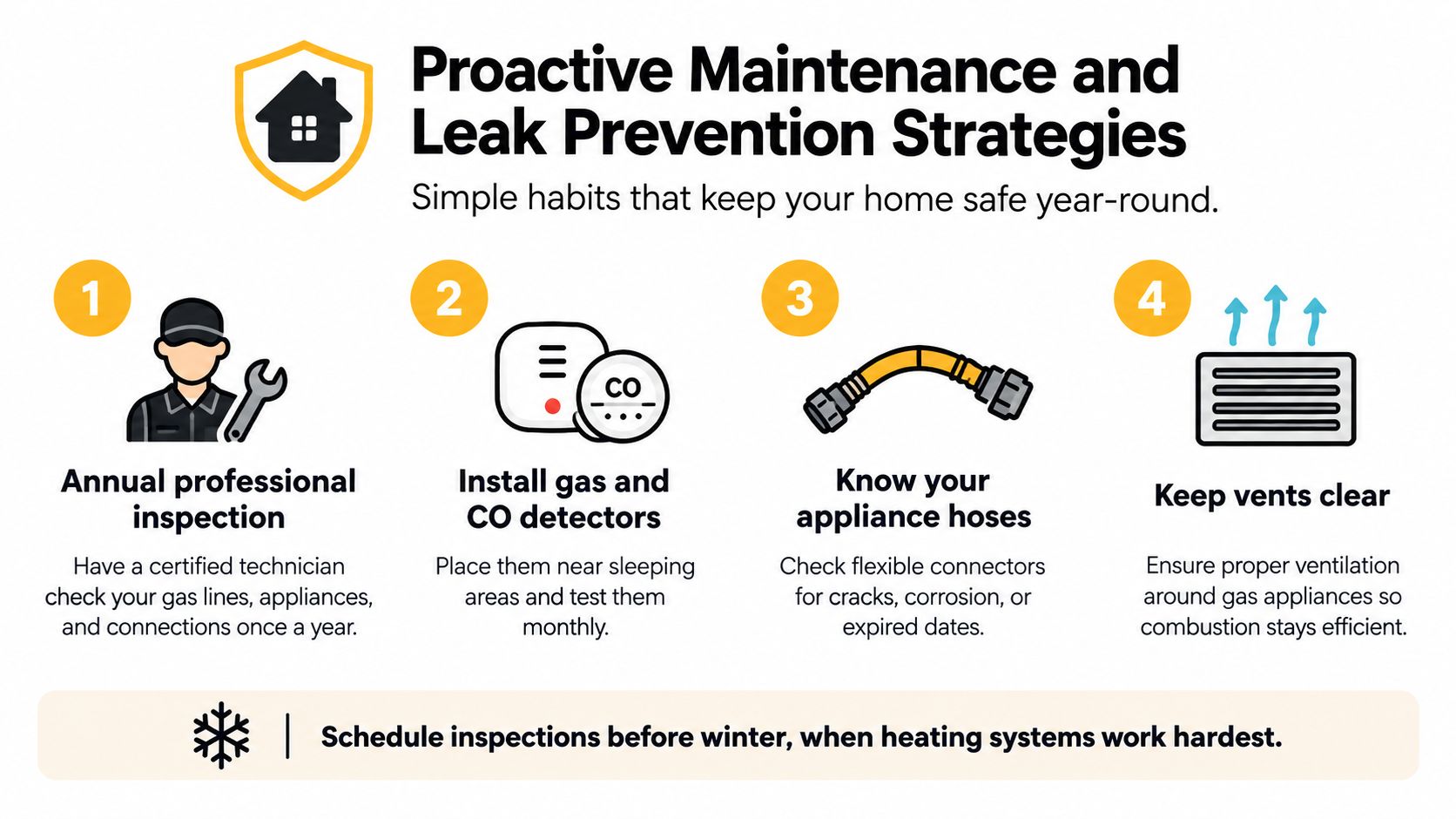
Emergency action matters, but a safer home also depends on routine attention to the equipment that burns or carries gas. Arrange professional inspections for furnaces, water heaters, stoves, fireplaces, gas lines, and appliance connections. A qualified technician can spot corrosion, loose fittings, deteriorated connectors, venting problems, and installation issues before they become an emergency.
Use both combustible-gas detection and carbon-monoxide alarms where appropriate. They detect different hazards, so a carbon-monoxide alarm isn't a replacement for a fuel-gas detector, and a fuel-gas detector isn't a replacement for a carbon-monoxide alarm. Follow each manufacturer's placement, testing, and replacement instructions.
Simple checks homeowners can make
- Look at visible gas lines: Report corrosion, dents, damaged insulation, or loose-looking connections instead of trying to repair them yourself.
- Keep appliance vents clear: Remove stored items, dust, leaves, and other obstructions around exhaust and combustion-air openings.
- Watch appliance behaviour: A new smell, unusual sound, poor ignition, soot, or repeated shutdown deserves professional attention.
- Know the emergency sequence: Every household member should know to leave on foot, avoid switches and phones indoors, and call from outside.
Don't wait until the heating system is working hard or an appliance fails at night to find a qualified contractor. Save the utility emergency number, keep alarms maintained, and arrange gas-line or appliance checks when you notice a change. Prevention is not about eliminating every possible fault. It's about finding problems before occupants have to make life-or-death decisions in a gas-filled room.
Encano Plumbing & Drainage Ltd. provides 24/7 emergency response, gas-line inspection, leak detection, and repair services for homes, strata properties, businesses, and facilities across Greater Vancouver. If your utility has made the property safe and you need qualified follow-up work, contact Encano Plumbing & Drainage Ltd. to arrange an assessment and repair.