A boiler rarely chooses a convenient time to fail. You may notice cold radiators before work, hear an unfamiliar banging sound late at night, or find water collecting near the unit during a busy week. Reliable boiler repair services help restore heat and hot water, but they also address the safety concerns that can come with a malfunctioning gas or hydronic heating system.
For homeowners, landlords, and property managers, the goal is not simply to get the heat back on. It is to identify the real cause, prevent additional damage, and make a repair that holds up through the heating season.
Signs You Need Boiler Repair Services
Some boiler problems are obvious, such as no heat or no hot water. Others begin as small changes that are easy to overlook. Acting early can often reduce the size and cost of a repair.
Cold rooms or uneven heating
If one area of the home stays cold while other rooms heat normally, the boiler may not be the only issue. Air trapped in radiators, a circulation pump problem, a stuck zone valve, or sludge in the system can all affect heat distribution. Repeatedly turning up the thermostat will not correct the underlying issue and can put extra strain on the equipment.
A qualified technician can determine whether the problem is within the boiler itself or elsewhere in the heating system. This distinction matters, especially in larger homes, multifamily buildings, and commercial spaces with multiple heating zones.
Strange noises from the unit or pipes
Boilers should not be ignored when they begin knocking, whistling, rumbling, or gurgling. A rumbling or kettling sound may point to mineral buildup or restricted water flow inside the heat exchanger. Gurgling can indicate air in the system. Banging pipes may be related to pressure changes, loose pipe supports, or a circulation issue.
Noise alone does not always mean the boiler is about to fail, but it is a useful warning sign. A timely inspection can prevent a minor circulation or pressure problem from becoming a damaged component or a complete shutdown.
Leaks, drips, or pressure changes
Water around a boiler should be taken seriously. The source could be a loose fitting, corroded pipe, failing pressure relief valve, worn pump seal, or an internal component that needs attention. Even a slow leak can damage flooring, walls, and nearby electrical equipment over time.
Low boiler pressure may also cause poor heating performance or trigger a shutdown. High pressure can be just as concerning. Do not keep refilling or resetting the system without finding out why the pressure changed in the first place.
Frequent resets or error codes
Modern boilers often display error codes when they detect an ignition fault, sensor issue, circulation problem, or unsafe operating condition. Resetting the boiler once according to the manufacturer’s instructions may be appropriate. If the error returns, repeated resets can hide a problem rather than solve it.
Take a photo of the code and note when it appeared. This gives the technician useful information and can speed up diagnosis when service arrives.
When a Boiler Problem Is an Emergency
Not every loss of heat requires an emergency call, but certain conditions do. If you smell gas, hear hissing near a gas line, suspect carbon monoxide, or see soot around the appliance, leave the area if it is safe to do so and contact your gas utility or emergency services. Do not operate switches, use open flames, or attempt a repair yourself.
Turn off the boiler only if you can do it safely and you know where the controls are. A carbon monoxide alarm that activates should always be treated as urgent. Headaches, dizziness, nausea, or confusion among occupants can also be signs of exposure.
A major water leak is another situation that calls for quick action. Shut off the water supply to the boiler if possible, protect belongings from water damage, and arrange professional help. In freezing weather, a heating outage can become urgent because unheated pipes are at risk of freezing and bursting.
What a Professional Boiler Repair Visit Should Include
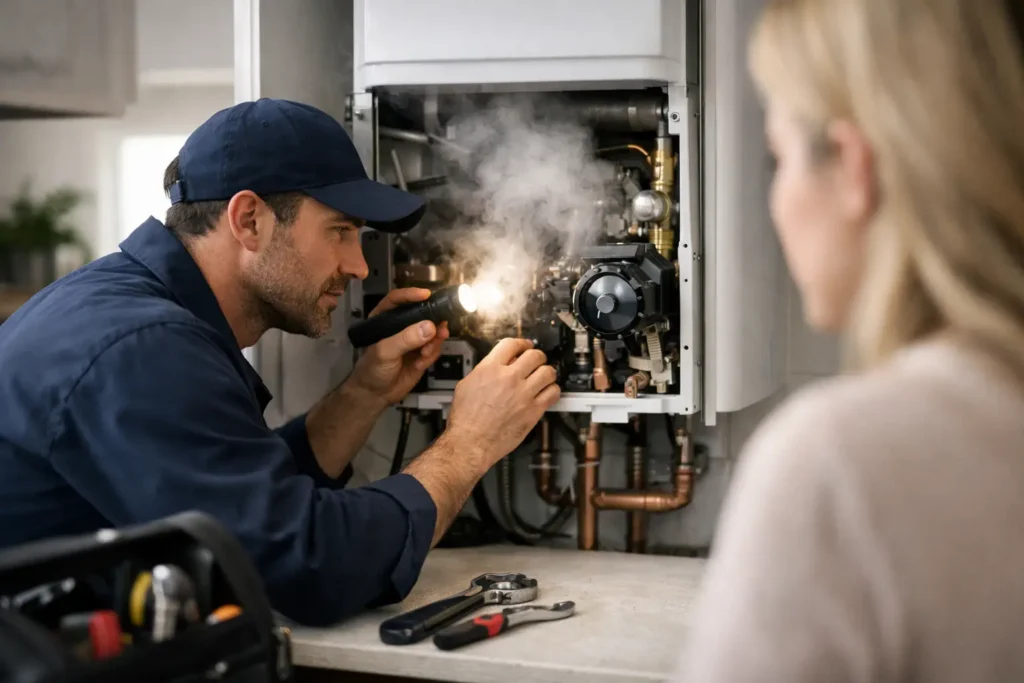
Good repair work starts with diagnosis, not guesswork. A technician should ask about the symptoms, inspect the boiler and related heating components, check pressure and controls, and look for leaks, corrosion, or ventilation concerns. For gas boilers, safe combustion and venting are critical parts of the assessment.
The repair itself depends on the system and fault. It may involve replacing a faulty igniter, sensor, valve, pump, expansion tank, or pressure relief component. In some cases, the system needs air removed, water quality addressed, or controls recalibrated. The right fix depends on the make, model, age, maintenance history, and condition of the full heating system.
Before work begins, ask for a clear explanation of what was found, what needs to be repaired, and what the expected cost includes. Transparent pricing is particularly important for property managers who need to approve work, communicate with tenants, and plan for future maintenance.
Repair or Replacement: How to Make the Call
A repair is often the sensible choice when the boiler is relatively new, the fault is isolated, and parts are available. Routine issues such as a worn sensor, failing pump, or pressure problem do not automatically mean the entire unit needs replacement.
Replacement may make more sense when breakdowns are recurring, repair costs are growing, parts are discontinued, or the boiler is nearing the end of its expected service life. An older unit may still run, but it can become less efficient and less predictable during cold weather. For a landlord or facility operator, repeated outages can cost more in disruptions and emergency calls than a planned replacement.
There is no one-age-fits-all rule. A well-maintained boiler can outlast expectations, while a neglected one may need major work sooner. A practical recommendation should compare the immediate repair cost with the condition, efficiency, safety, and reliability of the existing equipment.
Simple Steps to Reduce Boiler Breakdowns
Most boiler failures are not fully preventable, but regular attention can reduce the chance of a surprise shutdown. Annual professional service is a smart starting point, ideally before the colder months. This allows a technician to inspect key safety controls, verify proper operation, and spot wear before heavy seasonal use.
Homeowners can also keep the area around the boiler clear and dry, watch for changes in pressure or performance, and make sure exterior vents are not blocked by debris, snow, or stored items. Do not cover the unit or use the mechanical room as a crowded storage space.
For rental and commercial properties, keep a record of service dates, error codes, recurring symptoms, and completed repairs. That history helps identify patterns and gives maintenance teams a better basis for deciding when a repair is enough and when replacement should be scheduled.
Choosing a Local Boiler Repair Company
Boiler work involves water, pressure, electrical controls, fuel supply, and ventilation. It should be handled by qualified professionals who understand the system as a whole. Look for a company that explains findings in plain language, provides clear pricing, respects your property, and can respond promptly when heat or hot water is interrupted.
Local experience also helps. Homes and buildings across Richmond, Vancouver, Burnaby, and nearby communities vary widely in age and heating design. Encano Plumbing & Drainage Ltd. brings a hands-on approach to diagnosing boiler issues, completing necessary repairs, and helping customers make practical decisions without pressure.
If your boiler is making new noises, losing pressure, leaking, or leaving rooms cold, do not wait for the next full shutdown. A professional inspection now can protect your comfort, your property, and the people who depend on the heat.