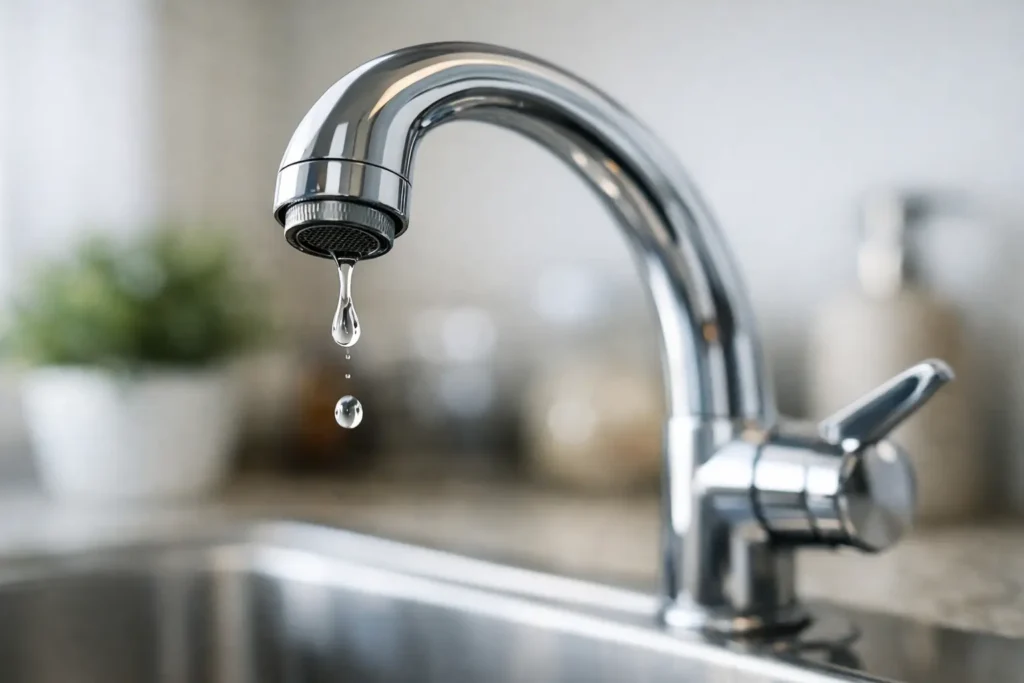
That steady drip at 2 a.m. is more than annoying. If you’re asking, why does my faucet keep dripping, the short answer is that something inside the fixture is no longer sealing the water flow properly. Sometimes it’s a simple worn part. Other times, it’s a sign of pressure issues, corrosion, or a faucet that has simply reached the end of its service life.
A dripping faucet usually starts small, which is why many people put it off. But over time, that small leak can waste water, stain sinks, create mineral buildup, and raise your utility bill. In homes, condos, rentals, and commercial buildings, it’s worth finding the real cause before it turns into a bigger repair.
Why does my faucet keep dripping even when it’s off?
When you turn a faucet off, internal parts are supposed to create a tight seal that stops water completely. If even one of those parts wears down, shifts out of place, or gets coated in debris, water can slip through and continue dripping from the spout.
The exact cause depends on the faucet type. A traditional compression faucet works differently from a cartridge, ceramic disc, or ball-style faucet. That’s why two faucets with the same symptom can need very different repairs.
In many cases, the issue comes down to normal wear. Faucets are used constantly, and over the years washers flatten, O-rings crack, cartridges wear out, and valve seats collect mineral deposits. In areas where hard water is common, those minerals can speed up the damage.
Worn washers and seals
In older compression faucets, a rubber washer presses against a valve seat to stop water flow. Every time the handle is turned, that washer takes friction and pressure. Eventually it hardens, cracks, or loses its shape.
Once that happens, the seal is no longer tight, and dripping starts. This is one of the most common causes of a faucet leak, especially in older homes or in bathrooms and utility sinks where fixtures may have been in place for many years.
Damaged O-rings
O-rings are small rubber rings that help seal parts inside the faucet handle and stem assembly. When they wear down, water may drip from the spout or leak around the base of the handle.
This is often a smaller repair, but the challenge is identifying the correct size and material for the replacement part. A close-enough fit can still leak.
Failing cartridge
Many modern kitchen and bathroom faucets use a cartridge to control water flow and temperature. When a cartridge wears out or becomes clogged with debris, the faucet may drip, become harder to turn, or stop shutting off cleanly.
Cartridge issues are very common in single-handle faucets. Replacing the cartridge often solves the problem, but only if the faucet body itself is still in good shape.
Corroded valve seat
The valve seat connects the faucet to the spout assembly, and in compression faucets it works with the washer to form a seal. Over time, sediment and corrosion can roughen that surface.
Even a brand-new washer may not stop the drip if the valve seat is pitted or damaged. In that case, the repair is a little more involved than swapping one rubber part.
Water pressure problems
Not every dripping faucet has a bad internal part. If your faucet only drips at certain times, such as overnight or when no one is using water elsewhere in the building, pressure fluctuations may be involved.
High water pressure can force a small amount of water through a faucet that otherwise seems shut off. This is more likely in multi-unit buildings and commercial properties, where pressure conditions can vary throughout the day.
Common signs the problem is getting worse
A slow drip is the first warning, but it usually doesn’t stay that way forever. If you notice squeaking handles, stiffness when turning the faucet, rust-colored stains, water around the base, or inconsistent temperature control, the internal components are likely wearing down further.
Mineral buildup around the aerator or spout can also point to a longer-term leak. In kitchens, the extra moisture can start affecting surrounding caulking or cabinet materials. In bathrooms, it can leave permanent marks on sink surfaces if ignored long enough.
Can you fix a dripping faucet yourself?
Sometimes, yes. If you’re comfortable turning off the water supply, removing the handle, and replacing a washer or cartridge with the exact matching part, a basic faucet repair can be manageable.
The key phrase there is exact matching part. Faucet repairs often go wrong when someone buys a part that looks similar but doesn’t seat properly. Overtightening is another common problem. It can damage threads, crack internal components, or make the faucet harder to repair later.
There is also the question of age. If the faucet is old, corroded, or already repaired multiple times, a small fix may only buy a little time. In those cases, replacement is often the better investment.
When DIY makes sense
A do-it-yourself repair is most reasonable when the faucet is fairly standard, the shutoff valves work properly, and the leak appears isolated to one worn internal part. If you already know the faucet brand and model, finding the right cartridge or washer is much easier.
When it is better to call a plumber
If the faucet is leaking from multiple points, the fixture is seized with mineral buildup, the shutoff valves don’t fully close, or the leak may be tied to water pressure, it is smarter to have it inspected. The same goes for commercial restrooms, tenant units, and busy kitchens where downtime matters.
For landlords and property managers, a quick repair done correctly usually costs less than repeated maintenance visits for the same fixture. For homeowners, professional service can prevent damage to the sink, countertop, cabinet, or wall behind it.
Why does my faucet keep dripping after I replaced the washer?
This is a common and frustrating situation. If the drip continues after replacing the washer, the washer may not have been the real issue. The valve seat could be corroded, the cartridge could be worn, the stem could be damaged, or the replacement part may not fit as precisely as it should.
It is also possible that the faucet has more than one failing component. In older fixtures, replacing one part can reveal wear in another part that was hidden before. That doesn’t mean the repair was pointless. It just means the faucet may be too worn for a single-part fix.
Repair or replace?
This depends on the faucet’s age, condition, and quality. If the fixture is relatively new and the body is in good shape, repair usually makes sense. A cartridge, washer, or O-ring replacement is straightforward when the faucet has not been damaged by corrosion.
If the faucet is older, loose at the base, visibly corroded, hard to operate, or leaking in more than one area, replacement often gives better long-term value. You avoid repeat repairs and get a fixture that works more reliably and efficiently.
For property owners in Vancouver-area condos and homes, this decision can also come down to access and convenience. If shutting down a sink affects tenants, staff, or everyday household use, replacing a failing faucet once may be less disruptive than troubleshooting it again in a few months.
How to prevent faucet drips in the future
Most faucet drips are caused by wear, but wear can be slowed down. Avoid cranking handles too tightly, since that puts extra stress on washers and cartridges. If you have hard water or visible mineral buildup, regular cleaning helps reduce sediment inside the fixture.
It also helps to deal with small issues early. A faucet that starts sticking, squeaking, or needing extra force to turn is already telling you something. Waiting until it leaks constantly usually means more wear and a more involved repair.
Routine plumbing maintenance matters more in older homes and multi-unit buildings, where pressure irregularities, aging shutoff valves, and mineral buildup are more common. A quick inspection can often catch the source before the drip becomes a larger plumbing problem.
The real cost of ignoring a drip
One dripping faucet may not feel urgent, but it adds up. Water waste is part of it, but so is the slow wear on the fixture and the surrounding area. What starts as a small annoyance can turn into staining, corrosion, cabinet damage, or a bigger leak if a weakened part finally fails.
If you’ve been wondering why does my faucet keep dripping, the answer is usually mechanical, not mysterious. Something inside that faucet is worn, loose, blocked, or no longer sealing the way it should. The sooner you identify which one, the easier it is to fix it properly.
If the repair looks simple, it may be worth handling. If not, getting a licensed plumber involved early can save time, water, and frustration. Encano Plumbing & Drainage Ltd. sees this often in both homes and commercial properties, and the right fix is usually clear once the faucet is opened up. A drip rarely improves on its own, but it is usually very fixable when addressed at the right time.