
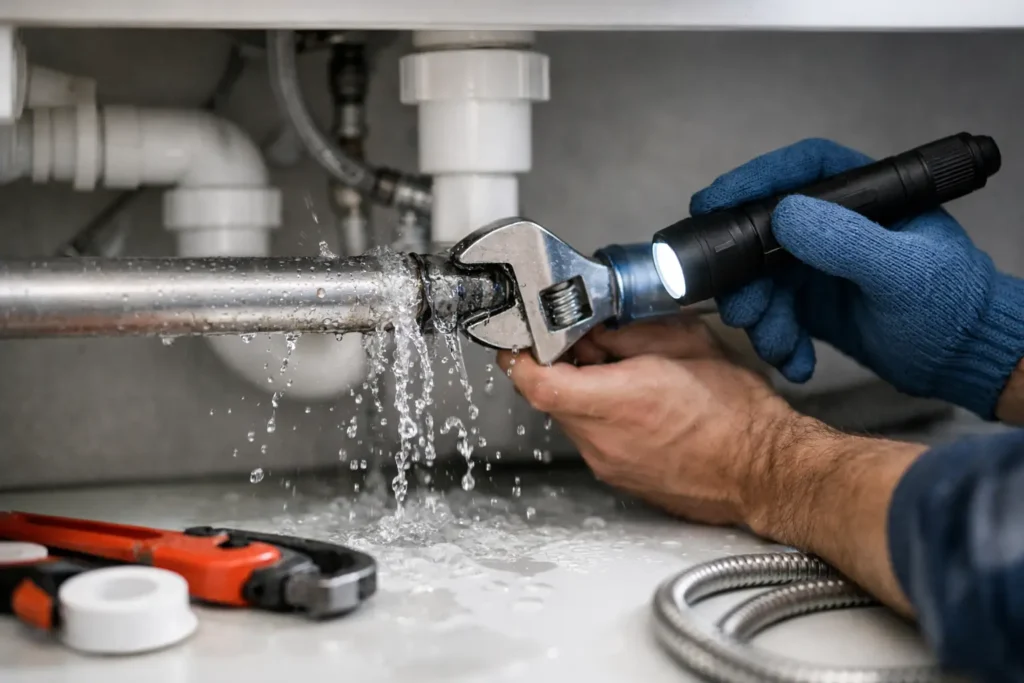
A leaking pipe rarely waits for a convenient time. It shows up under a sink before work, behind a wall on a weekend, or in a mechanical room when tenants are already calling. If you are searching for how to fix water pipe leakage, the first goal is not a perfect repair. It is stopping damage fast, staying safe, and knowing whether the pipe needs a temporary patch or a proper replacement.
Small leaks can turn into expensive repairs if they soak drywall, flooring, cabinetry, or electrical areas. The good news is that some pipe leaks can be slowed or temporarily sealed until a plumber arrives. The key is knowing what kind of leak you are dealing with and what not to do.
How to Fix Water Pipe Leakage: Start Here
Before touching the pipe, shut off the water. If the leak is isolated to a sink, toilet, or appliance line, you may be able to close the nearby shutoff valve. If the valve is stuck, missing, or the leak is on a main supply line, turn off the home’s main water valve instead.
Next, dry the area as much as possible. Use towels, a bucket, and if needed, a wet vacuum. This makes it easier to find the exact source of the leak and helps any temporary repair material stick better. If water is near outlets, power cords, or electrical panels, keep clear and shut off electricity to that area if it is safe to do so.
Then take a closer look at the pipe. Is the leak coming from a joint, a pinhole in the pipe, corrosion around a fitting, a crack from freezing, or a loose supply connection? That matters because not every leak should be handled the same way.
What Kind of Pipe Leak Do You Have?
A leak at a threaded connection or compression fitting is often the simplest case. Sometimes the fitting has loosened over time, or a washer has worn out. In those situations, a careful tightening or part replacement may solve the problem.
A pinhole leak in copper or a crack in plastic piping is different. Those usually point to a material failure, age, corrosion, pressure issues, freezing, or poor installation. A patch may buy you time, but it is rarely the long-term answer.
If the leak is hidden behind a wall or ceiling, signs may show up before the pipe does. Water stains, bubbling paint, musty odors, warped flooring, or a sudden spike in the water bill can all point to a concealed leak. That is usually where professional leak detection saves time and avoids opening more of the building than necessary.
Temporary Ways to Stop a Water Pipe Leak
If you need to control the leak right away, a temporary repair can help reduce damage until the pipe is properly fixed. Temporary does not mean permanent, even if it seems to hold.
Pipe repair tape can work on very small leaks. The pipe must be clean and as dry as possible, and the tape needs to be wrapped tightly with overlap around the damaged section. This is most useful for minor seepage, not an active split spraying water.
Epoxy putty is another short-term option. You knead it, press it over the leak, and let it harden. It can be effective on pinholes or hairline cracks, but only if the pressure is under control and the surface is prepared properly. If the pipe is badly corroded, the putty may hold only briefly because the surrounding material is already weak.
A pipe repair clamp is stronger than tape or putty for some situations. It uses a rubber pad and metal clamp to compress over the damaged area. For a straight section of pipe with a localized hole or crack, this can be a practical emergency measure. It is less useful at elbows, joints, or heavily rusted sections.
Rubber and a hose clamp can also slow a leak if nothing else is available. Wrap a thick piece of rubber around the hole and tighten it with a clamp. This is a basic emergency move, not a fix you want to forget about for six months.
When Tightening a Fitting Helps
If the leak is coming from a connection under a sink or near a toilet supply line, try tightening the fitting gently with a wrench. Gently matters here. Overtightening can crack plastic fittings, distort washers, or make the leak worse.
If tightening does not stop it, the shutoff should stay off until the washer, supply line, or fitting is replaced. Flexible supply lines are common failure points, especially older braided lines or plastic connectors that have become brittle. Replacing the line is often smarter than fighting with a worn connection.
When the Pipe Itself Needs Repair or Replacement
Knowing how to fix water pipe leakage also means knowing when a repair is not enough. If a pipe has visible corrosion, repeated leaks, mineral buildup, or signs of thinning metal, the problem is usually bigger than one wet spot. The leak you can see may be only the first weak point.
Copper pipes with pinhole leaks can sometimes be cut out and repaired with a new section, depending on access and overall pipe condition. PEX and CPVC lines can also be repaired by removing the damaged section and installing proper couplings or replacement pipe. These repairs need the right tools, correct fittings, and confidence that the surrounding pipe is sound.
For galvanized steel or older plumbing systems, isolated repairs can become a cycle. One section fails, then pressure shifts and another weak point opens up. In those cases, partial or full repiping may be the more cost-effective move.
Common Mistakes That Make Leaks Worse
One common mistake is leaving the water on while trying to patch a live leak. Repair materials do not bond well on wet, pressurized pipe, and you risk turning a drip into a burst.
Another is using the wrong product for the pipe material. What works on copper may not work on PEX or PVC. Mixing incompatible materials or adhesives can cause a poor seal or damage the pipe further.
It is also easy to miss the real source. Water travels. A drip showing at the bottom of a cabinet may actually be coming from a valve, disposal connection, faucet body, or drain line above. Supply leaks and drain leaks are not the same repair.
The biggest mistake, though, is treating a recurring leak as normal maintenance. If the same area keeps leaking, something deeper is wrong. Pressure problems, pipe movement, corrosion, freezing, or poor installation should be investigated.
When to Call a Professional Plumber
Some leaks are DIY-friendly for a short window. Others need a plumber immediately. If the leak is inside a wall, above a finished ceiling, near electrical wiring, on a main water line, or coming from an older corroded system, it is time to bring in professional help.
The same goes for burst pipes, frozen lines, slab leaks, and any situation where water damage is spreading fast. In apartment buildings, commercial spaces, and multi-unit properties, quick action matters even more because one leak can affect several units or tenants at once.
A professional plumber can do more than stop the visible leak. They can check water pressure, inspect pipe condition, identify whether the failure is isolated or systemic, and make a repair that holds. For property managers and business owners, that reduces repeat callouts and disruption.
At Encano Plumbing & Drainage Ltd., this is the kind of work that gets handled every day – from emergency leak response to targeted pipe repair and replacement for homes, rental properties, and commercial buildings.
Preventing the Next Leak
Once the immediate problem is under control, prevention is worth your attention. Many leaks start with small warning signs that are easy to overlook. A stained base cabinet, reduced water pressure, a hissing sound behind a wall, or a shutoff valve that no longer closes fully can all point to trouble ahead.
In colder weather, exposed pipes should be insulated to reduce the risk of freezing. If you have older supply lines, have them inspected before they fail. In rental or commercial properties, routine maintenance can catch weak fittings and aging pipes before they turn into emergency repairs.
Water pressure matters too. High pressure feels great in the shower, but it can stress fixtures, valves, and piping over time. If your pressure is consistently too high, a pressure-reducing valve may be needed.
A good repair is not just about stopping water today. It is about making sure the same pipe does not put you back in cleanup mode next month. If a leak seems minor, treat it early anyway. Plumbing problems are usually cheaper, cleaner, and less disruptive when they are handled before they spread.