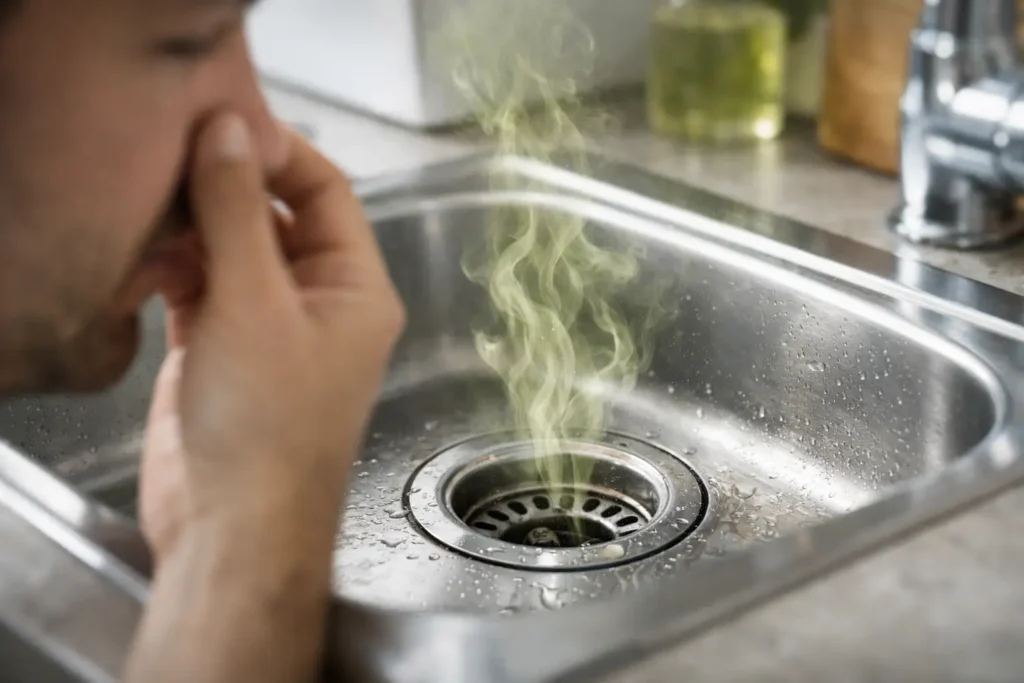
That rotten, musty, or sour smell coming from a sink or floor drain usually shows up at the worst time – right before guests arrive, during cleanup, or first thing in the morning. If you are asking, why does my drain smell bad, the short answer is that something in the drain or vent system is letting sewer gas, bacteria, or trapped debris create odor.
Sometimes the fix is simple. Other times, the smell points to a deeper plumbing problem that should not be ignored. The key is knowing the difference before a minor nuisance turns into a clogged line, water damage issue, or sewer repair.
Why does my drain smell bad in the first place?
Most drain odors come from one of a few common causes. In homes, the usual suspects are buildup inside the pipe, a dry P-trap, a partial clog, or a venting issue. In commercial buildings and multi-unit properties, heavy use and more complex plumbing layouts can make the problem harder to trace.
A drain is designed to carry wastewater away while also blocking sewer gas from coming back into the room. That barrier usually comes from the P-trap, the curved section of pipe under sinks and many fixtures. When everything is working properly, a small amount of water stays in that bend and seals off odors. When something disrupts that system, smells start to move upward.
The most common reasons a drain smells bad
Organic buildup inside the drain
Bathroom sinks, tubs, and showers collect soap scum, hair, toothpaste, shaving residue, and skin oils. Kitchen drains collect grease, food particles, and detergent film. Over time, that material sticks to the inside of the pipe and starts to break down. The result is a bad smell that can range from sour to rotten.
This is one of the most common causes, especially when the drain is still moving water but smells awful. In that case, the issue is often not a full blockage. It is the layer of sludge coating the pipe walls.
A dry P-trap
If a sink, shower, laundry drain, or basement floor drain is not used often, the water in the trap can evaporate. Once that seal is gone, sewer gas can come straight into the room. This is common in guest bathrooms, utility rooms, vacant suites, and unused commercial spaces.
A dry trap usually creates a strong sewer smell rather than a mild musty odor. The good news is that this is often easy to correct if the trap is otherwise in good condition.
A partial clog
A clog does not need to be complete to cause odor. When debris starts to collect in one section of pipe, wastewater moves more slowly, and organic material sits longer than it should. That standing material creates bacteria and odor even before the drain fully backs up.
Partial clogs are common in kitchen sinks and shower drains. If the drain smells bad and also drains slowly, a clog is high on the list.
Vent pipe problems
Your plumbing system depends on venting to regulate air pressure and move sewer gases safely outside. If a vent pipe is blocked by debris, nesting material, or damage, the system may not drain or seal properly. That can lead to gurgling sounds, slow drainage, and unpleasant smells near fixtures.
This is not usually a do-it-yourself diagnosis for most property owners. Vent issues can be tricky because the smell may show up in one room while the actual problem is somewhere else.
Sewer line trouble
If multiple drains smell bad, or the odor is strongest in the basement, utility area, or near a floor drain, the issue may be larger than one fixture. A damaged or backed-up sewer line can release strong odors and may come with slow drains, bubbling toilets, or recurring backups.
This is where it makes sense to act quickly. Sewer line problems do not improve on their own.
How to tell which drain is causing the smell
Start by narrowing down where the odor is strongest. If it is coming from only one sink, shower, or floor drain, the problem is likely local to that fixture. If several drains smell at once, especially on different floors, the issue may involve the venting or sewer system.
Pay attention to timing as well. If the smell gets worse after running water, the problem may be buildup or a partial clog being disturbed. If it appears after a drain has not been used for days or weeks, a dry trap is more likely. If rain seems to make the odor worse, that can sometimes point to drainage or venting issues around the property.
What you can safely try first
If the drain is not backing up and there are no signs of a bigger plumbing issue, a few simple steps may help.
For a sink or shower that smells but still drains, remove any visible hair or debris near the opening. Then flush the drain with hot water. In a bathroom sink, cleaning the stopper assembly often helps more than people expect, because that area collects a surprising amount of buildup.
If you suspect a dry P-trap, run water into the drain for a minute or two. For a floor drain, pour in enough water to refill the trap. If the smell goes away and stays away, evaporation was likely the problem.
For light organic buildup, a careful cleaning of the drain opening and surrounding parts can make a difference. The key is removing residue, not just masking the smell.
What not to do
It is tempting to pour harsh chemical cleaners into a smelly drain, especially when you want a quick fix. The problem is that chemical products do not always remove the actual buildup causing the odor, and repeated use can be rough on some pipes and fittings.
It is also easy to assume every bad smell means a clog and start using a plunger or drain snake aggressively. On the wrong fixture, that can damage components or push the blockage deeper.
If the smell is strong, recurring, or tied to multiple drains, it is better to stop guessing and have the system checked properly.
Signs it is time to call a plumber
A smelly drain is not always an emergency, but there are clear signs when professional service is the smarter move. If you notice slow drainage, repeated odor after cleaning, gurgling sounds, water backing up, or smell coming from more than one drain, the problem may be deeper in the line or connected to venting.
The same goes for odors near basement floor drains, laundry areas, or utility rooms. Those locations can point to larger drainage concerns that need proper inspection. In older homes and multi-unit buildings, recurring drain odor can also be related to aging pipes, improper slope, or hidden buildup farther down the system.
A licensed plumber can identify whether the issue needs a basic drain cleaning, trap repair, vent diagnosis, or sewer line inspection. That matters because the right fix saves time, money, and repeat service calls.
Why bad drain smells keep coming back
Recurring odor usually means the root cause was never fully removed. A quick rinse may help for a day or two, but if grease, sludge, or hair buildup remains in the pipe, the smell returns. The same is true if the real issue is a blocked vent, damaged trap, or sewer line problem.
In busy households, rental units, restaurants, and commercial properties, drain odors can come back faster simply because the plumbing system sees heavier daily use. Preventive maintenance matters more in those settings because even small restrictions turn into bigger service issues sooner.
For property owners in Vancouver and nearby areas, the mix of older plumbing systems, wet weather, and high-use buildings can make proper drain maintenance especially worthwhile. When odors keep returning, a professional cleaning or inspection is often the most cost-effective step.
A better way to think about drain odor
A bad-smelling drain is not just an annoying household smell. It is your plumbing system telling you that water, waste, or air is not moving the way it should. Sometimes that message is minor and easy to handle. Sometimes it is the first warning before a much messier problem.
If the odor is light and isolated, a simple cleanup may solve it. If it keeps coming back or comes with slow drains, gurgling, or sewer smell, it is worth getting it checked before the issue spreads. At Encano Plumbing & Drainage, we see this often, and the best outcomes usually come from dealing with the cause early rather than waiting for a backup to make the decision for you.
The good news is that drain odor is usually fixable. The sooner you identify what kind of smell you are dealing with, the sooner your home or building can get back to smelling like it should.