
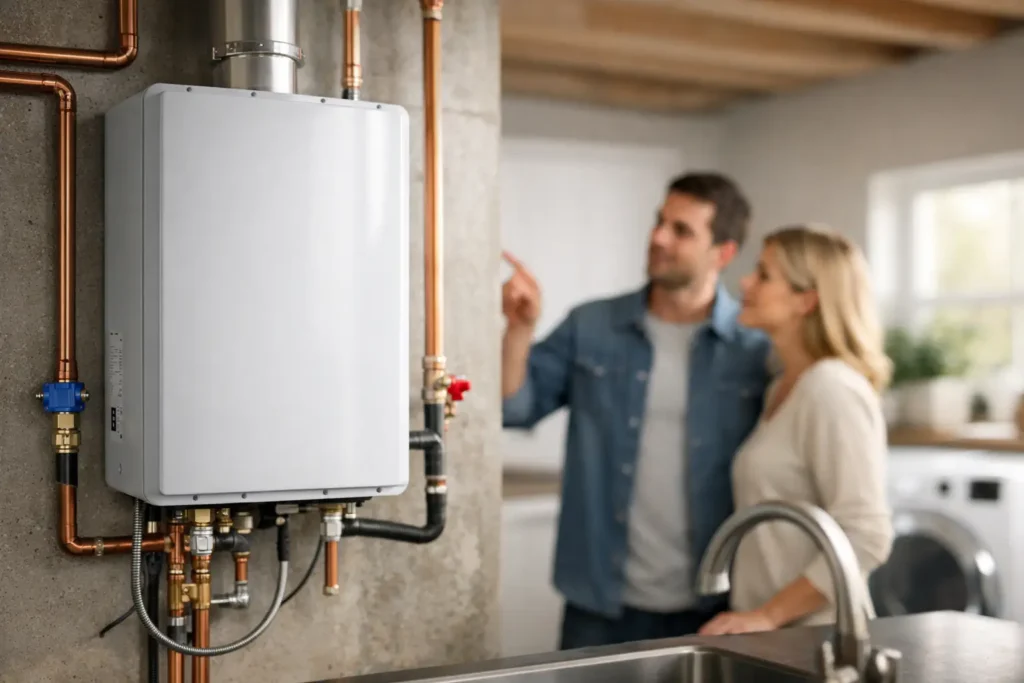
A cold shower at 6 a.m. is usually when people start thinking seriously about their water heater. But if you’re replacing an aging unit, a good tankless water heater review should answer more than one question. It should tell you whether tankless actually fits your home, your hot water habits, and your budget – not just whether the technology sounds appealing.
Tankless systems have a strong reputation for efficiency and endless hot water. In many homes, that reputation is earned. In others, the trade-offs show up quickly, especially when the unit is undersized, the gas line is inadequate, or the installation skips over key details. That is why the right review is less about hype and more about how these systems perform in real conditions.
Tankless water heater review: what stands out first
The biggest selling point is simple. A tankless water heater heats water on demand instead of storing it in a large tank all day. That means you are not paying to keep 40 or 50 gallons hot when nobody is using it.
For households that use hot water throughout the day, that can lower energy waste. For homes with limited mechanical room space, the smaller wall-mounted design is another plus. And for families that frequently run out of hot water with a conventional tank, a properly sized tankless unit can feel like a major upgrade.
But this is also where expectations need a reality check. Tankless does not mean unlimited hot water for unlimited fixtures at the same time. It means the unit can provide continuous hot water up to its flow rate capacity. If three showers, a washing machine, and a dishwasher all run at once, performance depends entirely on the model size, incoming water temperature, and fuel type.
Where tankless water heaters do very well
In day-to-day use, the best tankless systems are efficient, consistent, and compact. They are especially strong in homes where space is tight and hot water demand happens in waves rather than all at once.
One reason homeowners like them is lifespan. A quality tankless unit often lasts longer than a standard tank water heater when it is installed correctly and maintained regularly. Parts can often be serviced or replaced, which is not always the case with tank-style systems nearing the end of life.
Another benefit is standby energy savings. A tank system reheats stored water again and again, even while you sleep or leave for work. A tankless unit only fires when hot water is requested. Over time, that can help reduce utility costs, especially in homes with moderate daily usage.
There is also less risk of a full tank rupture flooding a utility room. That does not make tankless leak-proof, but it does remove one common failure point that causes expensive water damage.
The trade-offs most reviews skip
A balanced tankless water heater review has to talk about the downsides too. The first is upfront cost. Tankless systems usually cost more to purchase and install than traditional tank models. If the home needs a larger gas line, updated venting, or electrical upgrades, the project cost can rise further.
The second issue is flow rate. This matters more than brand slogans. Every unit has a limit to how many gallons per minute it can heat. In colder climates or during winter, incoming water starts colder, so the system has to work harder to achieve the same outlet temperature. That can reduce effective flow.
There can also be a slight delay before hot water reaches the fixture. Some people assume tankless means instant hot water, but that is not quite right. The unit heats quickly, but water still has to travel through the pipes. In some homes, the delay feels no different from a tank system. In others, recirculation may be needed for better convenience.
Maintenance is another factor. Tankless water heaters should be flushed periodically, especially in areas with hard water. Mineral buildup can reduce efficiency and shorten lifespan if ignored. Homeowners who like the low-maintenance simplicity of a basic tank model may not love that extra service requirement.
Gas vs electric in a tankless water heater review
Most whole-home tankless systems are gas-fired, and for good reason. Gas models generally deliver higher flow rates and are better suited for households with multiple bathrooms or heavier hot water demand.
Electric tankless units can work well in certain situations, especially for smaller homes, condos, additions, or point-of-use applications. They are compact and avoid combustion venting requirements. But for full-house use, electric models often need significant electrical capacity. In many existing homes, that becomes a limiting factor.
If you are comparing the two, the practical question is not which one sounds cleaner or simpler. It is whether your property infrastructure supports the output you need. A small electric unit may be perfect for one sink or one shower. It may be the wrong fit for a busy family home.
Sizing is where the real decision happens
Many tankless complaints come back to sizing. Not the brand. Not the concept. The sizing.
To choose the right unit, you have to estimate peak demand, meaning how much hot water may be needed at one time. A home with one bathroom and light usage has very different needs from a property with three bathrooms, a large soaking tub, and back-to-back morning showers.
Fixture count matters, but usage patterns matter more. A landlord managing a multi-unit building, for example, has to think differently than a homeowner in a small bungalow. A restaurant break room, salon sink, or commercial wash area also changes the demand profile fast.
This is where professional assessment pays off. A system that looks efficient on paper can disappoint in real life if it is chosen based on square footage instead of actual hot water load.
Installation quality matters as much as the unit
A premium tankless model can still perform poorly if the installation is rushed. Proper venting, gas pressure, condensate handling, combustion air, and water line setup all affect safety and performance.
That is especially true in older homes where existing plumbing or gas infrastructure may not match the new unit’s requirements. Retrofitting from a tank to tankless is not always plug-and-play. Sometimes it is straightforward. Sometimes it requires meaningful upgrades.
For property owners, this is where transparent pricing matters. A low quote that excludes venting changes or gas line work can end up costing more once the job starts. Clear planning upfront usually leads to fewer surprises and better long-term results.
Is tankless worth it for your home?
The honest answer is: it depends.
If you plan to stay in your home for years, want to improve energy efficiency, and are tired of running out of hot water, tankless can be a smart investment. It also makes sense when space is limited or when a long service life is a priority.
If your budget is tight and your current tank setup meets your needs, replacing it with another tank model may still be the practical move. That is not a step backward. It is just a different balance of cost, performance, and maintenance.
For rental properties, the answer depends on tenant usage, building layout, and maintenance planning. For commercial spaces, demand patterns and downtime risk become even more important. There is no single best system for every building.
Our tankless water heater review verdict
Tankless water heaters are not a gimmick. When sized correctly and installed properly, they offer strong efficiency, reliable hot water, and a longer service life than many standard tank units. For the right property, they are absolutely worth considering.
The catch is that they reward careful planning. A unit that matches your demand, fuel supply, and plumbing setup can perform very well for years. A unit chosen by price alone can lead to frustration.
For homeowners and property managers in Vancouver and nearby areas, local climate, building age, and household demand all play a role in the decision. That is why a hands-on evaluation matters more than broad marketing claims. Companies like Encano Plumbing & Drainage Ltd. see this firsthand on service calls – the best results come from matching the system to the building, not forcing the building to fit the system.
If you are considering a replacement, the smartest next step is not chasing the most advertised model. It is figuring out how much hot water you actually use, what your home can support, and which option will still make sense five years from now.