

You fill a glass from the kitchen tap, hold it to the light, and pause. Maybe it looks a little cloudy. Maybe there's a metallic taste you didn't notice last month. Maybe the white spots on the kettle are getting harder to ignore. Most Vancouver homeowners don't start by worrying about “water quality testing” as a technical topic. They start because something about the water feels off.
That concern is reasonable. Metro Vancouver is known for good source water, but your drinking water doesn't go straight from a mountain reservoir into your glass untouched. It travels through municipal infrastructure, service lines, valves, and your home's own plumbing. A kitchen tap in an older character home, a condo tower in Richmond, and a renovated Burnaby bungalow can all tell different stories.
That's why water quality testing matters. It helps answer a simple question with real confidence: is the water at your tap safe, and if not, what exactly needs attention? For homeowners, that's less about abstract science and more about practical decisions. Do you need a filter, a plumbing repair, or just reassurance that everything is fine?
Table of Contents
- What Is in Your Vancouver Tap Water
- The Science Behind Safe Drinking Water
- Local Water Concerns for Vancouver Homeowners
- Choosing Your Water Testing Method
- Making Sense of Your Water Quality Report
- From Test Results to a Lasting Solution
- When to Call a Professional Plumber
What Is in Your Vancouver Tap Water
You fill a glass from the kitchen tap in a Vancouver home first thing in the morning. The water looks clear, but it tastes metallic. Later that day, the taste is gone. In another home, a bathroom sink leaves blue-green stains while the shower seems fine. Those details matter because tap water quality is shaped by more than the city's supply. It is also shaped by the pipes, fittings, and fixtures inside the home.
That is why two homes on the same street can have very different water complaints.

Why your tap can differ from the city supply
Municipal water works like a clean delivery that still has to pass through your home before it reaches your glass. Along that last stretch, the condition of older copper lines, shutoff valves, faucet cartridges, soldered joints, and even the amount of time water sits unused can change the sample you drink.
That point is especially relevant in Greater Vancouver. Many homeowners get high-quality treated water from the region, but the plumbing inside older houses, renovated suites, and some condo buildings can still affect taste, colour, staining, and metal levels at the tap. A sample taken at the kitchen faucet answers a different question than a sample taken closer to the building entry.
For a homeowner, that distinction is simple. If the concern is your family's drinking water, the sample should usually come from the tap your family uses most.
What might actually be in the water
Homeowners usually are not asking for a lab lecture. They want to know what could explain the signs they are seeing.
At the tap, the usual suspects fall into a few practical categories:
- Natural minerals: These can affect hardness, spotting, and scale on kettles, glass, and fixtures.
- Metals from plumbing: Copper, lead, or other metals can enter water from older pipes, fittings, or fixtures, especially after water sits overnight.
- Treatment-related tastes or odours: Chlorine-related smells or a flat taste can come from disinfection, even when the water is still considered safe.
- Sediment or disturbed particles: Water main work, plumbing repairs, or debris inside older piping can cause temporary cloudiness or discolouration.
- Local plumbing byproducts: Corrosion inside the home can leave blue-green stains, metallic taste, or other fixture-specific clues.
Clear water can still have a taste, an odour, or dissolved metals that you cannot see. Cloudy water can be harmless trapped air, or it can point to sediment that deserves a closer look. Testing separates a passing nuisance from a real plumbing or water quality issue.
What Vancouver homeowners usually want to know
Most homeowners are trying to answer four practical questions.
- Is it safe to drink?
- Why does it taste or smell different at certain times of day?
- Are my pipes or fixtures affecting the water?
- Do I need a filter, a plumbing repair, or both?
A local example makes this easier to sort out. If an older Vancouver house has a metallic taste only from the kitchen cold tap first thing in the morning, the problem often points toward water that sat in the home's plumbing overnight. If every fixture shows the same issue all day, the investigation starts in a different place.
That is the key value of testing. It does not just say whether something is present. It helps narrow down where the problem starts, which is what lets you choose the right fix instead of guessing.
The Science Behind Safe Drinking Water
A Vancouver homeowner fills a glass at the kitchen sink, notices a faint smell, and wonders whether the problem is the city supply, the house plumbing, or just a harmless change after rain. That is where the science of water testing helps. It turns a vague concern into a clear process.
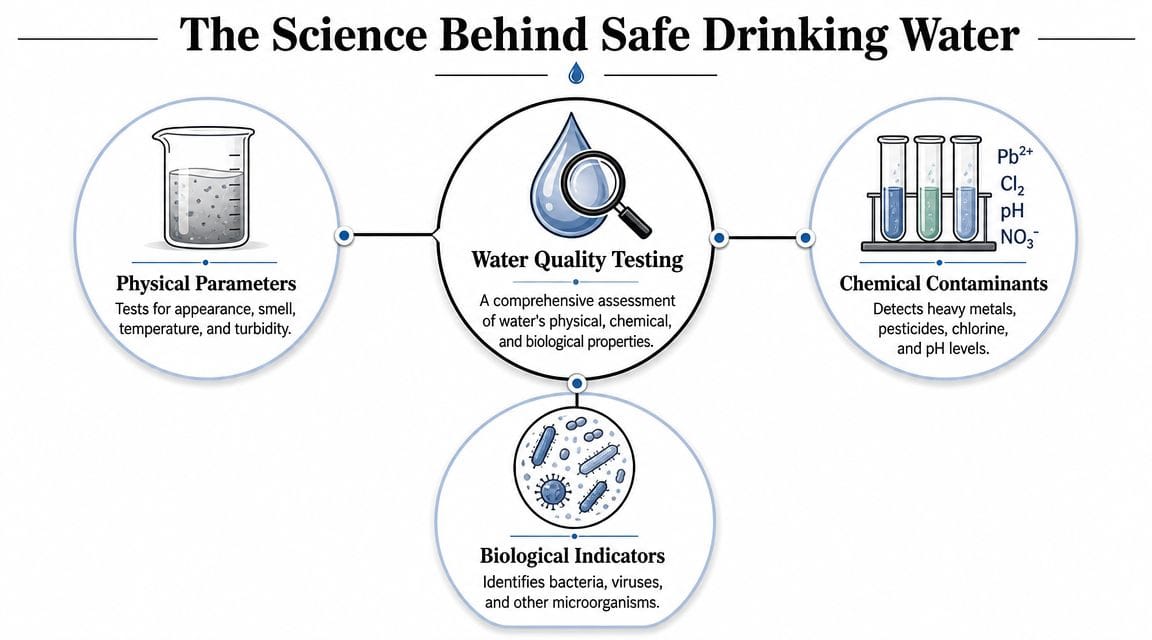
Water quality testing works like a three-part checkup. One part looks at what the water looks like. Another looks at what is dissolved in it. A third checks for microbes you cannot see. Looking at only one part is a bit like judging your home's plumbing by the sound in one pipe. You might catch a clue, but you can miss the actual cause.
The strongest diagnosis combines physical, chemical, and bacteriological testing because each one answers a different question. The FAO recommends using ISO-certified laboratories and qualified technicians for analysis, especially because high turbidity can make microbes harder to detect and can reduce treatment effectiveness. In practice, that means pairing turbidity checks with microbial testing such as E. coli and with metals testing to sort out whether the issue points to intrusion, corrosion, or a treatment problem, as outlined in the FAO guidance on water quality diagnosis.
Physical clues
Physical tests focus on signs you can often notice first. That includes turbidity, colour, and visible sediment.
In Greater Vancouver, this matters after heavy rain, nearby water main work, or plumbing repairs inside the home. Cloudy water can come from trapped air, which usually clears in a glass from the bottom up within a minute or two. Persistent cloudiness, grit, or particles that settle out point in a different direction and deserve testing.
Physical testing is useful because appearance can mislead. Water that looks odd may be harmless air. Water that looks clear may still have a problem. If a homeowner is also dealing with odour from drains or plumbing fixtures, a separate issue like a sewer smell in the house can add confusion, which is why isolating the source matters before choosing a filter or repair.
Chemical changes
Chemical testing checks what is dissolved in the water. Such testing can explain metallic taste, staining, chlorine odour, scaling, or signs of corrosion.
For many Vancouver-area homes, chemical testing helps answer a practical question: did the issue start in the municipal water, or did it develop after the water sat in the home's pipes? A blue-green stain near a sink often points toward copper corrosion. Water that tastes strongest first thing in the morning can suggest contact with plumbing materials overnight. A chlorine smell may reflect normal disinfection, but testing helps confirm whether disinfectant levels, pH, or metals are behind the complaint.
Professionals also use conductivity as a quick field indicator. It works like a snapshot of how much charged material is dissolved in the water. By itself, it does not identify the exact contaminant, but it can show that the water chemistry has changed and that more specific lab testing is warranted.
Bacteriological safety
Bacteriological tests look for microbes that no homeowner can confirm by sight, taste, or smell.
This part of testing matters most after backflow concerns, plumbing work, long periods of stagnant water, or any event that could allow contamination into the system. Tests often look for indicators such as E. coli and coliform bacteria because they help show whether the water may have been exposed to unsafe conditions.
Clear water can still be unsafe. That is why a visual check is useful for spotting clues, but it is never a substitute for proper testing.
Local Water Concerns for Vancouver Homeowners
In Greater Vancouver, the question usually isn't whether the region has access to good source water. The more useful question is what can happen between treatment and your tap. For homeowners in Vancouver, Burnaby, Richmond, New Westminster, Surrey, and nearby communities, local water concerns often come from a mix of municipal treatment choices and building-specific plumbing conditions.
What comes from treatment and what comes from plumbing
Municipal systems add disinfectants to protect public health. Homeowners often notice that as a swimming-pool-like smell, a medicinal taste, or water that tastes different from one season to another. Those complaints are common, and they don't automatically mean the water is unsafe. They do mean the water may benefit from targeted testing and, in some homes, filtration focused on taste and odour.
Turbidity can also become a concern after heavy rain, snowmelt, or nearby infrastructure work. Even when the issue is temporary, cloudy water can be unsettling. It can also make diagnosis trickier because appearance alone doesn't tell you whether the cause is air, sediment, or a broader disturbance.
The most important local concern for many homeowners, though, sits inside the house itself. Aging plumbing materials can change the water after it enters the building. That's why lead remains such a serious topic in older homes and older building systems. A major example of proactive lead policy comes from California, where AB 746 was enacted in 2017 to require lead testing in school drinking water outlets in buildings built before 2010, with testing implementation beginning by July 1, 2019. The broader lesson is that regulators shifted toward targeted, building-level testing because contamination can come from plumbing materials, not just the source, as described in this overview of lead testing requirements and proactive building-level monitoring.
That principle applies directly to older Vancouver homes, especially where original copper piping, older brass fixtures, or legacy solder may still be in place.
A practical Vancouver example
A family buys a beautifully renovated Burnaby house. The kitchen is new. The bathrooms look modern. The fixtures shine. But the renovation didn't include a full pipe replacement. The visible surfaces changed. Parts of the hidden plumbing didn't.
That's where homeowners get misled. Fresh tile and a new faucet don't guarantee that the water touching your drinking glass never passed through older materials. A point-of-use test from the kitchen cold tap can reveal risks that a building-wide assumption would miss.
If you're also noticing damp odours or broader plumbing concerns, it helps to separate water quality issues from drainage issues. A smell near a sink, floor drain, or utility area may point to a different problem entirely, such as one discussed in this guide to why there's a sewer smell in the house.
A simple way to think about local water concerns is this:
- At the street level: treatment choices can affect taste, odour, and appearance.
- At the building level: pipe materials and fixture components can add metals or other unwanted changes.
- At the tap level: the exact sampling point often tells you the most useful story.
Choosing Your Water Testing Method
Homeowners usually face a basic choice. Do you start with a DIY kit, or do you go straight to a professional lab test? The right answer depends on what you're worried about.
A home kit is like using a thermometer. It gives you a quick signal. A lab test is more like a full blood panel. It tells a much deeper story.
When a DIY kit makes sense
DIY strips and handheld meters are useful when your concern is narrow and immediate. They can help screen for things like pH, chlorine, or general hardness. They're convenient if you want a first look at whether something has changed.
A renter in a newer downtown condo, for example, might use a basic strip kit because the main concern is chlorine taste in drinking water. That's a reasonable first step when the goal is simple reassurance.
DIY tools are most useful in situations like these:
- Taste check: You want a quick read on chlorine-related taste or odour concerns.
- Fixture clues: You're seeing scale or soap scum and want a basic hardness screen.
- Routine curiosity: You'd like a rough baseline before deciding whether further testing is worth it.
They're less useful when the concern involves lead, bacteria, or a hidden plumbing source. Those are not “guess and compare colours on a strip” issues.
When lab testing is the right move
Professional lab testing is the better choice when health decisions depend on the result. It's also the better choice when the result needs to be defensible, repeatable, and specific enough to guide a real fix.
If you're buying an older Vancouver house, managing a strata property, or trying to rule out lead from aging plumbing, a lab test is the sensible route. The same applies if water has changed suddenly in taste, smell, or appearance and you can't link it to an obvious cause.
Here's the side-by-side comparison most homeowners need:
| Feature | DIY Test Kits | Professional Lab Testing |
|---|---|---|
| Best use | Quick screening at home | Detailed diagnosis |
| Speed | Fast, often same day | Slower, but more complete |
| Ease | Simple to use | Usually requires proper sampling steps |
| What it helps with | Chlorine, pH, hardness, general changes | Metals, bacteriological concerns, deeper analysis |
| Accuracy | Good for screening | Better for decision-making |
| Who it suits | Renters, newer homes, basic checks | Older homes, property purchases, unclear symptoms |
A home kit can tell you that something may be off. It usually can't tell you exactly why.
A practical example makes the choice clearer. If you own a newer condo in Richmond and dislike the tap taste, start with a simple screen. If you're moving into an older detached home with unknown plumbing history, skip the guesswork and go directly to professional analysis.
Making Sense of Your Water Quality Report
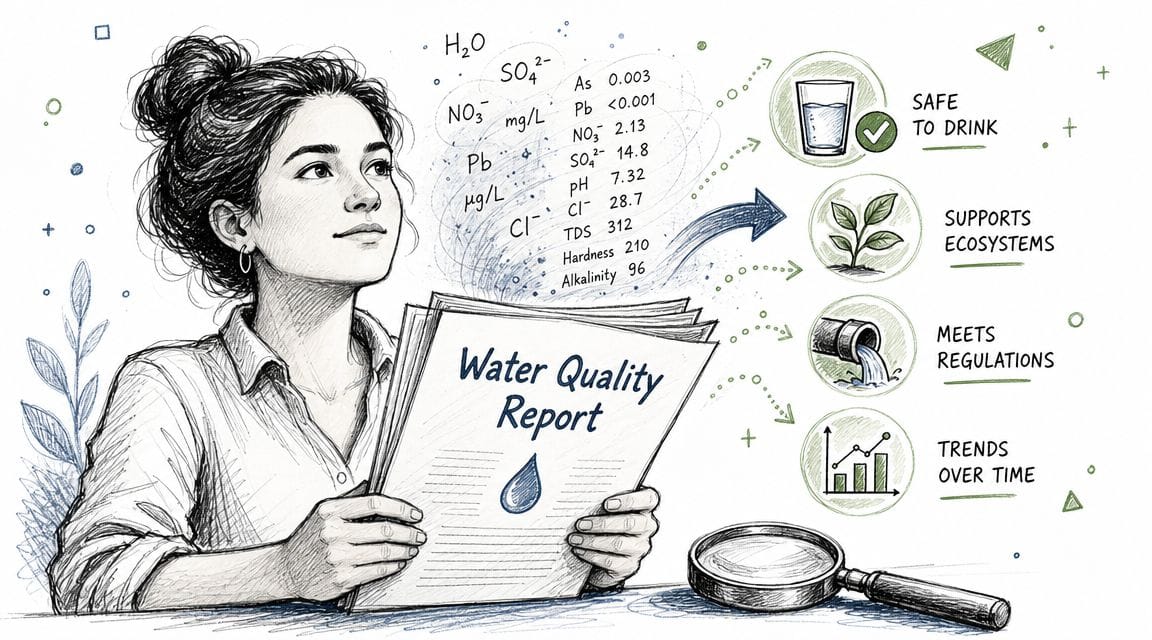
You open the report at your kitchen table, and it looks like a spreadsheet written for a lab, not a homeowner. That reaction is normal. In most Vancouver homes, the hard part is not getting the test done. It is figuring out what the report is saying about your water, your pipes, and what to do next.
Start with where the sample came from
The first line to check is the sampling location.
A sample taken before water enters the home answers a different question than a sample taken from the kitchen cold tap. Metro Vancouver's treated water can be very good at the municipal level, but your report may still reflect what happened inside the building after that water passed through shutoff valves, supply lines, soldered joints, or older brass fixtures.
That distinction matters in older Vancouver houses, some Burnaby and New Westminster homes with mixed-era plumbing, and even condos where one fixture has different components than the rest. A kitchen sample can show a plumbing-related issue that a source sample would never catch.
Also check whether the sample was first-draw or flushed. First-draw means the water sat in the pipes for several hours before sampling. Flushed means the water ran first. If metals are higher in the first-draw sample and lower after flushing, the problem often points back to the home's plumbing rather than the city supply.
Read the report in a simple order
Many homeowners jump straight to the biggest-looking number. That usually creates confusion.
A water report is easier to read if you go line by line in this order:
Parameter
This is what was tested, such as lead, copper, chlorine, turbidity, total coliforms, or E. coli.Result
This is the amount found in your sample.Unit
You may see ppm, ppb, mg/L, or µg/L. The unit matters because some substances are measured in very small amounts.Guideline or reference value
This gives you the comparison point. It shows whether the result is within the accepted range on that report.Sample details
Look for notes about first-draw, flushed, cold water only, sampling time, or the fixture used.
Units often trip people up. A simple way to picture it is cooking. A spoonful of salt and a pinch of salt are both salt, but they create very different outcomes. Water testing works the same way. Small amounts can still matter, especially for metals or bacteria.
Here is a practical example. If your kitchen tap shows high lead on a first-draw sample, but the level drops after running the water, that often suggests the water picked up lead from plumbing materials while sitting in the line. If the numbers stay similar before and after flushing, the next step may need a broader investigation.
After you've looked at the numbers, it helps to see how a technician talks through a result in plain language:
What "pass" and "fail" usually mean in real homes
A report is not a school test. A pass does not always mean every concern is resolved, and a fail does not mean your home is in immediate danger.
A passing result means that sample, from that location, at that time, met the reference shown on the report. If the taste is still off, the smell comes and goes, or one tap behaves differently from the others, the next question is whether you tested the right place under the right conditions.
A failing result needs context. One high result at one fixture may point to a local plumbing issue. A bacteriological concern calls for prompt follow-up because the response is different from what you would do for hardness, chlorine taste, or sediment. If the report points to a treatment need at the tap, it helps to review water filter options for Vancouver homes alongside the plumbing layout, so the fix matches both the water problem and the way the home is piped.
A simple way to decide what the report means
Use this checklist when you review the final page:
One fixture has the issue
Check that fixture, the stop valve, nearby supply lines, and any older fittings.Kitchen results differ from bathroom results
Focus on location-specific plumbing, not just the incoming water.First-draw is worse than flushed
Stagnation in household piping is likely part of the problem.The report shows bacteria-related concerns
Treat that as a health and safety matter and get direct guidance before using the water normally.The numbers look acceptable, but the water still tastes or smells wrong
Review the sampling method and consider whether the test covered the contaminant you suspect.
The report is a map. Once you know where the sample came from, what was measured, and how the result compares to the benchmark, the next step becomes much clearer.
From Test Results to a Lasting Solution
You get the lab report, see a few unfamiliar terms, and start shopping for filters that same night. That is how many Vancouver homeowners end up with equipment that helps the symptom but misses the cause. A chlorine taste issue needs a different fix than sediment from older building piping, and a metal concern at one tap can point to a very local plumbing problem rather than the whole home.
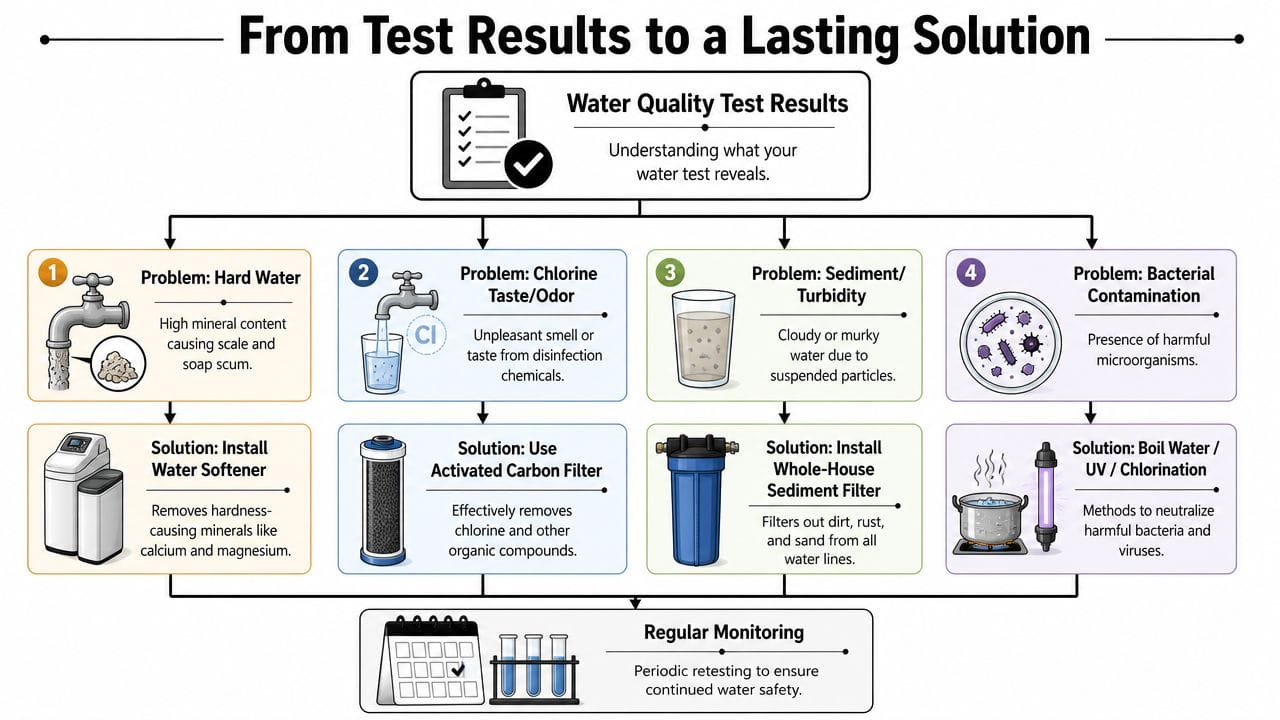
The goal is to match the treatment to the result, the location, and how your household uses the water. In Greater Vancouver, that matters because the incoming municipal supply can be good while the home's own plumbing still changes what comes out at the tap. Older fixtures, stagnant branch lines, aging shutoff valves, and building-specific piping materials can all shape the final result.
Match the fix to the finding
Water treatment works best when it is targeted.
Chlorine taste or odour
Activated carbon is often a practical answer. If the problem is only in the water you drink and cook with, an under-sink filter may be enough. If the smell shows up in showers and throughout the house, a whole-home setup may make more sense.Lead or other metal concerns at the tap
Use filtration certified for metal reduction, then look at the plumbing itself. In many Vancouver homes, treatment helps right away, but the longer-lasting fix may include replacing older fittings, supply lines, or problem sections of pipe.Sediment or turbidity
A sediment pre-filter can catch grit before it reaches faucets, appliances, or finer filter media. This is useful in homes where particles show up after plumbing work, in older buildings, or at fixtures that already have wear inside the valve body or aerator.Bacteriological concern
Treat this as a safety issue first. The right response can include immediate use precautions, follow-up sampling, plumbing inspection, and in some cases disinfection or UV treatment after the source is identified.
Screening tools can help narrow the picture, but they do not replace a proper diagnosis. Conductivity, for example, works a bit like a quick pulse check for dissolved minerals and ionic material in water. If that reading shifts along with taste, staining, or fixture-specific complaints, a plumber or water treatment specialist can use that clue to decide what to test next and whether the issue is in the supply, the piping, or both.
If you are comparing treatment layouts, these under-sink and whole-home water filter options for Vancouver homes can help you decide where the equipment should go and what each setup is meant to solve.
Why the biggest system is not always the best system
A whole-house filter can sound like the safest choice because it feels complete. In practice, it only makes sense when the problem affects water across the home. Filtering every litre used for toilets, laundry, and outdoor taps does not always solve the actual concern in a sensible way.
A point-of-use filter at the kitchen sink works well when the issue is limited to drinking and cooking water. Whole-home treatment fits better when the problem shows up in several places, such as chlorine smell in showers, visible sediment at multiple fixtures, or water that affects appliances and bathing.
The lasting solution comes from lining up three parts of the puzzle:
- What the test found
- Where the sample was taken
- How that water is used every day
That is the difference between buying equipment and solving the problem.
When to Call a Professional Plumber
Some water concerns are fine to monitor. Others need expert help sooner rather than later. The right time to call is usually when the question moves beyond “does this taste odd?” and into “what exactly is causing this, and how do I fix it correctly?”
Municipal systems use testing as a core compliance tool. California's broader drinking-water strategy, for example, relies on testing data to track whether roughly 3,000 public water systems meet health requirements, as described in this article on how water testing supports system compliance. Homeowners can use the same mindset at a household level. Testing is your personal compliance check for your own plumbing.
Call a professional plumber when any of these apply:
Your DIY result is unclear
If a strip gives a questionable reading or two fixtures behave differently, professional sampling can narrow it down.Your home is older and plumbing history is uncertain
This matters most when you're concerned about lead, corrosion, or fixture materials.The water changed suddenly
A new taste, strange smell, staining, or persistent cloudiness deserves proper diagnosis.You manage a building for other people
Landlords and strata managers need clearer answers because multiple residents are affected.You're planning treatment equipment
A filtration system should be chosen after testing, not before.You're already dealing with broader plumbing upgrades
If you're replacing aging fixtures or looking at a major appliance change, it's smart to review the full water picture at the same time. Related upgrades often overlap with work such as water heater replacement in Vancouver homes.
A good professional doesn't just collect a sample. They connect the result to the plumbing system, the symptoms in the home, and the fix that suits the property.
If you want clear answers about your tap water, Encano Plumbing & Drainage Ltd. can help you move from uncertainty to a practical plan. Their team serves Vancouver, Richmond, Burnaby, New Westminster, Delta, Surrey, and nearby communities, and can help homeowners, landlords, and strata managers assess plumbing-related water concerns, interpret what testing results mean in real terms, and choose treatment or repair options that fit the property.