A sewer line problem usually starts small – one slow drain, a toilet that bubbles, a damp patch in the yard. Then it stops feeling small very quickly. If you are asking when should a sewer line be replaced, the real answer is not based on one symptom alone. It comes down to the pipe’s condition, the age of the line, how often problems are happening, and whether a repair will actually last.
For homeowners and property managers, this is one of those decisions where waiting too long can lead to sewage backups, property damage, bad odors, and higher repair costs. The good news is that replacement is not always the first step. In many cases, a professional inspection can tell you clearly whether a sewer line still has years left in it or whether you are putting money into a pipe that is already at the end of its life.
When should a sewer line be replaced instead of repaired?
A repair makes sense when the damage is isolated and the rest of the pipe is still in decent shape. If there is a single crack, one section with root intrusion, or a local belly that can be corrected, targeted work may solve the problem without replacing the full line.
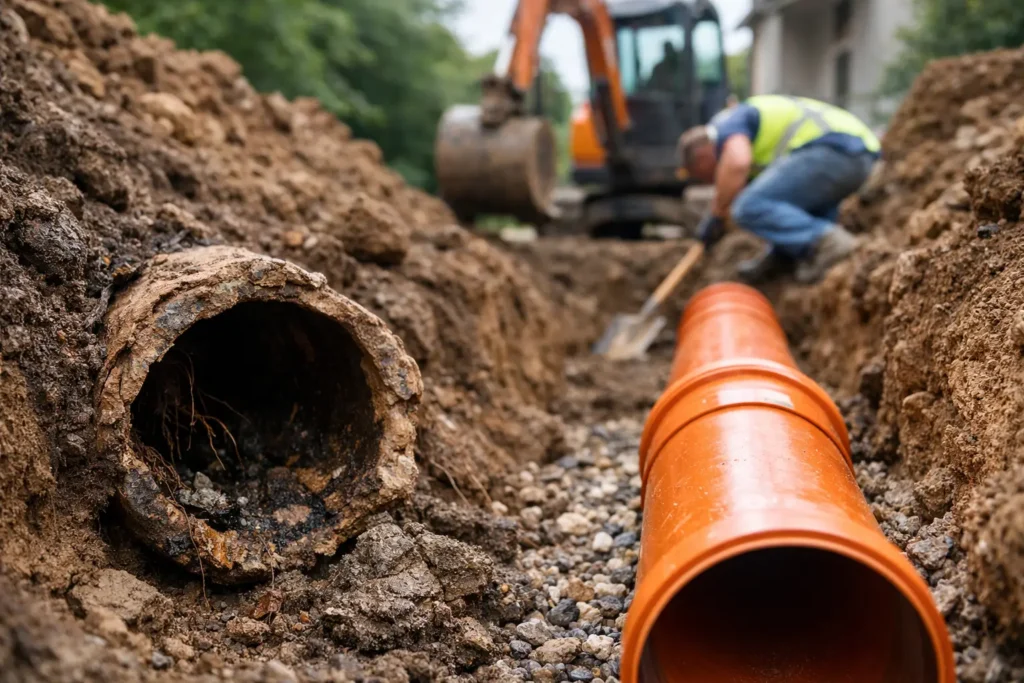
Replacement becomes the better option when the line has widespread deterioration or repeated failures. That often means multiple cracks, collapsed sections, severe corrosion, chronic root intrusion, or a pipe material that is known to break down with age. If you have already paid for repeated snaking, hydro jetting, or spot repairs and the same issues keep returning, that is a strong sign the underlying problem is the pipe itself.
This is where camera inspections matter. They show whether the trouble is limited to one section or spread throughout the system. Without that view, it is easy to spend money on short-term fixes that do not change the long-term outcome.
The most common signs your sewer line may need replacement
Some warning signs are easy to dismiss at first. The problem is that sewer lines rarely improve on their own.
Frequent backups are one of the biggest red flags. If more than one drain in the building backs up at the same time, especially lower-level fixtures like basement showers or floor drains, the issue may be in the main sewer line rather than a simple local clog.
Persistent foul smells also deserve attention. A sewer odor inside the home or around the yard can mean wastewater is not moving properly or that the line has cracked and is leaking underground.
Slow drains throughout the property can point to a main line restriction. A single slow sink is often just that sink. But when tubs, toilets, and sinks all seem sluggish, the main sewer line becomes a much more likely suspect.
You may also notice soggy lawn areas, unusually green patches of grass, or indentations in the yard. Those changes can happen when a buried sewer pipe leaks or collapses. In some cases, the first sign is not inside the building at all.
Rodent or insect activity can occasionally increase around damaged sewer lines too. Broken pipes create access points and moisture, both of which can attract pests.
Age and pipe material matter more than many owners realize
One of the biggest factors in deciding when should a sewer line be replaced is the age of the system. Older homes and buildings may still have clay, cast iron, Orangeburg, or aging concrete sewer lines. Each material has a different lifespan, but none lasts forever.
Clay pipes are especially vulnerable to root intrusion because the joints can separate over time. Cast iron can corrode from the inside out. Orangeburg, a bitumen-based pipe used in older installations, is known for deforming and failing as it ages. Even if these lines are still functioning today, recurring problems often become more common once they reach the later years of service.
That does not mean every old sewer line must be replaced immediately. It means older materials deserve closer attention, especially if you are already seeing backups, heavy root growth, or signs of structural damage on a camera inspection.
For landlords and property managers, age is also a budgeting issue. Replacing a failing line on your schedule is usually less disruptive than dealing with an emergency backup affecting tenants or operations.
What a camera inspection can reveal
A sewer camera inspection takes a lot of guesswork out of the decision. It can show root intrusion, offset joints, cracks, corrosion, scaling, grease buildup, standing water, and collapses. Just as importantly, it helps determine whether the issue is structural or simply a blockage that can be cleared.
That distinction matters. If the line is structurally sound, drain cleaning or repair may be enough. If the pipe walls are deteriorating or sections have shifted badly, cleaning alone may only buy a little time.
A good inspection should also look at the pattern of damage. One trouble spot is different from a pipe that is failing in several areas. The second case is where full replacement starts to make more financial sense.
Repair, lining, or full replacement?
There is no single answer for every property. In some cases, traditional repair is the right move. In others, trenchless methods such as pipe lining may be an option. And sometimes a full replacement is the safest route.
Pipe lining can work well when the existing pipe still has enough structure to support the liner. It is less invasive than digging up the entire line and can extend the life of the system. But it is not ideal for every situation. A collapsed pipe, severe misalignment, or extensive deformation may rule lining out.
Full replacement is usually recommended when the line has major structural failure, the material is badly deteriorated, or the damage is too widespread for patchwork repairs to hold up. While replacement costs more upfront, it often reduces the cycle of repeated service calls, cleanup, and emergency disruptions.
For commercial buildings and multi-unit properties, that reliability matters. A temporary fix might seem cheaper in the moment, but recurring sewer issues can create tenant complaints, downtime, sanitation concerns, and avoidable liability.
When waiting becomes the expensive choice
Many property owners hesitate because sewer replacement sounds disruptive and expensive. That is understandable. But waiting can be more expensive if the line is already failing.
A broken sewer line can damage landscaping, driveways, flooring, drywall, and stored belongings. If sewage backs up into occupied space, cleanup costs can rise quickly. There is also the health side of it. Wastewater exposure is not something to take lightly.
The practical question is not just how much replacement costs today. It is how much continued delays may cost if the pipe fails completely next month.
If you are dealing with repeated drain problems, recurring root intrusion, or a sewer line that has already been repaired more than once, replacement may actually be the more affordable path over time.
Local conditions can affect the timeline
In areas like Vancouver and surrounding communities, older housing stock, mature trees, heavy seasonal rain, and shifting ground conditions can all add stress to underground sewer lines. Tree roots are especially common around aging clay or jointed pipes. Moist soil and root growth can turn a small opening into a recurring major blockage.
That is why a sewer line that technically still works may still be a replacement candidate if it is clearly heading in the wrong direction. The goal is not just to get wastewater flowing again today. It is to avoid the next backup, the next emergency call, and the next round of property disruption.
How to know it is time to act
If the line is backing up repeatedly, showing structural damage on camera, leaking into the yard, or made from a material that is failing with age, it is time to seriously consider replacement. If the issue is isolated and the rest of the pipe is in solid condition, repair may still be the right call.
The best next step is a professional diagnosis based on the actual condition of the line, not guesswork. A trustworthy plumber will explain what they found, what can be repaired, what should be replaced, and why. That kind of clear advice helps you make a decision based on safety, cost, and long-term reliability rather than pressure.
Sewer line problems are never convenient, but they are easier to manage when you deal with them before they turn into a mess. If your drains keep warning you that something bigger is going on, it is worth listening.