

No. For most standard outdoor AC units in Greater Vancouver, you generally shouldn't cover them in winter, and in our wet coastal climate the bigger risk is trapped moisture, not cold weather. BC's winter relative humidity averages 85 to 90%, and sealed covers can accelerate corrosion 2 to 3 times faster in Greater Vancouver than in colder but drier regions.
That goes against the advice many homeowners still hear every autumn. A lot of that advice comes from places that deal with deep snow and dry cold for months at a time. Vancouver, Richmond, Burnaby, Delta, and the rest of the Lower Mainland have a different problem. We get long stretches of rain, damp air, and freeze thaw conditions that keep metal wet and slow down drying.
That's why the standard blue tarp or snug vinyl cover causes more trouble than it prevents. Modern outdoor condensers are built to live outside through rain, snow, and freezing temperatures. What they don't handle well is being wrapped up so tightly that moisture can't escape.
Table of Contents
- The Straight Answer for Vancouver Homeowners
- Why Full Covers Are a Bad Idea in Our Wet Climate
- The Critical Difference for Heat Pump Owners
- Safer Alternatives and Proper Covering Techniques
- Your Off-Season AC Maintenance Checklist
- Protect Your Investment and Know When to Call Encano
The Straight Answer for Vancouver Homeowners
For most homes in Vancouver and the surrounding area, the answer to should you cover your air conditioner in winter is simple. No, not if it's a standard cooling-only condenser in normal conditions. Guidance specific to British Columbia says covering a standard outdoor air conditioning condenser for winter is generally not required because modern units are engineered to handle rain, snow, and freezing temperatures year-round without protection, as outlined by BC guidance on winter AC covers.
The common mistake is treating every climate the same. A homeowner in a dry inland city might worry mostly about snow sitting on the cabinet. In Greater Vancouver, the main issue is moisture hanging around for weeks, getting trapped under plastic, and never fully drying out.
What makes Vancouver different
Our winters are mild, damp, and repetitive. Rain hits the unit, temperatures shift, condensation forms, and then another wet system rolls through. A full cover turns that normal outdoor exposure into a closed, humid pocket.
Practical rule: If your goal is to protect the unit, let it breathe first.
There are a few exceptions. If the condenser sits under heavy tree cover, close to construction dust, near ocean salt exposure, beside an exhaust vent, or near a pool environment, some protection from falling debris can make sense. But even then, the right answer usually isn't a full wrap.
If you want a broader look at seasonal system care, heating and cooling service guidance is a useful place to compare how different equipment should be handled in the off-season.
Why Full Covers Are a Bad Idea in Our Wet Climate
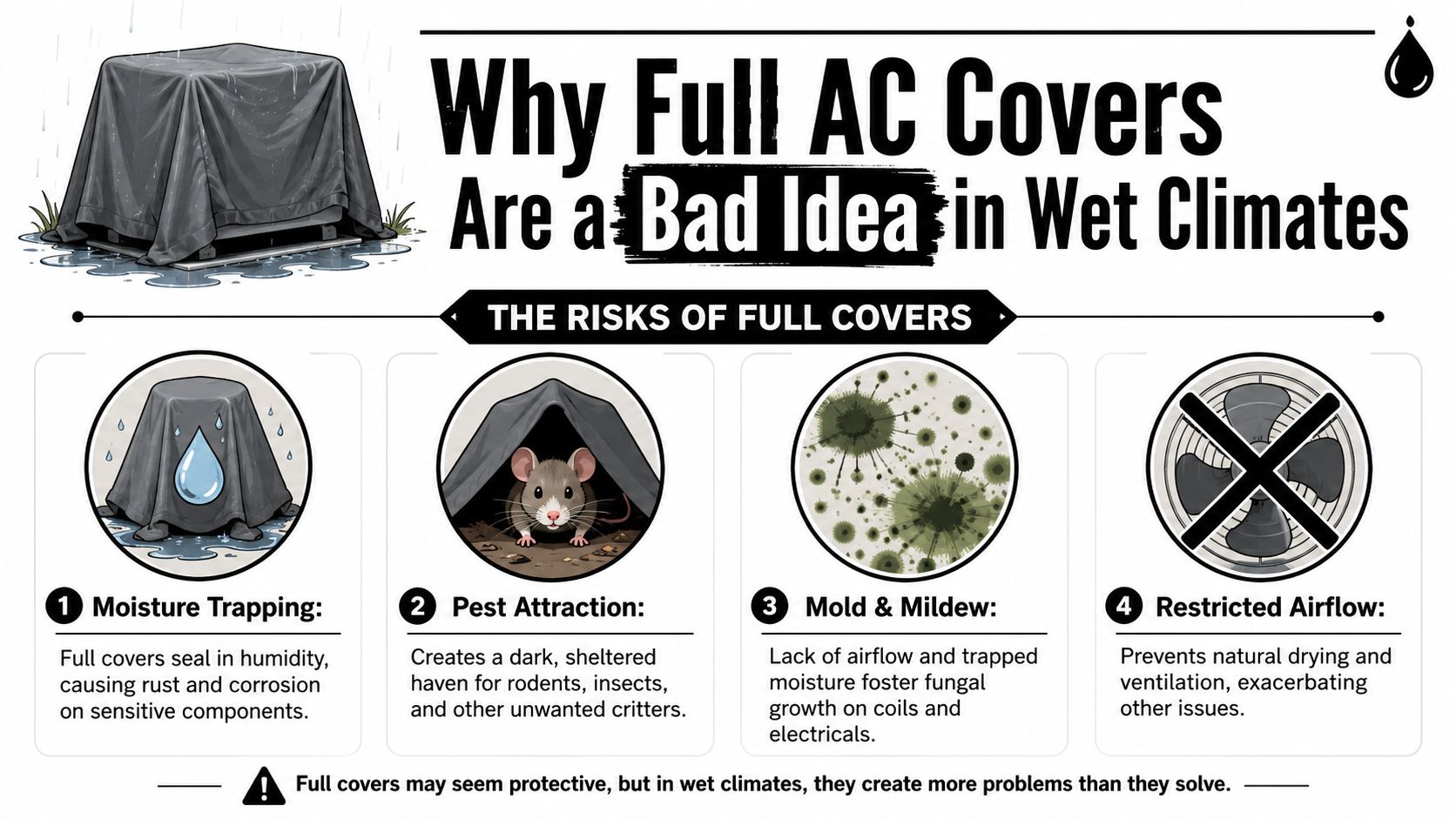
A full cover acts like a raincoat that never comes off. It blocks drying, traps humidity, and creates a sheltered cavity where corrosion and pests can settle in.
BC's winter relative humidity averages 85 to 90%, compared with 60% in Ontario, and sealed covers can accelerate corrosion 2 to 3 times faster in Greater Vancouver than in colder but drier regions, according to this discussion of regional winter cover conditions.
The moisture problem is bigger than the cold problem
Modern condensers are built for weather exposure. Rain, snow, and low temperatures aren't unusual operating conditions for the cabinet and coil. What causes avoidable damage is stale, trapped dampness sitting against metal parts, coil fins, fasteners, and wiring compartments.
Plastic tarps and tight vinyl sleeves are the worst choice in Vancouver. They restrict ventilation, hold moisture inside the cabinet, and slow natural drying after rain. If leaves or fir needles get under the cover, they stay wet longer and turn into organic muck around the base and coil area.
What I see go wrong most often
Homeowners usually cover the unit with good intentions. A blue tarp goes on in late autumn, gets tied tightly around the sides, and stays there all winter. By spring, the cabinet often smells musty, the inside stays damp, and the cover has also created a protected nook for insects or small animals.
That's one reason full wraps often overlap with indoor air quality concerns. Dampness outside the equipment can be part of a wider moisture pattern around the home, and homeowners already dealing with mould concerns in the home should be especially careful about creating another moisture trap outside.
A winter cover should never turn an outdoor machine into a damp storage bin.
Here's the practical example. A homeowner in East Vancouver installs a tight plastic cover over a standard condenser because they assume rain will damage it. Through winter, rain and humidity collect under the cover, the unit can't dry, and by spring the inside of the cabinet shows early rust and signs of pest activity. The cold didn't cause that. The trapped moisture did.
What full covers tend to cause
- Rust on metal parts: Moist air stays trapped against the cabinet and fasteners.
- Pest shelter: Rodents and insects like dark, protected spaces.
- Mildew and grime: Organic debris stays wet longer.
- Poor spring condition: The unit comes out of winter dirtier and damper than it went in.
The Critical Difference for Heat Pump Owners
If your outdoor unit runs during winter because it provides heat, this is a different conversation. Do not cover it. This is not optional.
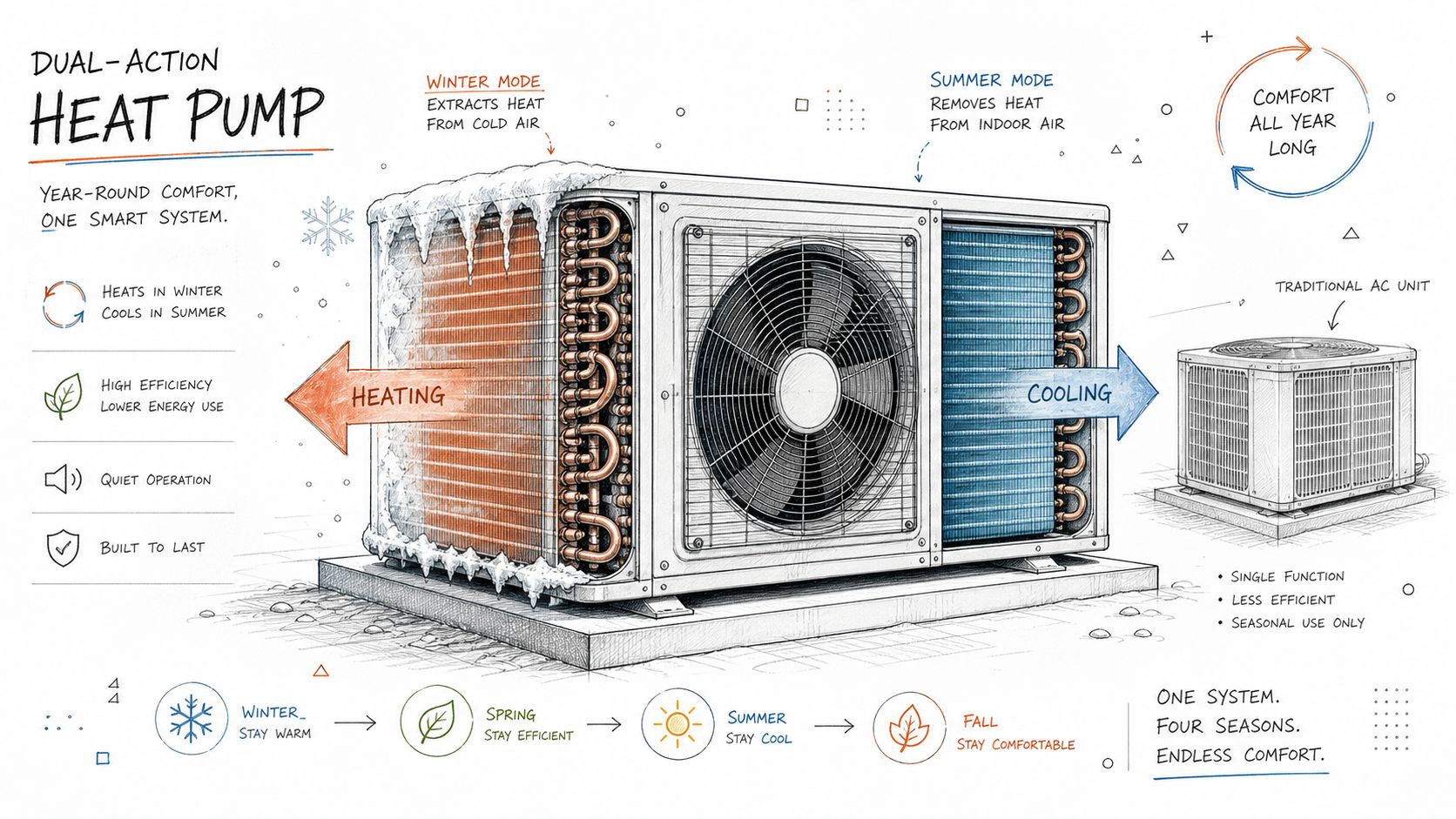
For households using a heat pump for winter heating, covering the outdoor unit is strictly prohibited because it blocks the airflow required for the defrost cycle, causing the system to ice up and shut down prematurely, as explained in this heat pump winter covering guide.
Why a heat pump must stay open
A heat pump needs to move air across the outdoor coil in winter. That's how it extracts heat from outdoor air and how it manages defrost. If you wrap the unit, you interfere with the basic function of the machine.
The verified guidance is specific. Heat pumps can operate by extracting heat from outdoor air even at -5°C, and a cover restricts the fan's ability to pull air through the coil, which can trigger safety shutdowns and increase compressor wear by up to 40% during peak heating months in the cited guidance above. In practical terms, that means reduced performance when you need heat most.
What homeowners often mistake for protection
Some people think a cover will keep snow and frost off the unit and help it work better. In reality, the system already expects frost and is designed to clear it through defrost cycles. The problem starts when airflow is blocked.
If heavy snow lands on the unit, the right response is simple maintenance. Gently remove buildup from the top and sides so air can move freely. Don't wrap the cabinet and don't cap the intake area.
If the unit heats your home in winter, covering it is like blocking the lungs of the system.
A lot of condo and townhouse owners now have ductless or compact heat pump systems, so this matters more than many generic articles acknowledge. Homeowners comparing system types can also look at heat pumps for condos to understand why airflow and defrost access are absolutely essential in compact installations.
A simple distinction to remember
| Equipment type | Winter cover advice |
|---|---|
| Cooling-only AC condenser | Usually no cover needed |
| Heat pump that runs in winter | Never cover the unit |
Safer Alternatives and Proper Covering Techniques
In Vancouver, the goal is not to keep the unit warm. The goal is to keep it from staying wet.
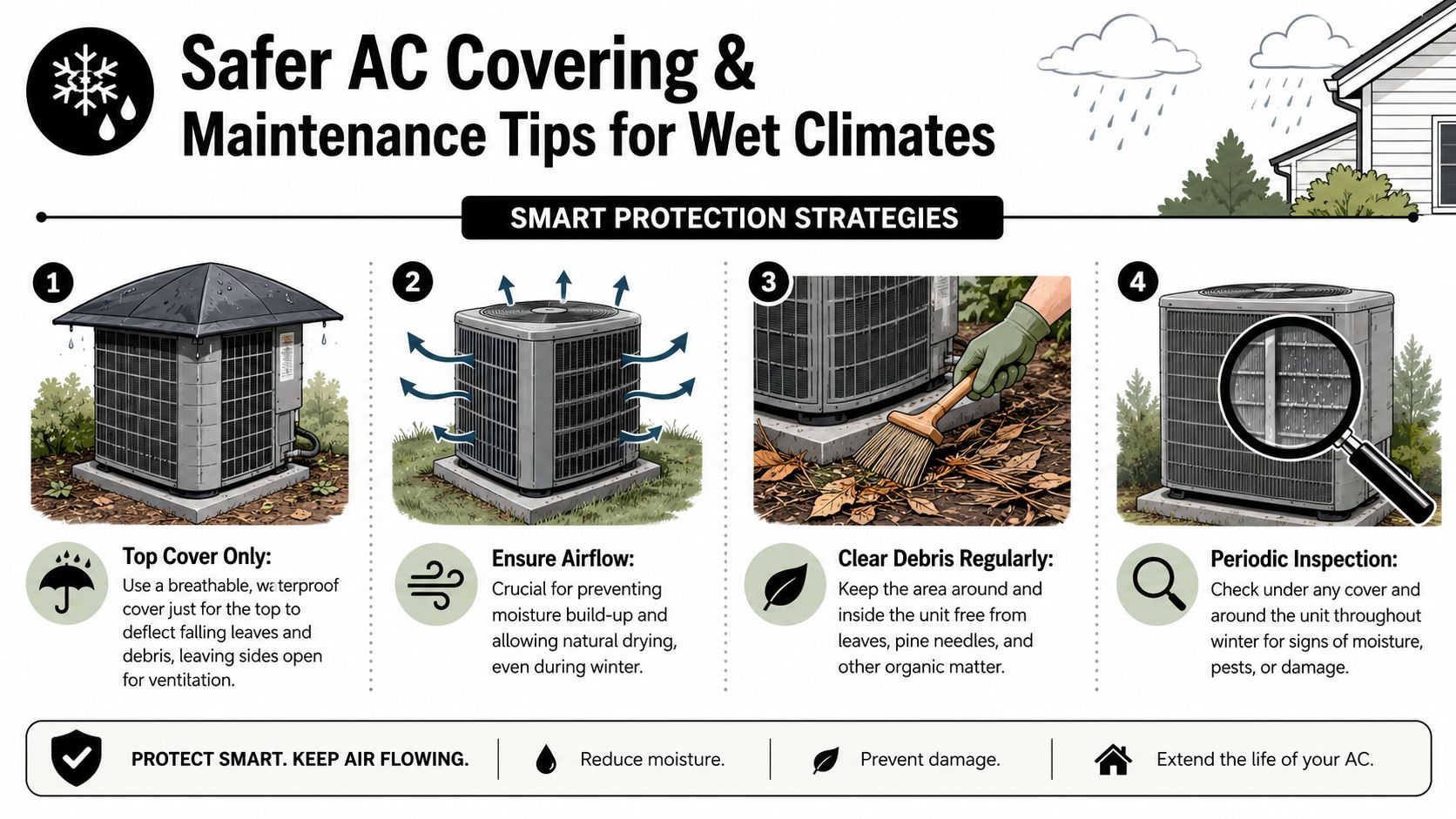
That changes the advice. A full winter cover might make sense in colder inland climates where snow burial is the main concern. Here, with steady rain, high humidity, and regular freeze-thaw swings, a wrapped condenser often stays damp longer and corrodes faster. If a cooling-only AC sits under a cedar, fir, or maple, the safer approach is usually a top-only cover that blocks falling debris and leaves the sides open to dry.
Industry guidance from the Air Conditioning Contractors of America supports avoiding full enclosure and using only limited top protection if debris is a problem.
What the right cover looks like
A proper cover works like a lid. It shields the fan opening from needles, leaves, cones, and small branches, but it does not wrap the cabinet.
Leave the sides fully exposed. In our climate, side airflow matters because the coil needs to dry after days of rain and damp overnight temperatures. A sealed vinyl bag, tarp, or shrink-wrap sleeve traps that moisture against metal surfaces and gives spiders, slugs, and other pests a sheltered spot to settle in.
Use a purpose-made condenser top cover with secure straps or bungee points so wind does not drag it into the coil. Loose plastic is a problem on its own.
Smart ways to protect the unit
- Use a top-only cover: Keep the fan opening protected while leaving the side panels open.
- Pick breathable material: Mesh or ventilated condenser covers dry out better than solid plastic wraps.
- Trim back overhead debris sources: Low branches drop less organic material into the cabinet.
- Keep the area around the pad clean: Wet needles and leaves against the base hold moisture for weeks.
- Check the cover after windstorms: If it shifts, remove and reset it before it rubs against the coil or blocks drainage.
A common North Vancouver setup is a cooling-only condenser under a large fir with needles dropping all winter. In that case, a small, secured top cover is a reasonable compromise. It keeps the fan section cleaner without turning the whole cabinet into a damp enclosure. That is the balance that works best on the coast.
This walk-through is also worth watching if you want to see the general idea in action.
Your Off-Season AC Maintenance Checklist
In Vancouver, winter prep is mostly moisture control. A condenser can handle cold. It does not do well with wet leaves packed around the base, standing water on the pad, or corrosion that sits unnoticed until the first hot week in spring.
If you use any top-only protection because the unit sits under trees, prep the cabinet first. Clean it, let it dry, and keep drainage paths open. Some homeowners also ask about coil protectants. If that route is being considered, use an HVAC-approved product and follow the label closely. The goal is to avoid trapping dirt or adding anything that interferes with airflow once the system is back in service.
A practical checklist for winter prep
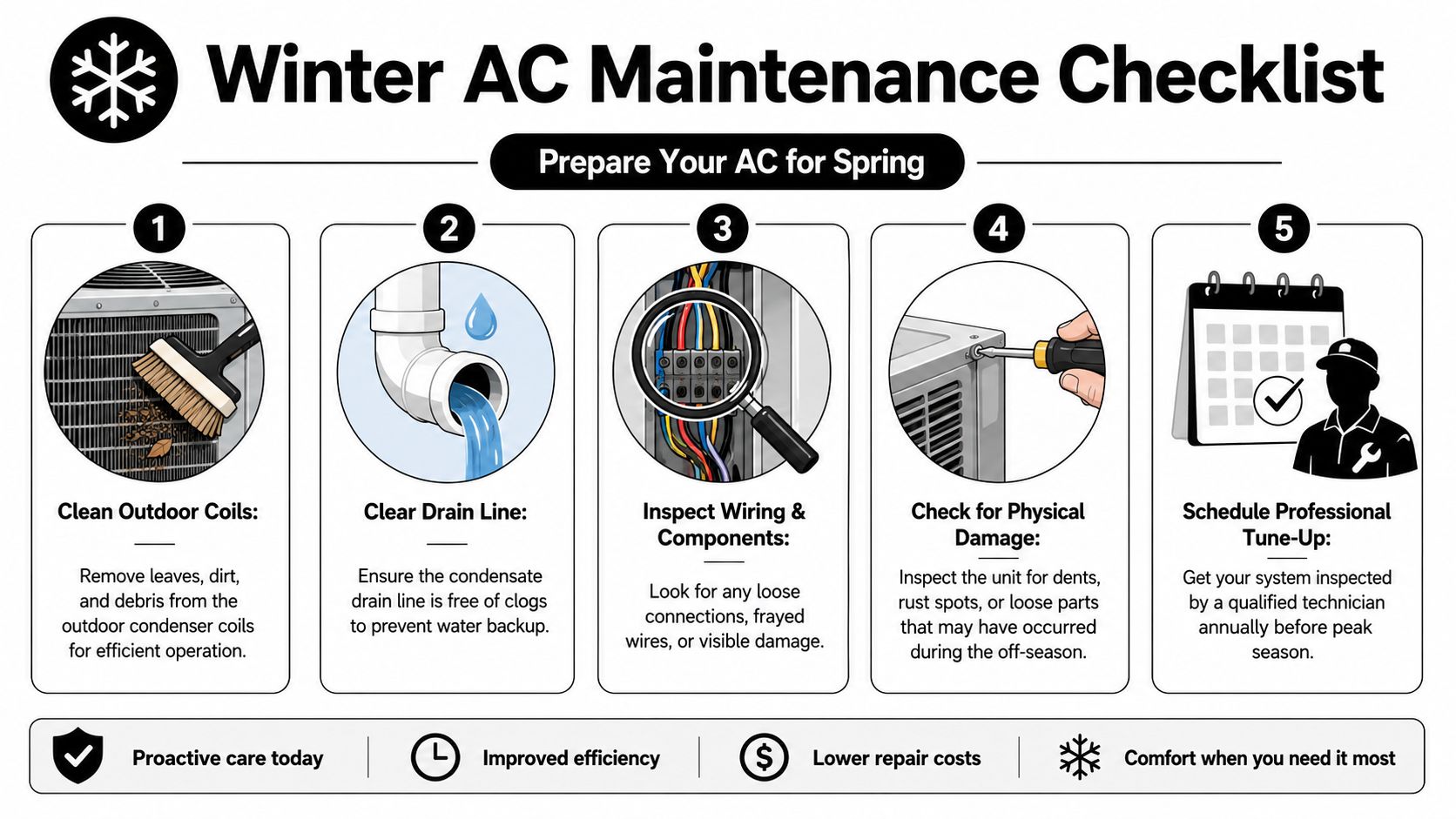
Start with power off at the disconnect. Then check the parts that cause the most trouble after a wet coastal winter.
Clear leaves, needles, and twigs
Remove debris from the top grille, inside the base if it is easy to reach, and around the pad. In Vancouver, soggy organic debris is a moisture reservoir. It keeps metal damp and gives pests a sheltered place to sit.Wash the coil gently if it is dirty
A garden hose on light pressure is enough for surface dirt. Spray straight through the coil, not at an angle. Skip the pressure washer. I see bent fins from that mistake every season.Keep open space around the unit
Trim plants back and keep stored items, bins, and lumber away from the cabinet. Manufacturers commonly call for clear space around outdoor condensers so they can drain and breathe properly. If the manual for your model gives a specific clearance, follow that first. ENERGY STAR's heat pump maintenance guidance also advises keeping the outdoor unit clear of vegetation and debris.Look over the cabinet and exposed components
Check for rust, loose screws, damaged insulation on visible wiring, and signs of rodents or slugs. Do not poke into electrical compartments. If something looks chewed, corroded, or out of place, book service.Check the pad and drainage
Make sure the unit is still sitting level and not surrounded by mud, bark mulch, or pooled water. Freeze-thaw cycles here are mild, but they are enough to shift a pad or leave the base sitting wet for weeks.
A common Lower Mainland example is a standard AC condenser beside a cedar hedge with poor sun exposure. The cabinet stays damp, the coil collects fine debris, and the ground around the pad never fully dries from November through February. In that setup, the useful work is cleanup, clearance, and periodic checks after storms. A full cover does not solve the underlying problem.
Keep the unit open enough to dry. That is what prevents a lot of spring surprises on the coast.
Winter checks worth doing
- After windstorms: Remove branches, needles, and any debris caught in the top or around the base.
- After a cold snap: Look for ice that formed from dripping gutters or splashback, not just weather exposure.
- Once a month: Confirm the area around the unit is still clear and any top cover has not shifted against the coil.
- Before spring startup: Remove the cover, clear debris again, and inspect for rust, damaged fins, or signs of pests.
Protect Your Investment and Know When to Call Encano
The best answer to should you cover your air conditioner in winter in Vancouver is still the same. For most standard AC units, don't fully cover it. For heat pumps, never cover it. In both cases, the safer approach is to keep the equipment clean, open, and able to dry out.
That advice fits the Lower Mainland because our winter problem isn't extreme cold. It's persistent dampness. Full covers trap that dampness, hold it against the equipment, and can turn a machine built for outdoor exposure into a pocket of condensation, rust, and pest activity.
Homeowners can handle the simple off-season tasks. Clear debris, keep proper space around the unit, and use only a breathable top cover when there's a real debris issue from above. If the unit has visible rust, repeated icing, damaged fins, unusual noise, or signs of rodents, it's time for a proper inspection.
A technician can check the coil condition, electrical components, cabinet integrity, and overall readiness before the cooling season starts. That's especially useful after a wet winter, when hidden corrosion or blocked airflow points often show up only once the system is asked to work again.
If you want a professional inspection before spring startup, Encano Plumbing & Drainage Ltd. provides HVAC service across Vancouver, Richmond, Burnaby, New Westminster, Delta, Surrey, and nearby communities. Their team can inspect outdoor equipment, spot moisture-related wear early, and make sure your system is ready for reliable warm-weather operation.