

Your furnace starts making a hard metallic noise on a wet November night. The house still heats, but not evenly. The back bedrooms feel cool, the main floor feels stuffy, and nobody wants to gamble on whether the system will make it through winter.
Then August arrives. It's hot, the air outside is smoky, and opening windows doesn't help. You're left deciding whether to keep patching an old setup or finally install something that can handle both heating and cooling properly.
That's where most Greater Vancouver homeowners are now. Our climate still looks mild on paper, but real comfort isn't just about outdoor temperature. It's about damp air, shoulder-season swings, older houses with leaky envelopes, strata restrictions, and summers that now make cooling feel less optional than it used to. The U.S. Census Bureau reports that about 10% of households were uncomfortably hot for 24 hours or more at least once in the previous year. That's U.S. data, but the comfort problem is familiar here too.
A practical example. A Vancouver Special with an older gas furnace often heats the upstairs reasonably well but leaves the lower level lagging, especially if the duct layout was never balanced properly. In summer, that same house can trap heat on the top floor all afternoon. A newer townhouse may have better insulation and tighter construction, but it can still overheat if it lacks proper cooling and ventilation. The right answer isn't the same for both homes.
Table of Contents
- Your Home's Comfort in Vancouver's Changing Climate
- Comparing Your HVAC System Options
- Understanding Efficiency Ratings and Operating Costs
- When to Repair Your System and When to Replace It
- Essential Maintenance and Troubleshooting Tips
- How to Choose a Qualified Vancouver HVAC Contractor
- Local Rebates and Frequently Asked Questions
Your Home's Comfort in Vancouver's Changing Climate
A lot of homes in Vancouver were built for heating first and cooling second. That made sense for years. You needed dependable winter heat, moisture control, and enough airflow to keep rooms from feeling clammy. Now homeowners are asking for both. They want heat in January and clean, closed-window comfort in August.
The trouble is that old equipment often struggles in both seasons. A furnace may still fire, but if the blower is weak, the filter is clogged, or the ductwork leaks into a crawlspace, the house won't feel right. In summer, portable units can help one room, but they rarely solve comfort across the whole home.
Why our climate makes system choice tricky
Greater Vancouver isn't Calgary and it isn't Victoria either. We deal with damp cold more than deep cold. We also get warm stretches where upper floors and west-facing rooms heat up fast. Add wildfire smoke, and natural ventilation stops being a reliable plan.
Open windows are a strategy. They aren't a cooling system.
That matters because a system that looks oversized on a spec sheet can still be the wrong fit if it short-cycles, misses humidity control, or doesn't match the house layout. In this region, the best setups usually balance three things well:
- Steady winter heat: Not blasts of hot air followed by cold rooms.
- Summer cooling: Enough capacity to handle hot afternoons without relying on open windows.
- Air movement and filtration: Important during smoke events and for homes that hold moisture.
A familiar homeowner scenario
Take a family in Burnaby with an older furnace and no AC. In winter, they keep the thermostat up because the far bedroom never catches up. In summer, they use fans and a portable unit upstairs. The portable cools one room but dumps noise into the house and doesn't help the hallway, office, or main floor.
That's usually the point where people stop asking, “Can I get by one more year?” and start asking, “What system fits this house?”
Comparing Your HVAC System Options
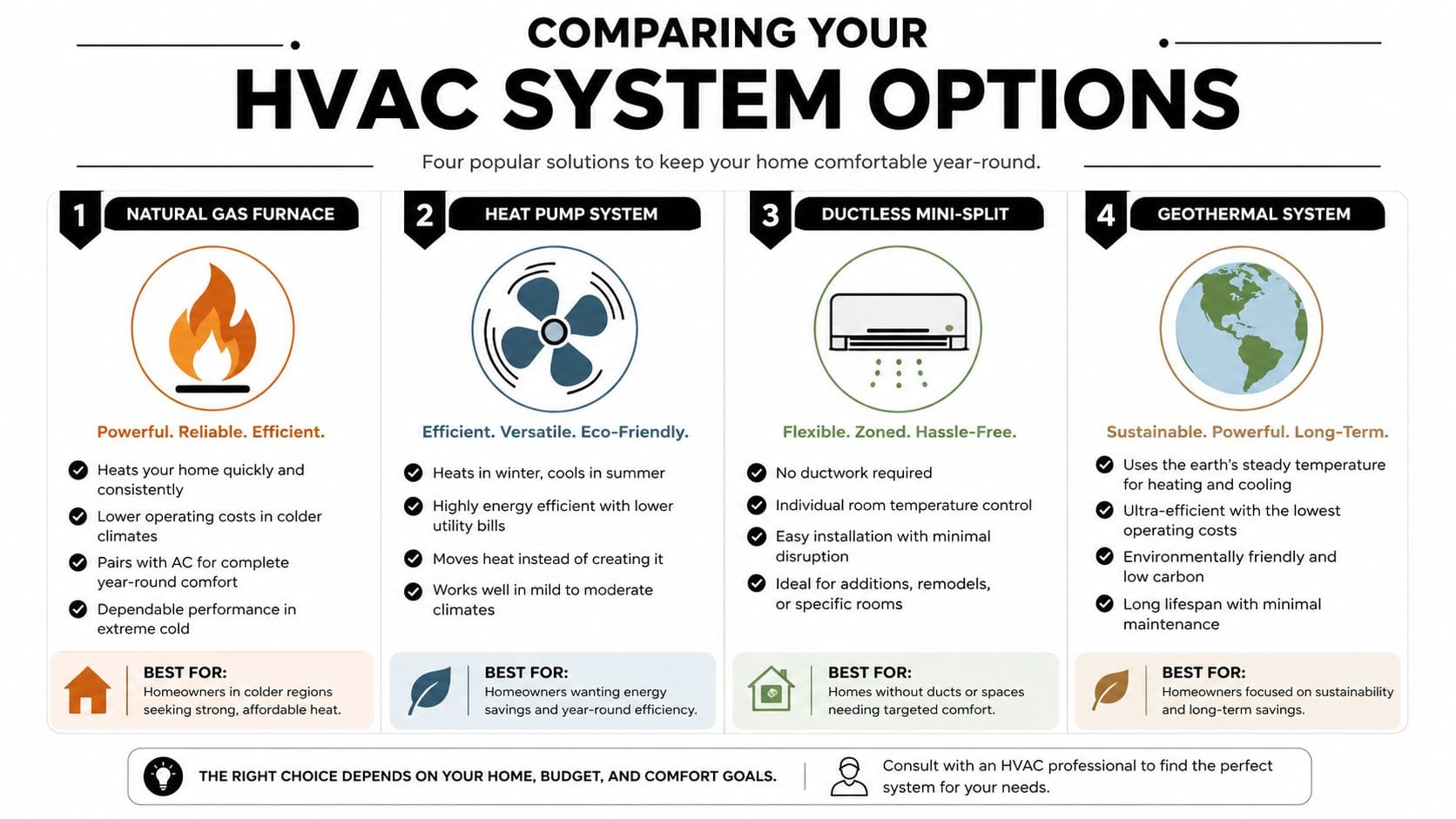
Homeowners usually narrow the choice to four paths. Natural gas furnace, central air conditioner, ductless mini-split heat pump, or central heat pump. Each can work in Greater Vancouver. Each also has situations where it's the wrong move.
What each system does well
A natural gas furnace is still the straightforward choice for strong, fast heating. If your house already has ductwork and you value warm supply air on cold mornings, a furnace does that well. On its own, though, it doesn't cool. You need to pair it with a central air conditioner if you want whole-home summer comfort.
A central air conditioner is cooling only. It uses the same ducts as your furnace and is a common add-on when the furnace is still in decent condition. For homeowners comparing installed cooling setups, this guide on the cost to install central air is useful for understanding what tends to affect the quote.
A ductless mini-split heat pump is like individual climate control for specific rooms or zones. One outdoor unit connects to one or more indoor heads. This works well in houses without existing ducts, suites, additions, laneway homes, and top-floor problem rooms that always run hot.
A central heat pump is basically a two-way air conditioner. It moves heat into the house in heating mode and moves heat out in cooling mode. In Vancouver's climate, that makes a lot of sense because winters are generally moderate and summers now justify proper cooling.
Practical rule: Match the system to the house first, then to the equipment brochure. Good equipment in the wrong layout still gives poor comfort.
Heating & Cooling System Comparison for Vancouver Homes
| System Type | Upfront Cost | Avg. Operating Cost | Best For… | Cooling Function |
|---|---|---|---|---|
| Natural gas furnace | Moderate to high | Depends on usage and fuel pricing | Homes with existing ducts that need strong heating | No, unless paired with AC |
| Central air conditioner | Moderate as add-on | Depends on runtime and efficiency | Homes with a working furnace and duct system | Yes |
| Ductless mini-split heat pump | Moderate to high depending on zones | Often attractive where targeted heating and cooling is needed | Older homes without ducts, suites, additions, room-by-room control | Yes |
| Central heat pump | High | Depends on electricity use, house efficiency, and controls | Whole-home heating and cooling through ducts | Yes |
A practical Vancouver example
A Vancouver Special often already has ducts, but not always great ones. If the ductwork is in workable shape and the house needs both heating and cooling, a central heat pump or furnace plus AC usually makes more sense than scattering portable units around the house. The deciding factor is often the condition of the ducts and whether the lower level and upper level can be balanced properly.
A modern townhouse can be different. If duct runs are limited or the layout creates very different temperatures between floors, ductless or multi-zone systems can be a cleaner fit. You get control by area instead of trying to force one thermostat to manage the whole building evenly.
Geothermal comes up in some conversations too. It can be a fit for the right property, but for most city lots in Greater Vancouver, the conversation is usually furnace, central heat pump, or ductless.
Here's what doesn't work well. Oversizing equipment because “more power is better.” In practice, oversized cooling can cycle too quickly, leave rooms uneven, and make the house feel cold but not comfortable. The better approach is proper load assessment, attention to duct design, and a realistic look at how the home is used.
Understanding Efficiency Ratings and Operating Costs
Efficiency labels matter, but homeowners often give them too much weight and the wrong kind of attention. A high rating is good. It just isn't the whole story. Installation quality, duct losses, thermostat setup, and the condition of the building envelope all affect what you pay to run the system.
According to the MIT Climate Portal, buildings account for 30% of global energy use, and about four-fifths of building energy use goes to heating and cooling. That's why this decision carries more weight than most appliance purchases.
What the ratings actually mean
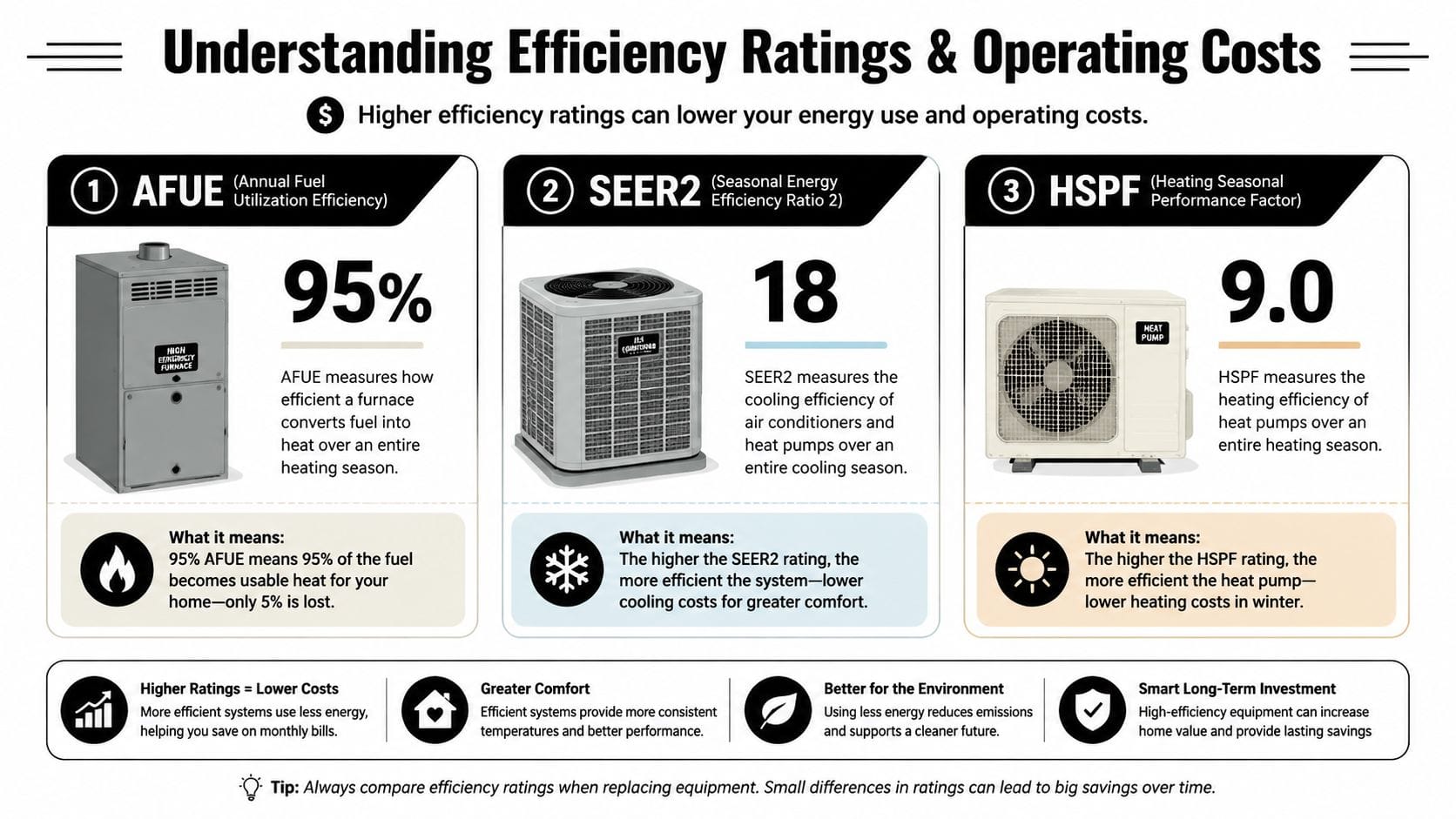
AFUE applies to furnaces. It tells you how efficiently the furnace converts fuel into heat over a season. Higher AFUE means less wasted fuel during normal operation. It's useful, but it doesn't measure duct leakage or whether the system is sized properly for the house.
SEER2 applies to cooling equipment like air conditioners and heat pumps in cooling mode. A higher number points to better seasonal cooling efficiency. For homeowners, the practical takeaway is simple. Better SEER2 usually means lower cooling energy use when all else is equal.
HSPF2 applies to heat pumps in heating mode. It helps you compare how efficiently a heat pump delivers heat over a season. In a place like Vancouver, where a heat pump can handle a lot of the annual heating load, this number matters.
How to read a quote properly
A quote should never be judged on equipment model alone. Ask what else is changing.
- Duct adjustments: If the contractor is reusing old ducts, ask whether they inspected static pressure, airflow, and visible leakage.
- Controls: A high-end unit with a poor thermostat strategy can still run badly.
- Electrical and line set work: Hidden upgrade needs can change the project cost.
- Commissioning: The system should be started, tested, and adjusted. It shouldn't just be installed and left.
If you're also comparing heating replacements, this page on how much a new furnace costs helps frame what usually moves pricing up or down.
The cheapest quote often leaves out the exact work that makes the system comfortable.
A practical example. Two homeowners buy the same efficiency-rated heat pump. One house has tight ductwork, decent insulation, and proper setup. The other has attic bypasses, supply leaks, and poor return air. The equipment rating is the same. The lived result won't be.
That's why I tell homeowners to treat efficiency ratings as one part of the decision, not the decision itself. Good equipment helps. Good design and installation decide whether that equipment performs the way you paid for.
When to Repair Your System and When to Replace It
Homeowners don't replace a furnace or AC because they were excited to shop for one. They replace it because something failed at the wrong time. The pressure of that moment leads to bad choices. Either they approve a repair that doesn't make sense, or they agree to a replacement they don't fully understand.
When repair still makes sense
Repair is usually reasonable when the system is otherwise sound, the failure is isolated, and the equipment still fits the house. A failed capacitor, igniter, contactor, or control issue can be worth fixing if the rest of the system is in solid shape.
It also makes sense when the homeowner needs time. Sometimes the right move is a safe, targeted repair now and a planned replacement later in the off-season, when there's more time to compare options and less pressure to accept the first quote.
Good repair candidates often look like this:
- The system has been dependable: One failure after years of stable operation is different from repeated calls.
- The equipment is still appropriate: No major comfort issues, no obvious undersizing or oversizing.
- The repair addresses the root cause: Not just a temporary patch.
When replacement is the better call
Replacement becomes more sensible when problems stack up. Maybe the heat exchanger has a serious issue. Maybe the outdoor unit is failing, the indoor coil is mismatched, or the blower and board have both become recurring headaches. At that point, you're not really maintaining the system. You're financing its decline one invoice at a time.
A practical example. An older furnace may still heat the house, but if it's loud, short-cycles, struggles to distribute air evenly, and has already needed multiple service visits, putting more money into it often delays the inevitable by one season. It doesn't restore confidence.
If you're planning your life around whether the equipment might fail this weekend, replacement is already on the table.
One more point that gets missed. A replacement isn't just about failure. It can also solve a comfort problem the old system never handled well. Homeowners who add cooling, improve filtration, or fix room-to-room imbalance often notice the comfort change before they notice the utility change.
If you want a quick visual on what technicians look for during replacement discussions, this video covers the broader decision well.
Don't let anyone reduce the decision to age alone. Age matters, but so do reliability, safety, comfort, available parts, and whether the house has changed since the system was first installed.
Essential Maintenance and Troubleshooting Tips
The best service call is often the one you never need. A lot of heating and cooling breakdowns start with small neglect. Dirty filters, blocked coils, plugged drains, loose panels, or outdoor units buried in leaves and debris. None of these are complicated. They just get ignored until the system starts acting up.
Many homeowners blame their AC unit for poor comfort, but duct leakage, insulation gaps, and air leakage are often the real issue. That matters a lot in older Vancouver homes where one room bakes, another feels cold, and the equipment gets blamed for a building problem.
A seasonal checklist that actually helps
Here's the maintenance list I'd give most homeowners.
- Change or clean the filter: Check it regularly during heavy use. A loaded filter cuts airflow and makes the system work harder than it should.
- Keep the outdoor unit clear: Remove leaves, fluff, and overgrowth around the condenser or heat pump. It needs space to move air.
- Check supply and return vents: Make sure furniture, rugs, and curtains aren't choking airflow.
- Listen for change: New rattles, buzzing, or scraping sounds are worth attention early.
- Book professional service before peak season: Spring for cooling systems, autumn for heating systems is usually the least stressful timing.
For homeowners in need of service rather than replacement, this guide to air conditioning repair covers common repair scenarios and what typically requires a technician.
Common problems and what they usually mean
If one room is always colder or hotter, don't assume the equipment is bad. Start with airflow. Closed dampers, crushed flex duct, poor return air, and imbalance are common causes. In older houses, insulation gaps and air leakage can make one room impossible to control with the current setup.
If the system runs but doesn't feel effective, check the filter first. Then look outside. Is the outdoor coil packed with debris? Are vents blocked? Is the thermostat set correctly? If those are fine, the issue may be refrigerant, blower performance, or a control problem.
If you hear rattling or banging, shut the system off and have it checked. Loose sheet metal is one thing. A failing motor or damaged blower wheel is another.
A unit can be working correctly and still fail to make the house comfortable if the ducts or insulation are doing the real damage.
What a proper diagnosis looks like
A good technician doesn't just stand at the thermostat and guess. They check temperature split, airflow, electrical components, drain condition, controls, and visible duct issues. In homes with chronic uneven comfort, they may recommend deeper envelope diagnostics such as thermal imaging or blower door testing through the appropriate specialists.
That's especially important in older detached homes, renovated basements, and mixed-use properties. If a lower level was finished later, duct branches may have been added badly. If an attic conversion happened without proper air sealing, the top floor may overheat no matter how much cooling you throw at it.
Encano Plumbing & Drainage Ltd. is one local contractor that handles HVAC-related service alongside heating, plumbing, and gas work, which can be useful when a comfort issue overlaps with mechanical systems elsewhere in the home.
How to Choose a Qualified Vancouver HVAC Contractor
A new system can be excellent on paper and still disappoint if the contractor rushes the job. That's why contractor selection matters almost as much as equipment selection. The trade is full of decent technicians, but homeowners still need to vet carefully.
What to verify before you sign
Ask direct questions and expect direct answers.
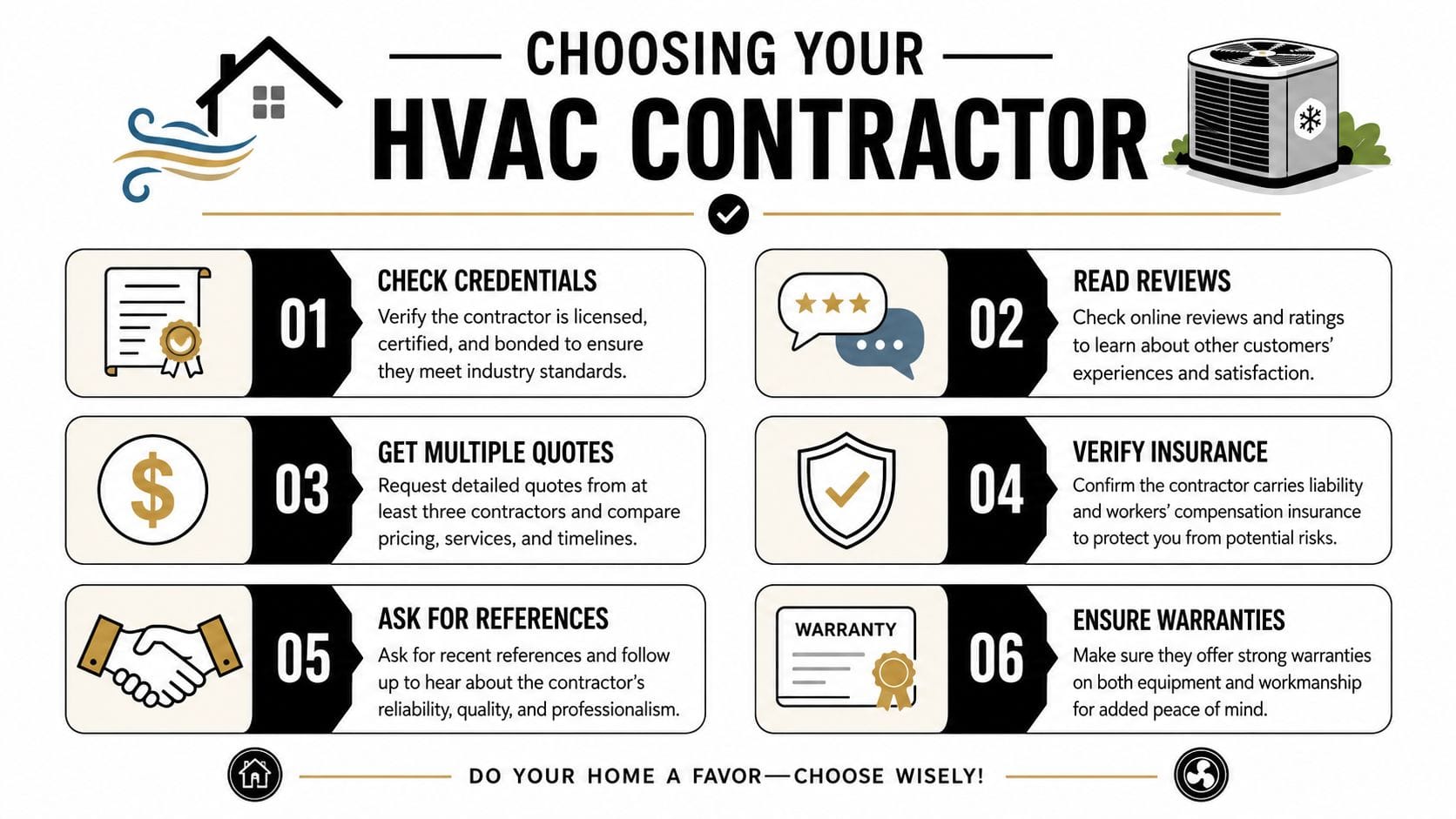
- Credentials and permits: The contractor should be clear about licensing, permit responsibility, and inspection requirements where applicable.
- Insurance and WorkSafeBC coverage: You want confirmation, not vague reassurance.
- Local experience: A company that works regularly in Vancouver, Richmond, Burnaby, and nearby municipalities is more likely to understand common house types and local constraints.
- Scope clarity: Ask exactly what is included. Equipment, line set, pad, electrical coordination, controls, duct modifications, disposal, startup, warranty.
Read reviews, but don't stop there. Reviews tell you how people felt. The quote tells you how the company works.
What a good quote looks like
A weak quote says something like “heat pump install” with a single price. That's not enough. It doesn't tell you what model is being installed, whether duct changes are included, whether the thermostat is replaced, or whether the old equipment is being removed properly.
A stronger quote usually includes:
- Specific equipment details: Brand, indoor and outdoor components, and compatibility.
- Labour scope: What gets installed, changed, or reused.
- Exclusions: What the price doesn't include.
- Warranty explanation: Manufacturer coverage and labour coverage.
- Timeline and process: How long the work should take and whether permits or inspections are part of the job.
A practical example. If Quote A is one line and Quote B explains the equipment match, electrical needs, condensate handling, duct transitions, and startup procedure, Quote B gives you something to compare. Even if the price is higher, at least you know what you're buying.
Good contractors don't avoid detailed questions. They welcome them because clear scope prevents problems later.
Be cautious with high-pressure sales tactics, cash-only suggestions, or promises that sound too easy for the amount of work involved. HVAC installs touch fuel, electricity, refrigeration, airflow, condensate, and code. It's skilled work. If the proposal treats it like a quick appliance swap, slow down.
Local Rebates and Frequently Asked Questions
Rebates can improve the economics of a project, but they shouldn't be the only reason you choose a system. The system still has to fit the home. In Greater Vancouver, homeowners often look first at CleanBC Better Homes and utility-linked programs, then at any available municipal or regional incentives. Program details change, so the smart move is to verify current eligibility, equipment requirements, and installer requirements before signing a contract.
How rebates fit into the decision
In practical terms, rebates tend to matter most when a homeowner is choosing between keeping a conventional setup or moving to a heat pump-based system. If the rebate lines up with your long-term plan, great. If the rebate pushes you toward equipment that doesn't suit your home, it's not really a savings.
A practical example. A homeowner in Richmond with an aging furnace may see a heat pump rebate and assume the choice is automatic. But if the house has poor ducts, weak insulation in key areas, and a chronic airflow problem to the upper floor, the better sequence may be to fix distribution or envelope issues alongside the equipment decision. Otherwise the rebate helps pay for a system that still won't feel right.
For that reason, ask these questions before counting on incentive money:
- Is the equipment eligible: Model eligibility can be specific.
- Does the installer need to meet program conditions: Some programs have contractor or documentation requirements.
- What work must be completed first: In some cases, assessment steps or paperwork timing matters.
- Will the rebate still make sense if the scope changes: Duct upgrades or electrical work can affect the total decision.
Heating and cooling questions Vancouver homeowners ask all the time
Are natural gas furnaces being phased out in BC
Rules and timelines can change, and they can vary by project type and municipality. The practical answer is this. Homeowners should expect more attention on electrification, efficiency, and lower-emission heating over time. That doesn't mean every existing gas furnace disappears overnight, but it does mean replacement planning should consider where policy is moving.
What's the best system for a strata apartment
That depends mostly on the building rules and what services already exist in the suite. Many strata properties limit exterior changes, penetrations, noise, and equipment placement. Ductless or compact heat pump solutions can work in some buildings, but approval matters as much as the equipment itself. Always confirm bylaws and mechanical constraints before getting too far into quoting.
Can I add air conditioning to an old house with radiators
Yes, often you can, but not by tying into the radiator system for cooling. Homes with hydronic heat usually need a separate cooling approach. That might mean ductless heads, a ducted heat pump with new ductwork in some cases, or a partial-zoning solution depending on the structure.
Why does one floor always feel hotter than the other
Usually because the house and the air system aren't balanced. Upper floors collect heat. Sun exposure, insulation gaps, return-air limitations, and duct routing all matter. The fix might be zoning, duct adjustment, a ductless head in a problem area, better air sealing, or some combination.
Should I replace furnace and AC at the same time
Sometimes yes, especially if the system is matched poorly or both components are old. But not always. If one side is in good shape and compatible with the plan for the house, staged replacement can make sense. The key is to avoid building a patchwork system that limits your options later.
Is a heat pump enough for Vancouver winters
For many homes in this region, it can be a strong fit because our winters are comparatively moderate. The main question is whether the specific unit, house, duct system, and backup strategy have been chosen properly. Blanket answers are usually unreliable.
The best heating and cooling decisions in Vancouver come from looking at the whole picture. House type, duct condition, insulation, smoke-season needs, budget, strata rules, and long-term plans all matter. The right system should feel boring in the best way. Quiet, steady, reliable, and suited to the way you live.
If you're weighing repair versus replacement, adding cooling to an older home, or trying to solve uneven comfort without guessing, Encano Plumbing & Drainage Ltd. can inspect the setup, explain the trade-offs clearly, and help you choose a practical heating and cooling solution for your Greater Vancouver property.