A sewer problem rarely starts with a dramatic backup. More often, it begins with one slow drain, a toilet that gurgles after flushing, or a damp patch that keeps returning in the yard. When those signs appear, homeowners and property managers face a practical question: should you repair or replace sewer line damage? The right answer depends on what is happening below the ground, how much pipe is affected, and whether a repair will truly last.
A professional camera inspection takes the guesswork out of that decision. Instead of digging based on symptoms alone, a licensed plumber can see the pipe condition, locate the trouble spot, and recommend work that fits the property and the budget.
Start With the Condition of the Pipe
Sewer lines do not all fail in the same way. A single cracked section has a very different solution than a line that has shifted, sagged, or deteriorated along much of its length. The age and material of the pipe matter too.
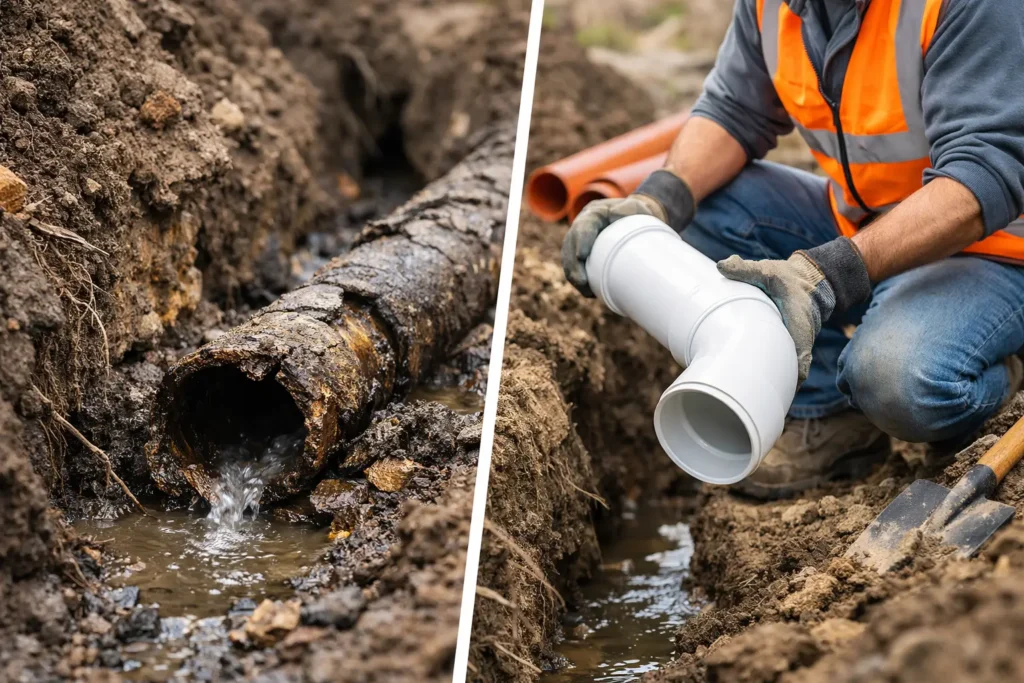
Older properties may have clay, cast iron, Orangeburg, or galvanized components. Clay pipes can crack or separate at joints. Cast iron can corrode from the inside until its walls become rough and narrow. Orangeburg, a fiber-based material used decades ago, can deform or break down over time. Newer PVC sewer lines are generally durable, but they can still be damaged by poor installation, ground movement, or heavy root growth.
A camera inspection shows whether the issue is isolated or widespread. It can reveal root intrusion, cracks, open joints, bellies where waste collects, blockages, offsets between pipe sections, and collapsed areas. That information is more valuable than choosing the cheapest-looking option at the start.
When Sewer Line Repair Makes Sense
Repair is often the sensible choice when the damage is limited and the rest of the line is in good working condition. For example, a plumber may be able to address one broken fitting, a small crack, or a short area with root intrusion without replacing the entire sewer lateral.
Spot repair is especially useful when a camera inspection identifies one clear failure point. The affected section can be excavated and replaced while leaving sound pipe in place. This approach can reduce cost and disruption, particularly if the problem is easy to access and does not run beneath a driveway, mature landscaping, or a building addition.
Some lines may also qualify for trenchless repair methods, depending on the pipe material, layout, and damage. Pipe lining creates a new interior surface within an existing pipe, while pipe bursting replaces the old pipe by pulling a new one through the same route. These methods can limit excavation, but they are not automatic solutions. A severely collapsed line, major belly, or pipe with poor slope may still require excavation and replacement to correct the underlying issue.
Repair is a good long-term value when it fixes the actual cause of the problem. Repeatedly clearing roots from a cracked pipe, for instance, may restore drainage for a short period but does not seal the opening that lets roots return.
When to Repair or Replace Sewer Line Damage
Replacement becomes the stronger option when the pipe has multiple failures or has reached the end of its useful life. It can feel like a bigger decision upfront, but it may prevent repeated service calls, ongoing backups, and damage to floors, walls, landscaping, or tenant spaces.
Consider replacement when a camera inspection shows damage in several locations, extensive corrosion, widespread root intrusion, a collapsed section, or pipe that has flattened or lost its proper slope. A sewer line that has settled and formed a belly may hold water and waste even after cleaning. In that case, replacing the affected run and correcting the grade is often more dependable than patching around it.
Frequent backups are another warning sign. If the main sewer line has needed professional cleaning more than once in a short period, ask for a camera inspection before scheduling another routine clearing. The blockage may be a symptom of structural trouble rather than a simple buildup.
For apartment buildings, commercial properties, and rental homes, replacement can also be the more practical choice when recurring sewer problems disrupt residents or operations. A planned project is usually easier to manage than an emergency backup that closes washrooms, damages units, or creates a sanitation concern.
Signs You Should Not Ignore
One clogged sink does not always point to a sewer problem. Several fixtures acting up at once is different. When the main line cannot move wastewater away from the property, lower drains often show the first symptoms.
Watch for slow drainage in multiple fixtures, toilets that bubble or gurgle, sewage odors indoors or outdoors, water backing up into a tub or shower after flushing, and wet or unusually green spots in the yard. A sudden increase in pests near a drain or sewer cleanout can also be worth investigating.
If sewage is backing up inside, avoid using water throughout the property until the line is assessed. Running the dishwasher, washing machine, or another toilet can add more wastewater to a blocked sewer line. For commercial facilities, it is wise to restrict affected washrooms and notify building occupants promptly.
Cost Depends on More Than the Length of Pipe
It is natural to ask for a price right away, but sewer repair and replacement costs depend on the conditions at the property. The length and depth of the line matter, as do access, soil conditions, pipe material, local permit requirements, and restoration after the work is complete.
A short repair in an open yard is usually less involved than a replacement beneath concrete, landscaping, or a busy parking area. Trenchless options may reduce surface restoration, but suitability must be confirmed after inspection. The best estimate explains the scope clearly: what is damaged, what method is proposed, what restoration is included, and what could change if hidden conditions are found.
Transparent pricing is not simply about a low number. It means understanding what the work solves and whether it is likely to prevent another major repair next year.
Protect a New or Repaired Sewer Line
Once the immediate issue is fixed, a few habits can help reduce future trouble. Keep wipes, grease, paper towels, hygiene products, and other non-flushable materials out of drains and toilets. Even products labeled “flushable” can create problems in older plumbing systems.
If roots have been an issue, ask whether periodic camera inspections or preventive cleaning make sense for the property. Avoid planting large trees directly over the sewer route when possible. Property managers should also keep service records, especially for older buildings, because a history of recurring clogs can help identify patterns before they become emergencies.
For homeowners in Vancouver and nearby communities, seasonal rain and aging infrastructure can add pressure to drainage systems. Acting on early symptoms gives you more options and more time to choose the right repair method rather than making a rushed decision during a backup.
A dependable sewer solution should leave you with more than a temporarily clear drain. It should give you a clear explanation of the pipe condition, a fair scope of work, and confidence that wastewater can move where it needs to go without creating another disruption at your property.