You're dealing with the kind of problem that keeps coming back just when you think it's gone. The kitchen sink is slow again, the basement drain gurgles after laundry day, and a quick snake job buys you a week or two before the backup returns. That's usually the point where a sewer camera inspection stops being a nice-to-have and becomes the most sensible next step, because it shows what's happening underground instead of guessing at it from the surface.
A camera inspection is the difference between treating a symptom and identifying the line itself. In Greater Vancouver homes, that matters because older laterals, dense tree cover, multi-unit buildings, and wet ground can turn a minor-looking drain complaint into a repeat failure. A sewer line can look fine from inside the house and still hide root intrusion, offsets, cracks, or a partial collapse further out, so the only useful question is what the pipe is doing, not what the fixtures are doing today. For readers who've already wondered whether a smell, backup, or recurring clog is pointing to something bigger, this sewer smell guide helps connect the dots without jumping straight to demolition.
Table of Contents
- Why a Sewer Camera Inspection Might Be Your Next Step
- How Sewer Camera Technology Works
- Common Reasons Homeowners Request an Inspection
- What Happens During Your Inspection Appointment
- What the Camera Can and Cannot Reveal
- Understanding Costs and Making Repair Decisions
- Choosing a Qualified Contractor in Greater Vancouver
- Frequently Asked Questions About Sewer Camera Inspections
Why a Sewer Camera Inspection Might Be Your Next Step
A Richmond homeowner may already have lived this one. The laundry drains slowly, the kitchen line was snaked last month, and now the basement floor drain is backing up again after a wet week. At that point, another snake isn't a diagnosis, it's another guess. A sewer camera inspection puts eyes in the line and shows whether the issue is grease, roots, a cracked section, an offset joint, or something that's only partially blocking the flow.
When a guess becomes expensive
The biggest mistake is authorising work without knowing where the fault sits. A camera inspection is a diagnostic method, not a repair service, so it's designed to identify defects, obstructions, and structural failures in concealed sewer lines without excavation National Sewer Authority. That makes it a practical first move before anyone talks about trenching, relining, or repeated cleaning.
Practical rule: if the same drain keeps acting up after cleaning, inspect before you repair.
That approach fits how sewer work has evolved. Modern inspections trace back to CCTV methods that let technicians inspect buried lines without digging, and the EPA's collection-systems guidance treats CCTV as a standard inspection technique while also recommending low-flow conditions, often between midnight and 5 AM if rising flow could overtop the camera EPA fact sheet. The same source gives a benchmark of about $1.00 per foot for CCTV inspections, including labour and equipment, which helps explain why video inspection is often the first step before a more expensive repair is approved.
Why it's worth doing before excavation
In practical terms, the inspection gives you a recorded view of the line before anyone commits to digging. That matters for homeowners, strata councils, and property managers because the video can separate a simple blockage from a structural problem that needs a different fix. In a place like Greater Vancouver, where disturbance to landscaping, parking, or shared access can get costly fast, that early clarity is often what saves the most money.
How Sewer Camera Technology Works
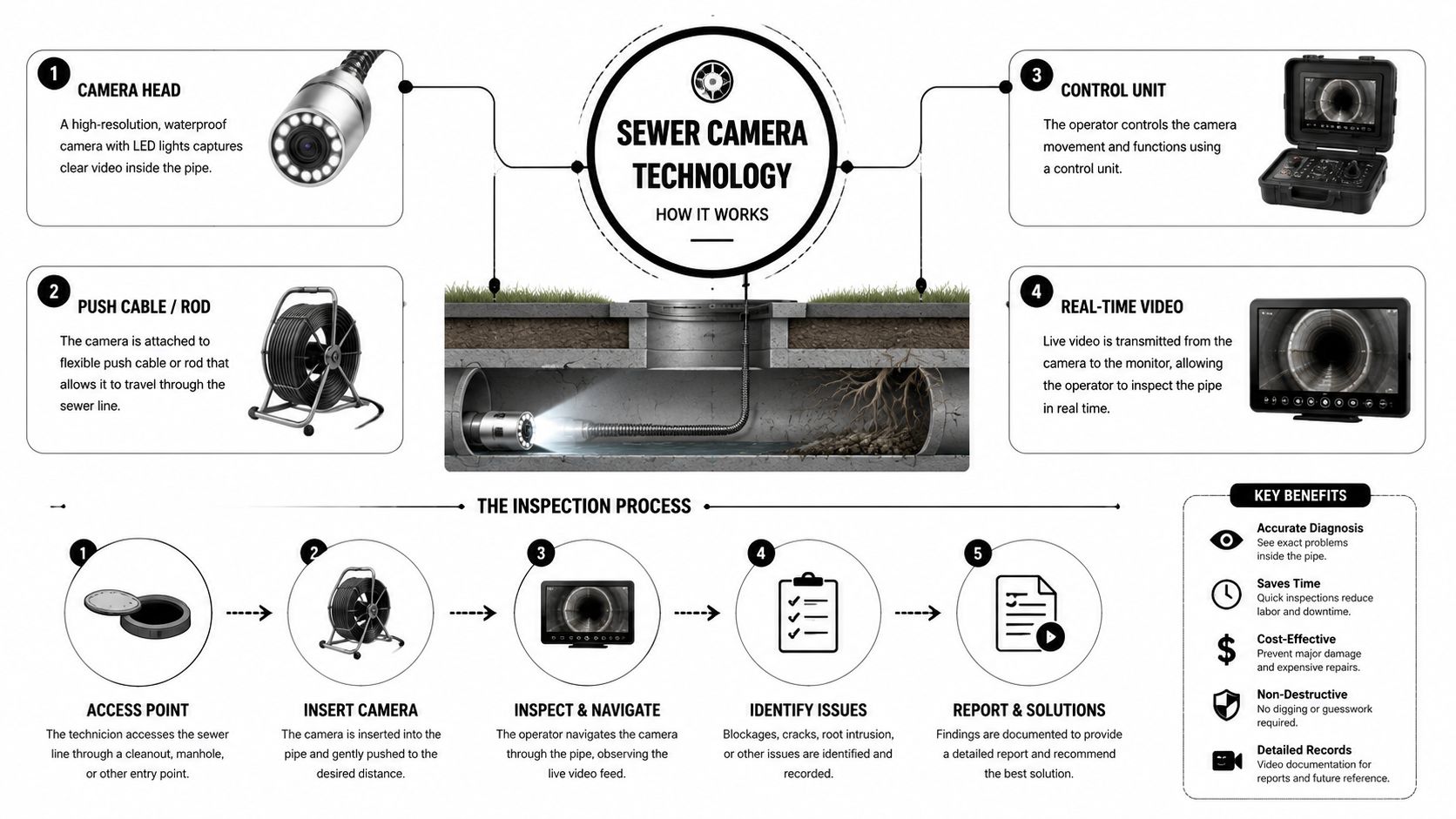
Professional sewer camera systems work like medical endoscopes for plumbing. A flexible, waterproof camera rides on a rod or snake through the pipe and sends live footage back to a monitor as it moves through the line Roto-Rooter. That live view lets the technician spot blockages, cracks, or standing water in real time instead of guessing from the surface symptoms.
The parts that do the work
The camera head usually has LED lighting so the inside of the pipe stays visible in dark, wet conditions. On better systems, the head is built to handle bends more smoothly, which matters in older homes where pipe runs are not always straight. A locator transmitter helps map the camera's position above ground, so if the technician finds a defect, that spot can be marked for repair without opening the wrong section of yard or concrete.
The recording gear matters just as much as the lens. In municipal and large-property work, standardized file handling keeps footage usable for asset management and review. Atlantic Canada specifications require sewer video submissions in formats compatible with NASSCO PACP, with 360-capable inspections submitted as .ipf and traditional inspections as .mp4, using H.264/MPEG-4 AVC encoding and a 1:1 vertical-to-horizontal scale MSDBC technical specifications. That structure matters because it keeps defect images legible and makes the footage easier to review later.
A good inspection video isn't just a recording. It is evidence that can be measured, checked again, and used to plan the next move.
The practical value comes from the mix of live viewing, location mapping, and a saved recording. For a homeowner, that means the technician can show the exact defect on-screen, explain what it likely means, and use the footage to support a repair quote or a follow-up decision without starting over from scratch.
A camera can show a break, a root mass, an offset joint, or a sag that holds water. It cannot always tell you how far the pipe has shifted, whether the surrounding soil is still moving, or whether a section that looks rough needs replacement right away. In older Greater Vancouver homes, that judgment matters. A line can look messy on video and still be serviceable after cleaning, or it can look passable while a hidden belly keeps causing repeat backups. The inspection is only as useful as the technician's interpretation of what the footage can, and cannot, prove.
Common Reasons Homeowners Request an Inspection

A lot of calls start the same way. The homeowner has already tried clearing the line, the backups return, and now they want to know if the problem is isolated or structural. That's where a sewer camera inspection earns its keep, because it lets you see whether the issue is in the branch line, the main lateral, or a connection point that keeps catching debris.
Residential signs that point to a camera
Recurring backups after heavy rain are one of the clearest reasons to inspect. In a Richmond townhouse, for example, repeated flooding after storms may point to a collapsed pipe, root intrusion, or an offset joint rather than a simple surface clog. A camera can sort those possibilities out before anyone authorises trenching or drain replacement.
Other common triggers are more mundane but still important. Slow drains that resist cleaning, a pre-purchase home inspection, or basement renovation planning all justify a look inside the line. If a homeowner is opening floors, finishing a basement, or replacing fixtures, it's far better to know the condition of the main line first than to discover a hidden defect after the work is complete.
Shared buildings need a different level of proof
Strata properties and commercial buildings often use inspections to decide whether a lateral line needs cleaning, repair, or monitoring. When the bill lands with a council or property manager, a video record helps justify why one line needs attention and another can wait. A camera also supports the basic point that sewer inspections are used to identify defects, obstructions, and structural failures without excavation National Sewer Authority, which is why they're so useful in buildings where breaking concrete too early is a poor bet.
Later in the day, the footage can also help explain the call.
For many Greater Vancouver owners, the primary question isn't whether a camera can find something. It's whether the thing it finds is the reason the line is failing. That's the distinction that turns a routine inspection into a smarter repair plan.
What Happens During Your Inspection Appointment
A good inspection appointment starts before the camera ever enters the line. I want the drain to be flowing, the cleanout to be clearly located and easy to reach, the footage counter to be set from the access point, and the setup recorded before the scope goes in. That gives the video a reliable starting point, which matters when someone later needs to match what was seen on screen to where it sits in the pipe.
What the technician is doing
Once the camera is in the sewer, the operator follows the live feed and advances slowly through the pipe. If a defect shows up, the camera should be paused long enough for the issue to be captured clearly. The camera should also never be shoved through an obstruction, because forcing it can damage the equipment and make the pipe's condition harder to read.
That restraint is practical. A rooted joint, a collapsed section, or a heavy blockage usually tells you plenty on the first pass. If the operator pushes through it, the footage can lose the detail that separates a simple cleaning from a repair that needs to be planned properly.
What the homeowner should prepare
The access point has to be reachable, so boxes, stored items, and garden clutter should be cleared before the technician arrives. A short symptom note helps too. Write down which fixtures drain slowly, whether backups show up after rain, and whether the problem gets worse when laundry or showers are running. If you can watch the live monitor, that usually makes the findings easier to follow as they come up.
If the technician can't access the line cleanly, the inspection becomes less useful fast.
The appointment itself is usually direct. The camera goes in, the line is checked section by section, and the recorded footage becomes the basis for the next decision. That might be routine cleaning, a targeted repair, or a recommendation to keep a questionable section under observation for now. For broader guidance on how inspectors approach sewer scope work, NACHI sewer scope guidance is a useful reference.
What the Camera Can and Cannot Reveal
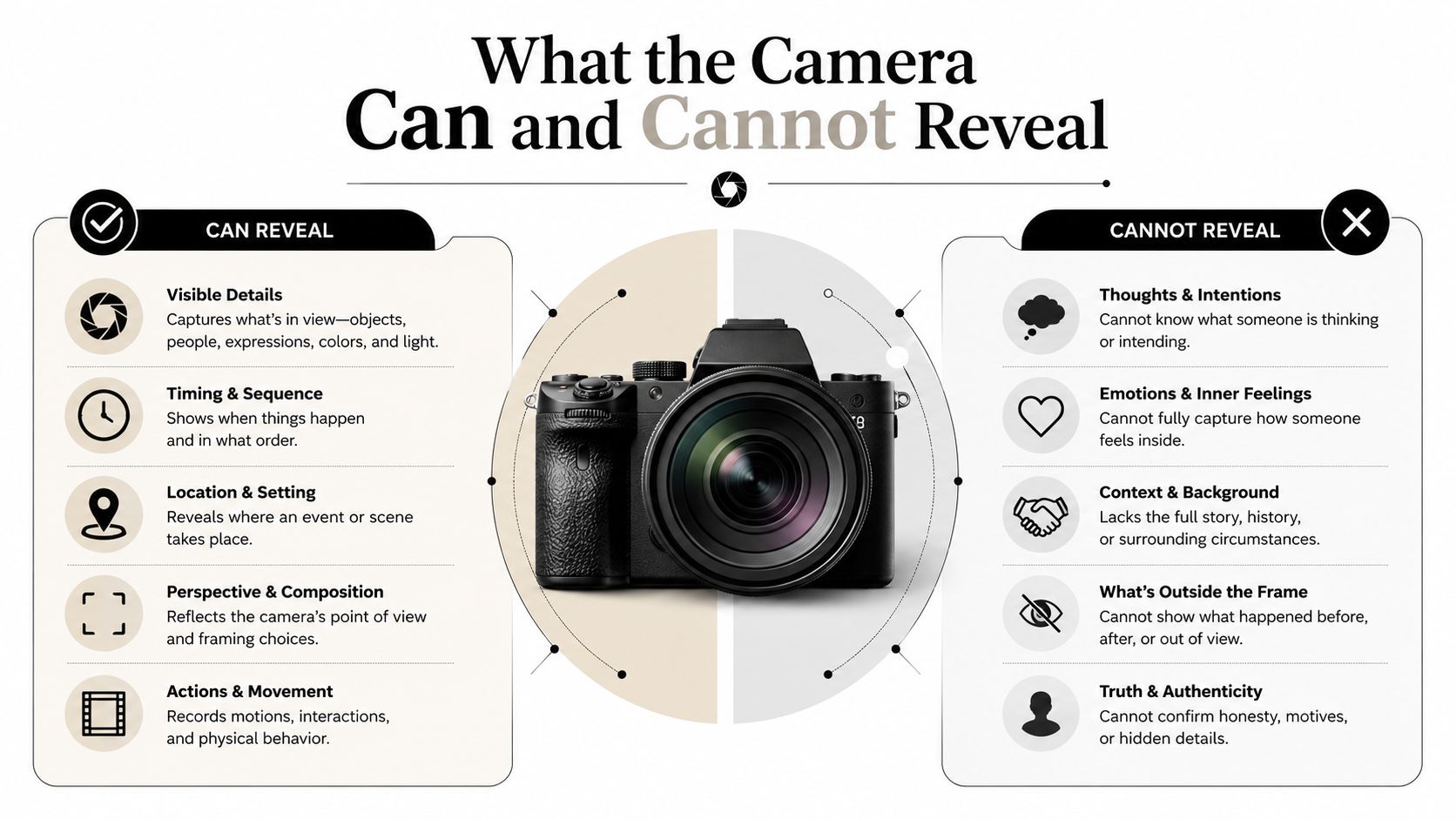
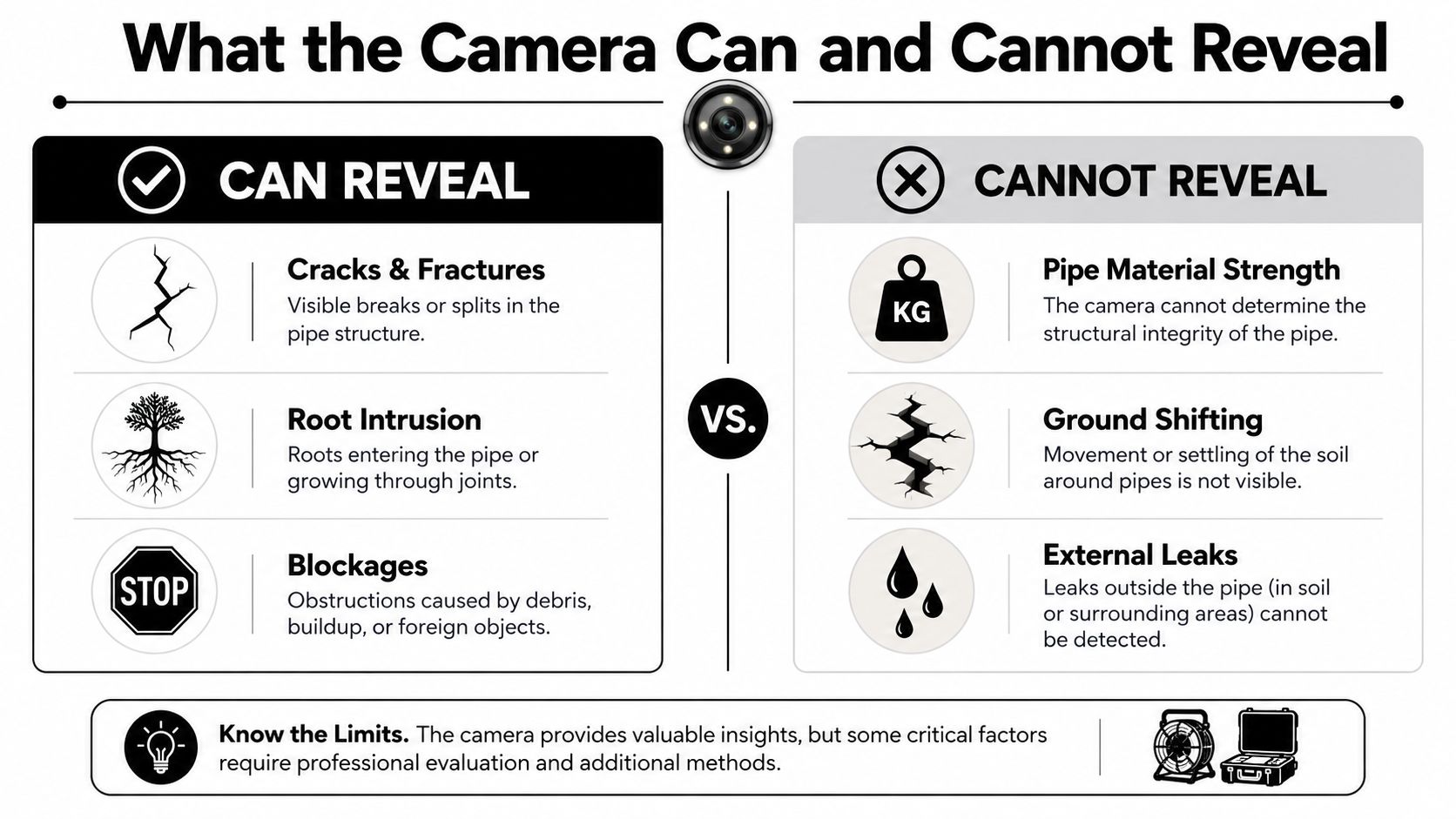
A camera gives you visibility, not omniscience. It can show cracks, roots, offsets, corrosion, and blockages, but it can't reliably confirm active leak rate, external soil voids, or exact wall thickness Texas Quality Plumbing. That distinction matters because homeowners sometimes see a defect on video and assume the repair choice is already obvious.
Why the blind spots matter in the Lower Mainland
In BC's Lower Mainland, old laterals and wet soil conditions can make the outside of the pipe just as important as the inside. A camera can show the visible damage, but it can't tell you how much surrounding soil has shifted or whether the line is leaking enough to justify immediate replacement. That's why video-only thinking can lead to overreaction, or the opposite, where a serious issue gets dismissed because the pipe still moves some water.
A visible crack is not automatically an urgent replacement. A camera can confirm that the crack exists, but it can't by itself prove that the defect is causing the service failure, or how much longer the line will stay functional. That is the gap most consumer guides skip, and it's the reason decisions often need more than one diagnostic.
When extra diagnostics make sense
A technician may pair the camera with location tools to mark the line accurately or with other diagnostics if the problem appears to involve conditions outside the pipe itself. That's especially useful when the footage shows a defect but the symptoms don't match the visual severity. If the line looks damaged yet drains normally, monitoring may be more sensible than immediate replacement.
Bottom line: the camera tells you what's visible. It doesn't always tell you how serious the system-level problem is.
That's the practical rule homeowners should remember. The best inspection results are interpreted, not just watched. A good technician will explain whether the finding is likely a maintenance issue, a repair issue, or something to keep on file until the line changes behaviour.
Understanding Costs and Making Repair Decisions
For most homeowners, the value of inspection is simple. Paying for a camera is usually easier to swallow than paying for exploratory digging with no idea where the actual fault sits. Consumer cost guides put standard camera inspections at $150 to $300, while specialised technology can reach $1,500, with a typical homeowner range of $270 to $1,731 Angi cost guide.
How to read the numbers
Those ranges don't mean every job should cost the same, and they don't tell you whether the inspection is worth it. They do show why a sewer camera is often the most targeted diagnostic step before repair work starts. If the line can be inspected before anyone cuts concrete or opens a yard, the homeowner gets a clearer decision point for a relatively contained spend.
| Sewer Camera Inspection Cost Ranges | ||
|---|---|---|
| Service Type | Typical Cost Range | Best For |
| Standard camera inspection | $150 to $300 | Routine diagnosis, recurring clogs, simple residential checks |
| Typical homeowner range | $270 to $1,731 | Mixed residential jobs, longer runs, varied access conditions |
| Specialised technology | Up to $1,500 | Complex lines, advanced recording, larger or harder-to-access systems |
Deciding what a finding actually means
A visible defect doesn't always justify immediate rehabilitation. If the line is still flowing, the problem may call for cleaning, monitoring, or a later repair window instead of emergency work. If the footage shows a serious offset, collapse, or repeated root entry that matches the service failure, repair climbs the list quickly.
That decision-making is where many guides get too fuzzy. They describe the workflow, but they don't explain the false-alarm problem, where a camera finds something real that isn't yet causing a breakdown. For homeowners comparing options, trenchless sewer line replacement costs are worth reviewing only after the inspection tells you the pipe needs that level of work.
Choosing a Qualified Contractor in Greater Vancouver
A good sewer camera inspection depends on more than the camera itself. It depends on whether the contractor knows how to read the line, explain the footage, and turn the findings into a sensible repair path. In Greater Vancouver, that means choosing someone who understands residential laterals, strata documentation, and the realities of older infrastructure in dense neighbourhoods.
What to look for before you book
Start with the basics. The contractor should be properly licensed and insured, use modern camera equipment with recording capability, and be comfortable working in homes, strata buildings, and commercial spaces. If the inspector can't produce clear footage or explain what it means in plain language, the inspection won't help much when decisions have to be made later.
Good pricing matters too. Transparent quotes, clear access requirements, and straightforward next-step options are signs that the company treats inspection as diagnosis, not as a lead-in to unnecessary work. A contractor that can inspect and then repair, if needed, also reduces the risk of having to repeat the same explanation with a second crew.
Why local experience counts
Greater Vancouver systems vary a lot by neighbourhood, age, and property type. A technician who works in Vancouver, Richmond, Burnaby, New Westminster, Delta, and Surrey is more likely to recognise the patterns that show up in older sewer laterals, strata service lines, and mixed residential-commercial buildings. Encano Plumbing & Drainage Ltd. is one local example, with 10+ years of experience, 24/7 emergency response, modern video inspection tools, and fair, transparent pricing, while also offering follow-through on related repair work Encano sewer line repair.
Good contractor, good outcome. The best inspection is the one that leads to a clear decision, not a vague recommendation.
If you're comparing providers, ask whether they document the footage, explain what the camera can't prove, and give you a repair recommendation that matches the actual defect. That's what separates a useful diagnostic visit from a costly repeat visit.
Frequently Asked Questions About Sewer Camera Inspections
How long does it take? Most residential inspections are fairly quick, but the exact time depends on access, line length, and whether the pipe is clear enough for the camera to travel smoothly. If the line is heavily obstructed, the inspection can take longer because the technician needs to document what's visible without forcing the equipment.
Do I need to be home? Not always, but being present helps. If you're there, you can see the live feed, ask about the defect right away, and understand whether the issue points to cleaning, repair, or monitoring.
What happens if the camera can't get past a blockage? The technician documents what can be seen and stops before damaging the equipment or the pipe. In many cases, the next step is cleaning or another access strategy before a second inspection.
How often should a line be inspected? There isn't a one-size-fits-all schedule. Homes with recurring backups, mature trees, older laterals, or shared service lines tend to benefit from periodic checks, while newer or recently repaired lines may only need inspections when symptoms return.
Can the footage be used for insurance or real estate? Often, yes, if the recording is clear and the contractor documents the line properly. The footage can support a claim, a pre-sale disclosure, or a repair negotiation, but the value depends on the quality of the recording and how well the findings are explained.
If you're seeing recurring drain problems in Vancouver, Richmond, or anywhere in Greater Vancouver, Encano Plumbing & Drainage Ltd. can inspect the line, explain what the camera shows, and help you decide whether cleaning, repair, or closer monitoring makes the most sense. Visit Encano Plumbing & Drainage Ltd. to book a sewer camera inspection and get a clear next step instead of another round of guesswork.