You're standing in the bathroom with the bowl water sitting higher than it should, one flush away from a mess you don't want to explain to anyone. There's no plunger handy, maybe it's late, maybe it's a rental, and the only thing that feels realistic is to try something low-risk before you make the problem worse. That's where dish soap earns its place, not as a miracle cure, but as a deliberate first move for a dish soap clogged toilet.
Table of Contents
- Why Dish Soap Can Unclog a Toilet
- The Dish Soap and Hot Water Method
- A Real-World Example From a Vancouver Rental
- Mistakes That Can Damage Your Toilet
- Troubleshooting When the Method Does Not Work
- Other DIY Options Worth Knowing
- When to Call a Licensed Plumber
Why Dish Soap Can Unclog a Toilet
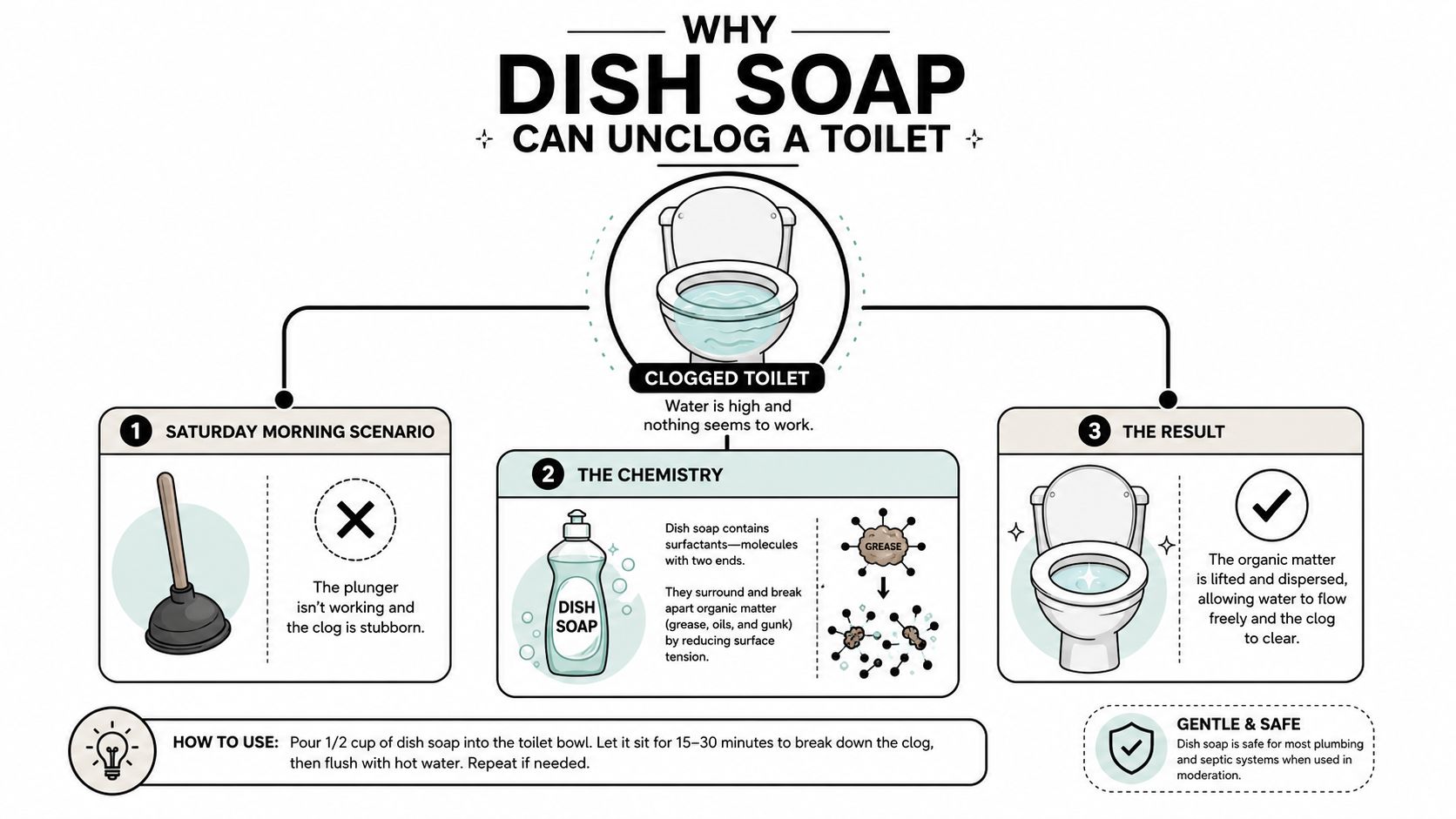
A toilet clog that looks minor can still behave badly. In a lot of cases, the blockage is soft, paper-heavy, or organic, and dish soap acts as a surfactant, which means it helps water spread, penetrate, and lubricate the mass instead of bouncing off it. That's why this trick gets used so often for paper buildup and waste that hasn't fully packed into a hard plug.
What the soap is actually doing
The soap isn't “eating” the clog. It's coating it, lowering drag, and helping warm water move through the trapway more easily. That's why it's useful as a first-stage lubricant and why it can sit in the bowl for a while without harming the porcelain or seals when you use it correctly.
Practical rule: if the clog is soft, soap can help it slide. If the clog is a hard object, a wipe mass, or a scale problem, the soap only buys you time.
That's also why the method is popular in apartments and rental homes. Harsh chemical drain cleaners are a bad bet around shared stacks, and in California, sewer overflows and sanitary sewer overflows are regulated because backups can send untreated sewage into streets, basements, and waterways. The same logic applies in dense housing elsewhere, including Greater Vancouver, where one blocked toilet can become a building issue if the branch line or stack is involved.
Chemical drain cleaners work differently, and that difference matters. They rely on caustic reactions, which can be rough on porcelain, seals, and piping. Dish soap is gentler, so it's the kind of thing you can leave in the bowl while you wait instead of risking a reaction you can't control.
A practical example is a toilet blocked by excess paper. In that situation, soap and hot water can soften the mass enough that a flush carries it through. That's also the limit of the method, because soap won't dissolve wipes, toys, or mineral buildup.
What to have ready before you start
- Liquid dish soap: Any standard liquid dish soap works best. Avoid versions that foam excessively, because you want lubrication, not a bowl full of suds.
- A bucket or kettle: You need a safe way to move hot water to the bathroom without rushing.
- Old towels: Put them around the base of the toilet so a splash doesn't turn into a floor cleanup.
- Rubber gloves: They keep the job cleaner and make it easier to work calmly if you need to bail water.
Hot water matters, but boiling water does not help. Hot tap water or water that's just off the boil and has cooled for a minute is the sweet spot, hot enough to soften paper, cool enough to avoid shocking cold porcelain. Don't grab bleach, don't mix cleaners, and don't carry a kettle full of boiling water straight from the stove to the bowl.
The Dish Soap and Hot Water Method
Start by looking at the water level in the bowl. If it's sitting close to the rim, bail some into a bucket first so you've got room to work and don't send it over the edge. Then pour about 1/2 cup of liquid dish soap straight into the centre of the bowl so it sinks toward the trapway instead of clinging to the porcelain.
The wait matters as much as the pour. Let the soap sit for 10 to 30 minutes, and give it the longer end if the blockage is paper-heavy or the bowl has been stubborn. That pause gives the soap time to coat the clog and make the next flush more useful.
Pour the water with control
Heat water to just below boiling, carry it carefully, and pour it from about waist height in a steady stream. The height gives you a little extra force without dumping the whole bucket all at once, and the hot water helps the soap do its work. One home-repair guide gives the standard sequence as about 1/4 to 1/2 cup of dish soap, 10 to 30 minutes of sit time, then hot, not boiling, water from waist height; several also warn that boiling water can crack porcelain or damage the wax ring seal (The Spruce).
Don't rush the flush. A lot of failed DIY tries happen because someone tests it too early and stirs the clog right back up.
After the pour, wait another five to ten minutes and then try a normal flush once. If the bowl drains and refills the way it should, you're done. If the water rises again, stop flushing and move on, because repeated flushing is how a manageable clog turns into a spill.
A Real-World Example From a Vancouver Rental
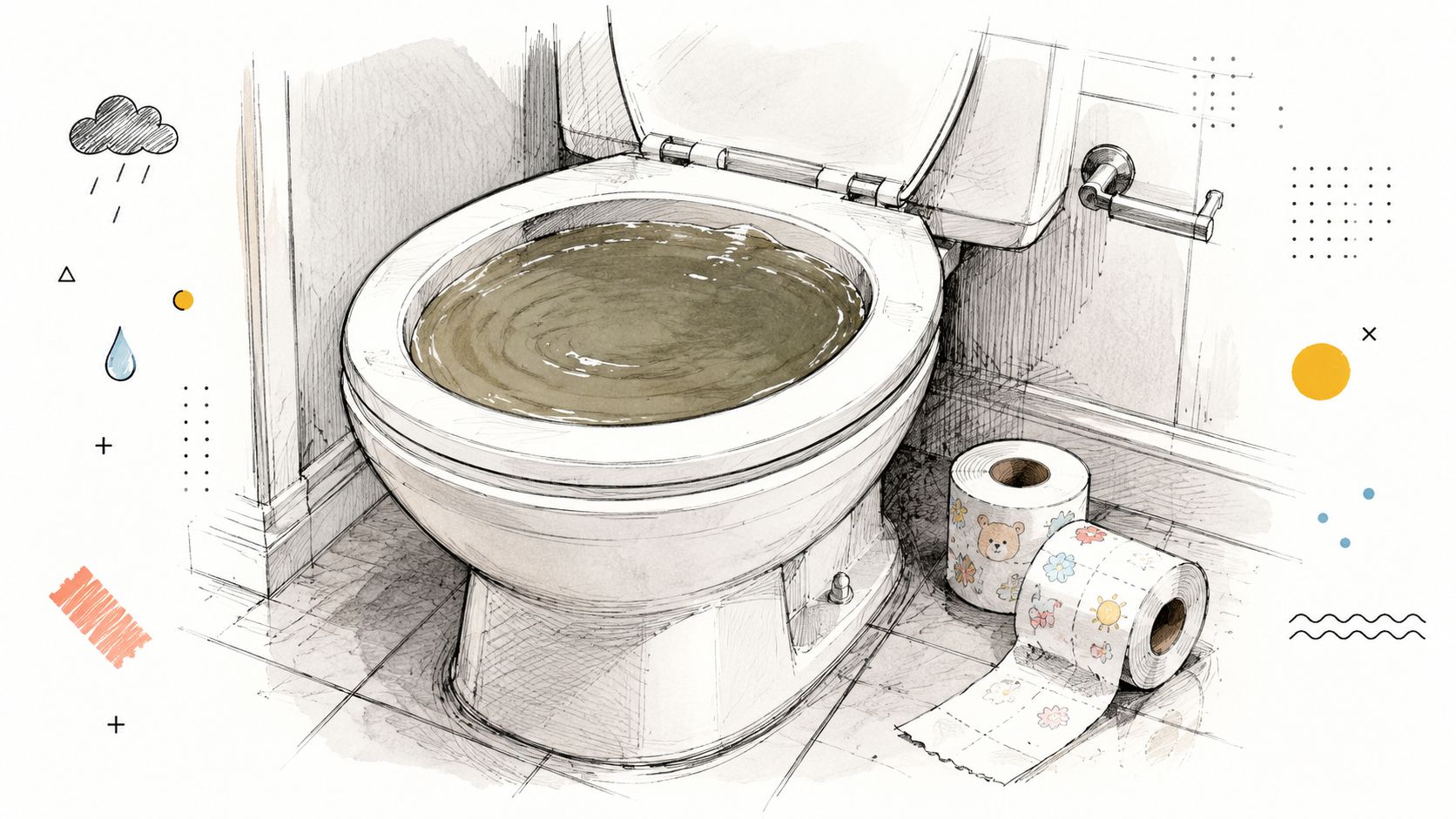
A Burnaby basement suite is a good example of where this trick makes sense. The toilet got loaded up with extra paper after a toddler used more than usual, and the tenant was facing a strata inspection the next morning. They tried the plunger briefly, got nowhere, and switched to dish soap because the clog still behaved like a soft blockage rather than a solid obstruction.
What made it work
The tenant used half a cup of dish soap, waited about 20 minutes, and spent that time cleaning the bathroom instead of hovering over the bowl. A kettle of water that had just cooled from boiling was poured from waist height, and the next flush went through normally. A slow second flush confirmed the trapway was clear, which is the kind of check I always want to see before I leave a job.
The useful part of that story isn't luck. It's the judgement calls: checking the bowl level first, giving the soap enough time, and not treating every delay as a reason to flush again. That's the difference between a calm fix and a floor full of water.
A second mini-example shows the limit. The same method failed when the blockage was a toothbrush that had dropped into the trapway. Soap can lubricate paper, but it won't move a hard foreign object. Once the toilet stops behaving like a soft clog, the right tool changes too.
Home-repair coverage often uses the same paper-heavy example, a toilet blocked by excess toilet paper where soap sits for 15 to 30 minutes before hot water helps the mass slide through the trapway (Snopes). That's a believable outcome in a rental suite, because the method is built for soft material, not for mystery objects or deeper line problems.
Mistakes That Can Damage Your Toilet
The biggest mistake is treating this like a chemical fight. It isn't. A dish soap clogged toilet fix depends on lubrication and patience, not force, and a few common shortcuts can turn a low-cost DIY attempt into a repair call.
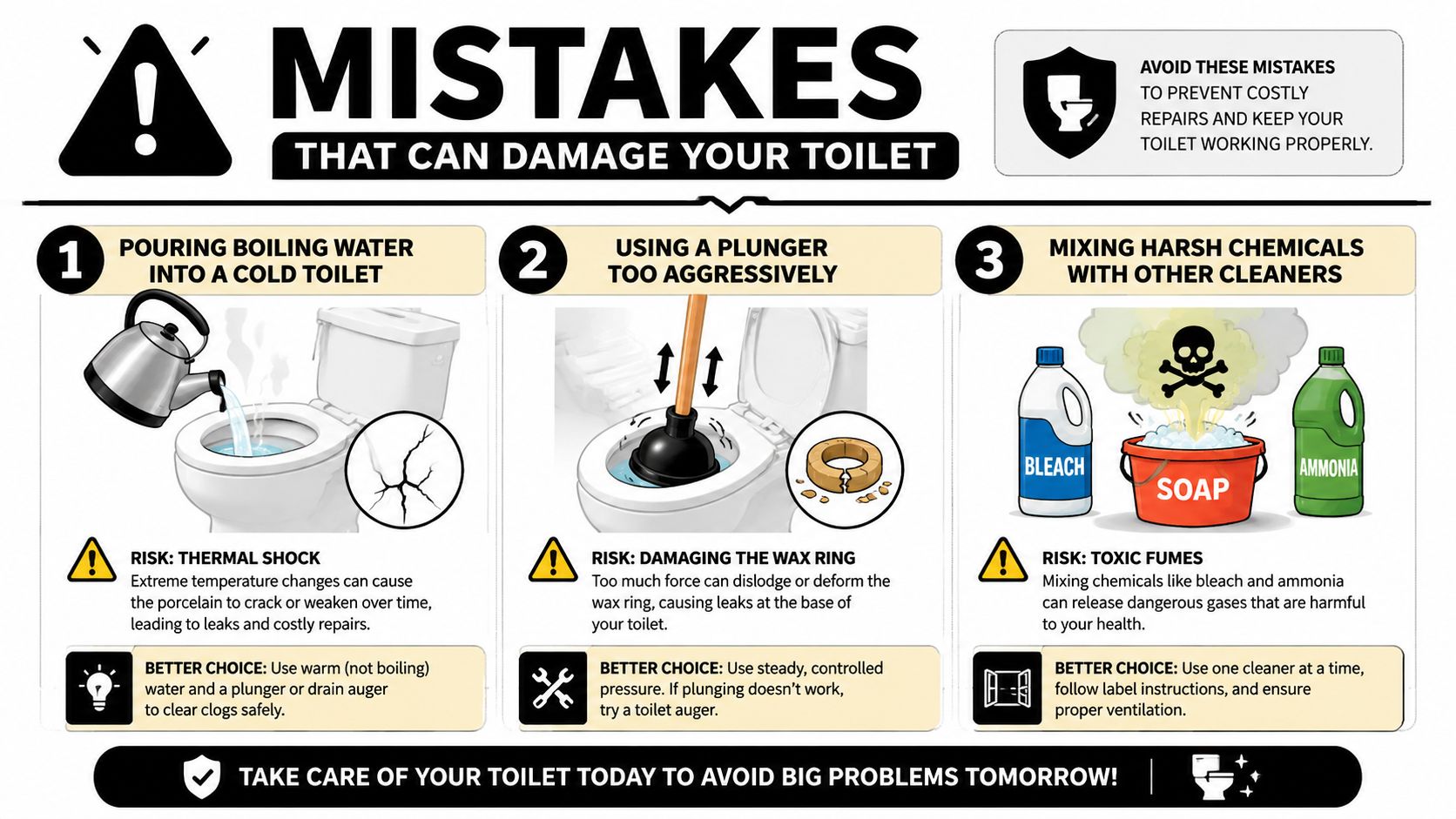
What not to do
- Don't pour boiling water straight into the bowl: Porcelain can crack from thermal shock, especially when the bowl is cold and wet.
- Don't mix dish soap with chemical drain cleaner: That can create a hazardous mess and splash caustic product back at you.
- Don't keep dumping hot water without waiting: You'll just raise the bowl level and push it closer to overflow.
- Don't start aggressive plunging too soon: Soapy water can blast out of the bowl and onto the floor if you rush the seal.
There's also a bigger assumption to challenge. Dish soap is a first-line DIY fix for minor, common toilet clogs, but it is not universal, and it works best when the blockage is small and made of something that can be softened or lubricated. That's the point of the method, and it's also its limit.
If something does go wrong, stop first. Bail water if needed, ventilate the room, and resist the urge to keep flushing just because the bowl looks stubborn. A small overflow is annoying, but a repeated overflow with sewage in the mix is a far worse problem to clean up.
Troubleshooting When the Method Does Not Work
If the first round didn't move the clog, don't start improvising. The decision tree is simple, and it saves time. The next move is usually a second soap-and-hot-water pass, especially if the first one loosened the blockage but didn't fully carry it through.
Escalate in the right order
A second round should use fresh hot water and a longer sit time. If that still fails, move to a flange plunger, the toilet-specific one with the folded bell, and make sure the cup seals over the outlet with enough water in the bowl to cover it. Use slow, steady pressure, not frantic pumping, because the goal is to build movement without spraying the bowl.
The plunger should feel like it's working against water, not air. If it's just splashing, the seal is wrong.
If the plunger still doesn't clear it, a closet auger is the next sensible tool. It reaches farther into the trapway and can hook soft material or break up a paper mass. Stop if you hit hard resistance that doesn't feel like compressible paper, because that's how you scratch porcelain or jam the cable.
The practical cutoff is clear. If the soap method fails after 1 to 2 rounds, sources consistently advise moving on to a plunger or auger, then a plumber, because dish soap is built for soft obstructions and hard foreign objects or severe trapway blockages usually won't respond to lubrication alone (DG Floors).
If the toilet is slow in a way that feels broader than one bowl, the problem may be deeper in the line. Slow-draining toilets usually need more than a bowl-level fix, and that's where the DIY line should stop.
Other DIY Options Worth Knowing
Dish soap is the cleanest first try for a soft clog, but it's not the only household option. The right choice depends on what the clog feels like, how much water is in the bowl, and how much risk you want to take with the fixture.
A short comparison of the usual suspects
| Method | Best For | Main Risk |
|---|---|---|
| Dish soap | Soft paper clogs and organic waste | Doesn't move hard objects |
| Baking soda and vinegar | Very light buildups and odour control | Weak on real blockages |
| Hot water alone | Paper clogs when the bowl level is manageable | Less reliable than soap |
| Flange plunger | Clogs near the trapway | Splashing if the seal is poor |
| Wet/dry vacuum | Unusual soft obstructions | Splash and sanitation risk |
| Closet auger | Deeper soft clogs | Scratching porcelain if used badly |
Baking soda and vinegar sounds clever, and it can help with very light, smelly buildup, but it rarely moves a real toilet clog. Hot water alone can help paper if the bowl isn't too full, yet the soap version usually works better because it lowers friction as the water moves. A wet/dry vacuum can pull out soft material, but it's a niche tool, not a normal bathroom fix.
A bent wire hanger is the temptation I always warn people about. It can scratch the bowl and get stuck, and a real closet auger is cheaper to replace than a toilet. For prevention, frequent drain clog prevention tips are more useful than any one-off trick, because repeated clogs usually point to habits, a weak flush, or a line that needs attention.
When to Call a Licensed Plumber
There's a clear point where a toilet clog stops being a weekend task. If the bowl keeps clogging again within days, or the toilet starts gurgling when a tub or shower drain runs, the issue is probably beyond the toilet itself. Water backing up into other fixtures, sewage odours, or pooling at the base of the toilet all point to a blockage in the branch line or stack, not just a bowl-level clog.
A professional visit usually starts with diagnosis, not guesswork. That can mean a drain camera, a mechanical auger, or another tool that shows where the blockage sits before anyone opens up walls or commits to bigger work. On larger jobs, the plumber may clear the line mechanically or with hydro-jetting, then give a written quote before any major repair begins.
About 22% of Americans, roughly 1 in 5, experience a clogged toilet each year, and more severe blockages can require professional service costing about $85 to $600 depending on severity (Horow). That range is why a smart stop point matters. Calling early is usually cheaper than calling after sewage has spread into more than one fixture.
For landlords, strata managers, and homeowners in Greater Vancouver, the practical value is fast diagnosis and one contractor who can handle a blocked stack, a stubborn branch line, or a larger sewer problem without dragging the job out. Emergency drain cleaning matters most when the symptoms stop looking local and start looking system-wide.
If your toilet is still slow, backing up, or acting like the clog is deeper than the bowl, contact Encano Plumbing & Drainage Ltd. for a proper diagnosis and a clean fix. They handle toilet and drain problems across Greater Vancouver, and you can visit Encano Plumbing & Drainage Ltd. to book service before a small clog turns into a bigger mess.