In Metro Vancouver, a basic single-fixture drain clear usually runs in the low to mid hundreds, while a main-line or hydro-jet job usually lands between $600 and $1,500. If the call is after hours, expect 30% to 50% more on top.
You're usually standing in the kitchen or bathroom at the exact wrong time, staring at water that won't move and wondering whether this is a quick snake job or a serious plumbing bill. The honest answer is that the cost of drain cleaning in Vancouver depends less on the word “clog” and more on what's blocked, where the blockage sits, and how hard it is to reach.
Table of Contents
- What Drain Cleaning Costs in Greater Vancouver
- Inside a Drain Cleaning Quote
- Routine Clearing, Camera Inspection, and Hydro Jetting Compared
- What Makes a Vancouver Drain Job Suddenly Expensive
- What Happens During a Professional Drain Visit
- DIY Versus Professional Drain Cleaning
- Preventive Maintenance for Strata, Rentals, and Small Businesses
- Smart Ways to Keep Drain Cleaning Costs Down
What Drain Cleaning Costs in Greater Vancouver
A kitchen sink that drains like syrup on a Saturday afternoon is not a mystery job. In Greater Vancouver, a routine single-fixture clear usually lands in the low-to-mid hundreds, while deeper main-line work or hydro jetting commonly moves into the $600 to $1,500 range. That local reality lines up with national references that put average drain cleaning around $242 to $246, with typical U.S. ranges of $147 to $352, and note that West Coast markets often run 20% to 40% above national averages (Angi drain cleaning cost guide).
For a homeowner in Vancouver, Richmond, or Surrey, the mistake is comparing a local quote to a U.S. article and assuming the number is padded. You are paying for access, diagnostics, equipment, and time. A simple sink or tub blockage is usually far cheaper than a sewer-line problem, and a stubborn blockage can still climb into the several-hundred-dollar range once the plumber has to locate it, clear it, and verify the line is open.
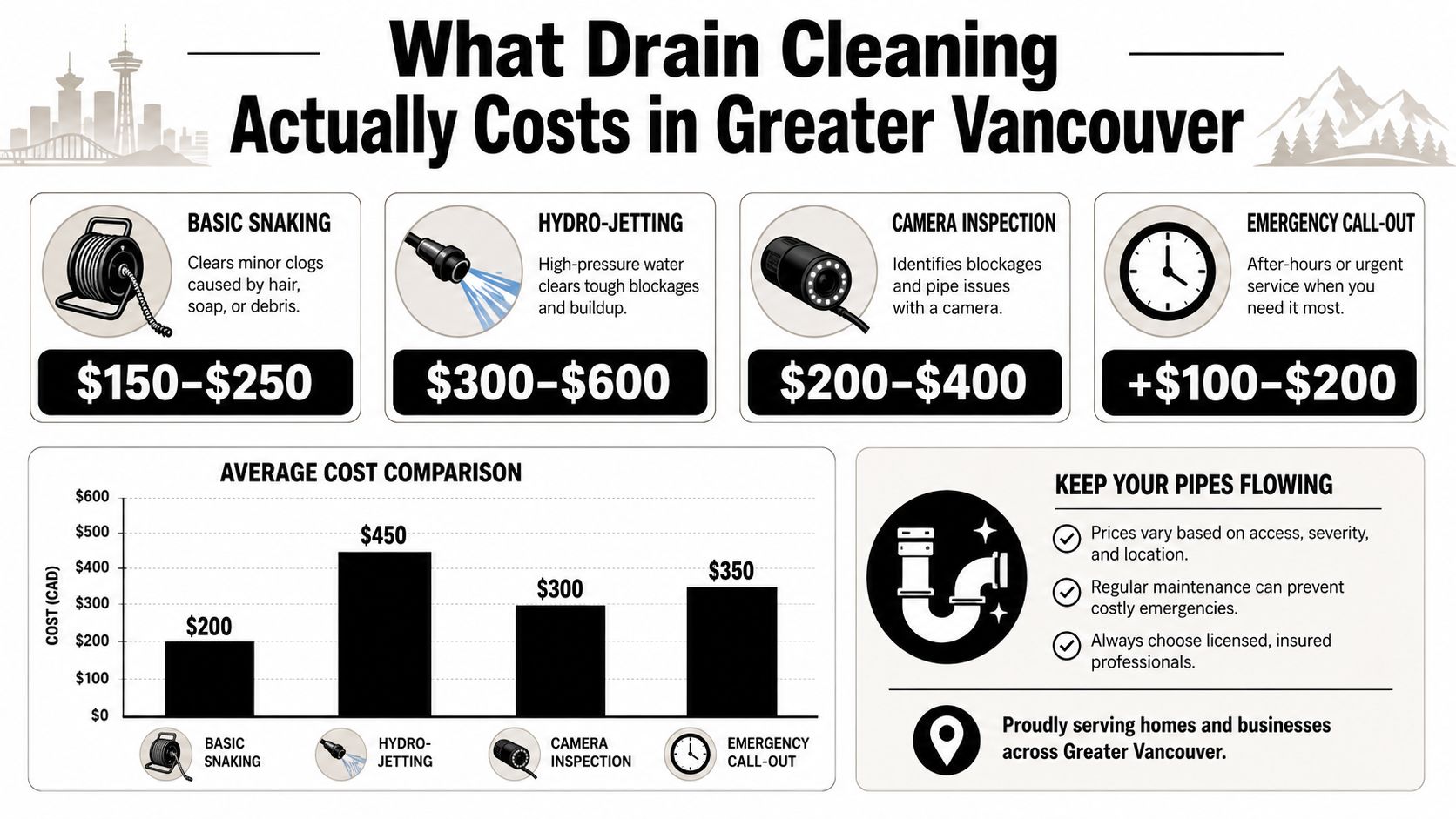
Practical rule: if one fixture is slow, you are usually looking at a service visit that stays in the lower band. If multiple fixtures are backing up, the price moves up fast.
The four things that drive the bill are simple. Access decides how much labour the tech spends getting to the line. Severity decides whether a snake is enough. Equipment decides whether the job needs a camera or hydro jetter. Timing decides whether the call gets an emergency premium.
Older homes, tight mechanical rooms, and strata plumbing all push costs higher in Metro Vancouver because the drain is harder to reach and the diagnosis takes longer. For homeowners comparing drain work with other plumbing repairs, see our plumbing repair cost guide. A basic residential call commonly sits around the low hundreds, not around the bargain-bin numbers people hope for. The right question is not “what does drain cleaning cost?”, it is “what kind of drain problem do I have?”
Inside a Drain Cleaning Quote
Most drain quotes are not one price, they're a stack of decisions. The bill usually starts with a service call or trip charge, then adds the labour rate, then layers on the equipment needed for the job, and finally picks up any extras such as after-hours service or fixture removal. Once you see it that way, a quote that looks like a single number starts making sense.
The parts that change the price
A plumber charging for a straightforward sink blockage is usually doing very different work from a tech dealing with a main-line backup in a strata building. In practice, the quote shifts when the drain isn't easy to reach, when the blockage sits deeper in the system, or when the job needs diagnostic confirmation instead of just a quick clear. That's why a heritage home with no cleanout can cost more than a newer house with a neat access point in the yard.
A strata stack in Burnaby is a good example. If the issue is isolated to one fixture, the bill may stay relatively contained. If the stack backs up, the plumber may have to confirm whether the problem is private-side plumbing, building lateral, or a broader system issue, which adds labour and often changes the scope of the job. A restaurant in Richmond with grease-heavy lines is another different animal, because the work tends to move faster from cleaning into diagnosis.
A quote that skips the access question is incomplete. Ask where the tech expects to enter the line, because that detail often tells you more than the headline price.
For readers who want a broader plumbing context, this internal guide helps compare drain work with other repair costs: plumbing repair cost overview.
What to listen for on the phone
A good quote call should tell you three things. First, whether the issue sounds like a single fixture or a main-line problem. Second, whether the tech expects to use a snake, camera, or hydro jetter. Third, whether the price changes if the technician finds a deeper obstruction than expected.
If a plumber can't explain why the job might grow after arrival, they're not giving you a real quote. They're giving you a guess.
Routine Clearing, Camera Inspection, and Hydro Jetting Compared
Not every clogged drain needs the same tool. A basic snake solves a lot of everyday fixture clogs, but it won't clean a grease-coated pipe wall or show you why a backup keeps returning. A camera inspection costs more, but it stops you from paying twice for the same problem. Hydro jetting is the heavy-duty option, and it's the right call when buildup, roots, or repeated failures make a simple clear pointless.
Here's the cleanest way to think about the three methods.
| Method | Typical Vancouver Price | Best For | Wrong Choice When |
|---|---|---|---|
| Basic snaking | $100 to $275 | Single-fixture clogs, soft blockages, quick access | The clog keeps coming back, or more than one fixture is involved |
| Camera inspection | $200 to $500 | Recurring backups, diagnosis, confirming line condition | You just need a simple one-time clear on an easy fixture |
| Hydro jetting | $600 to $1,500 for main sewer lines in the Lower Mainland | Heavy grease, roots, stubborn main-line blockages | The problem is minor and clearly confined to one fixture |
The local numbers matter because the cheapest tool is not always the cheapest outcome. A snake can get water moving again, but it can also miss a deeper cause. A camera inspection is the smarter spend when the same drain keeps acting up, especially if the building is older or the symptoms point beyond one sink. Hydro jetting is the option I'd want on a line that's packed with grease or roots, because that's where the more aggressive cleaning earns its keep (drain cleaning cost breakdown).
For service planning, see drain camera inspection services if you want to understand when diagnosis makes more sense than another quick snake.
Simple decision rule: match the tool to the symptom, not to the cheapest line on the invoice.
If you're staring at one slow bathroom sink, don't overbuy the job. If the kitchen, tub, and toilet are all misbehaving, don't pretend it's a sink issue. That's how homeowners waste money.
What Makes a Vancouver Drain Job Suddenly Expensive
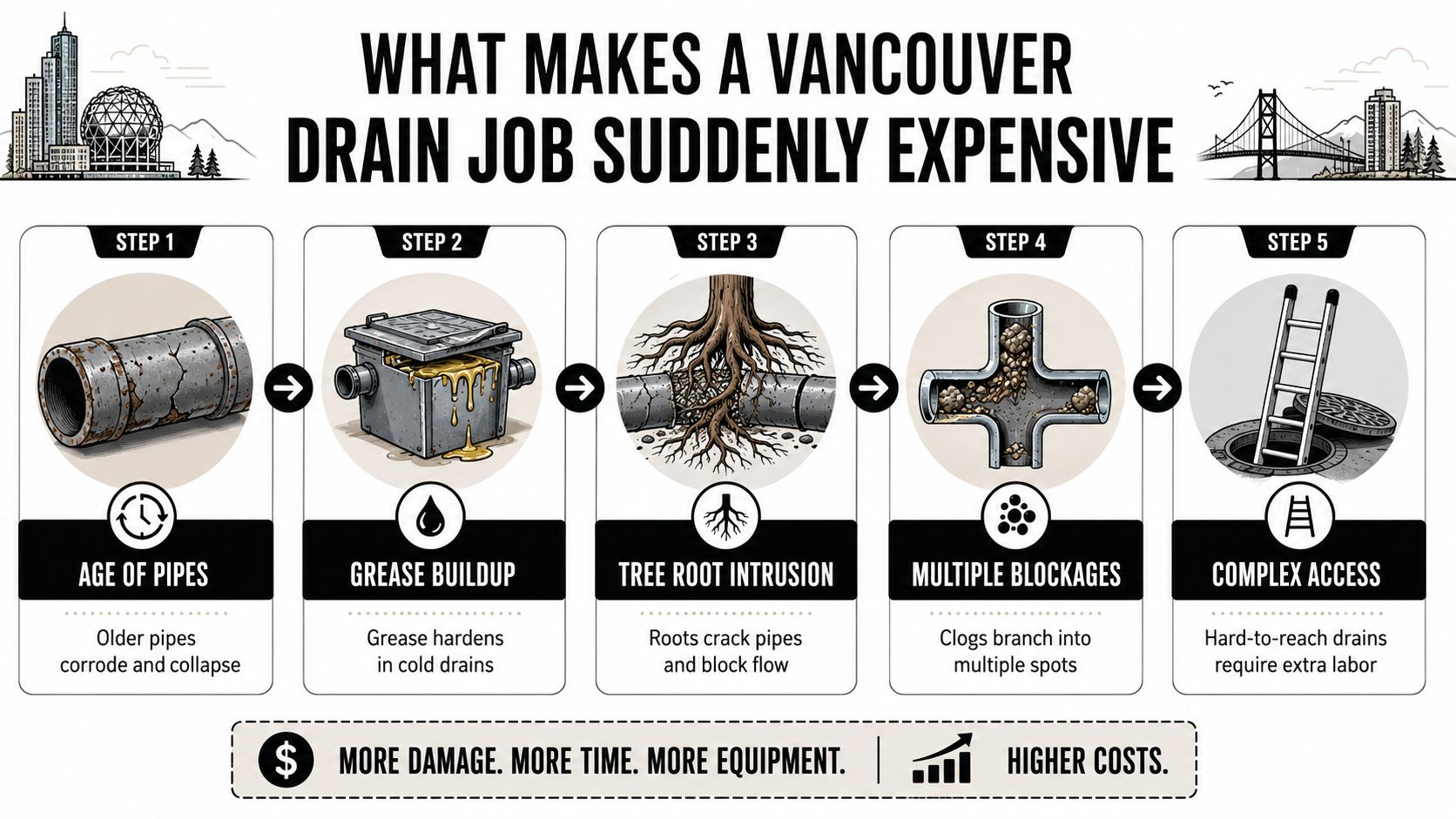
The jump from a cheap clog to an expensive job usually happens because the plumber discovers the line isn't just blocked, it's complicated. Older buildings, harder access, and deeper obstructions all push the work away from a simple service call and toward diagnosis plus cleaning. In Metro Vancouver, that's common enough that you should expect it, not be surprised by it.
The local cost stack
The first cost trigger is age of the building. Older homes and strata properties often have lines that are harder to work on, and some have infrastructure that makes access awkward. The second trigger is pipe condition. Grease, roots, and corrosion don't behave like a soft hair clog in a bathroom sink. The third trigger is distance to the cleanout, because the farther the tech has to work into the system, the more time and equipment the job needs.
The fourth trigger is where the blockage sits. A branch line problem is one thing. A main sewer line problem is another. The fifth trigger is multiple fixtures backing up at once, which usually means the issue is deeper than the fixture itself. If the laundry, toilet, and lowest drain all start acting up together, that's not a coincidence.
A 1970s Burnaby strata unit gives you the classic example. The resident thinks the kitchen line is just slow. The plumber snakes it, but the problem comes back. A camera inspection finds root intrusion well down the building lateral, and the job shifts into hydro jetting plus verification. That's not a fancy upsell, it's what the line needed.
Warning signs that the bill is climbing
- Gurgling fixtures: If the toilet gurgles when another appliance drains, the blockage is likely deeper than one sink.
- Repeat backups: A clog that returns after snaking usually needs inspection, not another guess.
- Multiple affected drains: More than one fixture acting up points toward the main line.
- Slow lowest fixture: The lowest drain in the home often tells the truth first.
- No easy access: If the tech has to remove fixtures or work around finished spaces, the labour rises.
A plumber doesn't charge more because they feel like it. The job gets more expensive because the problem demands more work, and Vancouver's older housing stock makes that more likely than people want to admit.
What Happens During a Professional Drain Visit
A proper drain visit starts before the tool comes out of the truck. The technician should arrive with a window, give you a clear explanation of the likely issue, and say what the initial work will cost before they begin. If that part is fuzzy, the visit usually gets worse from there.
The visit should move in a clean sequence
First comes the arrival and walk-through. The plumber asks what's backed up, whether other fixtures are affected, and whether the problem has happened before. Then comes the on-site diagnosis, which may include checking cleanout access, testing fixtures, and deciding whether snaking is enough.
Next is the tool choice. A single clog might get a snake. A recurring backup might get a camera. A greasy or root-choked line might need hydro jetting. If the technician finds something beyond a simple blockage, they should explain the next step in plain language, not hide behind jargon.
The visit should end with clean-up and a written summary of what was found. That matters more than people think, especially for landlords and strata managers who need a paper trail. If you're paying for diagnosis and the contractor leaves without telling you what caused the blockage, you've bought half a service.
If a recurring problem is cleared without any explanation, ask for the reason in writing. You don't need a lecture, you need enough information to stop paying for the same clog twice.
A solid visit also gives you a chance to speak up. Ask for camera footage if the backup keeps coming back. Ask what the likely cause was. Ask whether the cleanout location makes future service easier. Those are practical questions, not picky ones.
There are a lot of good drain cleaners in this market, including Encano Plumbing & Drainage Ltd. if you need a contractor that uses video inspection, acoustic leak detection, and high-pressure jetting alongside drain service. The point is not the brand, it's the process. A good visit solves the drain and tells you why it happened.
DIY Versus Professional Drain Cleaning
DIY has its place, but it's narrow. A slow bathroom sink with a soft clog is a fair target for a hair snake and some patience. A kitchen line coated in grease is not a DIY victory waiting to happen. A main-line backup is definitely not the moment to gamble.
When DIY makes sense
A small, recent clog in one fixture is the sweet spot for DIY. If the sink is draining slowly, the problem is likely local and soft, and a basic hand snake can be enough. That's the one case where a homeowner can spend a small amount and solve the issue without paying for a truck roll.
When DIY turns stupid
Kitchen grease is where many homeowners make the line worse. Chemical drain cleaners can be rough on older cast-iron or galvanized lines, and they don't solve the underlying buildup in a meaningful way. If the clog is deep or recurring, the cleaner just sits there while the problem stays in place.
A main-line backup is the hard stop. If sewage is involved, or multiple fixtures are backing up, delaying professional service risks a much bigger mess. That's where the bill can move into the $400 to $1,500 range once diagnosis and equipment are added, which is exactly why waiting for “one more DIY try” is usually false economy (drain cleaning cost guide).
| Situation | DIY Reasonable | Call a Pro |
|---|---|---|
| Slow bathroom sink | Yes | If the clog returns |
| Grease-heavy kitchen drain | No | Yes |
| Multiple fixtures backing up | No | Yes |
| Sewage smell or backup | No | Yes |
If you're comparing effort to risk, the decision is straightforward. Use DIY for a single, soft, recent clog. Call a pro the moment the problem spreads, returns, or smells like sewage.
Preventive Maintenance for Strata, Rentals, and Small Businesses
For strata managers, landlords, and small-business owners, drain cleaning shouldn't be treated as a crisis line item. It should be part of the maintenance budget. Reactive service is expensive because you're paying for urgency, disruption, and repeat visits. Planned service is usually calmer, easier to coordinate, and less likely to wreck a weekend.
A practical rhythm for recurring properties
The best habit is to map the high-risk lines and keep them on a schedule. Grease-heavy kitchen areas, older lateral lines, and buildings with recurring backups should be inspected before they fail. If a property has root intrusion risk or a history of repeat clogs, a camera inspection and targeted cleaning will usually make more sense than another emergency snake.
In Metro Vancouver, that matters because the Drainage and Sewerage Utility serves 21 municipalities, one electoral area, and one treaty First Nation under the region's Liquid Waste Management Plan (Metro Vancouver drainage and sewerage system). That structure makes drainage a private and public coordination issue, not just a pipe issue. If a building lateral or shared line is involved, property managers need to know where their responsibility ends and where municipal rules begin.
A six-unit Richmond rental building is the kind of property that benefits from this approach. If management waits for repeated backups, the annual drain spend turns into a series of emergencies. If management keeps cleanout locations documented, schedules inspections, and gets ahead of grease or root issues, the work is more predictable and tenant disruption drops.
For properties with grease-heavy kitchens, grease trap cleaning belongs in the same maintenance conversation. Grease and drains are a bad combination, and ignoring that relationship just makes the plumber's job harder later.
Practical move: document every cleanout location now. When the drain fails, nobody wants to be hunting for access in the rain.
For managers, the win is simple. You stop treating every backup like a surprise, and you stop paying emergency pricing for problems that were visible months earlier.
Smart Ways to Keep Drain Cleaning Costs Down
Know where the cleanouts are. That alone can save labour and keep a job from turning invasive. Avoid chemical drain cleaners on older pipes. They're a blunt tool, and blunt tools are bad for ageing plumbing.
Schedule camera checks on mature properties with trees near the lateral. Roots don't care about your budget, and they rarely announce themselves politely. Choose a contractor who breaks out the line items, because a single flat number usually hides the actual work.
- Find the cleanouts early: Ask for a walkthrough before the next problem starts.
- Stop using harsh chemicals on old lines: They can create more trouble than they solve.
- Watch for repeat symptoms: Recurring backups deserve inspection, not another blind snake.
- Match the method to the blockage: Snaking, camera work, and hydro jetting each solve different problems.
- Get written findings: That keeps the next visit shorter and more honest.
If you want a contractor who handles drain cleaning, emergency plumbing, and diagnostic work across Vancouver, Richmond, Burnaby, New Westminster, Delta, Surrey, and nearby communities, Encano Plumbing & Drainage Ltd. is one option to call when the line stops behaving. Their team offers 24/7 emergency response and uses tools like video inspection, acoustic leak detection, and high-pressure jetting to get to the source faster.
If your drain is backing up right now, stop guessing and get a real diagnosis before the problem gets bigger. Encano Plumbing & Drainage Ltd. handles drain cleaning, emergency plumbing, and inspection work across Greater Vancouver, so you can get a straight answer on what the job will cost and what it needs.