

Typical plumbing repairs from a licensed professional in Vancouver often land around $200 to $600 for common problems like a leaky faucet or clogged drain, but the overall range is wider once you factor in access, timing, and the type of repair. Broad industry benchmarks put many standard plumbing jobs at $182 to $499, with plumbers commonly charging $45 to $200 per hour and emergency calls running 1.5 to 3 times the normal rate.
If you're reading this with a drip in the wall, a toilet that won't stop running, or water where it absolutely shouldn't be, the stress is real. Homeowners generally don't mind paying for a proper fix. They mind not knowing what the bill is built from, why one plumber quotes one number and another comes in much higher, and whether they're looking at a quick repair or the start of a much bigger problem.
In Greater Vancouver, plumbing repair cost isn't just about the pipe or fixture. Strata approvals, permit requirements, older building layouts, tight crawlspaces, finished basements, and bad timing during a storm can all change the final invoice fast.
Table of Contents
- That Drip Costs How Much? Understanding Plumbing Prices
- Common Plumbing Repair Costs in Vancouver 2026
- The Four Factors Driving Your Final Plumbing Bill
- The True Cost of a Plumbing Emergency in the Lower Mainland
- Smart Ways to Reduce Your Plumbing Repair Costs
- How to Vet Quotes and Hire a Plumber You Can Trust
- Frequently Asked Questions About Plumbing Costs
That Drip Costs How Much? Understanding Plumbing Prices
At 7:30 on a rainy Vancouver morning, a small drip under the kitchen sink can feel like a minor problem. By lunch, it can involve a soaked cabinet floor, a strata manager asking for photos, and a plumber trying to trace whether the leak is only inside your unit or affecting a neighbour below.
That gap between what you see and what the repair involves is what drives plumbing prices.
For many homeowners, the first visit is not expensive because of the part. It is expensive because someone has to find the actual source, shut things down safely, open access if needed, and confirm whether the problem stops at the fixture or runs deeper into the line. A leaking shutoff valve, cracked trap arm, failed wax seal, or pinhole in older copper can all start with the same symptom. The repair path changes once the system is opened and tested.
In Greater Vancouver, a generic online price guide only gets you so far. Local conditions change the bill quickly. Older East Van and North Shore homes may have aging copper, galvanized sections, or past patchwork repairs hidden behind finished walls. In condos, the job can involve booking elevator access, following strata rules, protecting common areas, and documenting the work. If the repair touches permitted work, inspection and paperwork can add time and cost before a wrench even turns.
Weather matters here too.
During cold snaps, heavy rain, or sudden freeze-thaw weeks, call volume rises and small leaks become urgent faster. A homeowner who waits on a slow drip in dry weather might still have a manageable repair. The same leak during a storm, or in a building where water can travel into another unit, often turns into a same-day problem with a much higher final bill.
A practical way to look at plumbing cost is this: you are paying for diagnosis, access, labour, materials, and risk control. The visible drip is only one part of the job.
That is also why replacement decisions sometimes make more financial sense than another patch. If the issue ties into an older fixture or failing hot water system, it helps to compare the repair against related upgrade costs, such as water heater replacement costs in Vancouver.
One more point homeowners should keep in mind. A small leak in a detached house and the same leak in a concrete strata building are rarely priced the same. The plumbing may be similar. The access, approvals, cleanup requirements, and liability are not.
Common Plumbing Repair Costs in Vancouver 2026
A homeowner in Vancouver often starts with one simple question. What will this repair likely cost me if I call today?
The most useful answer is a price range tied to the actual job. A running toilet, a localized leak under a sink, and a burst pipe in a condo riser are all plumbing repairs, but they do not belong in the same budget bucket. Use the table below as a planning guide for common repairs homeowners ask about in Greater Vancouver.
Typical plumbing repair ranges
| Service | Typical Cost Range (CAD) |
|---|---|
| Typical plumbing project | $182 to $499 |
| Typical plumbing job | $175 to $450 |
| Toilet repair | $100 to $300 |
| Leaking pipe repair | $150 to $350 |
| Drain unclogging | $100 to $300 |
| Burst pipe repair | $1,000 to $4,000 |
| Rerouting plumbing | $700 to $1,500 |
| Under-slab leak repair | $500 to $4,000 |
| Gas pipe repair | $250 to $750 |
| Leak repair where scope may involve repair or replacement | $300 to $4,000 |
| Whole-house plumbing | $10,000 to $20,000 |
These figures reflect broad industry benchmarks and are best read as starting ranges, not fixed quotes.
Here is what those numbers usually mean on site.
- Toilet repair at $100 to $300 often covers replacing a fill valve, flapper, supply line, wax seal, or fixing a minor base leak.
- Leaking pipe repair at $150 to $350 usually fits a visible, accessible leak where the damaged section is small and the wall or ceiling stays closed.
- Drain unclogging at $100 to $300 generally applies to a simple fixture stoppage, not a deeper branch line or main drain problem.
- Burst pipe repair at $1,000 to $4,000 usually includes shutoff, damaged pipe replacement, cleanup coordination, and some level of access or restoration work.
In Greater Vancouver, local conditions push repairs up or down faster than many online guides suggest. A kitchen drain clearing in a detached house in Surrey may stay near the low end. The same complaint in a Vancouver condo can cost more if the plumber has to book parking, protect elevators, follow strata move-in rules for materials, or document the repair for building management.
Weather changes pricing pressure too. During freeze-thaw stretches or heavy rain events, small leaks become urgent calls, schedules tighten, and the same repair can move from routine service into emergency work. That shift matters in the Lower Mainland because water often affects finished basements, shared walls, and units below.
Some categories have wide ranges because the first symptom does not tell you the true scope. Weak drainage at a kitchen sink might be a quick trap blockage. It might also be a deeper line issue that needs camera work or rerouting. An under-slab leak can stay at the lower end if the source is confirmed quickly and access is simple. It climbs fast when testing, concrete access, or longer pipe replacement is involved.
Water heater calls create the same kind of confusion. Homeowners often ask for a repair number when the true decision is whether another repair makes financial sense at all. If you are comparing those options, this guide to water heater replacement costs in Vancouver is usually more helpful than a generic repair range.
One practical rule helps here. The more the plumber needs to diagnose, expose, coordinate, or document, the less useful a flat price from the internet becomes.
If you live in Vancouver, Burnaby, Richmond, Coquitlam, or Surrey, treat these numbers as realistic budgeting ranges. Final pricing depends on what is found after diagnosis, how easy the repair is to access, and whether the work stays inside one unit or touches strata rules, permits, or shared building systems.
The Four Factors Driving Your Final Plumbing Bill
A homeowner in Burnaby can have the same symptom as a homeowner in Surrey and still get a very different final bill. The difference usually comes down to four cost drivers. Labour, materials, access, and admin. In Greater Vancouver, those last two often change the price more than homeowners expect, especially in strata buildings or on repairs that need permits, inspections, or building approval.
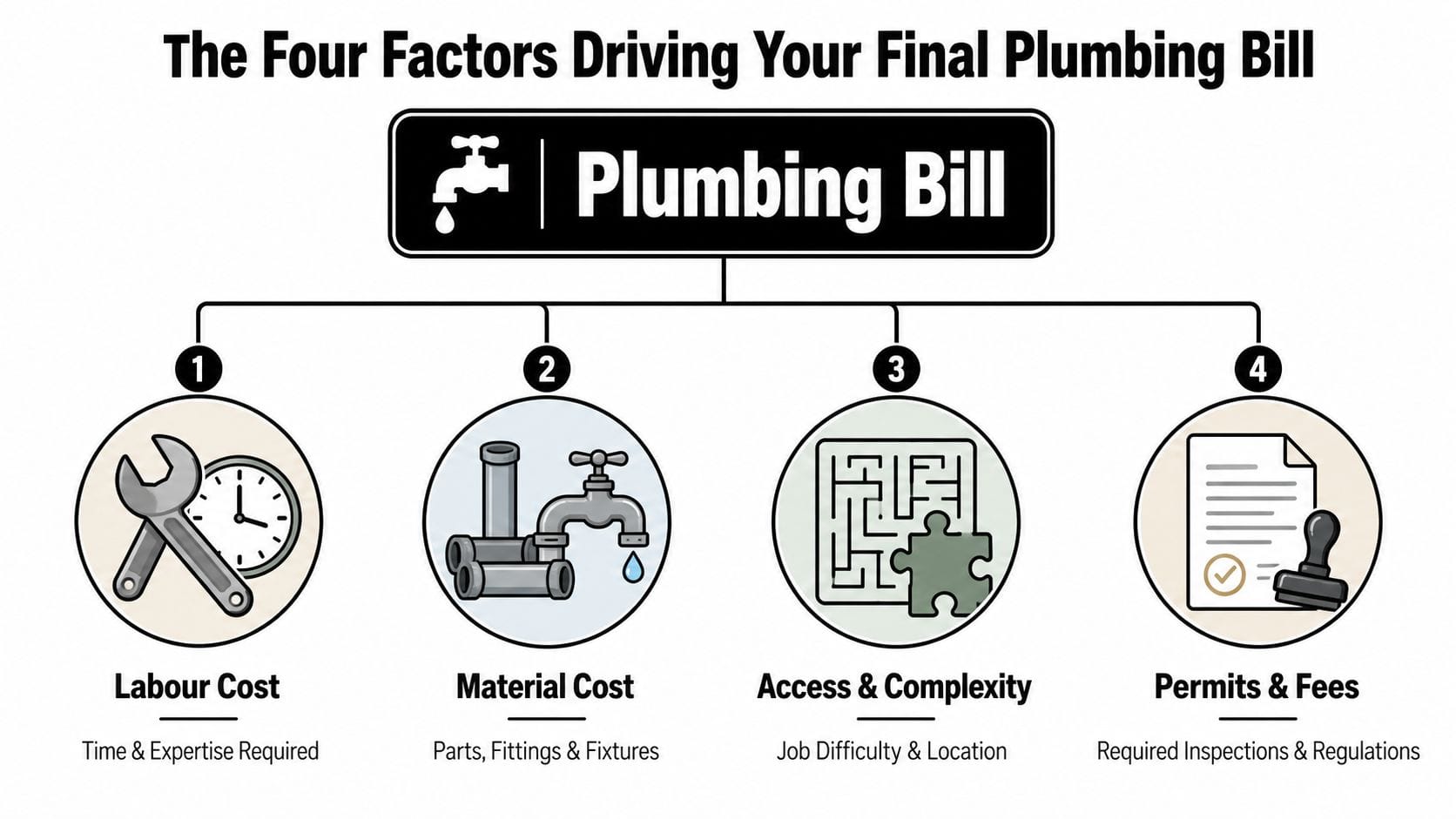
Labour is the biggest cost on many repairs
Homeowners often focus on the part that failed. The bigger charge is usually the time needed to diagnose the problem, isolate it safely, make the repair to code, test it, and clean up properly. In Vancouver-area homes, labour climbs faster when the plumber is dealing with older copper, mixed materials from previous renovations, tight crawlspaces, or a building where water shutoffs affect more than one unit.
Weather also matters here. During cold snaps, heavy rain, or freeze-thaw events, schedules tighten across the Lower Mainland. A repair that would be straightforward on a normal weekday can cost more if crews are stretched and the job has to be handled quickly to prevent further damage.
Materials can be cheap, specialised, or hard to match
Some jobs use standard stock parts and stay predictable. Others do not.
A toilet fill valve, angle stop, or trap arm is one thing. A specialty cartridge, a concealed shower valve, a backflow component, or a section of pipe that has to tie into an older system can take longer to source and longer to install. If the repair reaches buried drainage or a damaged sewer line, the method matters as much as the material. Homeowners weighing excavation against less invasive options should review the trade-offs in this guide to trenchless sewer line repairs and what you need to know.
The part itself is not always the expensive piece. Getting the right part, getting access to install it, and avoiding a second visit often matter more.
Access is where similar repairs stop being similar
This is the factor that causes the biggest spread between online price ranges and real quotes in Greater Vancouver.
A leak under an open bathroom sink is usually straightforward. A leak behind tile in a condo tower, above a finished ceiling, inside a mechanical chase, or below a slab is a different job entirely. The plumbing repair may be small. Reaching it may not be.
Common access issues that raise costs include:
- Finished surfaces that need careful opening to avoid unnecessary restoration
- Concrete, tile, and built-ins that slow exposure and repair work
- Strata rules that limit shutoff times, require booking windows, or require management sign-off
- Multi-unit risk where one mistake can affect the suite below or common property
- Limited parking, elevator access, and site logistics in denser Vancouver buildings
This is why two honest plumbers can price the same symptom differently. One may assume easy access. The other may allow for the full complexity of the building.
Permits, inspections, and coordination add cost even when the repair is simple
This catches a lot of homeowners off guard. In detached homes, some repairs stay simple and stay within a normal service call. In condos, townhomes, and larger renovations, the paperwork can become part of the job.
Greater Vancouver repairs may involve municipal permit requirements, inspection scheduling, strata approval, insurer documentation, water shutoff coordination, or after-hours access arranged through building management. Sewer work, drainage changes, backwater devices, and water heater replacements are common examples where those steps matter. The wrench time may be only part of what you are paying for.
The practical takeaway is simple. A plumbing bill is not just the cost of a part and an hourly rate. It reflects how hard the repair is to diagnose, reach, approve, and complete properly in the kind of home or building you live in.
The True Cost of a Plumbing Emergency in the Lower Mainland
A true emergency isn't just a higher hourly rate. It's a chain reaction. The longer water moves, the more expensive the whole event becomes.
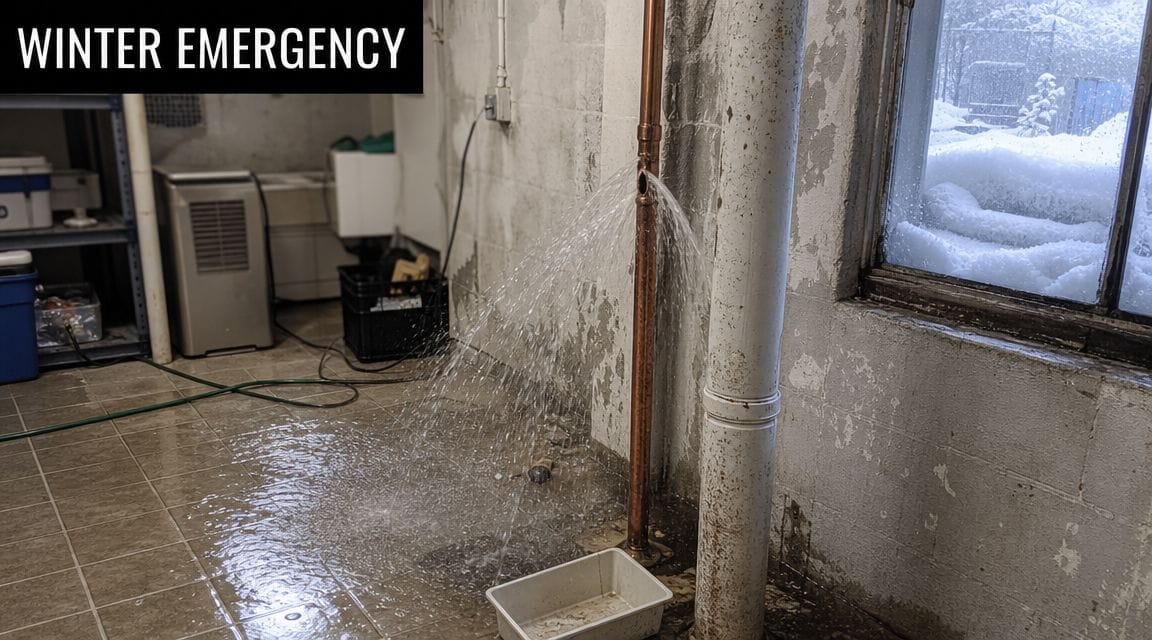
A realistic emergency sequence
Take a winter cold snap in the Lower Mainland. A pipe bursts in a crawlspace or basement mechanical area overnight. The first cost is the emergency dispatch itself. Verified data shows emergency plumbers usually charge 1.5 to 3 times standard rates, and another cited industry benchmark places emergency plumbing around $150 to $300 per hour in some cases, as discussed in this review of emergency plumbing cost considerations and repair timing.
But that's only the start.
The plumber may need to:
- Shut down and isolate the water before more damage spreads
- Find the exact failure point if the leak isn't visible
- Open access carefully to reach the damaged line
- Contain active water to protect flooring, drywall, and adjacent units
- Stabilise the system before permanent repair work begins
Verified regional guidance also notes that in BC, water damage claims remain a major homeowner issue, and emergency plumbing invoices can expand quickly when leak detection, moisture control, and drying are needed in a coastal market where water spreads fast through finished spaces. That point is outlined in this article on pipe repair, materials, and emergency plumbing cost factors.
Why fast action is cheaper than waiting
A homeowner might hesitate at an after-hours rate and decide to wait until morning. Sometimes that's reasonable. Sometimes it's the most expensive decision available.
If water is actively escaping, the cheapest hour of the whole event is usually the first one.
The trade-off is simple. Paying more for immediate response can prevent a larger bill tied to soaked insulation, damaged ceilings, flooring, cabinetry, or moisture that keeps spreading after the pipe itself is fixed.
For that reason, a 24/7 plumbing company isn't just selling convenience. It's often the difference between a contained repair and a much larger restoration problem. Encano Plumbing & Drainage Ltd. is one example of a local contractor that handles emergency plumbing, leak detection, drainage issues, and scheduled repairs across Greater Vancouver.
Smart Ways to Reduce Your Plumbing Repair Costs
Saving money on plumbing doesn't mean choosing the lowest number on the page. It means reducing the chance that a small, affordable repair turns into a disruptive one.
Spend earlier, not bigger
The best cost control is early action. A toilet that runs, a slow drain, or a cabinet leak usually gives some warning before it becomes an urgent problem. Homeowners who respond early often keep the work limited to the plumbing itself instead of paying for access, cleanup, and restoration around it.
A practical example is a small leak under a kitchen sink. If you call while it's still contained to the cabinet, the repair may stay focused on a fitting, valve, or short section of pipe. If you wait until the cabinet base swells, the shutoff fails, or the leak spreads into the wall, you're no longer paying only for plumbing.
Good habits that usually help:
- Bundle small repairs: If you already need a plumber, add the dripping tap, loose toilet, or slow laundry drain instead of booking separate visits.
- Learn your shutoff locations: Quick action limits damage when a line lets go.
- Pay attention to patterns: Repeated clogs, recurring leaks, or inconsistent hot water usually mean the system is asking for a proper diagnosis.
- Keep fixture access clear: Packed vanities, blocked crawlspace entries, and inaccessible utility rooms add time to the visit.
Small plumbing issues are cheap right up until they aren't.
Know when DIY stops saving money
Some DIY is reasonable. Using a plunger on a simple toilet clog, tightening a loose connection you can clearly see, or replacing an accessible showerhead is one thing.
DIY becomes a false economy when:
- The leak source isn't obvious
- You're dealing with supply lines or shutoff valves
- The problem is inside a wall, ceiling, or floor
- Drain chemicals have already been poured into the line
- A strata, insurer, or buyer may later ask for documentation
In those situations, the risk isn't just a failed repair. It's making diagnosis harder, damaging the fixture, or creating a code and liability issue that costs more to sort out later.
How to Vet Quotes and Hire a Plumber You Can Trust
A low quote isn't always a good quote. Sometimes it's just an incomplete one.
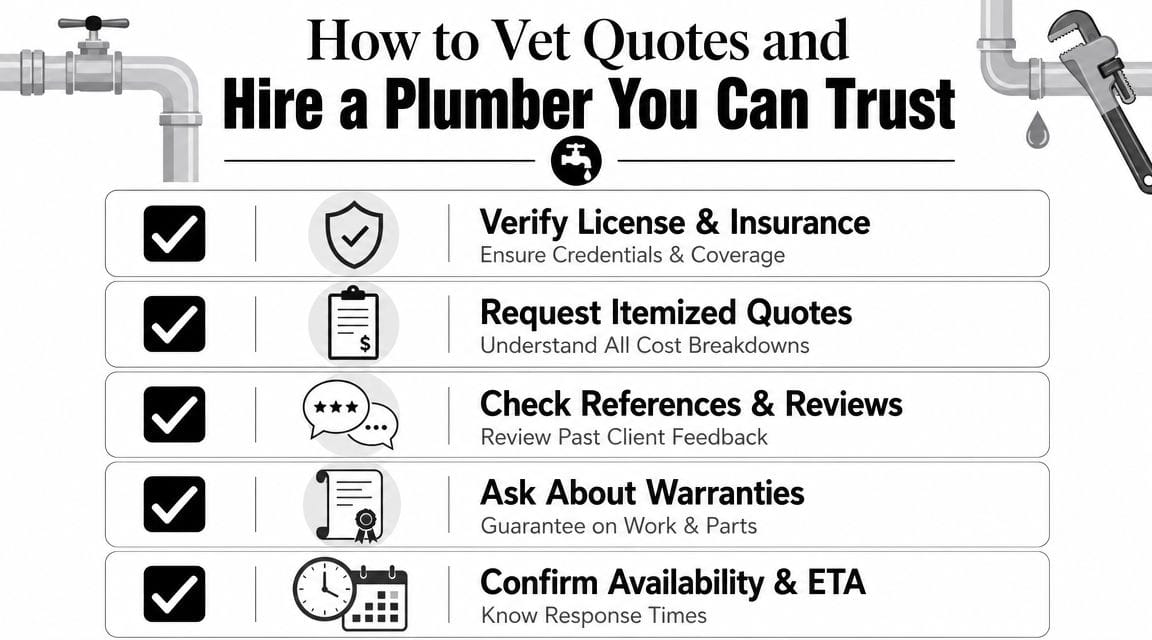
What a solid quote should show
When you ask for pricing, look for enough detail to understand what you're approving. If the scope is vague, the bill can become vague too.
A good plumbing quote should usually include:
- The actual scope of work: What is being repaired, replaced, or investigated.
- Labour and parts clarity: Even if the job is flat-rate, you should still understand what the price covers.
- Access assumptions: Whether the price assumes open access or expects extra work if walls, ceilings, slabs, or fixtures have to be opened.
- Permit or inspection notes: Important for drainage changes, water heater work, sewer work, and some strata repairs.
- Warranty information: What is covered on workmanship and installed parts.
- Timing details: Especially for urgent jobs, ask about availability and expected arrival window.
This short video is a useful companion when you're thinking about how to compare plumbers and repair quotes.
What to ask before you approve the work
Don't just ask, "How much?" Ask better questions.
- What exactly are you fixing today? This tells you whether the plumber is addressing the cause or only the symptom.
- What could change the price? Good contractors will explain where uncertainty still exists.
- Does this require documentation? In condos and managed properties, that question matters.
- If you open the area and find more damage, how will you handle approval? You want that process clear before work starts.
- Are there alternatives? Sometimes repair, replacement, and temporary stabilisation are all valid options.
The right plumber doesn't hide uncertainty. They explain it before the work starts.
Trust usually shows up in clarity. A professional quote should make you feel informed, not rushed.
Frequently Asked Questions About Plumbing Costs
Is it better to repair an old fixture or replace it
If the fixture is otherwise sound and the failure is isolated, repair often makes sense. If the same fixture keeps failing, parts are getting hard to match, or the repair only buys short-term relief, replacement is usually the better financial decision. The right call depends on condition, not just age.
What's the real risk of DIY plumbing repair
The biggest risk isn't only doing the repair wrong. It's misreading the problem. A homeowner may fix a visible drip while missing pressure issues, hidden corrosion, a cracked fitting, or drainage trouble deeper in the system. DIY also gets risky fast when water lines, gas-adjacent equipment, walls, or strata documentation are involved.
What's the difference between an estimate and a firm quote
An estimate is an informed price range based on what the plumber can see at the time. A firm quote is a more defined commitment tied to a clear scope of work. Hidden conditions can still change any job, especially if the issue is behind finished surfaces, but a solid quote should spell out what is included and what could trigger a change.
If you need a clear opinion on your plumbing repair cost before the damage gets worse, Encano Plumbing & Drainage Ltd. can assess the issue, explain the likely scope, and help you understand whether you're dealing with a routine repair, an access problem, or an emergency that needs immediate action.