A kitchen sink that drains slowly may need a simple cable cleaning. A recurring sewer backup affecting several fixtures may need something much more thorough. That is the real question behind drain cleaning vs hydro jetting: not which service sounds stronger, but which one safely solves the problem in your pipe.
Both methods are professional solutions for blocked drains and sewer lines. They work differently, cost differently, and suit different conditions. Choosing the right one can mean the difference between a drain that stays clear and one that clogs again a few weeks later.
Drain Cleaning vs Hydro Jetting: The Main Difference
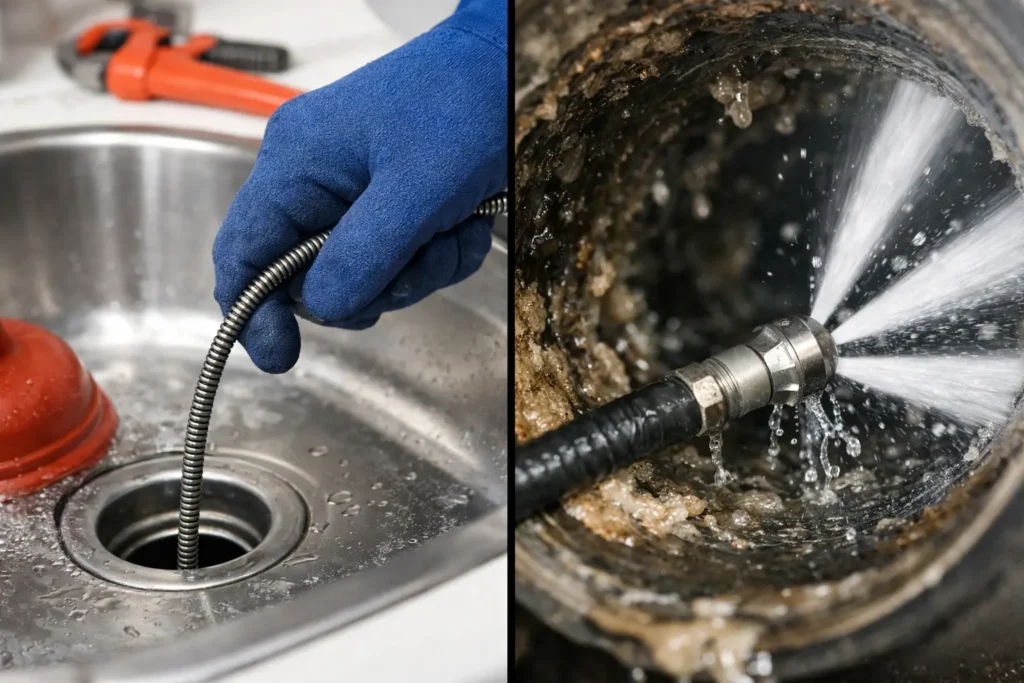
Traditional drain cleaning usually means mechanically clearing a blockage with a drain cable, often called a snake or auger. A licensed plumber feeds the cable through the drain or cleanout and uses a cutting head to break apart or pull through the obstruction. It is a targeted method that creates an opening for water and waste to move again.
Hydro jetting uses a specialized hose and high-pressure water to scour the inside of a drain or sewer pipe. The jetting nozzle directs water forward to cut through the blockage and backward to flush loosened debris out of the line. Rather than simply punching a path through buildup, hydro jetting can clean a much larger portion of the pipe wall.
Neither option is automatically better in every situation. The right service depends on what is inside the pipe, how often the problem returns, the pipe material and condition, and whether there may be a deeper issue such as roots, a broken line, or a sagging section of sewer pipe.
When Standard Drain Cleaning Is the Right Call
Mechanical drain cleaning is often the practical first choice for a localized clog. A bathroom sink blocked by hair and soap residue, a toilet affected by paper buildup, or a single slow shower drain can frequently be restored quickly with the proper cable and cutting head.
This approach is also useful when a plumber needs to remove a specific obstruction. For example, a cable may retrieve wipes, cloth, hygiene products, or other material that should never have gone down the drain. In a commercial setting, it can help clear a localized blockage without taking a larger plumbing system out of service for an extended period.
Drain cleaning may be preferred when pipe condition is unknown. Older pipes, especially those with corrosion, cracks, offsets, or prior damage, should be assessed before high-pressure cleaning is considered. A professional may recommend a camera inspection to see what is happening inside the line and avoid using a method that is not appropriate for its condition.
The limitation is that a cable primarily clears a route through the blockage. It may leave grease, sludge, scale, and residue attached to the pipe walls. If those materials are the underlying cause of repeated backups, the drain may flow better for now but clog again sooner than expected.
Common signs a cable cleaning may be enough
A single fixture is draining slowly, the clog appeared suddenly, or there is an obvious cause such as hair or a small object. If the line has not been backing up repeatedly and there are no signs of a main sewer issue, a straightforward drain cleaning can be efficient and cost-effective.
When Hydro Jetting Makes More Sense
Hydro jetting is designed for heavier buildup and recurring drainage problems. It is especially effective against grease, food residue, soap scum, mineral scale, sludge, and organic debris that collect over time. Restaurants, apartment buildings, and properties with busy kitchen systems often benefit from hydro jetting because grease does not usually sit in one small spot. It coats the line over a longer distance.
For homeowners, hydro jetting can be a strong option when several drains are slow, a sewer line backs up more than once, or a previous cable cleaning provided only short-term relief. It can also help remove root intrusion after a plumber has inspected the line and confirmed that the pipe can handle the service.
The cleaning action is the key benefit. A properly performed hydro jetting service can flush debris out of the pipe instead of leaving much of it behind. That often helps restore better flow and extends the time between service calls.
Hydro jetting is not a shortcut around pipe repair. If a camera inspection finds collapsed pipe, severe cracks, separated joints, or major root damage, forcing water through the line will not fix the structural problem. In those cases, repair or replacement may be the safer long-term answer.
Why an inspection matters before hydro jetting
High-pressure water is effective because it is powerful. A trained plumber needs to know the pipe’s material, access points, condition, and likely cause of the blockage before selecting the right nozzle and pressure. This is particularly important in older homes and buildings where the sewer line may have decades of wear.
A drain camera inspection can identify grease buildup, roots, scale, foreign objects, bellies in the pipe, and damage that cannot be seen from above ground. It replaces guesswork with a clear view of what the line needs.
Comparing Cost, Results, and Disruption
Traditional drain cleaning generally costs less than hydro jetting because the equipment and service time are often more limited. For a simple, isolated clog, paying for hydro jetting may not provide enough additional value to justify the cost.
Hydro jetting usually has a higher upfront price, but it can offer better value when buildup is widespread or recurring. Repeated cable visits add up. If grease or scale remains on the pipe walls after each service, the underlying restriction is still there. Thorough cleaning may reduce future disruption for a home, rental property, or business.
There is also a practical difference in the results. Cable cleaning is excellent at restoring flow through a specific blockage. Hydro jetting is better suited to cleaning the length and interior surface of a pipe. A good plumber will explain which result your system needs rather than treating every clog with the same tool.
For property managers, scheduling also matters. A planned hydro jetting maintenance service can often be less disruptive than responding to a sewer backup during a busy workday or after tenants have already been affected. The best schedule depends on the building’s age, occupancy, pipe use, and history of backups.
Problems That Need More Than Cleaning
A clear drain is not always a healthy drain. If backups keep returning in the same location, there may be an issue that cleaning alone cannot solve. Tree roots can enter damaged joints. A pipe can settle and develop a low area where waste collects. Old cast iron can corrode internally, narrowing the passageway even after debris is removed.
Warning signs include sewage backing up into tubs or floor drains, gurgling from multiple fixtures, water appearing at a lower-level drain when an upstairs fixture is used, foul odors, and repeated clogs despite professional service. These symptoms call for a proper diagnosis, often including a camera inspection.
Avoid relying on store-bought chemical drain cleaners while waiting for help. Many are harsh on pipes and can create a safety hazard for anyone working on the drain afterward. They also rarely solve heavy grease buildup, roots, or a main sewer obstruction.
How to Choose the Best Service for Your Drain
Start with the pattern of the problem. One slow sink with a recent clog often points to mechanical drain cleaning. Multiple affected fixtures, repeat sewer backups, heavy kitchen grease, or a line that has been snaked several times may point toward hydro jetting and a camera inspection.
Then consider the pipe itself. The strongest cleaning method is not the right one if the line is compromised. A qualified plumber should evaluate the condition of older or questionable piping before recommending high-pressure cleaning.
For homes and commercial properties in Vancouver and nearby communities, Encano Plumbing & Drainage can assess the source of the blockage, explain the options clearly, and recommend work based on the condition of the line. The goal should be a safe, lasting repair plan with fair, transparent pricing, not a temporary fix that leaves you facing the same backup again.
If your drain is slowing down, address it before it turns into a full overflow. A timely inspection gives you more options, protects your property, and helps ensure the chosen service fits the problem inside the pipe.