
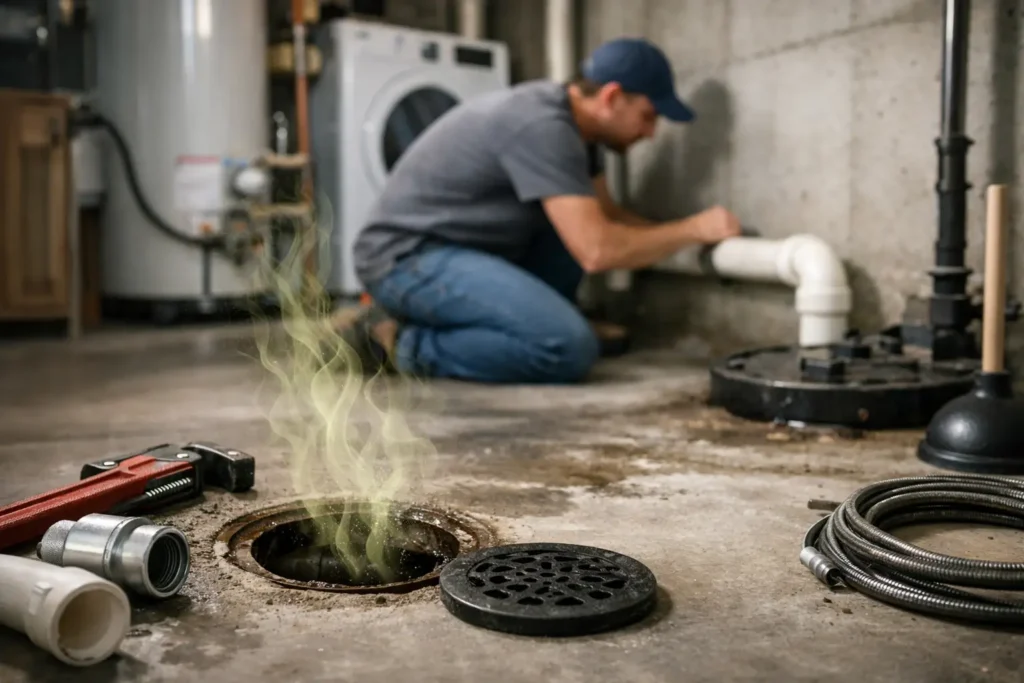
A sewer odor in the basement is not the kind of problem to cover with air freshener and hope for the best. Sewer smell in basement causes can range from a dry floor drain that takes seconds to fix to a damaged sewer line that needs prompt professional attention. The key is finding the source early, before the odor becomes a health concern, a drainage backup, or a more expensive repair.
Basements are especially prone to these smells because they contain floor drains, laundry connections, utility sinks, sump systems, and plumbing pipes that may not be used every day. Start with the simple checks, but do not ignore a persistent smell, gurgling drains, slow fixtures, or any sign of wastewater.
The Most Common Sewer Smell in Basement Causes
A dry floor drain trap
A dry P-trap is one of the most common and easiest-to-solve causes of basement sewer odor. The curved section of pipe beneath a floor drain, sink, shower, or laundry standpipe holds water. That water creates a seal that blocks sewer gas from coming back into the home.
When a basement floor drain is rarely used, the water in that trap can evaporate. This is common after a long dry period, in vacant units, or in utility areas that do not see regular use. Without that water seal, sewer gas has a direct path into the basement.
Pour a few cups of water slowly into the floor drain. If the smell improves over the next several hours, the dry trap was likely the issue. In a rarely used drain, adding a small amount of mineral oil after the water can slow evaporation. If the odor returns quickly, the trap may be leaking, improperly installed, or connected to a larger drainage problem.
A clogged or dirty drain
Not every sewer-like odor comes directly from the sewer line. Organic buildup inside a floor drain, laundry drain, utility sink, or shower drain can smell unpleasant as bacteria feed on soap residue, hair, lint, grease, and debris.
A slow drain often points to buildup. You may notice a sour or musty smell rather than a strong sewage odor, but the difference is not always obvious. Remove visible debris from the drain cover, flush the drain with hot water if appropriate for the fixture, and avoid pouring harsh chemical drain cleaners into aging plumbing. Those products can damage certain pipes and may make professional drain cleaning more difficult.
If several fixtures are draining slowly at once, the problem is less likely to be a single dirty drain and more likely to involve the main sewer line.
A failed toilet wax ring or loose toilet
A basement bathroom toilet can release sewer gas when its wax ring fails. The wax ring seals the connection between the toilet and the drain pipe below it. Over time, movement, age, an uneven floor, or a loose mounting can compromise that seal.
The toilet may still flush normally, so homeowners sometimes overlook it. Check whether the toilet rocks when gently pressed from side to side, whether there is moisture around its base, or whether the odor becomes stronger after flushing. Do not simply caulk over the issue or keep tightening bolts without knowing the cause. A loose or leaking toilet should be inspected and resealed correctly to prevent damage to the flooring and subfloor.
A damaged vent pipe or blocked plumbing vent
Plumbing vents allow sewer gases to exit safely above the roof while helping drains maintain proper pressure. If a vent is blocked by debris, damaged, disconnected, or improperly installed, sewer gas can find another route into the building.
Warning signs can include gurgling toilets, bubbling sink drains, traps that lose water, and odors that worsen when water is running elsewhere in the property. Vent problems are not always visible from the basement, and roof access brings safety risks. This is usually a job for a licensed plumber, particularly in multi-unit buildings or commercial properties where several drainage branches may be involved.
A cracked pipe, failed seal, or open cleanout
Basement utility rooms often expose sections of drainage piping and cleanout fittings. A cracked pipe, loose cap, worn rubber coupling, or open cleanout can allow odor into the room even without an obvious leak.
Look for damp spots, staining, white mineral deposits, corrosion, or a missing cleanout cap around exposed pipes. Avoid disassembling drain piping if sewage has been present or if you are unsure what the fitting serves. A small crack can turn into a major leak, and an improperly sealed cleanout can release a surprising amount of sewer gas.
A sewer line blockage or damage outside the home
When the smell is paired with repeated clogs, toilets that bubble, water backing up in a basement shower or floor drain, or wastewater appearing at the lowest drain, the main sewer line may be blocked or damaged. Tree roots, grease buildup, wipes, shifting soil, aging pipe materials, and breaks in the line can all restrict flow.
This situation calls for quick action. Do not run the dishwasher, washing machine, or multiple showers while a suspected sewer backup is developing. Extra water can force sewage out through the lowest fixture, which is often the basement floor drain. Professional drain cleaning and a sewer camera inspection can identify whether the line needs clearing, repair, or replacement.
How to Narrow Down the Source Safely
A few observations can help determine whether the problem is minor or urgent. Notice where the odor is strongest and when it appears. If it is strongest directly at a floor drain and fades after adding water, a dry trap is a likely answer. If it gets worse after flushing a toilet or running the washing machine, the issue may involve a drain, vent, or main line.
Check all basement fixtures, including the floor drain, utility sink, laundry standpipe, shower, and toilet. Also inspect for dampness around pipes and around the toilet base. Keep children and pets away from standing wastewater, and ventilate the space if the odor is strong.
Do not use these shortcuts as a substitute for diagnosis:
- Do not pour bleach, acid, or chemical drain opener into a drain with unknown blockage.
- Do not tape over a drain or cleanout to hide an odor.
- Do not continue using water heavily if sewage is backing up.
- Do not enter a confined crawlspace or sewer-related pit where gas may be concentrated.
Sewer gas can contain methane, hydrogen sulfide, and other gases that are unpleasant and potentially hazardous at higher concentrations. A brief odor from a dry trap is usually manageable once corrected, but a strong or persistent odor deserves attention.
When to Call a Plumber for a Basement Sewer Odor
Call for professional help if the smell remains after refilling traps and cleaning accessible drain debris. You should also arrange service promptly if more than one drain is slow, drains are gurgling, the toilet is loose or leaking, or you see water or sewage coming up through a floor drain.
For property managers and commercial operators, recurring odor complaints should not be treated as a housekeeping issue. Shared drain lines, underused washrooms, and long pipe runs can make the source harder to locate. A targeted inspection can prevent disruption to tenants, staff, and customers.
In Vancouver and nearby Lower Mainland communities, wet weather and mature tree roots can add pressure to older drainage systems. Encano Plumbing & Drainage can inspect the drainage system, clear blockages, repair failed seals, and use camera diagnostics when the source is not visible.
Preventing the Smell From Returning
The best prevention is simple, regular use and basic awareness. Run water into rarely used basement drains every month. Keep floor drain covers clear of lint and debris, avoid flushing wipes or other non-flushable products, and address slow drains before they become backups.
If your building has an older sewer line, repeated root intrusion, or a history of basement drainage issues, scheduled maintenance may be worth the cost. It depends on the age of the pipe, the property layout, and the frequency of past problems, but preventive cleaning and inspection are often far less disruptive than an emergency cleanup.
A basement should smell like a basement, not a sewer. If the odor does not disappear after the basic checks, treating it early protects your indoor air, your drainage system, and the parts of your property that are hardest to repair once sewage has escaped.