
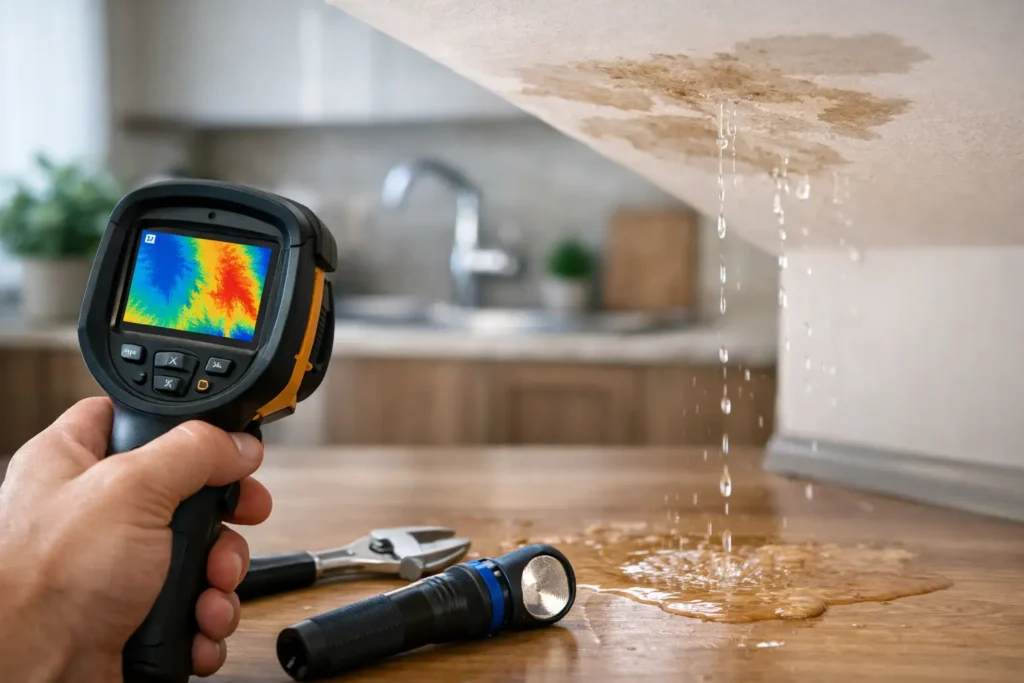
A water leak does not have to leave a puddle in the middle of the floor to cause real damage. A slow drip behind a wall, under a slab, or beneath a bathroom vanity can raise your water bill, weaken building materials, and create the damp conditions mold needs to grow. Knowing how to find hidden water leaks early gives you more options and may turn a major repair into a straightforward service call.
The goal is not to open walls at the first suspicious stain. It is to narrow down where the water is going, rule out simple causes, and know when the evidence calls for professional leak detection.
Start With the Water Meter Test
Your water meter can tell you whether water is moving through the plumbing when nobody is using it. This is one of the most useful checks for a hidden leak because it can reveal a problem before visible damage appears.
First, make sure all water use is stopped. Turn off faucets, avoid running the dishwasher or washing machine, and do not use toilets during the test. If your home has an ice maker, irrigation system, or water treatment equipment, account for those as well. Even a small automatic refill cycle can affect the result.
Find the water meter, record the reading, and wait 30 to 60 minutes without using water. Some meters have a small leak indicator that spins or moves when water is flowing. If the indicator moves or the reading changes, water is likely being used somewhere in the system.
A positive meter test does not identify the exact source. It does, however, tell you the issue deserves a closer look. In a condo, apartment, or commercial building, meter access and shared plumbing can make this test less clear. A property manager or licensed plumber may need to help isolate the affected line.
Check the Most Common Hidden Leak Sources
Most concealed leaks begin at common fixtures, connections, or appliances. Start with the places you can inspect without removing finishes. Take your time and use a flashlight. Dampness, corrosion, mineral buildup, or a musty smell can all be useful clues.
Toilets Can Leak Without Making a Sound
A toilet that runs occasionally is one of the most common sources of wasted water. The problem is often a worn flapper that allows water to pass from the tank into the bowl. Because the water stays inside the fixture, there may be no puddle at all.
Add a few drops of food coloring to the toilet tank and wait about 15 minutes without flushing. If color appears in the bowl, the flapper or flush valve is leaking. This repair is often simple, but the toilet should also be checked around its base. Soft flooring, staining on the ceiling below, or a sewer-like odor may point to a failed wax ring or drain connection rather than a tank leak.
Look Under Sinks and Behind Appliances
Open every sink cabinet and feel around supply valves, shutoff connections, drain traps, and the bottom of the cabinet. A slow leak may leave a swollen cabinet base, a white or green crust on metal fittings, or a dark ring around a pipe opening.
Next, inspect the water heater, dishwasher, refrigerator water line, washing machine hoses, and any filtration equipment. Water heater leaks may show up as moisture around the base, rust near fittings, or water from the temperature and pressure relief valve. A small amount of condensation can be normal in certain conditions, but repeated pooling is not.
With washing machines, pay close attention to hoses and shutoff valves. Hoses can weaken with age, and a leak may only happen when the machine is filling or draining. If the area behind an appliance is difficult to reach, look for water marks on nearby walls, flooring changes, or moisture at the edge of the room.
Test Outdoor Fixtures and Irrigation
Outdoor faucets, hose connections, underground irrigation lines, and pool equipment can also cause a meter to move. Check hose bibs for drips and inspect nearby soil for unusually green patches, persistent mud, or a sinking area. In dry weather, a strip of greener grass can be a clue that an underground line is leaking.
If you have irrigation, turn it off at the controller and repeat the meter test. Some systems have separate shutoff valves that allow a plumber to isolate the irrigation line from the indoor plumbing. This step can save time and prevent unnecessary investigation inside the home.
Watch for Clues Inside Walls, Floors, and Ceilings
Hidden water leaks often announce themselves through changes in the building, not through a visible stream of water. A fresh stain on a ceiling below a bathroom is a strong warning sign, but less obvious clues matter too.
Pay attention to peeling paint, bubbling drywall, warped baseboards, cracked or loose tile, soft spots in flooring, and a persistent musty odor. Wood floors may cup or buckle when moisture gets underneath them. Vinyl or laminate flooring can separate at seams. On walls, discoloration may appear yellow, brown, or gray depending on the material and how long it has been wet.
Do not assume every stain is an active plumbing leak. Roof leaks, window failures, condensation, and exterior drainage problems can create similar symptoms. The location and timing help separate the possibilities. A stain that worsens after a shower points toward plumbing. One that appears after heavy rain may be related to the building exterior.
If you see mold growth, treat it as a moisture warning rather than just a cleaning problem. Cleaning the surface without stopping the water source allows the issue to return and can leave hidden damage in place.
Use Simple Isolation Tests to Narrow It Down
Once you know the meter is moving, isolation can help determine whether the leak is on a specific fixture line, in the main supply, or related to a water-using appliance. Turn off individual fixture valves where practical, then repeat the meter test. For example, you can shut off the toilet supply, water heater, or washing machine valves one at a time.
If turning off a fixture stops the meter movement, you have narrowed the search considerably. If the meter continues to move with accessible fixtures isolated, the leak may be in a concealed supply line, under the floor, or underground between the meter and the building.
Be careful with older shutoff valves. A valve that has not been operated for years may drip or fail when turned. If it feels seized, heavily corroded, or fragile, do not force it. A plumber can isolate the line safely and replace unreliable valves at the same time.
When a Hidden Leak Needs Professional Detection
Some leaks cannot be found accurately with a visual check alone. This is especially true for leaks behind finished walls, under concrete slabs, in ceilings, or within larger commercial plumbing systems. Cutting into walls based on a guess can create needless disruption and still miss the source.
Professional leak detection uses targeted methods such as moisture readings, thermal imaging, acoustic listening equipment, pressure testing, and pipe tracing. The right method depends on the building, pipe material, access, and symptoms. A pinhole leak in a copper line may sound different from a failed drain fitting, while a leak beneath a slab requires a different approach than one in a second-floor bathroom wall.
Call for help promptly if you notice a rapidly rising water bill, warm spots on the floor, water stains that spread, recurring mold, low water pressure, or a meter that continues moving after all normal water use is stopped. Shut off the main water supply if water is actively entering the home or threatening electrical equipment, finishes, or belongings.
For property managers, quick action matters even more. A leak in one suite can affect neighboring units, common areas, and building systems. Document visible conditions, notify affected occupants, and arrange qualified service before moisture travels farther than it first appears.
Avoid These Costly Mistakes
Do not ignore a small unexplained increase in water use for months. Slow leaks are often the ones that damage cabinets, subfloors, insulation, and drywall before anyone sees them. Also avoid using chemical drain cleaners to solve suspected leaks. They address clogs, not failed pipes or fittings, and can make plumbing repairs more difficult.
It is also wise not to patch over stains, caulk around a leaking pipe, or replace a ceiling section before the source has been confirmed. Cosmetic repairs can hide the evidence while moisture continues behind the surface. The right repair starts with finding the actual path of the water.
A hidden leak is frustrating, but it is usually manageable when you act on the first signs. Keep an eye on your water bill, trust changes in your home, and arrange a professional inspection when the meter or moisture clues do not add up. A careful diagnosis protects the part of your property you can see and the plumbing behind it.