A sprinkler system, boiler, commercial dishwasher, or irrigation line can be working perfectly and still create a risk to your drinking water. If water pressure changes suddenly, water from one of those systems can move in the wrong direction. Backflow prevention testing verifies that the device designed to stop that reversal is working when it matters.
For homeowners, landlords, and facility managers, this is not just another maintenance item. It is a practical safeguard for the water used for drinking, cooking, bathing, and cleaning. A proper test also helps identify a failing device before it becomes a compliance issue, a water-quality concern, or an unexpected repair.
What Backflow Is and Why It Happens
Backflow occurs when water flows opposite its intended direction, potentially allowing non-potable water to enter a clean water supply. This can happen through backpressure or backsiphonage.
Backpressure happens when pressure on the property side of a plumbing system becomes greater than pressure in the public water supply. Pumps, boilers, heating equipment, and certain commercial processes can create this condition. Backsiphonage happens when supply pressure drops, such as during a water main break, firefighting activity, or heavy demand on the system. That pressure drop can pull water backward through an unprotected connection.
The concern depends on what is connected to the line. A garden hose left in a pool, a chemical dispensing system, a fire sprinkler line, or an irrigation system may contain water that should never enter a drinking-water pipe. A backflow preventer is installed at cross-connections to keep those systems separated.
How Backflow Prevention Testing Works
A backflow assembly contains internal check valves, shutoff valves, springs, and, depending on the device, a relief valve. These parts are built to allow water to move in one direction while stopping reverse flow. Like any mechanical equipment, they can wear out, stick, corrode, leak, or fail to seal tightly.
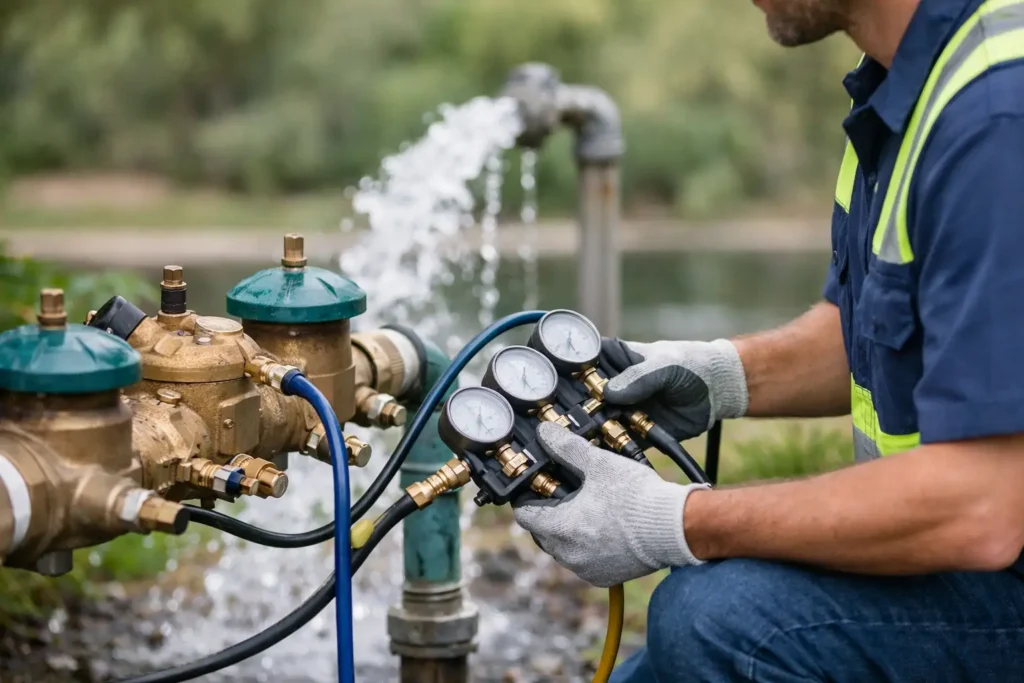
During backflow prevention testing, a qualified tester uses calibrated gauges to measure pressure and confirm that each check valve and relief component operates within its required range. The tester isolates the assembly, connects the equipment to test ports, and follows a set procedure for that device type.
This is more than a quick visual inspection. An assembly may look fine from the outside while an internal valve is failing. The test provides a documented result: pass, fail, or repair required. If the device fails, the technician can explain whether it needs cleaning, replacement parts, a full rebuild, or replacement of the assembly itself.
Testing may briefly interrupt water service to a portion of the building. In a larger property, scheduling the work at a lower-use time can reduce disruption for tenants, staff, or customers.
Common devices that require testing
The type of backflow assembly depends on the level of hazard and the plumbing application. Pressure vacuum breakers are often used for irrigation. Double check valve assemblies may protect lower-hazard systems. Reduced pressure principle assemblies are commonly selected where there is a higher health hazard because they include a relief valve for added protection.
The right device is determined by the connection, local requirements, and the potential risk to the potable water system. It is not a situation where one device fits every property.
Who Needs Backflow Prevention Testing?
Commercial and multi-unit properties are the most common candidates because they often have fire protection, irrigation, mechanical systems, commercial kitchens, boilers, or specialized equipment. Schools, offices, restaurants, warehouses, medical facilities, apartment buildings, and government buildings may all have testable assemblies.
Residential properties may need testing too. Homes with underground irrigation, a fire sprinkler system, a boiler, a pool fill connection, or other cross-connections can have a backflow device installed. If you recently purchased a property, renovated plumbing, added irrigation, or received a notice from the water provider, it is worth confirming what assembly is present and what maintenance it requires.
The testing schedule is usually set by the local water authority or jurisdiction. Annual testing is common for many assemblies, but requirements can vary by device type, property use, and local regulations. A property manager should not assume that a device only needs attention when it leaks. Staying ahead of the deadline is usually easier and less disruptive than responding after a notice arrives.
Signs Your Backflow Device May Need Attention
A required annual test is reason enough to book service, but some symptoms deserve faster attention. Water dripping from a reduced pressure assembly’s relief valve can indicate a problem inside the device. Visible corrosion, a damaged valve, a missing test-port cap, or water around the assembly should also be checked.
Changes in water pressure can have several causes, so they do not automatically point to a backflow issue. Still, if pressure changes occur near the device or after irrigation, heating, or mechanical equipment is used, a professional inspection is sensible. Do not try to bypass, cap, or remove a backflow preventer to stop a leak. That can create a bigger safety problem and may violate local requirements.
Cold weather is another concern in areas that experience freezing temperatures. Exterior assemblies and irrigation devices need proper seasonal shutdown or protection. A frozen assembly can crack, leak, and fail its next test.
What Property Owners Should Do Before the Test
A little preparation helps the appointment go smoothly. Make sure the tester can reach the assembly, whether it is in a mechanical room, parking area, utility closet, exterior enclosure, or landscaping area. Remove stored items, keep pets away from the work zone, and let building occupants know if there may be a short water interruption.
For managed properties, keep prior test reports and repair records on file. They can help identify repeat failures and show whether an aging assembly is becoming more expensive to maintain. If a water authority requires a report submission, confirm who is responsible for filing it. Some testing providers handle the documentation, while others provide the completed report for the owner or manager to submit.
It also helps to ask clear questions before approving repairs: What failed? Is a rebuild practical? Are replacement parts available? Will the repair require a follow-up test? Straight answers make it easier to balance cost, reliability, and downtime.
Repair or Replace? The Practical Decision
Many failed backflow preventers can be repaired with replacement checks, rubber components, springs, or relief-valve parts. Repair is often a sensible option when the assembly body is in good condition and approved parts are readily available.
Replacement may be the better value when the device is heavily corroded, repeatedly fails, has been damaged by freezing, or uses obsolete parts. Access also matters. An assembly installed in a cramped or poorly protected location can make every future repair more difficult. In some cases, improving the installation at the same time as replacement can save frustration later.
A licensed plumbing professional can test the device, explain the result in plain language, and provide a clear recommendation based on the assembly’s condition. For Vancouver-area homes and buildings, Encano Plumbing & Drainage Ltd. can help coordinate testing, repairs, and practical maintenance planning with minimal interruption.
Keep Protection on Schedule
Backflow protection does its job quietly, so it is easy to overlook until a notice arrives or a device starts leaking. Put the next testing date in your property maintenance calendar, keep the report with your building records, and address failures promptly. That small bit of planning helps protect the water your household, tenants, employees, and customers rely on every day.