
A backed-up floor drain during lunch service. No hot water in a multi-tenant office on a Monday morning. A sewer smell in a clinic waiting area that staff can't ignore anymore. Those aren't small maintenance issues. In a commercial building, plumbing failures interrupt revenue, create safety problems, frustrate tenants, and put managers under pressure fast.
That's why commercial plumbing has to be treated as building infrastructure, not as a series of one-off repairs. In Vancouver, a commercial system has to handle heavier use, stricter compliance demands, and more complicated equipment than a house ever will. It also has to stay reliable while people are working, customers are visiting, and inspectors may need records or proof of testing.
The scale of the trade shows why this work isn't casual. IBISWorld projects $191.4 billion in revenue for U.S. plumbing contractors in 2026, with 129,000 plumbing businesses and a 3.1% CAGR over the previous five years in that broader market, which reflects how large and specialised this field has become (IBISWorld plumbing industry data). For a Vancouver property manager, the practical takeaway is simple. Contractor selection matters because commercial plumbing is a high-complexity trade from estimating through execution.
Table of Contents
- Your Business Runs on Water and Your Plumbing System
- How Commercial Plumbing Differs from Residential Systems
- An Overview of Essential Commercial Plumbing Services
- Navigating Plumbing Codes and Compliance in Greater Vancouver
- Diagnosing Common Problems with Modern Plumbing Technology
- Building a Proactive Maintenance Plan to Prevent Emergencies
- How to Choose Your Commercial Plumber in Vancouver
Your Business Runs on Water and Your Plumbing System
Commercial buildings depend on plumbing in ways many new managers don't realise until something fails. Washrooms need to stay open. Kitchens need drainage that keeps moving. Tenants expect hot water, working sinks, and no leaks above the ceiling grid. If one part of the system goes down, the problem often spreads into other parts of the business.
A restaurant is the clearest example. If the floor drain backs up during dinner service, staff can't just work around it for long. Slip hazards increase, odours spread, and the kitchen starts losing time dealing with a facilities problem instead of serving customers. The same pattern shows up in offices, schools, warehouses, and strata buildings. Plumbing affects continuity.
It's not just bigger pipe
Residential plumbing is built around lighter use and simpler layouts. Commercial plumbing has more fixtures, longer pipe runs, more users, more code obligations, and more consequences when something goes wrong. A single repair may also involve tenants, janitorial teams, building engineers, and after-hours scheduling.
That changes how the work should be approached:
- Diagnosis first: Guesswork wastes time in occupied buildings.
- Access planning: Repairs often need to happen without shutting down a whole floor.
- Documentation: Managers need service records, not just verbal updates.
- Compliance awareness: A fix that works mechanically still fails if it creates a code issue.
Practical rule: In commercial plumbing, the cheapest repair on day one is often the most expensive decision by month three if it ignores root cause.
What matters in Vancouver
In Greater Vancouver, many properties combine older infrastructure with modern usage demands. A renovated café may still connect to aging drain lines. An office upgrade may add touchless fixtures and new washrooms without fully correcting legacy piping issues. That mismatch is where recurring problems start.
The right commercial plumber looks at the whole system. That means asking how the building is used, when downtime is acceptable, what compliance obligations apply, and whether the current plumbing layout still matches the occupancy. If you're managing a business, strata, or mixed-use property, that systems view is what keeps a small issue from turning into an operational one.
How Commercial Plumbing Differs from Residential Systems
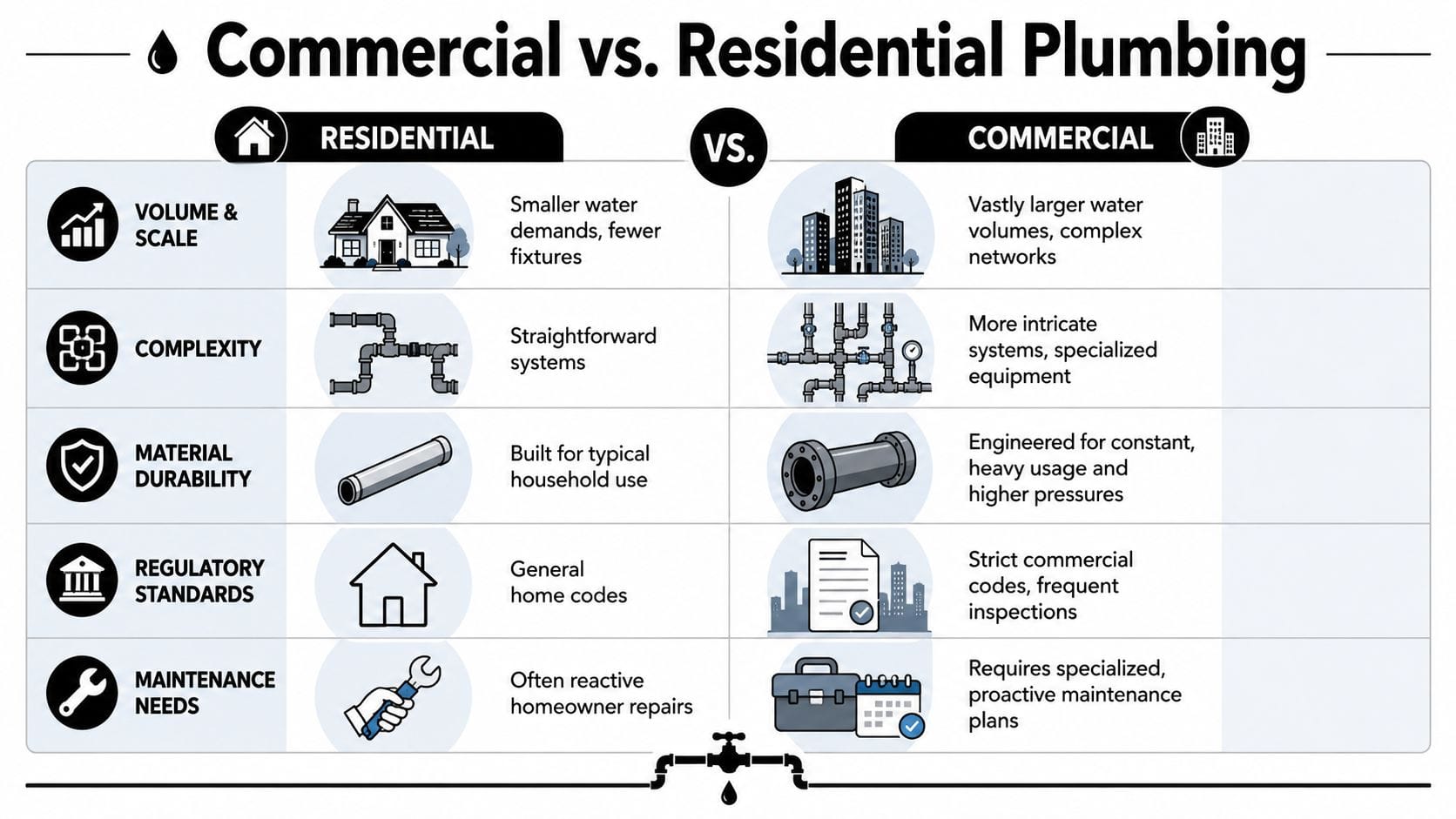
A house plumbing system is like a local street. It serves a limited number of users, traffic is predictable, and a short disruption is inconvenient. A commercial plumbing system is closer to a multi-lane route through a busy district. More traffic, more pressure, tighter rules, and less room for mistakes.
Scale changes everything
The first difference is use volume. In a home, fixture demand is spread across a small number of people. In a commercial building, dozens or hundreds of users may hit the system over a short period. That affects supply sizing, drainage behaviour, fixture selection, and maintenance frequency.
A simple example is a washroom bank in an office or retail site. A toilet that works fine in a house won't hold up the same way under constant public use. Flush valves, carriers, partitions, trap sizing, shutoffs, and access all need to be chosen for serviceability and durability, not just appearance.
The system is more complicated than it looks
Commercial plumbing also includes equipment and connections that many owners don't see directly:
- Backflow assemblies tied to potable water protection
- Grease management for food service operations
- Commercial water heaters or boiler-linked hot water systems
- Drainage across multiple storeys with venting and coordination concerns
- Accessibility-driven fixtures and layouts in public washrooms
A handyman can replace a faucet. That doesn't mean they should diagnose pressure imbalance across a tenant improvement, evaluate a recurring branch clog, or decide whether a new fixture package fits the building's existing system.
In commercial buildings, plumbing decisions are rarely isolated. One fixture change can affect maintenance access, water use patterns, occupant experience, and code compliance.
Materials and maintenance aren't the same either
Residential systems are often repaired reactively. Commercial systems need planning. The reason is simple. When a fixture fails in a house, one family adjusts. When a fixture fails in a restaurant, school, or clinic, operations are affected immediately.
What works in commercial settings is a maintenance mindset built around inspection, recordkeeping, and wear patterns. What doesn't work is waiting for repeated stoppages, leaks, or temperature complaints before looking deeper. Heavy usage exposes weak installation details fast, especially in public and shared-use spaces.
An Overview of Essential Commercial Plumbing Services
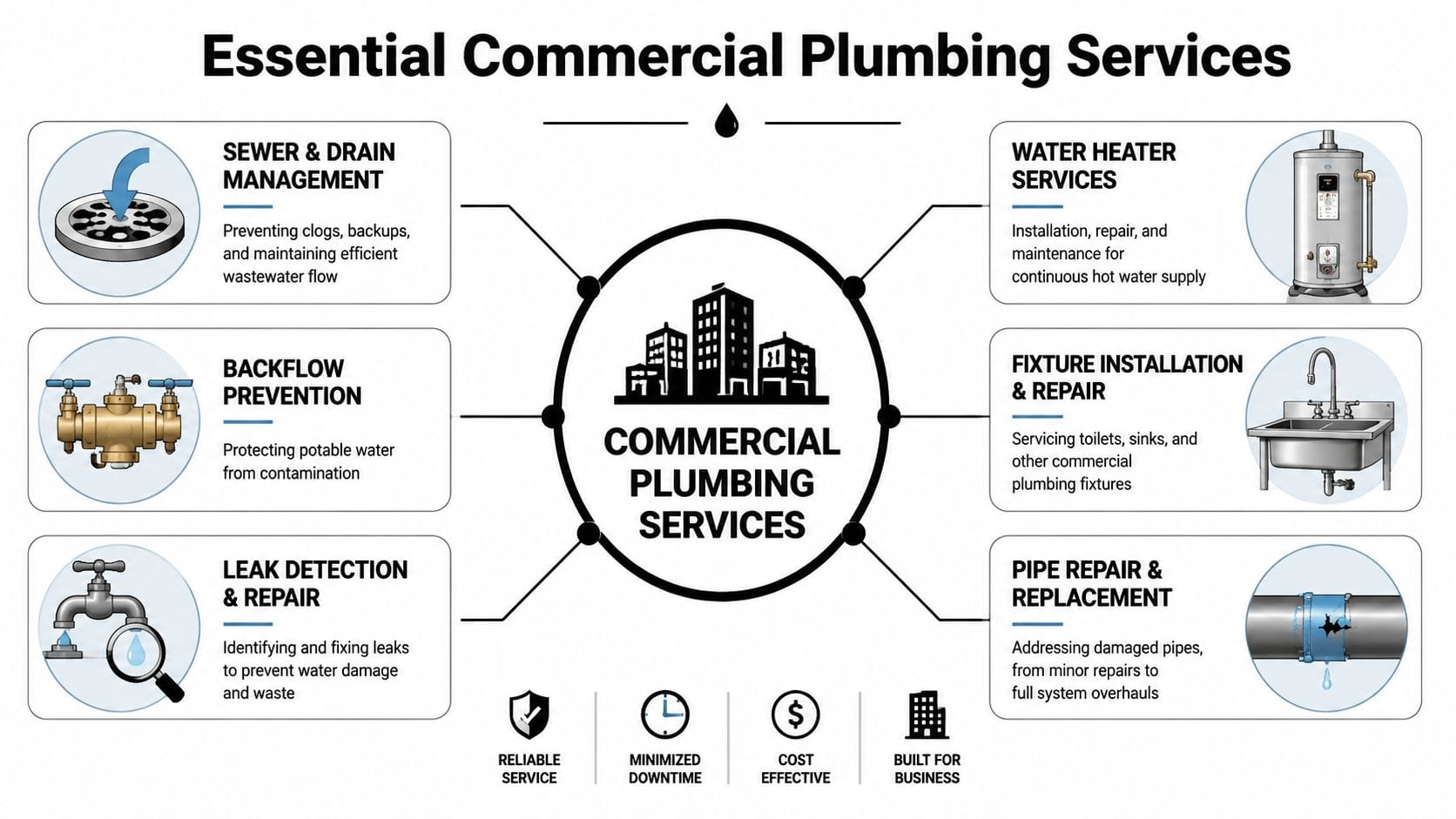
Service lists don't help much unless they're tied to business risk. A property manager needs to know what each service protects. In commercial plumbing, the answer is usually one of three things: uptime, compliance, or containment of damage.
This visual gives a quick view of the main categories involved.
Drain and sewer work that protects operations
Drainage problems are among the most disruptive issues in commercial buildings because they usually show up while people are using the space. Slow floor drains in a restaurant prep area, repeated washroom backups in a strata common area, or standing water near a service sink all point to a system that needs more than a quick auger.
For a Vancouver strata property, hydro-jetting and camera inspection are often paired for a reason. Jetting clears accumulated grease, sludge, and debris. Video inspection shows whether the problem is buildup, a sag, root intrusion, or a damaged section that keeps catching waste. If a line has reached the point where excavation would disrupt access or finished surfaces, a manager may need to compare repair methods with options like trenchless sewer line repairs for commercial properties.
A practical example is an older mixed-use building with repeated lower-level backups after busy weekends. Snaking may restore flow temporarily. It won't tell you whether the branch line is holding solids because of a physical defect. That distinction matters.
A short walkthrough of common service categories helps:
- Sewer and drain management: Best for restaurants, strata buildings, and retail sites that can't afford recurring backups.
- Grease trap service: Critical in food service where kitchen discharge has to be managed before it creates internal or municipal problems.
- Fixture repair and replacement: Important in offices, schools, and public buildings where one failed flush valve or sensor tap becomes a tenant complaint quickly.
A visual explanation can help if you're comparing categories with your maintenance list.
Water, heat, and fixture systems that people notice immediately
Hot water failures create instant complaints because occupants feel them right away. In a gym, hotel, salon, or healthcare setting, poor hot water performance is more than a nuisance. It can affect hygiene routines, customer experience, and scheduling.
Commercial plumbers deal with storage tanks, tankless setups, recirculation issues, tempering concerns, isolation valves, and heat source coordination. In some buildings, plumbing also intersects with HVAC and mechanical rooms, which means troubleshooting has to account for more than one system.
Fixture upgrades matter too. A washroom renovation in an office tower isn't just a design project. The plumber has to consider accessibility, cleaning access, vandal resistance, shutoff access, and whether the existing rough-in arrangement will support the new fixtures without creating service headaches later.
Protection devices and repairs that prevent bigger losses
Backflow prevention is one of those services many managers think about only when a test is due or a report is missing. In practice, it's a core water safety issue. A healthcare clinic, food premises, or commercial building with irrigation, boilers, or specialised equipment may require assembly testing and maintenance to protect potable water.
Leak detection sits in the same category of low-visibility, high-impact work. A small leak in a wall cavity, slab, or ceiling space can damage finishes, affect tenants, and trigger mould concerns before anyone sees active dripping. This is where modern tools matter. Encano Plumbing & Drainage Ltd. provides commercial plumbing, drainage, leak detection, sewer inspection, water heating, and related building services for Vancouver-area properties, including work that helps isolate problems with less disruption.
Pipe repair and replacement decisions also need context. Spot repair works when the defect is localised and the surrounding pipe is sound. It doesn't work when a building has repeated failures across aging sections, poor prior renovations, or access conditions that make repeated reactive openings more disruptive than planned replacement.
Navigating Plumbing Codes and Compliance in Greater Vancouver
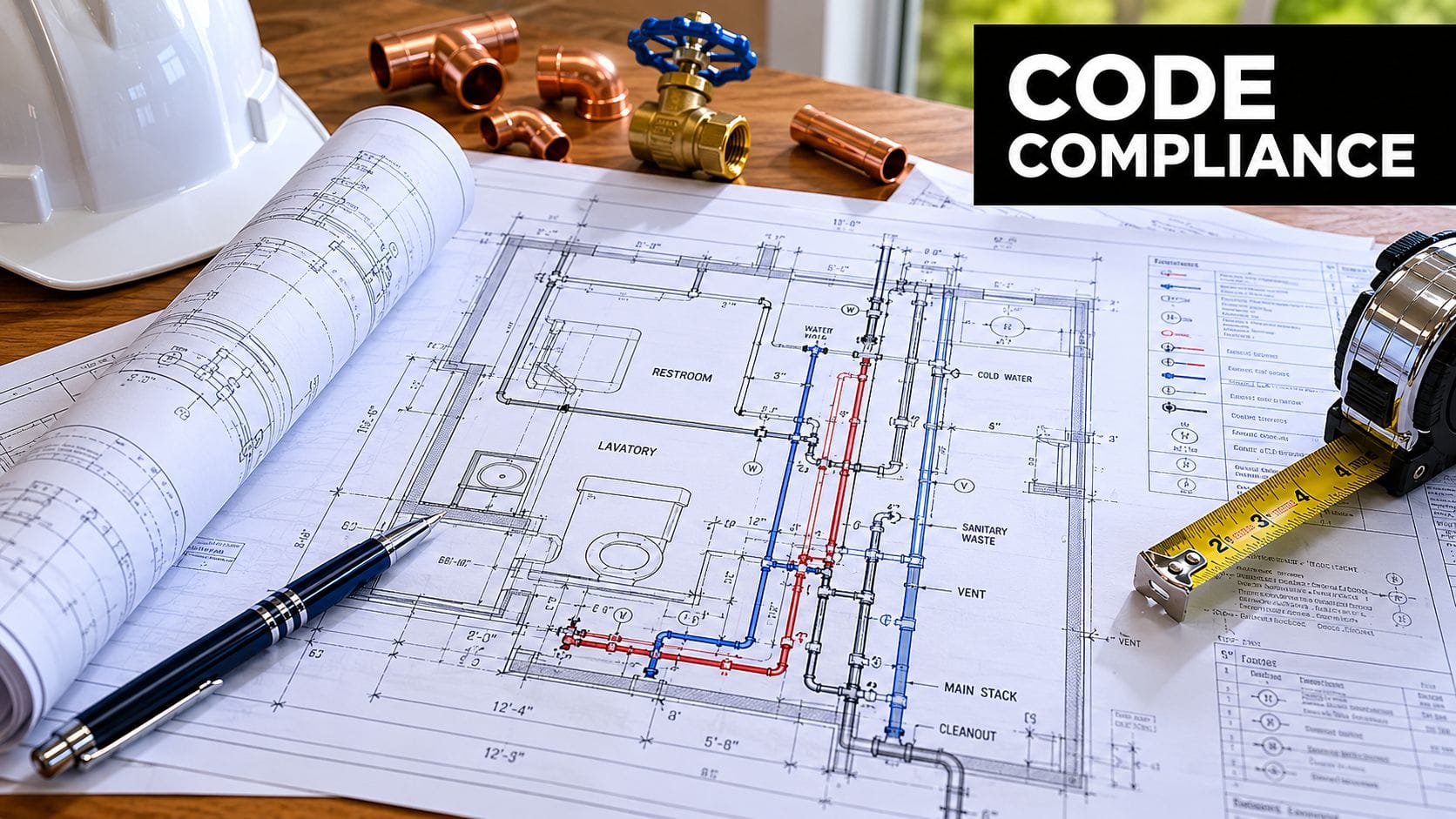
A commercial plumbing system has to do more than function. It has to satisfy code, suit the occupancy, and stand up to inspection or incident review. That's where many new managers get caught. A repair can look finished and still leave the building exposed if the fixture choice, device testing, or installation detail doesn't align with the rules that apply.
Why code affects day-to-day operations
Commercial standards in BC are stricter than residential ones because these buildings have higher use, more wear, and greater contamination risk. Guidance on commercial specifications notes that fixture decisions need to account for durability, accessibility, vandal resistance, and total cost of ownership, and that standards such as CSA, ASME, and WaterSense are mandatory where adopted (commercial plumbing standards guidance referenced here).
For a facility manager, that changes purchasing decisions. The lowest-cost faucet or toilet isn't necessarily the right one if it fails under heavy use, creates accessibility issues, or doesn't meet the adopted standard for the application. In offices, restaurants, schools, and healthcare spaces, compliance and lifecycle performance belong in the same conversation.
Where managers get caught off guard
Most compliance trouble starts in routine situations, not major projects. A tenant improvement adds fixtures without fully considering drain capacity. A replacement device is installed without matching the approved use. A backflow assembly is physically present but testing records are incomplete. A restaurant keeps the kitchen running while grease management slips until odours or slow drainage show up.
The practical way to reduce risk is to track plumbing as an operational file, not as scattered invoices. Keep service records, test dates, fixture specs, and repair notes in one place.
A useful working checklist looks like this:
- Know the occupancy requirements: A clinic, restaurant, office, and school don't present the same risks.
- Confirm approved products: Public and high-use spaces need fixtures suited to code and abuse conditions.
- Schedule test-based compliance items: Don't wait for reminders to look for records.
- Review renovations carefully: Small layout changes can create bigger drainage or accessibility issues.
If a plumbing component affects potable water, public washroom access, or sanitary drainage, treat it as a compliance item first and a maintenance item second.
Diagnosing Common Problems with Modern Plumbing Technology
Commercial plumbing problems usually don't announce themselves neatly. A tenant reports a sewer odour only in the afternoon. Staff mention that hot water swings from warm to cold. A lower-level unit gets another backup after the line was “cleared” recently. The mistake is treating each symptom as separate before confirming what the system is doing.
What older methods get wrong
The old approach was often guess, open, test, and hope. That can still happen in buildings where nobody wants to invest in proper diagnostics. The result is familiar. Walls get opened without locating the leak accurately. Drains are snaked repeatedly without checking the line profile. Parts get replaced because they are easy to reach, not because they are proven to be the problem.
One common issue in older commercial buildings is a drain line that never had the right fall, or lost effective slope after changes and repairs. Plumbing code principles place the minimum slope for many commercial drainage lines at 1/4 inch per foot, and deviations can lead to solids settlement and chronic blockages (commercial drainage code principles). That's exactly the kind of defect a building can live with for years while suffering repeat stoppages.
What modern diagnostics do better
Modern tools let plumbers confirm location, condition, and likely cause before they start tearing into finishes.
- Video camera inspection: Useful for recurring clogs, suspected breaks, offset joints, and low spots in buried or concealed drains.
- Acoustic leak detection: Helps isolate hidden water leaks under slab or behind walls without opening every possible area.
- High-pressure hydro-jetting: Clears grease, sludge, and scale more thoroughly than a basic cable in the right application.
- Targeted leak investigation: A modern process reduces unnecessary demolition and gives the manager a clearer repair plan. A good example is the kind of approach described in modern commercial leak detection methods.
A practical example is a retail unit with a recurring grease-related branch clog. Snaking may punch a temporary hole through the blockage and restore flow for a short time. Jetting cleans the full internal wall of the pipe more effectively, and a camera can confirm whether the line is dirty or structurally compromised.
The right diagnostic tool doesn't just find the problem. It tells you whether a quick repair is reasonable or whether the building is heading toward repeated downtime.
Building a Proactive Maintenance Plan to Prevent Emergencies
Emergency plumbing is expensive in ways that don't always appear on the invoice. You pay in disruption, tenant frustration, scheduling chaos, cleanup, and rushed decision-making. A maintenance plan changes the timing. It lets you inspect and service the system while the building is still calm.
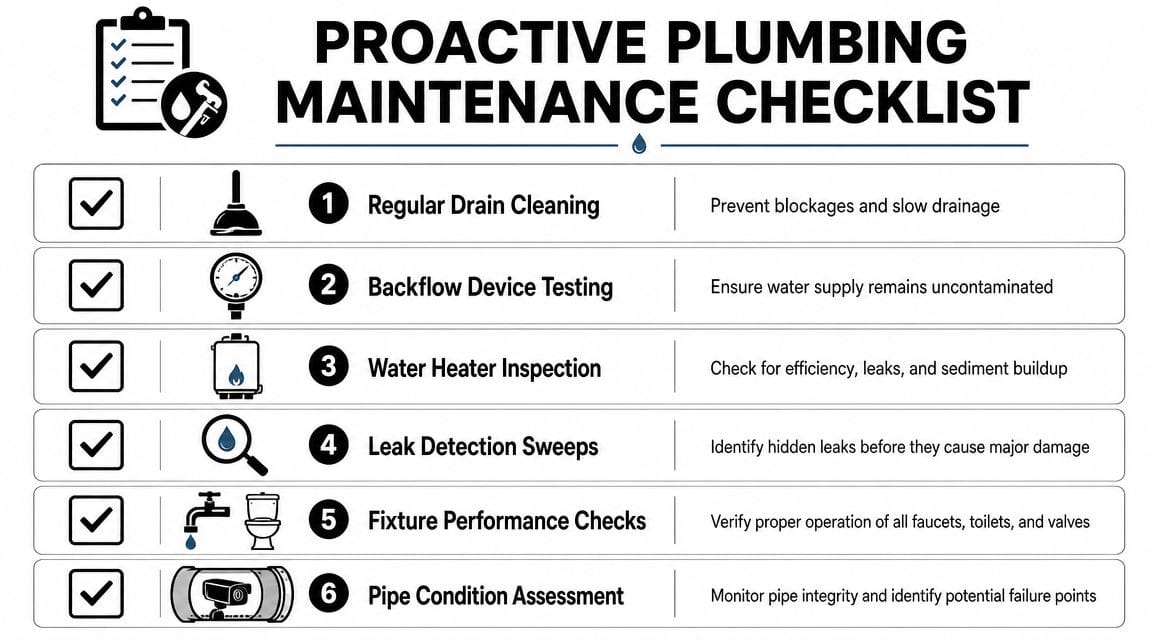
What should be on the schedule
A useful commercial plumbing plan is built around the building's risk points, not a generic template. A restaurant needs a different schedule than an office or warehouse, but the structure is similar.
Include these core items:
- Drain cleaning at intervals that match actual use: High-grease and high-solids sites usually need closer attention than standard office space.
- Backflow device testing and recordkeeping: This protects potable water and helps avoid compliance problems.
- Water heater and hot water system inspections: Look for performance drift, leaks, isolation issues, and wear before users complain.
- Leak detection sweeps in vulnerable areas: Mechanical rooms, slab zones, washroom groups, and tenant improvement areas deserve attention.
- Fixture checks: Flush valves, sensor taps, shutoffs, and supply stops fail gradually before they fail completely.
- Pipe condition review: If a building has a history of backups or leaks, periodic camera work can be more useful than repeated emergency calls.
A practical example
Take a Main Street restaurant with a busy kitchen and one customer washroom. If the owner waits for slow drainage, grease odour, or a floor sink backup, the call will come during service. If the owner keeps grease trap service, drain cleaning, and fixture checks on a schedule, the plumbing work happens during planned access windows.
That's the primary business case. Preventive maintenance isn't extra plumbing work. It's operational risk control.
How to Choose Your Commercial Plumber in Vancouver
Commercial plumbing contractors aren't interchangeable. Some are set up for houses and occasional small commercial calls. Others can handle occupied buildings, testing requirements, after-hours work, documentation, and specialised diagnostics. If you manage a property, you need to know which type you're hiring before the first emergency happens.
Questions worth asking before work starts
Start with licensing, insurance, and whether the contractor is accustomed to your property type. A restaurant, high-rise, school, and mixed-use building all create different plumbing demands.
Then ask practical questions that reveal how they work:
- What kinds of commercial properties do you service most often? Experience should match your occupancy.
- Do you handle diagnostics in-house? Camera inspection, acoustic leak detection, and jetting reduce guesswork.
- Can you manage compliance-related work? Backflow testing, documentation, and code-aware fixture replacement matter.
- How do you plan repairs in occupied spaces? Access, shutdown windows, and communication make a big difference.
- What does pricing include? You want clarity on diagnosis, repair scope, materials, and follow-up recommendations.
If you want a baseline for credential questions, this guide on hiring a licensed plumber in Vancouver is a useful reference point for what to verify.
Checklist for vetting a commercial plumber
| Qualification | What to Ask | Why It Matters |
|---|---|---|
| Licensing and trade credentials | Are you licensed for the work being proposed? | Confirms the contractor is qualified for regulated plumbing work. |
| Insurance and WorkSafeBC coverage | Can you provide proof of insurance and current coverage? | Protects the property owner or manager from avoidable liability exposure. |
| Commercial property experience | Have you worked on buildings like ours before? | Commercial systems vary widely by occupancy and usage pattern. |
| Diagnostic capability | Do you use sewer cameras, acoustic leak tools, and hydro-jetting where appropriate? | Better diagnostics reduce unnecessary demolition and repeated failures. |
| Compliance knowledge | Do you handle backflow testing, records, and code-aware fixture replacement? | Mechanical success alone isn't enough if the building remains non-compliant. |
| Emergency response planning | What happens if we have a failure after hours? | Response process matters when tenants or operations are affected. |
| Scope clarity | Will you provide a written scope and explain repair versus replacement options? | Clear scope reduces confusion and helps with budgeting. |
| Communication process | Who updates the manager during active work? | Occupied buildings need coordination, not just technical work. |
The strongest commercial plumber is usually the one who asks good questions before touching a tool. They want fixture counts, usage patterns, past failures, access restrictions, and compliance history. That's a good sign. It means they're trying to solve the right problem, not just close the current ticket.
If you manage a commercial property in Vancouver, Richmond, Burnaby, New Westminster, Delta, Surrey, or nearby areas and need help with drainage issues, leak detection, hot water systems, fixture repairs, sewer inspection, or planned maintenance, contact Encano Plumbing & Drainage Ltd. for commercial plumbing support suited for occupied buildings and day-to-day operational needs.