
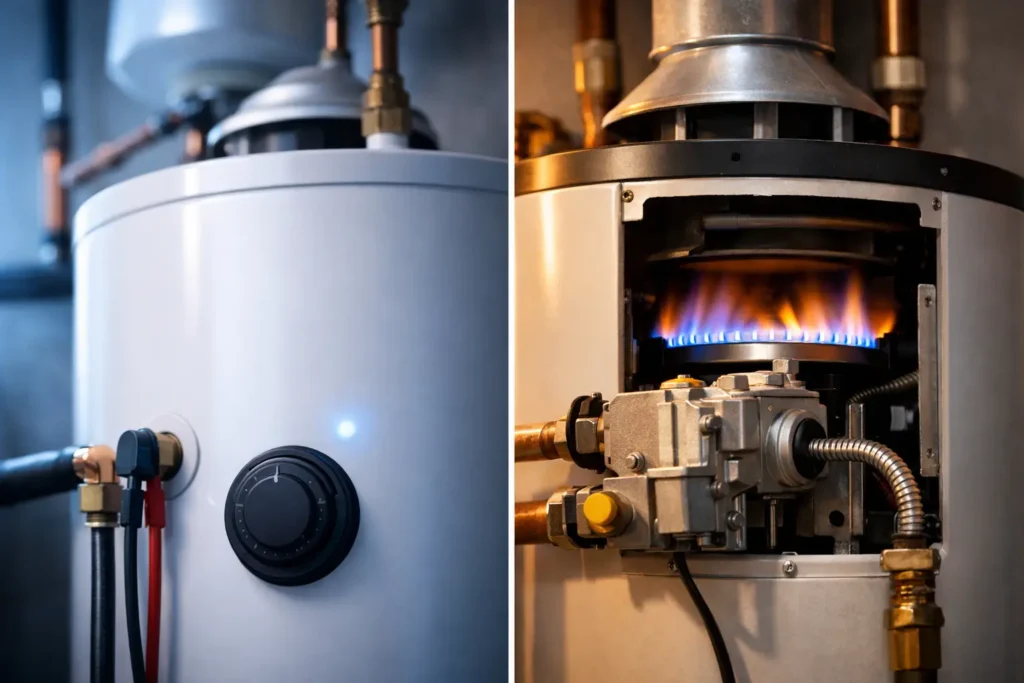
Running out of hot water during a morning rush usually turns a simple home upgrade into an urgent decision. When homeowners compare an electric vs gas water heater, they are usually trying to answer one practical question: which one will give reliable hot water without driving up costs or creating installation headaches?
The honest answer is that both can be a good fit. The better choice depends on your home, your utility setup, your hot water habits, and how long you plan to stay in the property. A water heater is not just an appliance on a spec sheet. It affects monthly bills, recovery time, maintenance needs, and even what kind of venting or electrical work your property can handle.
Electric vs gas water heater: the main difference
At the simplest level, electric water heaters use heating elements powered by electricity, while gas water heaters use a burner fueled by natural gas or propane. That sounds straightforward, but the real-world differences show up in operating cost, installation complexity, and performance during heavy use.
Electric models are usually simpler to install if the home already has the proper electrical capacity. They do not require gas piping or combustion venting, which can make placement easier in some buildings. Gas units often heat water faster and recover more quickly after multiple showers, but they need proper venting and safe gas connections.
For many households, the decision comes down to this: electric is often simpler and more efficient at the appliance level, while gas is often stronger on fast recovery and may cost less to run where natural gas rates are favorable.
Upfront cost vs long-term cost
Price is where many people start, but it helps to separate purchase price from total cost of ownership.
An electric tank water heater often has a lower installation cost, especially if your home is already set up for it. There is no vent to install, no burner assembly, and no gas line work if you are replacing an existing electric model. That can make the job faster and less disruptive.
A gas water heater may cost more to install because the work can involve venting upgrades, gas fittings, combustion air considerations, and code requirements. If the property does not already have a gas connection in the right location, installation costs can rise quickly.
Operating cost is where things can shift. In many areas, natural gas is less expensive than electricity for heating water, so a gas unit may have lower monthly utility costs. But that is not universal. Local utility pricing matters, and the gap can narrow or widen depending on rates.
If you are planning to stay in the property for years, monthly operating costs deserve more attention than sticker price alone. If you need a straightforward replacement with minimal installation work, upfront cost may carry more weight.
Performance in real households
Homeowners rarely care about heating technology in the abstract. They care about whether the water stays hot when two people shower back-to-back, the dishwasher is running, and laundry starts in the middle of it all.
This is where gas often has an edge. A traditional gas tank water heater usually recovers faster than a traditional electric tank model. That means it can reheat a depleted tank more quickly after heavy use. Larger families, shared households, and properties with high hot water demand often notice that difference.
Electric tank units are reliable, but they can be slower to recover. In a smaller home or condo with moderate hot water use, that may not matter much. In a busy household, it can become frustrating.
Tankless options change the conversation a bit. Both electric and gas tankless systems exist, but gas tankless models are often better suited for whole-home demand because they can produce higher flow rates. Electric tankless units can work well in smaller applications, point-of-use setups, or homes with lower simultaneous demand, but they may require significant electrical upgrades.
Efficiency is not the whole story
Electric water heaters are often described as more efficient, and that is technically true at the appliance level. Nearly all the electricity they use goes into heating water. Gas units lose some energy through venting and combustion.
But efficiency ratings do not always tell you what your bill will look like. If electricity is much more expensive than gas in your area, a highly efficient electric unit can still cost more to operate than a less efficient gas model.
This is why a good recommendation should never be based on efficiency labels alone. It should account for local utility rates, household demand, and the type of equipment being installed.
Installation factors that can make the choice for you
Sometimes the best water heater is simply the one that fits the building safely and affordably.
In an all-electric condo or apartment, a gas water heater may not be practical at all. The building may not have gas service available, and adding venting could be impossible or not allowed. In those cases, electric is the obvious choice.
In a detached home with existing gas service, replacing an older gas unit with a new gas model can make sense because the infrastructure is already there. The same goes for homes where owners want stronger recovery performance without changing usage habits.
Electrical capacity matters too. Some newer electric systems, especially tankless units, demand a lot of amperage. If the panel is already near its limit, the project may require electrical upgrades. That can erase the simplicity people often associate with electric equipment.
A professional installation also matters for safety. Gas systems need correct venting and combustion setup. Electric systems need proper wiring, breaker sizing, and grounding. Either way, shortcuts create problems that show up later as poor performance, nuisance shutdowns, or safety risks.
Maintenance and lifespan
Both electric and gas water heaters need maintenance, but the type of maintenance differs.
Electric tank water heaters generally have fewer mechanical parts. There is no burner or flue, which can make them simpler to maintain. Heating elements and thermostats can still fail, and sediment buildup inside the tank remains an issue, especially in areas with hard water.
Gas units add components such as burners, thermocouples, gas valves, and venting systems. That does not make them unreliable, but it does mean there are more parts to inspect and service over time.
In general, lifespan is fairly similar for standard tank models when they are properly installed and maintained. Water quality, usage patterns, and maintenance habits often have more impact than whether the unit is electric or gas.
What works best for different property types?
For condos, apartments, and smaller households, electric water heaters often make a lot of sense. They are compact, quiet, and usually easier to fit into buildings where venting options are limited.
For single-family homes with multiple bathrooms, gas is often appealing because of faster recovery. If several people use hot water in a short window, that extra performance can make daily life easier.
For landlords and property managers, the right choice often depends on what the building already supports. Standardizing equipment across units can simplify maintenance and replacement planning. At the same time, operating cost and tenant expectations still matter. A lower-cost installation is not always the better value if it leads to complaints about hot water availability.
For commercial or mixed-use properties, sizing and demand calculations become even more important. The wrong unit, whether gas or electric, will underperform if it is not matched to actual usage.
So which should you choose?
If you want the shortest version, choose electric if your property does not have convenient gas access, if you want a simpler installation, or if your hot water demand is moderate. Choose gas if your home already has gas service, if you have a larger household, or if fast recovery is a priority.
Still, there is plenty of room for gray areas. A small family in a gas-serviced home may still prefer electric for simplicity. A homeowner focused on lower utility bills may lean toward gas. A condo owner may not really have a choice at all.
That is why the best decision usually starts with the property, not the product. A water heater should fit the building, the people using it, and the budget for both installation and long-term operation. In homes around Vancouver and nearby areas, we often see people focus first on price and only later realize that venting, panel capacity, or household demand should have been part of the decision from the start.
If you are replacing a failing unit, this is one upgrade where a quick conversation with a licensed plumber can save a lot of guesswork. The right answer is not the same for every home, but the goal is always the same: safe installation, dependable hot water, and no surprises when the bill arrives or the shower turns cold.
When a water heater choice lines up with how your property actually works, you stop thinking about it – and that is usually a sign you picked the right one.