
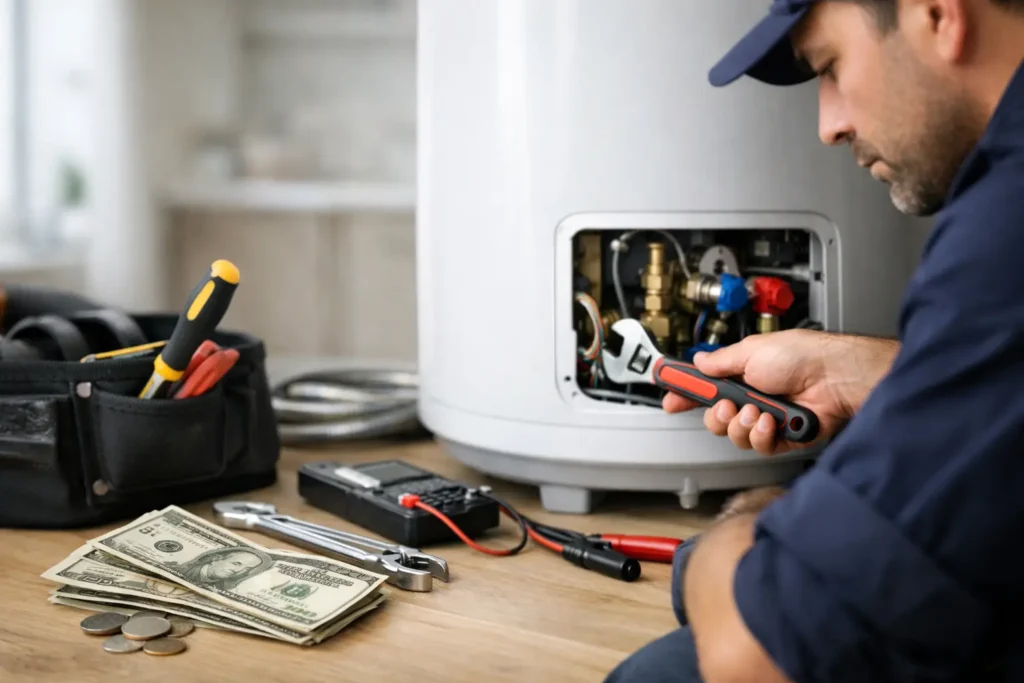
No one plans for a cold shower at 6 a.m. or a leaking tank in the utility room. When hot water suddenly stops working, the first question is usually simple: what will the water heater repair cost? The honest answer is that it depends on the type of heater, the failed part, how quickly service is needed, and whether the unit is still worth repairing.
For homeowners and property managers, cost matters, but so does making the right call. A cheap repair on an aging water heater can turn into a second service visit a month later. On the other hand, replacing a unit too early can mean spending thousands when a straightforward fix would have solved the problem. Knowing what drives the price helps you make a smart decision without guessing.
What affects water heater repair cost?
The biggest factor is the actual fault. Some problems are relatively minor, like a thermostat that is no longer regulating temperature correctly or a heating element that has burned out. Others are more serious, such as a gas control valve failure, a leaking tank, or internal corrosion that has already shortened the life of the unit.
The type of water heater also changes the repair approach. Conventional tank water heaters are usually simpler to diagnose and repair. Tankless models can be more efficient, but they also include more sensors, electronics, and venting components. That can mean more labor time and more expensive parts.
Age matters too. If your unit is eight to twelve years old and has started showing multiple issues, the repair may not deliver much value. If the water heater is fairly new and the problem is isolated, repair is often the better investment.
Labor rates, emergency timing, and access also influence price. A heater located in a tight crawl space or commercial mechanical room may take longer to inspect and repair than one in an open garage or basement. After-hours emergency service will usually cost more than a scheduled daytime visit.
Typical water heater repair cost by problem
Most repairs fall into a practical middle range, but the final invoice depends on parts and labor together.
For electric water heaters, replacing a thermostat or heating element is often one of the more affordable jobs. These repairs are common and usually do not require extensive disassembly. If the issue is caught early, the cost is often manageable compared with replacement.
For gas water heaters, repairs can become more variable. Pilot light problems may be straightforward if the issue is tied to a dirty component or thermocouple. But if the gas control valve has failed, the repair cost rises because the part itself is more expensive and proper testing is critical for safety.
Pressure relief valve replacements, minor leak repairs at fittings, and anode rod replacements are often moderate-cost repairs. These jobs can help extend the heater’s life, especially if the tank itself is still in solid condition.
Tankless water heater repairs often cost more than tank-style repairs. Ignition issues, flow sensor failures, descaling-related performance problems, or venting faults can take more time to diagnose. In many cases, regular maintenance could have prevented the breakdown, but once the unit is failing, the technician still needs to work through the system carefully.
A leaking tank is the turning point most owners do not want to hear about. If the actual tank body is leaking from corrosion or a split seam, that is generally not a repairable issue. At that point, the cost discussion shifts from repair to replacement.
Average price ranges homeowners can expect
While every service call is different, many basic water heater repairs land somewhere between $150 and $600. Mid-level repairs involving more expensive parts often fall between $300 and $800. Complex tankless repairs or gas valve-related repairs can go higher.
If replacement is being considered, that number changes quickly. A new water heater installation can cost substantially more than a repair, depending on unit type, size, venting, code upgrades, and labor. That is why diagnosis matters. Spending a service fee to confirm the actual issue can save you from making a rushed, expensive decision.
It is also worth asking whether the quoted repair includes testing, cleanup, disposal of failed parts, and any adjustments needed to get the system running safely again. A lower initial number is not always the better value if it does not cover the full scope of work.
When repair makes sense and when it does not
A repair usually makes sense when the unit is relatively new, the tank is sound, and the problem is limited to one replaceable part. This is especially true if the heater has otherwise been reliable and has received regular maintenance.
Repair becomes harder to justify when the unit is near the end of its expected service life, has visible rust, produces discolored hot water, or has needed several recent fixes. In that case, paying for one more repair may only delay the inevitable.
A useful rule of thumb is to compare the repair cost to the age and condition of the unit. If the repair is a large percentage of replacement cost and the heater is already older, replacement is often the more practical path. Not because repair is impossible, but because it may not be the best value for your property.
For landlords and facility operators, downtime is another part of the equation. A cheaper repair is not always cheaper if tenants remain without hot water or staff have to deal with another shutdown soon after. Reliability has value, especially in multi-unit or commercial settings.
Hidden factors that can raise the bill
The failed part is only one piece of the total cost. There may also be issues around installation quality, sediment buildup, venting, code compliance, or water pressure that contributed to the failure.
For example, if a tank water heater has never been flushed, sediment can overwork the heating system and reduce efficiency. If expansion control is missing where required, that can place extra stress on valves and fittings. If a previous installation was done improperly, the repair may uncover safety concerns that need attention before the heater can be put back into service.
This is one reason transparent pricing matters. A professional diagnosis should explain not only what failed, but why it failed and whether fixing that one issue will likely solve the problem for the long term.
How to keep water heater repair cost under control
The best way to avoid major repair bills is regular maintenance. Tank water heaters benefit from periodic flushing to reduce sediment. The anode rod should be checked at recommended intervals because it helps protect the tank from corrosion. Tankless units should be descaled based on water conditions and manufacturer recommendations.
It also helps to act early. Strange noises, inconsistent water temperature, rusty water, reduced hot water supply, or moisture around the unit are all signs to schedule service before the problem becomes more expensive.
Choosing qualified service matters as well. Water heaters involve plumbing, heating, and in many cases gas connections or electrical components. A quick patch by someone untrained can create bigger problems, especially when safety controls are involved.
In areas such as Vancouver and nearby communities, many homes have older plumbing systems or varying water conditions that can affect heater performance over time. A local technician who sees these issues regularly can often spot patterns faster and recommend a repair that actually lasts.
Questions to ask before approving a repair
Before saying yes to any estimate, ask whether the tank itself is in good shape, whether the quoted repair solves the root problem, and how much useful life the technician expects the unit to have afterward. You should also ask whether replacement should be considered now or only if another issue appears.
That conversation should feel clear, not pressured. A trustworthy plumbing company will explain the options in plain language, outline the costs, and let you weigh repair versus replacement based on your budget and the condition of the unit. That practical approach is one reason many local property owners choose teams like Encano Plumbing & Drainage Ltd. when hot water problems need to be handled quickly and professionally.
When your water heater fails, price matters, but confidence matters too. The right repair is not just the cheapest number on paper. It is the one that restores safe, reliable hot water without setting you up for another surprise next week.