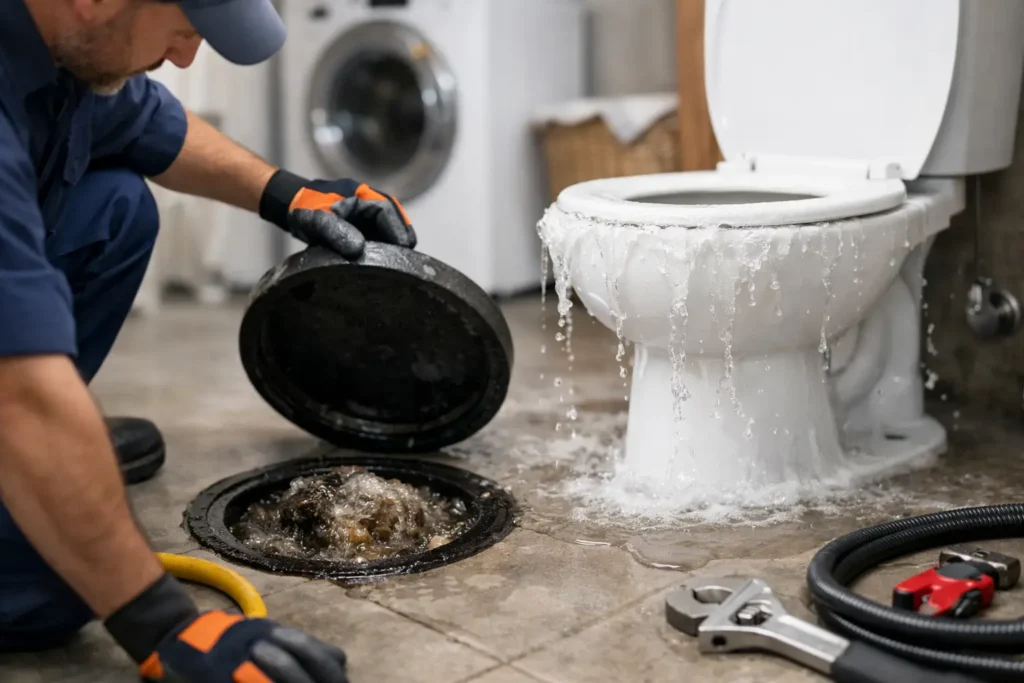
A sewer backup rarely starts with a dramatic warning. More often, it begins with a slow drain in the basement, a gurgling toilet, or a bad smell that seems to come and go. If you are wondering how to prevent sewer backups, the good news is that a few smart habits and timely inspections can lower your risk in a big way.
For homeowners, landlords, and property managers, prevention matters because sewer backups are messy, expensive, and disruptive. Cleanup can involve flooring, drywall, furniture, and sanitation work, not just plumbing. The best approach is to deal with the causes before wastewater has a chance to come back into the building.
What causes sewer backups in the first place?
Most backups happen for one of three reasons. The first is a blockage in the building drain or sewer line. Grease, wipes, paper products, scale buildup, and debris can narrow the pipe until water has nowhere to go.
The second is damage to the sewer line itself. Older pipes can crack, sag, shift, or collapse over time. Tree roots are a common issue because they naturally seek out moisture and can enter even small openings in underground pipes.
The third is overload. During heavy rain or sudden surges, municipal systems and private drainage systems can be put under pressure. If a property has weak points in its drainage setup, wastewater may back up through the lowest openings, often a basement floor drain, shower, or toilet.
How to prevent sewer backups with better day-to-day habits
A lot of prevention comes down to what goes into your drains. Toilets should only handle human waste and toilet paper. Even products labeled flushable can create trouble in real plumbing systems, especially in older buildings or lines with partial buildup.
Kitchen drains need the same level of care. Grease is one of the biggest offenders because it may go down warm but it cools, sticks, and traps other debris inside the pipe. Coffee grounds, eggshells, pasta, rice, fibrous food scraps, and heavy soap residue can add to the problem. A sink strainer and a habit of putting food waste in the trash instead of the drain can prevent a lot of clogs before they start.
In bathrooms, hair and soap scum are the usual culprits. Drain screens help, and regular cleaning helps more than waiting until water starts pooling around your feet.
Pay attention to early warning signs
Sewer backups rarely happen without some kind of signal. Slow drains in more than one fixture, bubbling sounds when water is used, sewage odors, or water rising in a basement floor drain are all signs that the system may be struggling.
One slow sink alone might be a local clog. But when a shower, toilet, and sink all start acting up around the same time, that points to a larger drainage issue. This is where acting early can save thousands of dollars. Clearing a developing blockage is much easier than cleaning up a full backup.
Why regular drain cleaning makes a difference
If your home or building has a history of slow drains, root intrusion, grease buildup, or older piping, routine maintenance is usually worth it. Professional drain cleaning removes the material that keeps building up inside the line, restoring better flow and reducing the chance of a sudden blockage.
This is especially useful for multi-unit properties, busy family homes, restaurants, and commercial spaces where drains get heavy use. The exact timing depends on the age of the system and how the property is used. Some buildings benefit from annual service, while others may only need inspection and cleaning when symptoms start to show.
The trade-off is simple. Preventive maintenance costs money, but emergency restoration and repair usually cost much more. It also tends to happen at the worst possible time.
Tree roots and older sewer lines need a closer look
If your property has mature trees, root growth should always be on your radar. Roots can enter tiny cracks in a pipe and expand inside the line, catching waste and causing repeated clogs. Cutting roots out may restore flow, but if the pipe is damaged, the problem often comes back.
Homes with clay, cast iron, or aging sewer lines are more vulnerable to this kind of trouble. A camera inspection can show exactly what is happening underground without guesswork. That matters because the right fix depends on the condition of the pipe. In some cases, cleaning is enough. In others, repair or replacement is the safer long-term answer.
Backwater valves can help prevent major damage
A backwater valve is one of the most effective tools for preventing sewage from flowing back into a property. It allows wastewater to leave the building but closes if flow reverses toward the home.
This can be especially valuable in lower-level spaces and areas where heavy rain puts extra pressure on drainage systems. That said, a backwater valve is not a cure-all. It needs proper installation, the right application, and regular maintenance to work as intended. If it is neglected or installed incorrectly, it may not protect the property when you need it most.
For some homes, adding a backwater valve makes excellent sense. For others, the bigger issue may be a damaged private sewer lateral, poor site drainage, or repeated root intrusion. A professional assessment helps you avoid spending money on the wrong solution.
Keep outdoor drainage working properly
Sewer protection is not only about what happens inside the house. Exterior drainage plays a major role too. Downspouts, area drains, catch basins, and grading around the property all affect how water moves during a storm.
If water collects near the foundation, enters window wells, or overwhelms older drain systems, it can increase the risk of backup and water damage. Gutters and downspouts should be kept clear and directed away from the building where appropriate. Yard drains and catch basins need periodic cleaning so leaves, mud, and debris do not block flow.
This is particularly important during the rainy season in places like Vancouver and surrounding areas, where extended wet weather can expose drainage weaknesses fast.
Be careful with basement floor drains and lower fixtures
The lowest drain in the building is often where trouble shows up first. Basement floor drains are common backup points because wastewater follows the path of least resistance. If you have a finished basement, laundry room, or lower-level bathroom, it is worth paying close attention to how those fixtures perform.
Do not ignore occasional odors or minor gurgling. Those small signs may be your early warning that the line needs service. If a floor drain is rarely used, keeping the trap properly maintained can also help with odors, although ongoing sewer smells should still be checked by a plumber.
How to prevent sewer backups in rental and commercial properties
Shared buildings and commercial spaces need a more proactive plan because more users mean more opportunity for misuse and buildup. Tenants, staff, and visitors may flush wipes, dump grease, or overload fixtures without realizing the risk.
In these properties, prevention usually works best when it combines education, scheduled maintenance, and quick response to complaints. If multiple units report slow drains, treat that as a building issue, not just a one-off inconvenience. Waiting can turn a manageable service call into a major disruption affecting several units or business operations.
For property managers, written guidance on what should never go down sinks and toilets can help. So can a service history that tracks repeat clogs, root problems, and camera findings over time.
What to do if you think a backup is starting
If you suspect a sewer backup, stop using water right away. That means no flushing toilets, running dishwashers, taking showers, or doing laundry. The more water you send into the system, the worse the backup can become.
If it is safe, keep people away from affected areas, especially where contaminated water is present. Then call a licensed plumber as soon as possible. Fast action matters because the right diagnosis can limit damage and reduce health risks.
A dependable local plumbing team can inspect the line, identify whether the cause is a clog, root intrusion, or pipe damage, and recommend the most practical next step. For many homeowners and property managers, that peace of mind is exactly why they call a company like Encano Plumbing & Drainage when warning signs appear.
Preventing sewer backups is really about staying ahead of small problems while they are still small. A cleaner drain, a camera inspection at the right time, or a habit change in the kitchen can make the difference between a routine service visit and a very long cleanup day.