
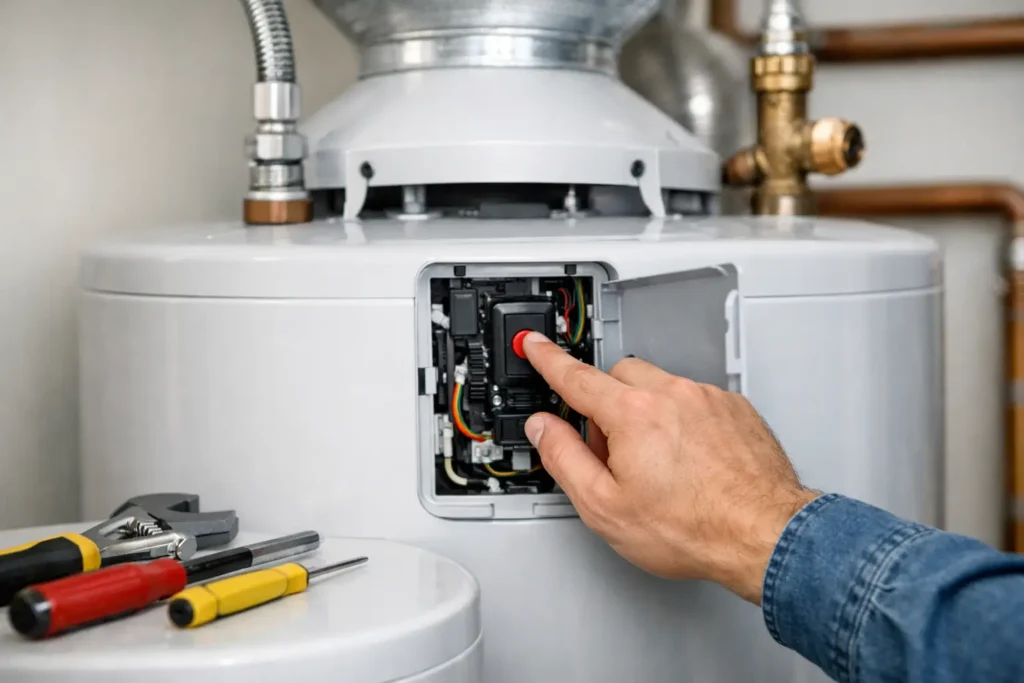
A cold shower is frustrating. A water heater that repeatedly shuts off can also be a warning that needs attention. Knowing how to reset water heater equipment correctly may restore hot water after a one-time interruption, but a reset button is not a permanent repair. If the heater trips again, stop resetting it and have the cause checked.
The right approach depends on whether you have an electric tank water heater, gas tank water heater, tankless unit, or heat pump water heater. Start by identifying the system. The information label on the side of the unit usually lists the fuel type, model number, and basic operating instructions.
When a water heater reset makes sense
A reset can be appropriate after a power outage, a tripped breaker, a brief overheating event, or a temporary control fault. On a standard electric tank water heater, the reset button is part of the high-limit safety switch. It cuts power when the tank temperature becomes unsafe.
That safety feature is useful, but it should not trip under normal operation. If it does, the cause could be a failed thermostat, a malfunctioning heating element, loose wiring, sediment buildup, or an electrical problem. Resetting the heater once is reasonable. Resetting it every few days is not.
Before touching the unit, check for obvious trouble: water around the tank, a burning smell, scorched wiring, hissing, unusual banging, or a leaking temperature-and-pressure relief valve. Do not attempt a reset if you see any of these signs. Turn off power or gas to the unit if it is safe to do so, keep clear of standing water, and arrange professional service.
How to reset an electric water heater
Most electric tank-style water heaters have a red reset button behind the upper access panel. The button is not usually visible from the outside, and the panel may be held in place with one or two screws.
Turn off power at the breaker
Go to your electrical panel and switch off the breaker marked water heater. If the breaker has tripped to the middle position, move it fully to OFF first, then back to ON only after completing the reset. For the reset procedure itself, leave the breaker OFF.
Electric water heaters use high-voltage power. Never remove an access panel or touch wiring while the circuit is energized. If the panel is not clearly labeled or you are unsure which breaker controls the heater, do not guess.
Open the upper access panel
Use a screwdriver to remove the upper metal cover on the side of the tank. Behind it, you will usually find insulation and a plastic safety cover. Gently fold back the insulation and remove the plastic cover if needed.
Look for the red button near the upper thermostat. Press it firmly once. You may hear or feel a small click, which means the high-limit switch has reset.
Do not press the button repeatedly or force it. If it will not click, it may not have tripped, or the control may have failed.
Reassemble and restore power
Put the plastic cover and insulation back exactly as they were. Reinstall the metal access panel, then turn the breaker back on.
Give the tank time to recover. A typical electric water heater can take one to several hours to heat a full tank, depending on tank size, incoming water temperature, and whether one or both heating elements are operating. Avoid running several hot-water fixtures while you wait.
If the water is still cold after adequate recovery time, or the breaker trips again, turn the breaker off and call a qualified plumber or electrician. Continuing to reset a tripping unit can create an electrical and scalding hazard.
How to reset a gas water heater
Gas water heaters usually do not have the same red high-limit reset button found on electric models. Many have a gas control valve with settings such as OFF, PILOT, and ON. Some newer units use electronic ignition and may display an error code or have a dedicated reset sequence printed on the unit.
Start with the manufacturer instructions on the tank. Do not rely on a generic relighting process if your heater has electronic controls, a sealed combustion chamber, or an unfamiliar display.
If the pilot light is out on an older standing-pilot model, turn the gas control to OFF and wait at least five minutes. This allows any unburned gas to clear. If you smell gas at any time, do not relight the appliance, use electrical switches, or create a flame. Leave the area and contact your gas utility or emergency service from a safe location.
After the waiting period, follow the lighting instructions printed on the heater. Typically, you turn the dial to PILOT, hold the control button, and use the igniter until the pilot flame remains lit. Then move the control to ON and set the temperature to a safe level. Around 120°F is a common household setting that balances comfort, energy use, and scald prevention.
A pilot that will not stay lit, a burner that will not ignite, yellow or lazy flames, soot, or repeated error codes require professional diagnosis. Gas controls, venting, combustion air, and flame sensors are not areas for trial-and-error repairs.
Resetting tankless and heat pump water heaters
Tankless water heaters often reset through their control panel, a power cycle, or a dedicated reset button. Turn the unit off using the manufacturer procedure, wait several minutes, then restore power. Check the display first. An error code can point to issues such as ignition failure, blocked venting, scale buildup, restricted water flow, or a failed sensor.
A tankless unit that goes cold only when more than one fixture is running may not be malfunctioning. It may be reaching its flow or temperature capacity. That is different from a unit that shuts down with an error code.
Heat pump water heaters have both plumbing and electrical components, plus a compressor and fan. Some faults can clear after a power cycle at the breaker, but repeated errors need service. Do not remove covers or attempt to bypass safety controls. These systems have more complex electrical and refrigerant-related components than a conventional tank heater.
Why the reset button keeps tripping
The most common mistake is treating the reset button as the repair. The button trips because it detected a condition that could overheat the water or damage the equipment.
On electric models, a thermostat that sticks in the ON position can keep an element heating beyond the set temperature. A grounded heating element or deteriorating wire connection may also create a fault. In older tanks, heavy mineral sediment can make the system less efficient and contribute to overheating at the bottom element.
If your hot water is excessively hot, discolored, rusty, has a sulfur-like odor, or runs out much faster than usual, mention those details when booking service. They help narrow down whether the issue involves the tank, elements, thermostat, anode rod, or water quality.
Age matters too. Many tank water heaters last roughly eight to 12 years, although maintenance, water conditions, and usage can change that range. A repair may be the practical choice for a newer unit with a clear, isolated problem. For an aging unit that leaks, needs multiple major parts, or has recurring shutdowns, replacement can be the more reliable and cost-effective decision.
A few safety checks before you call
You can gather useful information without taking the heater apart. Check whether the breaker has tripped, whether the gas control display shows an error code, and whether there is visible water at the base of the tank. Note when the problem started and whether all fixtures have lost hot water or only one faucet has.
For property managers and landlords, ask occupants whether the issue followed a power outage, a plumbing shutdown, unusually high hot-water demand, or recent work in the building. That information can help reduce downtime and prevent repeat visits.
Do not drain a hot water heater, alter gas piping, replace electrical components, or cap a leaking relief valve unless you are trained to do the work. The relief valve is a critical safety device, and a leaking tank can worsen quickly.
If a reset does not restore hot water, or it restores it only briefly, a licensed professional can test the heater safely and explain the repair options before work begins. For homeowners and building operators in Vancouver and nearby communities, Encano Plumbing & Drainage can diagnose water heater faults with clear recommendations and professional service. A single careful reset may get your day moving again, but a heater that asks for repeated resets is asking for attention.