A drain that clears for a few days, then backs up again, is telling you something: the blockage may have been opened without being fully removed. When comparing hydro jetting versus snaking, the right choice depends on what is inside the pipe, the pipe’s condition, and whether you need a short-term opening or a more complete cleaning.
Both methods are professional drain-cleaning tools, and both have their place. A drain snake can be the quickest, most practical answer to a localized clog. Hydro jetting uses high-pressure water to scour buildup from the pipe walls and is often the stronger option for recurring blockages, grease, sludge, and larger drainage systems. A licensed plumber can identify the source of the problem before recommending either service.
Hydro Jetting Versus Snaking: The Main Difference
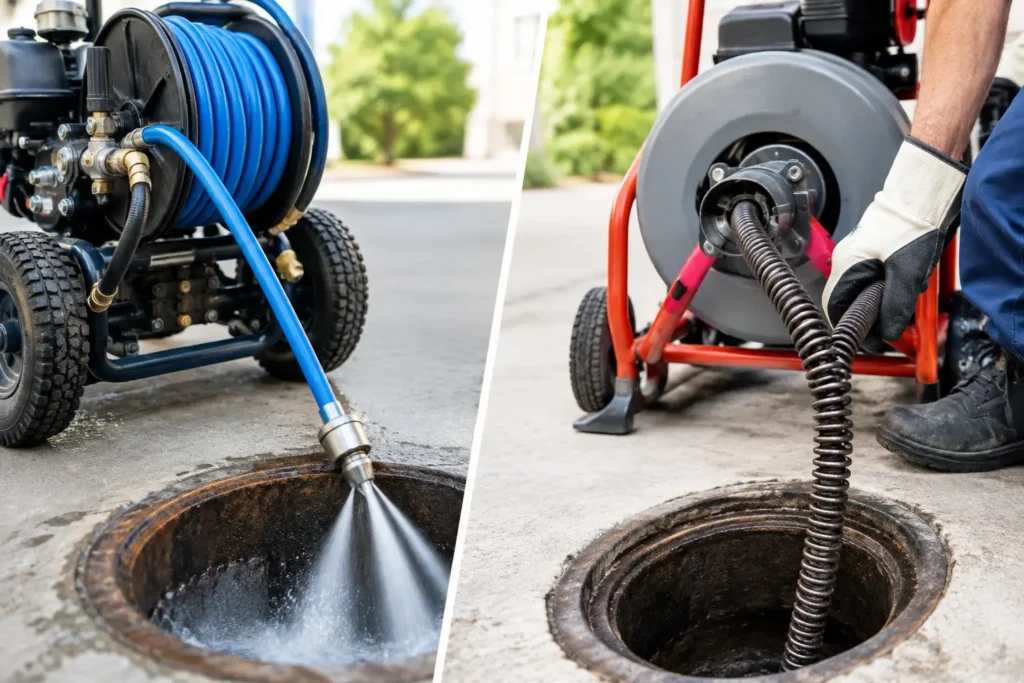
Drain snaking, also called cable cleaning or augering, uses a flexible metal cable with a cutting or retrieval head. The plumber guides the cable through the drain until it reaches the obstruction. Depending on the head used, the cable can break apart a clog, pull out hair and debris, or cut through roots that have entered a sewer line.
Hydro jetting works differently. A specialized hose and nozzle send pressurized water through the pipe. Forward jets help move the hose through the line, while rear-facing jets flush loosened debris back toward the access point. Rather than simply making a passage through a blockage, hydro jetting can clean a much larger portion of the pipe interior.
That difference matters. Snaking is often about restoring flow quickly. Hydro jetting is often about restoring flow and removing the buildup that caused the restriction in the first place.
When a Drain Snake Is the Better Choice
A drain snake is a dependable solution for many everyday clogs. If a bathroom sink is draining slowly because of hair, soap residue, or a small object near the trap, cabling may clear it efficiently without needing a more extensive service. The same can be true for a toilet blockage caused by paper buildup or an item caught close to the fixture.
Snaking is also useful when tree roots have entered a sewer pipe through a crack or separated joint. A cutting head can slice through roots and get the line moving again. However, cutting roots does not repair the opening where they entered. If roots keep returning, a camera inspection can show whether the pipe needs repair, replacement, or ongoing maintenance.
For older or fragile pipes, a snake may be the safer starting point. High-pressure water is highly effective when used correctly, but a plumber should first confirm that a deteriorated, cracked, or poorly installed line can handle it. Good drain service is not about choosing the most powerful tool. It is about choosing the tool that solves the issue without creating unnecessary risk.
When Hydro Jetting Makes More Sense
Hydro jetting is especially effective when buildup coats the inside of a drain or sewer line. Kitchen drains in homes, restaurants, and commercial buildings often collect grease, food residue, detergent, and sludge over time. A snake can punch through this material, but it may leave much of the greasy layer behind. Hydro jetting can wash that buildup away more thoroughly.
It is also a strong option for recurring clogs. If the same drain backs up every few months, the problem may be more than one isolated obstruction. Scale, soap scum, sediment, or grease may have narrowed the line. Cleaning the pipe walls can give wastewater a clearer path and reduce the chance of another backup soon after service.
For property managers and facility operators, hydro jetting can be valuable preventive maintenance. Multi-unit properties, commercial kitchens, laundry areas, and buildings with high restroom use put more demand on drainage lines than a typical household. Scheduling cleaning before a major blockage develops can help avoid messy interruptions, tenant complaints, and emergency calls.
Is Hydro Jetting Safe for Every Pipe?
Not automatically. Hydro jetting should begin with a professional assessment, often including a drain camera inspection for main sewer lines or recurring issues. The camera helps identify cracks, collapsed sections, offsets, severe corrosion, root intrusion, and the type of buildup inside the pipe.
If a pipe is structurally sound, hydro jetting can be safe and highly effective. If the line is badly damaged, the pressure could expose an existing weakness or send water where it does not belong. The jetting itself is not the real concern in those cases. The concern is the condition of the pipe before cleaning starts.
This is why hydro jetting is not a DIY drain-cleaning project. Professional equipment allows the technician to control pressure, select the correct nozzle, and work from the proper cleanout. It also takes experience to know when to stop and recommend repair instead.
Cost: Why the Cheapest Option Is Not Always the Best Value
A basic snaking service often costs less than hydro jetting because the work is generally faster and requires different equipment. For a simple, nearby clog, that can make snaking the sensible value choice. There is no reason to use a full-line cleaning method when a small obstruction can be safely removed with a cable.
Hydro jetting may cost more upfront, particularly when it involves camera inspection, a long sewer line, heavy grease buildup, or difficult access. Yet it can be the better value when repeated snaking has not solved the problem. Paying for several temporary clearings can become more expensive and more disruptive than cleaning the line properly once.
The fairest estimate comes after the drain has been assessed. Factors such as line length, access, blockage severity, pipe material, and whether the issue is in a branch drain or the main sewer all affect the work required. Clear communication before the job begins matters just as much as the equipment used.
Signs You May Need More Than Snaking
A single slow drain does not always mean you need hydro jetting. But certain warning signs suggest a deeper buildup or main-line issue. Watch for multiple fixtures draining slowly, water backing up into a tub when a toilet is flushed, frequent clogs in the same area, gurgling sounds, sewer odors, or wastewater appearing at a floor drain.
These symptoms can point to a blockage farther down the system. They can also indicate roots, a damaged pipe, or a sewer line that has lost its proper slope. Trying chemical drain cleaners repeatedly is rarely a good answer. These products can be harsh on some pipes, may not reach the actual blockage, and can leave hazardous chemicals behind for anyone working on the drain later.
If sewage is backing up into a home or business, stop using water fixtures as much as possible and arrange professional help promptly. Continued water use can worsen the backup and increase cleanup needs.
Choosing the Right Drain-Cleaning Method
The best decision starts with a diagnosis, not an assumption. A localized hair clog near a shower drain may only need snaking. A grease-coated kitchen branch line may benefit from hydro jetting. A main sewer line with repeated root intrusion may need cabling first, followed by camera inspection and a plan to address the damaged section.
For homeowners, the goal is a drain that works reliably without overspending. For landlords and commercial operators, it is also about protecting the property, reducing disruptions, and avoiding preventable emergencies. A plumber should explain what was found, why a particular method is recommended, and what to expect after the service.
Encano Plumbing & Drainage helps homeowners and property managers across Greater Vancouver make that call with straightforward recommendations and professional drain diagnostics. If a drain keeps coming back, ask for an assessment that looks beyond the immediate clog. The right cleaning method can protect your pipes, your schedule, and your property from the next unpleasant surprise.